
My views do not necessarily reflect the views of my employer.
I had too much fun in Naha, Okinawa so I’m going to split up these posts. Here is my port talk and I’ll tell you about what I did in my next post:
Naha, Okinawa, Japan
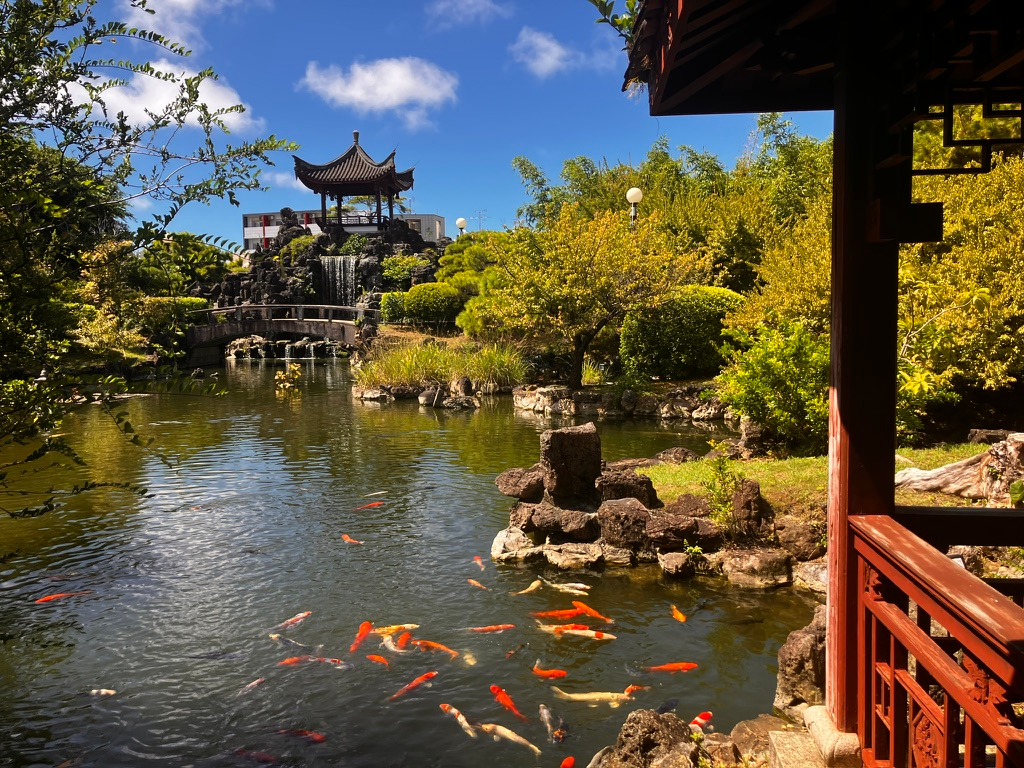
Welcome to Naha, the capital of Okinawa Prefecture and home to about 320,000 residents (1.4 million across the prefecture). Once the political and cultural heart of the Ryukyu Kingdom, Naha today blends tropical landscapes with a unique island identity shaped by centuries of maritime trade. It is also the gateway to Shurijo Castle, a UNESCO World Heritage Site that symbolizes Okinawa’s royal heritage. Visitors can stroll bustling Kokusai Street, explore colorful markets, and experience Okinawan music and cuisine unlike anywhere else in Japan. Naha offers a warm island welcome infused with both Japanese and distinctly Ryukyuan traditions.
History:
For centuries, Okinawa thrived as the Ryukyu Kingdom, a maritime trading hub linking Japan, China, and Southeast Asia. Its kings ruled from Shuri Castle, overseeing a flourishing culture that emphasized diplomacy and exchange. In the early 17th century, the kingdom was conquered by the Satsuma domain of southern Japan but retained relative autonomy until the late 19th century, when Okinawa was formally annexed into Japan.
During World War II, Okinawa endured fierce battles, including the devastating Battle of Okinawa in 1945, which left Naha in ruins and claimed over 100,000 civilian lives. After the war, Okinawa remained under U.S. administration until 1972, shaping much of its modern identity through American military presence and cultural influence.
Today, Naha reflects this layered past: traditional Ryukyuan culture, Japanese modernity, and international influences combine to create a vibrant and resilient city that treasures peace and cultural preservation.
Itinerary:
Arrival: Tuesday September 9, 9:00am (please allow time for port clearance)
Departure: Wednesday September 10, All aboard: 7:00pm Sail away: 8:00pm
Weather
- Average Temps: High ~31 °C (88 °F), Low ~26 °C (79 °F)
- Climate: Humid subtropical; hot, humid, with a chance of late-summer typhoons.
- What to Wear: Light, breathable clothing, sun protection, and comfortable walking shoes. Bring an umbrella or light rain jacket for showers.
Near the Pier:
Cruise Ship Dock: No. 2 Naha Cruise Berth (No. 12 Naha Port New Wharf)
Address: 4-4 Minatomachi, Naha, Okinawa 900-0001, Japan
Address in Japanese: 日本、沖縄県那覇市港町4-4, 〒900-0001
Distance to Port Gate: ~300 m
Distance to Town Center: 5.5 km (~15–20 min by taxi)
Is the Water Safe to Drink? Yes – tap water is safe, though many locals prefer bottled for taste.
Nearby Essentials
- Pharmacy: Matsumoto Kiyoshi (near Kokusai-dori)
- ATM: 7-Eleven (international cards accepted)
- Grocery/Snacks: FamilyMart & Lawson convenience stores in Naha
- Nearest Church: Catholic Naha Church (~15 min by taxi)
- Nearest Golf: Okinawa Country Club (~25 min by taxi)
- Nearest Don Quijote: Don Quijote Naha on Kokusai-dori (~15 min by taxi)
- Shopping Mall: Ryubo Department Store (downtown) or AEON Parco City (~15 min drive)
- Public Market: Naha City Makishi Public Market – famous for local foods and crafts
Getting Around:
- 🚶 Walking: Limited near the pier; downtown is too far on foot (5.5 km).
- 🚌 Public Transit: Yui Monorail (“Yuirail”) runs from Naha Airport through central Naha. Closest stop from port requires taxi transfer (~10 min).
- 🚖 Taxis: Abundant at the pier; ~¥1,500–2,000 to downtown/Kokusai Street (15–20 min).
- 🚴 Bike Rentals: Limited; some e-bike rentals downtown.
- 🚗 Car Rentals: Available at Naha Airport and downtown; international license required.
- 🚌 Hop-On Hop-Off Bus: Naha City Sightseeing Bus loops major attractions including Shurijo Castle, Kokusai Street, and Gyokusendo Cave (~¥1,000–2,000 day pass).
Witnessing:
Shurijo Castle (UNESCO)
Once the royal palace of the Ryukyu Kingdom, Shurijo Castle is Okinawa’s most iconic site. Though heavily damaged during WWII and again by fire in 2019, reconstruction efforts are ongoing, and visitors can explore restored gates, walls, and cultural exhibits about the Ryukyu dynasty. The hilltop castle offers sweeping views of Naha.
- Admission: ¥400–¥820 adults (depending on access)
- Visit Time: 1.5–2 hours
- Access: About 20 minutes by taxi (~¥2,000) or via monorail to Shuri Station + 15 min walk
✨ Travel Tip: Don’t miss the Shureimon Gate, a symbol featured on Japan’s ¥2,000 note.
Kokusai Street (Kokusai-dori)
The bustling heart of Naha, this 2-km-long shopping street is lined with souvenir shops, boutiques, restaurants, and bars. It’s the perfect place to experience Okinawan crafts, music, and food in one lively stretch.
- Admission: Free
- Visit Time: 1–2 hours (or more with shopping/meals)
- Access: about 15 minutes by taxi (~¥1,500) from the port
✨ Fun Fact: On Sundays, part of Kokusai Street is closed to traffic, creating a pedestrian festival atmosphere.
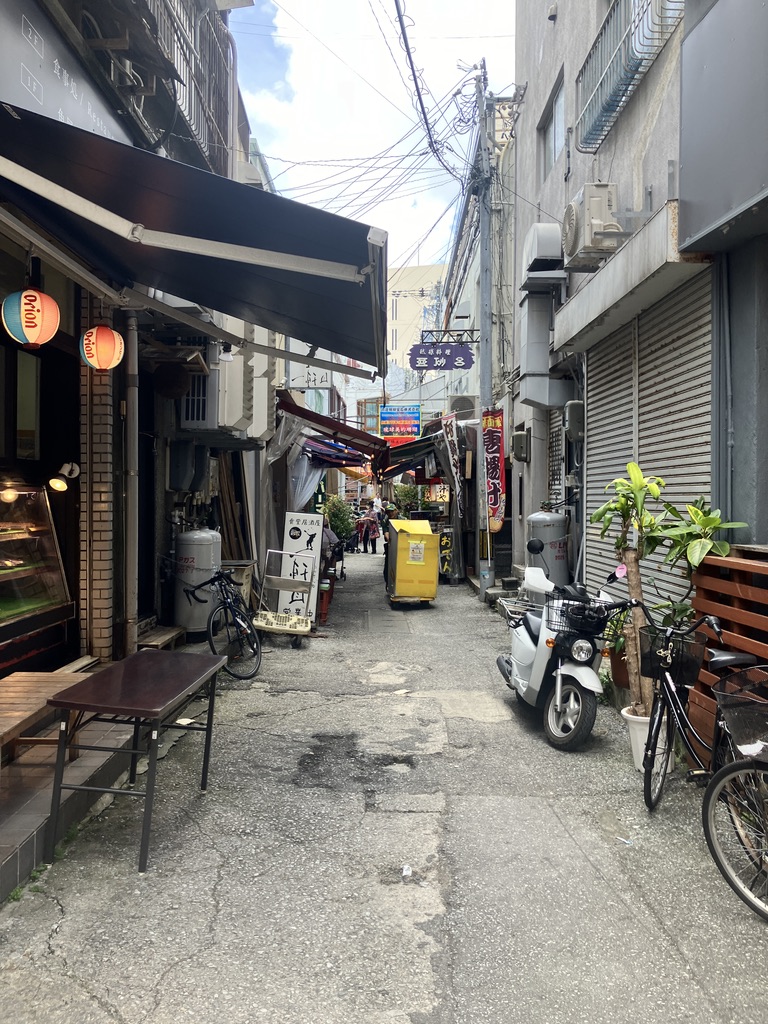
Naha City Makishi Public Market
Known as “the kitchen of Okinawa,” this market is a paradise for food lovers, offering fresh seafood, local meats, tropical produce, and Okinawan specialties like goya (bitter melon) and beni-imo (purple sweet potato). Many stalls prepare dishes on the spot.
- Admission: Free (pay for food)
- Visit Time: 1–1.5 hours
- Access: about 15 minutes by taxi (¥1,500) from port
✨ Travel Tip: Try the upstairs dining area, where you can hand-pick ingredients from the market and have them cooked for you.
Learning:
Okinawa Prefectural Museum & Art Museum
A modern facility combining history, art, and natural sciences, showcasing Okinawa’s unique heritage, crafts, and natural environment.
- Admission: ¥530 adults
- Visit Time: 1.5–2 hours
- Access: about 15 minutes by taxi (¥1,500)
✨ Tip: Exhibits are bilingual (Japanese/English).
Tsuboya Pottery District & Museum
A historic district where Tsuboya-yaki pottery has been crafted for centuries. Visitors can explore workshops, galleries, and a small museum.
- Admission: Free (museum ~¥350)
- Visit Time: 1–2 hours
- Access: 15 min taxi or 20 min monorail + walk
✨ Fun Fact: Tsuboya pottery is famous for its bold designs and durability, once used for Okinawan awamori liquor jars.
Discovery:
Naminoue Beach
A small but charming urban beach near central Naha, beneath the cliffside Naminoue Shrine. Great for a quick swim or stroll. Naminoue Beach is closest to Naha, or venture further to tropical white-sand beaches. Access: ~10 minutes by taxi (~¥1,000)
Okinawa World & Gyokusendo Cave
One of Okinawa’s most popular attractions, Okinawa World combines cultural heritage with natural wonder. Its centerpiece, Gyokusendo Cave, is a spectacular limestone cavern stretching nearly 5 km (about 850m open to visitors), filled with dramatic stalactites, underground streams, and illuminated chambers. Above ground, the theme park features Ryukyu Kingdom Village, where you can see traditional crafts such as glassblowing, pottery, and weaving. Daily Eisa dance performances bring the rhythms of Okinawan drums to life, and there are also interactive exhibits, gardens, and a snake museum (optional). It’s a one-stop introduction to Okinawan culture and nature, making it especially worthwhile for first-time visitors.
- Admission: ¥2,000 adults (cave + park)
- Visit Time: 3–4 hours
- Access: 40–50 min by taxi (~¥5,000–6,000 one way); public buses from Naha Bus Terminal take ~1.5 hrs each way.
✨ Worth It: A perfect full-day option if you want both immersive cultural experiences and one of Japan’s most impressive caves.
Shopping:
Makishi Public Market & Kokusai-dori Arcades
Known as “the kitchen of Naha,” Makishi Public Market is a lively hub of seafood stalls, butchers, produce vendors, and specialty shops. Visitors can choose fresh seafood on the ground floor and have it cooked upstairs for a true local meal. Around the market, the covered shopping arcades branching off Kokusai-dori (International Street) are packed with souvenir shops, Ryukyuan crafts, clothing, and casual eateries.
- Admission: Free
- Visit Time: 1–2 hours
- Access: 15 minutes by taxi (~¥1,500) or ~25 minutes by Yui Rail monorail to Makishi Station, then 10-minute walk
DFS T Galleria Okinawa
Japan’s only duty-free mall located outside an airport, DFS T Galleria offers luxury shopping with international brands, fine jewelry, and cosmetics—all tax-free for foreign visitors. It’s sleek, modern, and air-conditioned, making it ideal for guests seeking a premium shopping experience.
- Admission: Free
- Visit Time: 1–2 hours
- Access: 20 minutes by taxi (~¥2,000) or direct access from Omoromachi Station (Yui Rail monorail)
Aeon Mall Okinawa Rycom
Okinawa’s largest shopping mall, Rycom blends Japanese and international brands with restaurants, a supermarket, and entertainment. It’s popular with locals and visitors alike, offering everything from UNIQLO and MUJI to Okinawan craft shops. The food court and casual dining options make it a great place to sample local dishes in comfort.
- Admission: Free
- Visit Time: 2–3 hours
- Access: 40-45 minutes by taxi (~¥5,000–6,000 one way) from port; limited bus service available but slower (~1.5 hours, multiple transfers)
Hiking
Shurijo Castle Park Trails
Not a wilderness hike, but the grounds of Shurijo Castle and surrounding hills offer pleasant walking paths with gentle climbs, stone stairways, and sweeping city views. Easy to combine with cultural sightseeing.
- Visit Time: 1–2 hours
- Access: 20 min by taxi (~¥1,500–2,000) from port
Sueyoshi Park & Forest Trail
A lush forested area in central Naha with shaded walking trails, shrines, and quiet natural surroundings. Great for an easy escape from the city without traveling far.
- Visit Time: 1–1.5 hours
- Access: 15 min taxi (~¥1,500) from port
Shikinaen Garden & Hillside Paths (UNESCO)
This former royal villa combines landscaped gardens, ponds, and short hillside walking trails that reflect Ryukyuan culture and Chinese influence.
- Visit Time: 1–1.5 hours
- Access: 20 min taxi (~¥1,800–2,000) from port
Mt. Gusuku (a.k.a. “Tatchuu”) – Nakagusuku Village
A small mountain north of Naha with hiking trails and panoramic views of Nakagusuku Bay. More of a half-day option.
- Visit Time: ~2–3 hours
- Access: ~40 minute taxi (¥5,000 one way)
Exploring:
Cape Manzamo (Iconic Cliff View)
A dramatic limestone bluff shaped like an elephant’s trunk, Cape Manzamo offers one of Okinawa’s most iconic views. The grassy plateau above the cliffs provides sweeping panoramas of the East China Sea, coral reefs, and rugged coastline. The short walking path to the viewpoint is easy and well-maintained, making it accessible to most visitors.
- Admission: Free
- Visit Time: ~30–45 minutes
- Access: 1 hour taxi from Naha (~¥9,000–10,000 one way); public transit takes ~2 hrs with multiple transfers.
✨ Travel Tip: Time your visit for early morning or late afternoon, when the light makes the cliffs especially photogenic.
Hidden Gems:
Naha Inshallah – For half a century, this Arabian-inspired retro café has been an oasis for locals in Okinawa’s central tourist area
Old Sogenji Temple Gate – All that remains of Okinawa’s royal temple are a restored gateway and a tall banyan tree
Yamashita Archaeological Cave – Arechaeologists continue to debate whether this site yielded the oldest human remains in Japan
1 mile from Naha – Naval Underground Headquarters – Elaborate series of tunnels where traces of mass suicide are still visible
During World War II, Japanese naval forces in Okinawa, led by Rear Admiral Minoru Ota, built an elaborate underground headquarters, with hundreds of meters of connecting tunnels under a hill in Tomagusuku. On June 4, 1945, the U.S. 6th Marines landed and a pitched battle ensued.
Ota sent his farewell telegram to the 32nd Army on June 11. In it, he commended the Okinawan people’s self-sacrifice and cooperation during the battle. Ota then, along with members of his staff, committed suicide on June 13 to avoid surrender. The Marines sealed the entrances to the underground headquarters rather than attempt to enter it. When it was unsealed in the 1950s, the remains of over 2000 sailors were found.
Today, the Japanese Navy Underground Headquarters can be visited by the public. Traces of the mass suicide by Ota and his men can still be seen. Blast scars from a hand grenade are visible on the walls and the farewell message left by Ota is still clearly visible.
Hacksaw Ridge – This World War II battle site was known as Hacksaw Ridge. The area was made famous after the film of the same name followed the life of Corporal Desmond Doss during the Battle of Okinawa in 1945. Here, Doss single-handedly saved the lives of 70 plus men under heavy enemy fire.
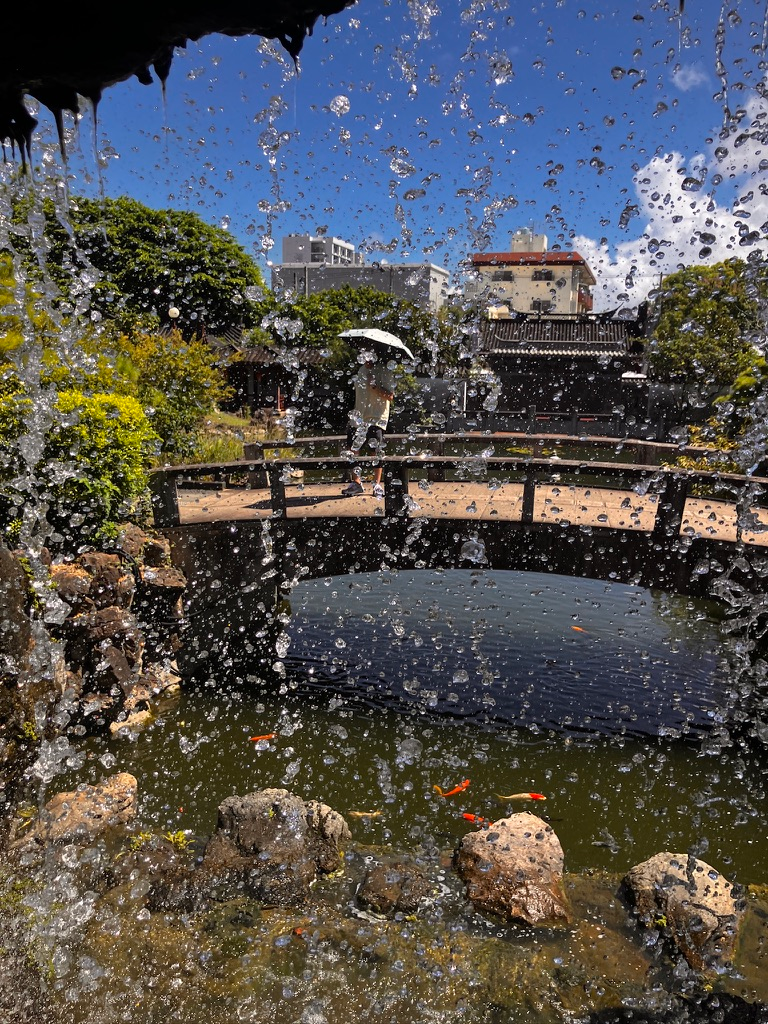
Fukushu-en Chinese Garden – peaceful walled garden built to honor Naha’s sister-city ties with Fuzhou, China.
Tasting:
- Okinawa Soba (¥600–900): Thick wheat noodles in pork broth with pork belly and fish cake.
- Awamori: Okinawa’s signature distilled spirit, smooth and strong; tasting available at shops/bars.
- Beni-imo (Purple Sweet Potato): Used in cakes, tarts, and ice cream.
- Goya Champuru: Stir-fry of bitter melon, tofu, egg, and pork.
- Makishi Market Dining: Pick fresh seafood and have it cooked upstairs (~¥1,000–2,000 meal).
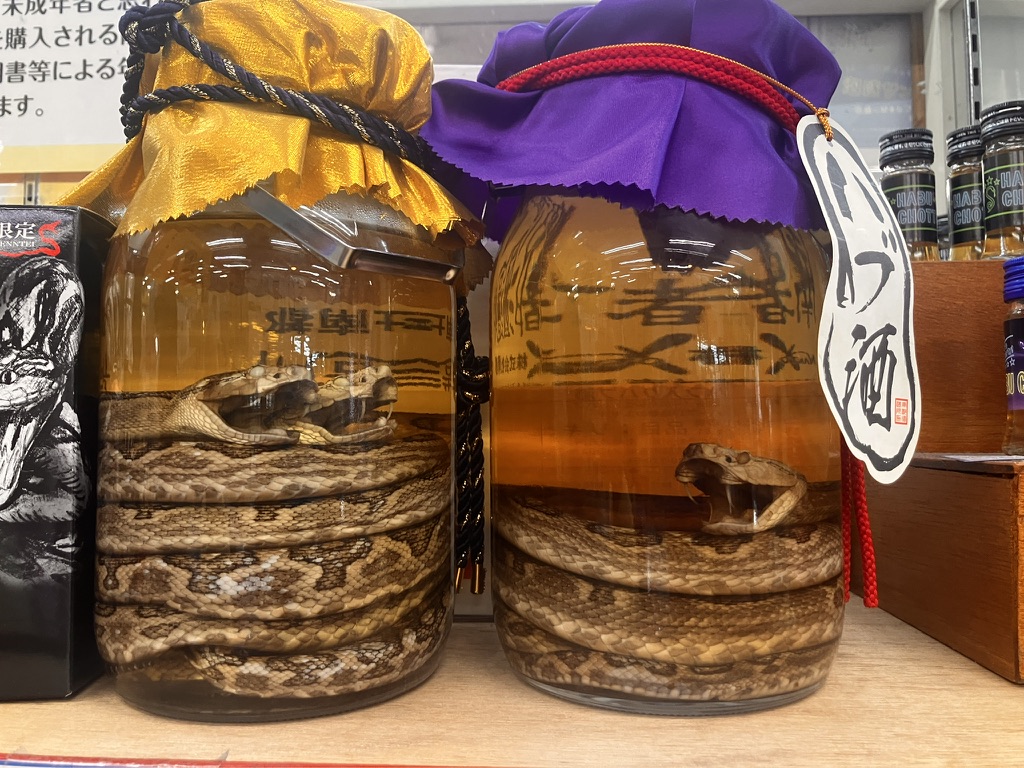
Habu-shu (Snake Sake)
A uniquely Okinawan liquor made by infusing awamori (local rice spirit) with the venomous habu pit viper. The snake is either steeped whole in the bottle or its essence is blended during brewing. Locals consider it an aphrodisiac and believe it boosts stamina and vitality. The flavor is surprisingly smooth and slightly herbal, with a strong kick. It’s often sold in souvenir bottles with the snake still inside—eye-catching but not for the faint of heart!
- Where to Try: Bars around Naha’s Kokusai-dori and Okinawa World (Habu Museum Park).
- Cost: ~¥500–800 per glass; souvenir bottles ¥3,000–10,000 depending on size.
✨ Travel Tip: Great for adventurous tasters, but don’t worry—safely prepared habu-shu is not dangerous to drink.
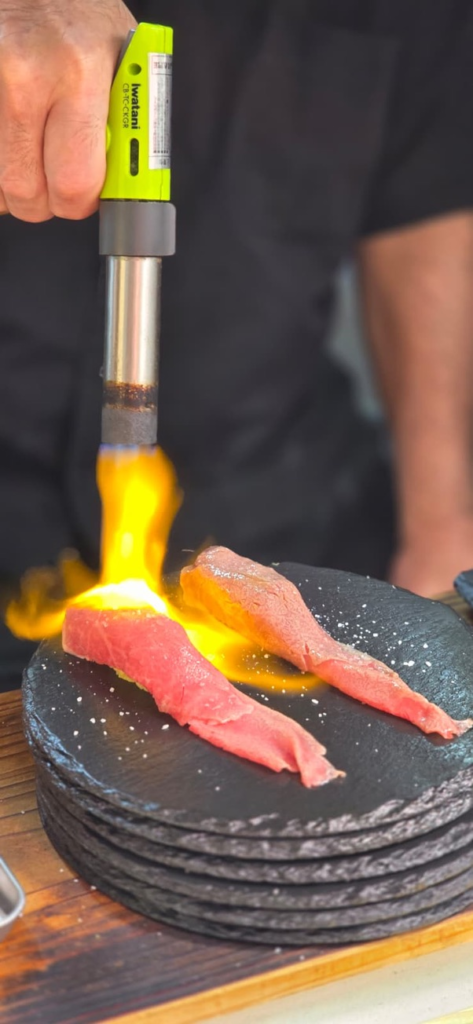
Okinawan wagyu beef sushi (和牛寿司/ Wagyu Nigiri) 🍣. You’ll often find it at Naha’s Makishi Public Market or in specialty food stalls around Kokusai-dori. Instead of fish, thin slices of beautifully marbled local wagyu are seared lightly with a torch and placed over sushi rice with a bit of sauce.
It’s a local delicacy because Okinawa raises high-quality wagyu cattle, and Ishigaki beef in particular is famous nationwide. Prices usually run ¥500–700 per piece, depending on the cut.
Irish Pub Smuggler’s Inn: Cozy downtown pub with Guinness and pub fare.
Mexican Restaurant: Jef fast food chain (serving taco rice, a local Okinawan-Mexican fusion).
Nightlife:
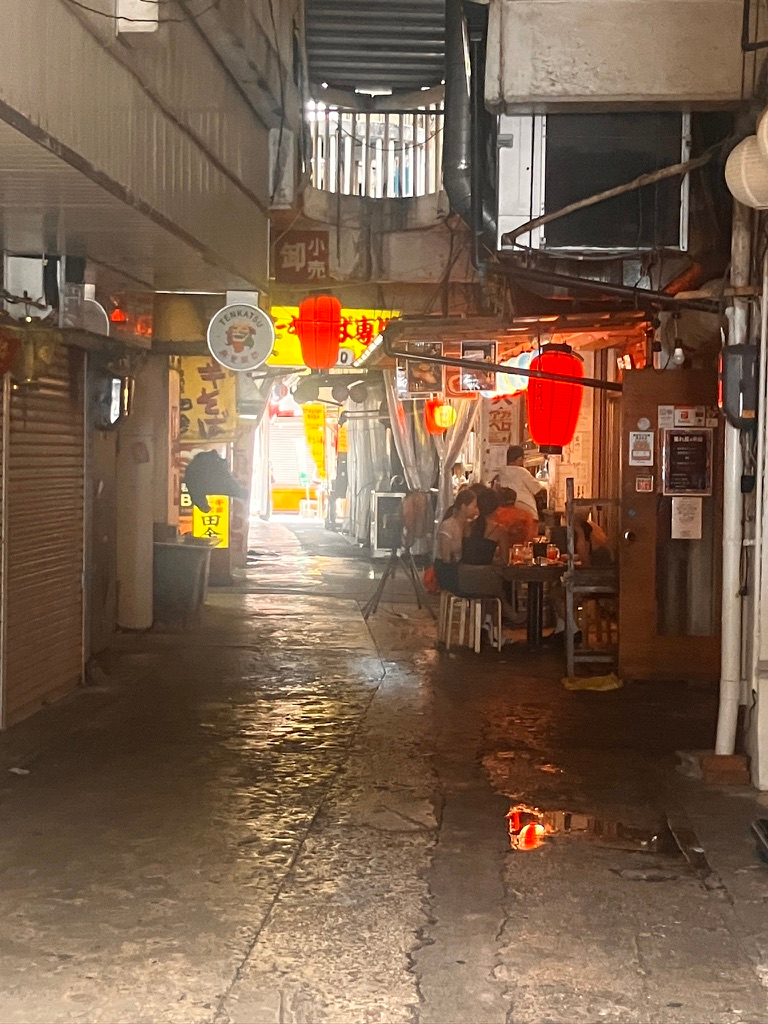
- Kokusai-dori & Heiwa-dori Arcades – Shopping by day, izakaya by night.
- Eisa Dance & Music Venues – Live Okinawan drumming and dance shows.
- Bars & Pubs: Mix of local izakaya, cocktail lounges, and expat-friendly pubs.
- Kokusai Street Area: Packed with izakaya, karaoke, and bars.
- Live Jazz at Sakurazaka Theater: Occasional small performances.
- Cultural shows and live music available nightly in central Naha.
- Irish Pub Smuggler’s Inn: Friendly expat crowd and pints of Guinness.
(Note: Overnight stay means nightlife is possible, but plan taxi back to port ~15 min.)
Travel Tips:
- Transport: Buy a Yui Rail pass for flexibility.
- Cash Preferred: While cards are accepted at malls, small shops and taxis often prefer yen.
- Language: Basic English spoken, but learn a few Okinawan greetings for fun (e.g., “Haisai” for hello).
- Weather: September is typhoon season—carry an umbrella and allow buffer time for transport.
- Etiquette: At Shurijo Castle and shrines, be respectful—no loud talking or eating in sacred areas.