My views do not necessarily reflect the views of my employer.
October 5-7 2025
Surprise! We didn’t end up going to Bohol. I can’t remember the reason for this change in the itinerary, but it was announced that instead, we would go to Cebu, the next island over.
Then, while we were in Puerto Princesa, a 6.9 earthquake struck just off of the northern coast of Cebu Island. I checked with the tour operators, who were in contact with the port agents in Cebu, and the Captain confirmed that it would still be safe for us to make our planned port of call.
On board, the residents immediately started organizing relief efforts. They collected donations and set up volunteer schedules to distribute food and water to those who needed it. Special donations were also gathered for Odyssey crew members who’s families had been affected by the earthquake.
Some of the residents were hesitant to visit so soon after a disaster, but the port authorities assured us that they still wanted us to come experience their corner of the world. I reminded everyone that spending money on food, tours, and local businesses was also a way to support the local economy during recovery.
Cebu, Philippines
Cebu City—capital of the central Visayas—blends 500+ years of history with a lively island-metropolis vibe. About 964,000 people call the city home (Metro Cebu ~2.9M), and it’s famed for lechon (roast pork), heritage churches, and easy access to coral-rich Mactan. There are no inscribed UNESCO World Heritage Sites in Cebu City, but the 18th-century Patrocinio de Maria Church in Boljoon (south Cebu) is on the Philippines’ UNESCO Tentative List as part of the proposed Baroque Churches extension. Expect friendly English-speaking locals, jeepneys and taxis for zipping around, and a food scene spanning beach-casual to chef-driven.
History:
Before Spain arrived, the Rajahnate of Cebu (Sugbu) was a thriving trading polity linked to regional Malay and Chinese networks. In 1521, Ferdinand Magellan reached Cebu; Rajah Humabon and Queen Juana were baptized and gifted the Santo Niño image. Days later, Magellan was killed in the Battle of Mactan by Lapulapu. Spain returned in 1565 under Miguel López de Legazpi, establishing the first permanent Spanish settlement in the Philippines at Cebu before moving the colonial capital to Manila in 1571. Catholic devotion to the Santo Niño grew into the Sinulog Festival (third Sunday of January), today one of the country’s biggest religious-cultural events. American rule followed the Spanish-American War; World War II brought Japanese occupation and liberation battles. Post-war, Cebu emerged as a commerce and education hub; modern Cebu mixes shipbuilding, BPOs, tourism, and culinary culture. The city’s identity is anchored in faith (Basilica Minore del Santo Niño), seafaring trade, and proud independence embodied by Lapulapu.
Itinerary:
Arrival: Sunday October 5, 9:00am (please allow time for port clearance)
Departure: Tuesday October 7, All aboard: 12:30pm Sail away: 1:00pm
Weather
- Average Temps (October): High 31 °C / 88 °F, Low 25 °C / 77 °F. Humid, with passing showers possible.
- Climate: Tropical monsoon; wettest months generally Jun–Oct. Sudden downpours; UV index high year-round.
- What to Wear: Breathable fabrics, sun hat, sunglasses, reef-safe sunscreen, light rain shell; comfy closed-toe walking shoes or sandals with grip.
Near the Pier:
Cruise Ship Dock: Cebu International Port (CIP) Berths 6/7.
Address (English): Cebu International Port (CIP) Complex, S. Osmeña Blvd., North Reclamation Area, Cebu City 6000, Philippines.
Address (in Filipino): “Cebu International Port (CIP) Complex, S. Osmeña Blvd., North Reclamation Area, Dakbayan sa Sugbo 6000, Pilipinas.”
FYI – Active Cargo Operations: CIP is a working cargo/container port. Expect trucks, yard equipment, and restricted zones during your call; follow CPA signage and security staff at all times. (CPA manages all Cebu ports; NCICP—Consolacion—remains a separate, new container project.)
Nearby Essentials
- Pharmacy: Watsons @ SM City Cebu — ~1.2 km / 5–10 min taxi (often the quickest big mall from CIP).
- ATM: Easiest: multiple ATMs inside SM City Cebu (BPI, BDO, Landbank, etc.), ~1.2 km / 5–10 min taxi. (Pier 1 ATMs are farther: ~2.5–3 km.)
- Grocery/Snacks: SM City Cebu supermarket (~1.2 km). 7-Eleven (Pier 4 area) ~700–900 m from CIP gates (handy for quick drinks/snacks).
- Nearest Church: Basilica Minore del Santo Niño — ~2.6–3.0 km / 10–20 min taxi (traffic-dependent).
- Nearest Golf: Cebu Country Club (Lahug) — ~5.5–6.5 km / 20–35 min. Alta Vista Golf & Country Club (Pardo)— ~9–11 km / 35–50 min.
- Nearest Shopping (mall/market): SM City Cebu (~1.2 km) and Robinsons Galleria Cebu (~1.7–2.0 km) — both in North Reclamation.
Getting Around:
🚶 Walking: Heritage core (Magellan’s Cross / Basilica / Fort San Pedro) is ~2.6–3.0 km—30–40 min on foot with busy crossings/heat; taxi is advised.
🚌 Public Transit: Jeepneys pass along S. Osmeña Blvd./North Reclamation (min fare ₱13–₱15), but routes can be confusing for short calls. MyBus (SM City ↔ Airport) is handy once you’re at SM City.
🚖 Taxis / Apps: Metered taxis plentiful at CIP/SM. Flag-down ₱50.
- CIP → Basilica/Fort/Magellan’s Cross: ₱120–₱180, 10–20 min.
- CIP → Ayala Center Cebu: ₱160–₱240, 15–30 min.
Grab and MiCab operate city-wide.
🚴 Bike Rentals: Limited around the port; more options on Mactan.
🚗 Car Rentals: Available at airport/city hotels; not ideal for a short call (traffic/parking).
Witnessing:
Magellan’s Cross & Basilica Minore del Santo Niño Beneath the octagonal kiosk’s painted ceiling, the Cross stands sheathed in tindalo wood like a reliquary—more symbol than relic, but powerful all the same. Outside, candle vendors sway in a gentle two-step as they fan flames and whisper petitions. Steps away, the Basilica’s coral-stone façade opens to cool, incense-scented shadows and the tiny, jewel-robed Santo Niño—a living focus of devotion. Choir warm-ups and bell peals spill into the plaza, where faith, history, and daily life braid together.
- Practical: Free; 45–60 min. ~1.2 km from Pier 1; taxi ₱100–₱150. Modest dress.
✨ Tip: Time your visit to catch a short Mass or observe the Sinulog hand-movements outside the Pilgrim Center.
Sinulog & Santo Niño Devotions (context stop at Basilica) – Panels and displays around the Pilgrim Center unpack how a tiny image became a city-wide identity—dance, drums, and devotion. Watching locals pray here grounds the grand January festival in everyday faith.
- Practical: Free; 30–45 min; near Magellan’s Cross.
✨Tip: Visit the Pilgrim Center outside mass times.
Fort San Pedro This pocket-sized, triangular bastion feels intimate—moss-touched stones, sun-bleached ramparts, and cannon embrasures framing harbor views. Panels trace Cebu’s early Spanish period; inside the courtyard, bougainvillea wraps the walkways and stray cats nap under mango trees. It’s a quick, atmospheric step into the 1560s.
- Practical: Entrance ~₱30–₱50; 45 min. ~1.3 km from Pier 1; taxi ₱120.
✨Tip: Climb the ramparts for port views and photo ops.
Cebu Taoist Temple Perched above the city, dragon-trimmed roofs and painted gates open to incense curls and hush. Climb the steps for breezy, wide-screen views over the channel; koi ponds, pagodas, and fortune-stick canisters lend a contemplative rhythm. It’s as much about the lookout as the temple’s ritual life.
- Practical: Free; 45–60 min. ~6 km; taxi ₱220–₱300 each way. No photography in sacred areas; dress modestly.
✨Tip: Combine with Ayala Center for shopping after.
Learning:
Museo Sugbo (Provincial Museum) A 19th-century stone carcel reborn as a timeline of Cebu—precolonial trade, galleon days, wartime grit, and pop-culture memory. Cells now hold exhibits; typewriters clack in your imagination; wartime posters and radios make the 1940s feel close. It’s compact but layered, with a courtyard that invites a breather between galleries.
- Practical: Admission ~₱30–₱50; 60–90 min. ~2.5 km; taxi ₱150–₱200. ✨Tip: Look for the WWII galleries and old typewriters.
Casa Gorordo Museum – A lovingly restored bahay-na-bato where capiz-shell light softens hardwood floors. Kitchen tools, heirloom textiles, and portraits sketch the routines of 19th-century Cebuano elite life. The garden pocket is a quiet pause from downtown buzz.
- Practical: ₱120–₱180; 60 min; ~2.5 km; taxi ₱150–₱200.
✨Tip: Ask about weaving or cooking demos.
Alegre Guitar Factory (Mactan) Step into a working workshop where cedar, spruce, and local hardwoods are shaped into guitars, ukuleles, and bandurrias by hand. You’ll see luthiers brace tops, set necks, and polish finishes, then test instruments in the showroom’s small demo area—great acoustics for trying a few chords. Staff can explain wood choices, care, and basic setup; cases and accessories are on site.
- Practical: Free entry; allow 60–90 min. ~14 km / 45–70 min by taxi from Pier 1 (~₱350–₱500, traffic-dependent).
Access: Ask your driver for “Alegre Guitar, Mactan” and pin the location before you go; combine easily with Mactan Shrine or airport drop.
Etiquette: Request permission before photographing artisans; avoid touching unfinished instruments.
✨ Tip: Sundays can have shorter hours; call or message ahead.
Discovery:
Tops Lookout / Busay Hills As the city lights flicker on, cool upland air and wide-open views make this the classic “we were in Cebu” panorama. Stone arches frame photo-ops; kiosks sell snacks for an easy sunset perch.
- Entrance varies; 60–90 min; ~11 km / 35–60 min; taxi ₱350–₱500.
✨Tip: Best in clear late afternoon.
Mactan Shrine (Lapulapu Monument) – A sea-edge park where the 1521 battle is remembered in bronze, plaques, and sea air. Stroll the promenade, then nibble seafood or pick up shell craft nearby.
- Free; 60 min; ~16 km / 45–70 min; taxi ₱400–₱550.
✨Tip: Pair with a quick beach or seafood stop.
Topline Express Ferry (Mactan ↔ Pier 3) If schedules align, the quick harbor hop is a breezy mini-cruise with skyline views—fun, cheap, and practical when bridges crawl.
- Practical: Check same-day timetables.
✨ Tip: Sit starboard leaving Cebu for a wider city sweep.
Hiking
- Sirao Peak / Mt. Kan-Irag (Backdoor/Ayala Heights) – Short, steep final ascent; 30–60 min from trailhead; moderate. Taxi from pier to Ayala Heights trailhead ~45 min; allow 2.5–3 hrs round-trip with transit. ✨Tip:Trails can be slippery after rain.
- Budlaan Falls → Sirao Peak Traverse – Rivers, boulders, multiple falls; moderate-hard, 3.5–4 hrs hiking plus transport. Not ideal for tight port calls. ✨Tip: Hire a local guide and start early.
- Osmeña Peak (Dalaguete) – Island’s highest point; easy 20–30 min trail but 3–4 hrs each way by road from Cebu City—only feasible with a private tour and ample time. ✨Tip: Clear mornings offer “Chocolate Hills-like” ridges.
Shopping
- Ayala Center Cebu – Upscale retail and dining at Cebu Business Park; hours 10:00–21:00 (Sun–Thu), 10:00–22:00 (Fri–Sat). Taxi ~₱150–₱220. ✨Tip: Department store often has tourist-size toiletries.
- SM City Cebu – Big mall near the port; 10:00–21:00 daily (typical). Taxi ~₱120–₱180. ✨Tip: Easy ATMs, pharmacies, and snack options.
- Carbon Market – Cebu’s oldest public market for fruits, souvenirs, and street food. Free; most lively daytimes; ~2 km; taxi ₱120–₱180. ✨Tip: Keep valuables close; bring small bills.
Exploring:
Mactan Island Hopping (Maribago) Skiff out to snorkel patches and sandbars where the channel turns postcard-blue. Your captain times tides and wind; you time sunscreen and smiles.
· Feasibility: 45–70 min taxi each way; half-day boats priced per group.
✨ Note: Go early, watch sea conditions, and plan a firm return window to meet all-aboard.
Temple of Leah & Sirao Gardens (Busay Loop) A neo-Roman tribute mansion and technicolor flower fields in one hill run—over-the-top, yes, but crowd-pleasing and photogenic.
· Feasibility: 2.5–3 hrs with car hire/taxi.
✨ Note: Best under clear skies; combine with Tops for a tidy upland trio.
Tan-awan Whale Sharks, Oslob (southeast Cebu) — the island’s long-running, dawn-to-noon whale-shark site. Official operating window 6:00am–12:00pm; last registration typically by 11:00am.
How to get there:
- Private car/van: 3–4.5 hrs each way depending on traffic through Talisay–Carcar. Leave 2:00–3:00am to make early queues.
- Bus + trike: Bus from Cebu South Bus Terminal → Oslob (tell the conductor “Tan-awan, whale sharks”), then a short tricycle ride. Plan extra buffer for lines.
What it costs (as of 2025):
- Foreign visitor snorkeling: ₱1,000 environmental/interaction fee (municipal ordinance update effective Mar 21, 2025).
- Scuba add-ons cost more; (Some operators may collect the additional ₱500 on site for foreigners if you prepaid earlier rates.)
On-site flow (what to expect):
Rules to follow (and enforce for your group):
- Do not touch, ride, chase, or block a whale shark; no flash, keep your distance.
- No sunscreen right before entry (protects water quality); slide in quietly—no splashing.
- Only authorized feeders; tourists must not feed.
Practical pairing
- Sumilon Island sandbar (Bluewater Sumilon boats from Bancogon pier; typical shuttle times throughout the day). Handy after the whale sharks if seas are calm.
- Tumalog Falls (quick photo stop commonly paired on tours).
Ethics & alternatives (read before you book): Oslob is controversial because regular provisioning (feeding) can alter whale-shark behavior. If you’d prefer a non-provisioned model, consider Donsol (Sorsogon)—a WWF-supported program with strict limits (boat caps, one shark per boat, brief interactions) and no feeding; sightings are wild-chance, but the approach is widely cited as more responsible.
Hidden Gems:
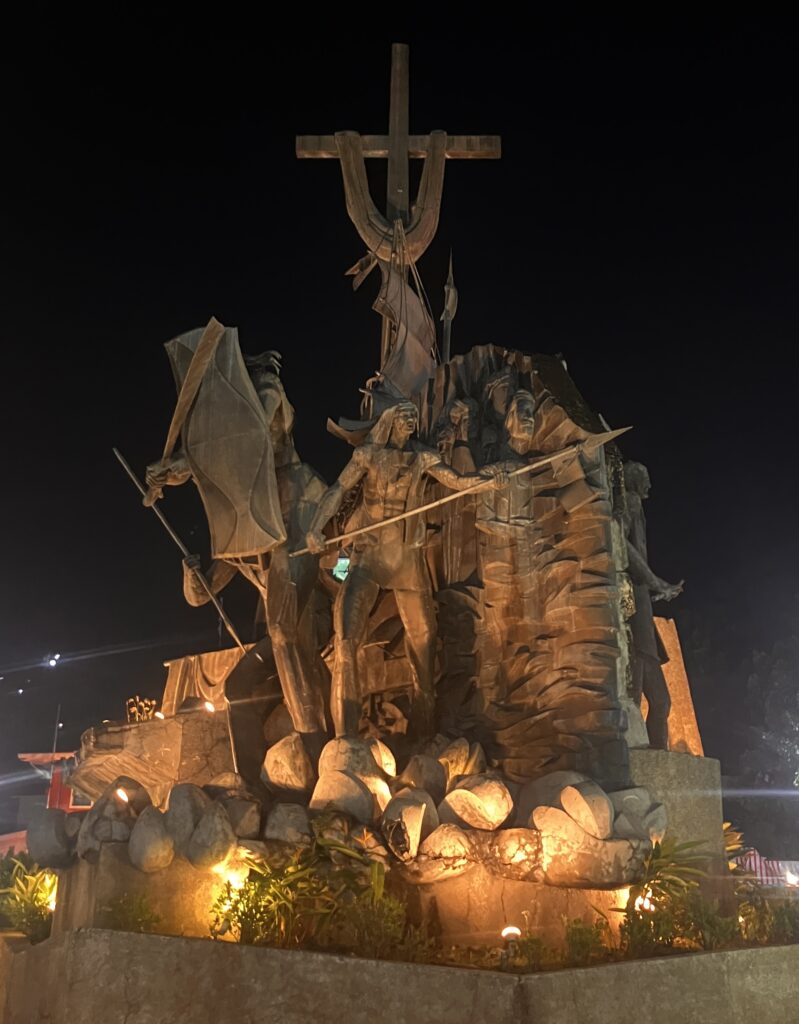
Magellan’s Cross Standing under a Spanish-styled pavilion is a large wooden cross that claims to be the one planted by famed explorer Ferdinand Magellan, yet some believe it is nothing but a replica.
According to the etched plaque at the base of the cross, it is actually made of more recent wood which covers the original crucifix planted in 1521. The story goes that upon his arrival upon the Philippine shores, Magellan ordered the cross set-up by his fellow explorers to mark Europe and Catholicism’s first contact with the islands. In the centuries following the first contact, the cross earned a reputation as a holy item and visitors looking to take away a souvenir or even a supernatural relic began chipping away at the cross until it began to fall apart completely. Before the cross disappeared the city of Cebu which had grown up around the site covered the aging original with all new wood so that it could last for centuries to come. While this is the largely accepted version of the story its also possible that is simply untrue.
It is also believed by some that Magellan’s Cross is nothing more than a recreation of the original which was stolen or destroyed not long after it was placed. No one has yet verified which tale is true, the cross and its ornate chapel remain a popular pilgrimage site for locals and tourists alike.
Santo Niño de Cebú Just before everything went horribly wrong and he wound up dead on the beach of Mactan Island, the Portuguese explorer Ferdinand Magellan presented this small sacred image, along with other religious gifts to the Cebu chieftain’s principal wife, Hara Amihan, to celebrate their realm’s conversion to Catholicism.
The elaborately dressed, carved wooden figure, believed to be of Belgian origin, traveled with Magellan on his voyage of discovery and conquest from Spain to the Philippines, making this the oldest Catholic object in the islands.
After Magellan’s death at the hands of angry locals in April 1521, the little image of Jesus disappeared until 1565, when it was rediscovered by returning Spaniards. Its present shrine is the Basilica Minore del Santo Niño, said to be built over the burnt house where it was found in a box. The basilica has burnt to the ground twice, and bombed during World War Ii, but the little Santo Niño has escaped ‘miraculously’ unscathed. As the basilica is the oldest church in the country, it is titled “Mother and Head” of all other Catholic houses of worship.
The Feast of the Santo Niño is held nationwide on the third Sunday in January, with liturgies, dancing, and processions. This mirrors the preceding nine-day long Sinulog Festival in Cebú City, where fervent religious dancing follows that of Hara Amihan – christened Queen “Juana” – who was overjoyed at receiving the charming image. The whole event is marked by contests, parades, music, and street parties. Once the celebrations end, the little image has one last public appearance: the Hubo. As prayers are chanted, it is bathed in scented water and dressed in plainer robes, returning to its bulletproof altar where devotees visit it until the next January.
Magellan’s death, meanwhile, is re-enacted locally every April.
Tasting:
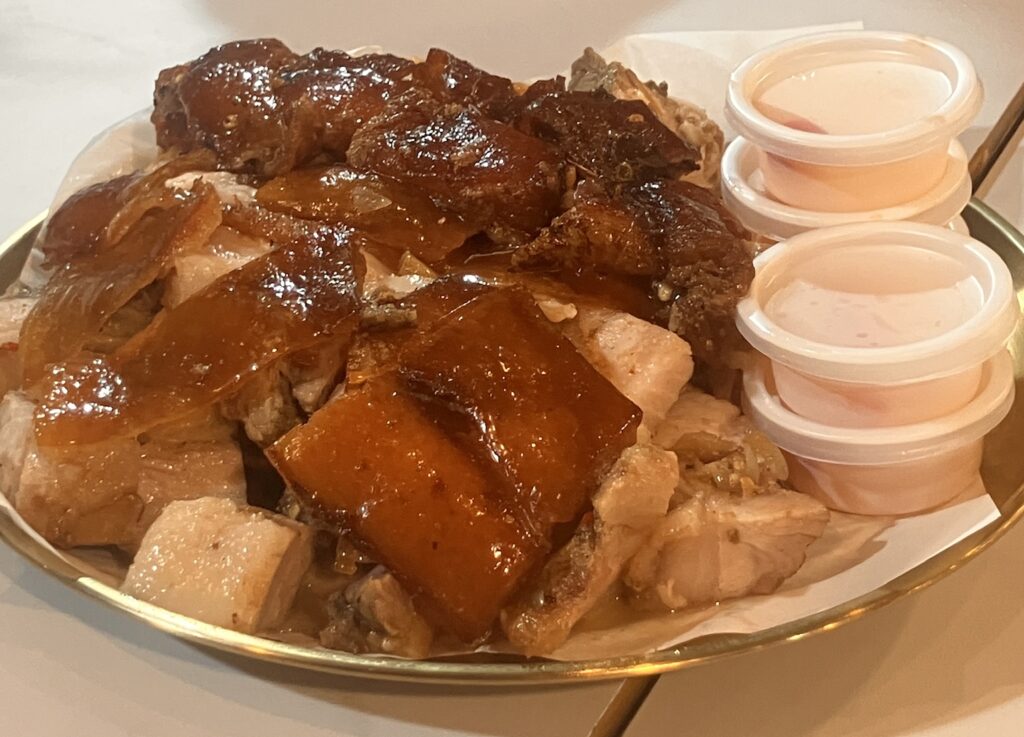
- Lechon (Cebu-style roast pork): Crisp skin, herb-salted meat. Typical dine-in prices: ₱395 per ¼-kilo, ₱990 per kilo at Rico’s Lechon; boxes extra. Branches in Cebu City and Mactan.
- Puso (hanging rice), ngohiong (Cebu spring roll), sutukil (grill/steam in Mactan), mango desserts.
Specialty Markets: Carbon Market for fruits, snacks, ukay-ukay, and street grub.
Irish Pubs (open daytime/afternoon):
- The Celtic Bar & Restaurant (Cebu IT Park, Garden Row) — full Irish-pub menu & pints; opens ~11:00am (check same-day hours). Taxi 30–45 min; ₱200–₱300.
Mexican Restaurants:
- La Lucha Taqueria (Mango Square) — tacos & burritos; 9:00am–11:00pm. Taxi 15–25 min; ₱150–₱220.
- Maya Mexican Restaurant (Crossroads Banilad) — modern Mexican; opens ~5:00pm (tight before 5:00pm all-aboard). Taxi 30–40 min.
Events:
- IBP Cebu Run 2025 — Sun, Oct 5 (AM), Robinsons Galleria Cebu (North Reclamation, ~1.7 km from Pier 1). Expect heavier traffic/partial closures around Robinsons/SM City area in the morning.
- Basilica Minore del Santo Niño — Sunday Masses — Multiple English/Cebuano services throughout the day; good cultural stop close to the pier (e.g., 8:30am & 11:30am English morning, 5:30pm & 7:00pm English evening; schedules subject to change).
Nightlife:
Live music & jazz-leaning
- Jazz n’ Bluz (Mabolo) – Long-running club with jazz/blues bands, dance floor, dinner-show vibe. ~15–25 min from Pier 1 (₱150–₱220 by taxi). Call ahead for the night’s set.
- The Social (Ayala Center / Park Avenue) – Big stage, nightly bands; dependable weekend energy. ~20–30 min (₱150–₱220).
- Ambiance Bar & Restaurant (IT Park, Garden Row) – Chic restobar with live acoustic band nightly from ~8 pm; open-air options. ~25–35 min (₱180–₱260).
Polished show bar / casino complex
- Axis Entertainment & Sports Bar (NUSTAR) – Nightly live performances, bands/DJs, cocktails; upscale setting. ~25–40 min (₱220–₱320).
Craft beer & casual hangs
- Turning Wheels Brewery (Mabolo) – Local taproom with rotating beers; typically opens mid-afternoon till late. ~15–25 min.
Irish-pub
- The Celtic Bar & Restaurant (IT Park, Garden Row) – Opened Aug 2025; sport screenings, late hours; good for a pint before/after live bands nearby. ~25–35 min.
Travel Tips:
- Spend your local currency! It’s our last port in the Philippines for a while.
- Cash vs. Card: Cards widely accepted in malls; bring cash for taxis, markets, small museums. ATMs at Pier 1 and nearby malls.
- Taxis: Insist on the meter; flag-down ₱50 after recalibration. If no fare matrix or meter isn’t used, politely alight. Apps (Grab/MiCab) are reliable.
- Jeepneys: Cheapest travel but route numbers can be confusing; keep small bills/coins. Minimum fares ₱13–₱15.
- Traffic & Timing: Allow extra buffer crossing the Mactan Channel bridges (midday congestion).
- Weather/Typhoon Notes: October can bring brief downpours—carry a light rain jacket; check ship advisories if a disturbance forms.
- Etiquette: Modest attire in churches; ask before photographing worshippers.
- Phrasing for Taxis: Say, “Pier One, Quezon Boulevard” or “Basilica del Santo Niño” (locals understand both).
What did I do?
I did a very Filipino thing.
I went to the mall.
We went to Chevy’s on the first day, which tasted like home.
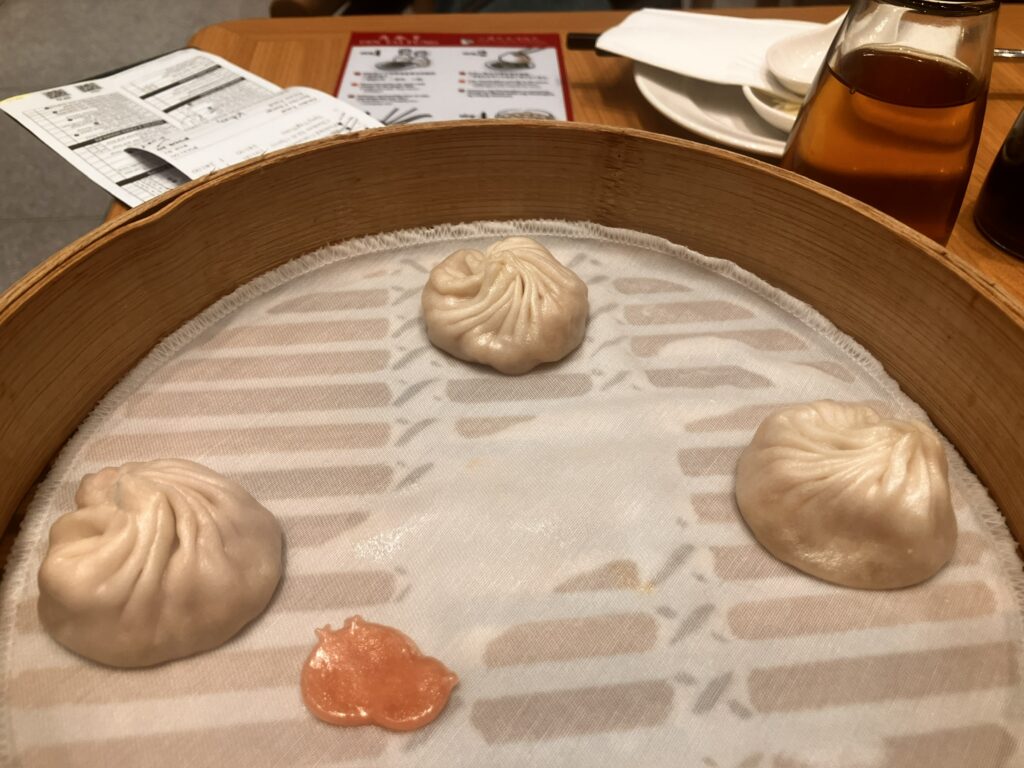
The second day, we went to a famous dumpling restaurant.
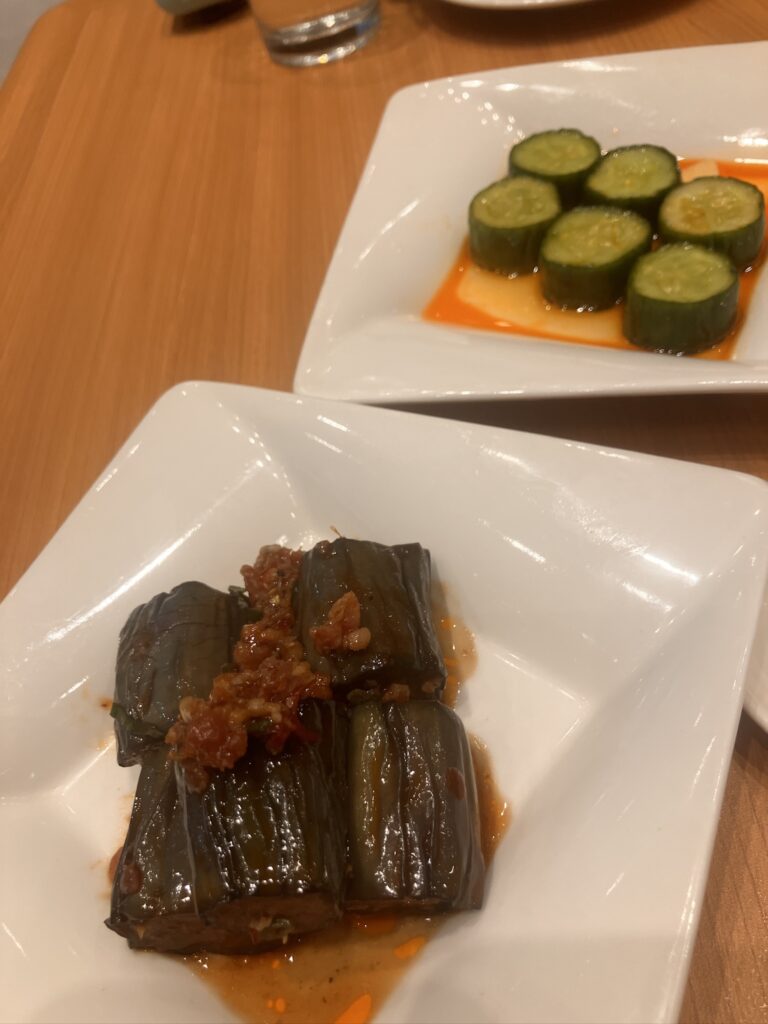
They had dessert dumplings that were so good we ordered another round.
I overheard one of the residents talking about a food tour.
I love food tours- especially in countries where I don’t know what to order.
I asked if I could invite myself along, and Mary Ann said yes!
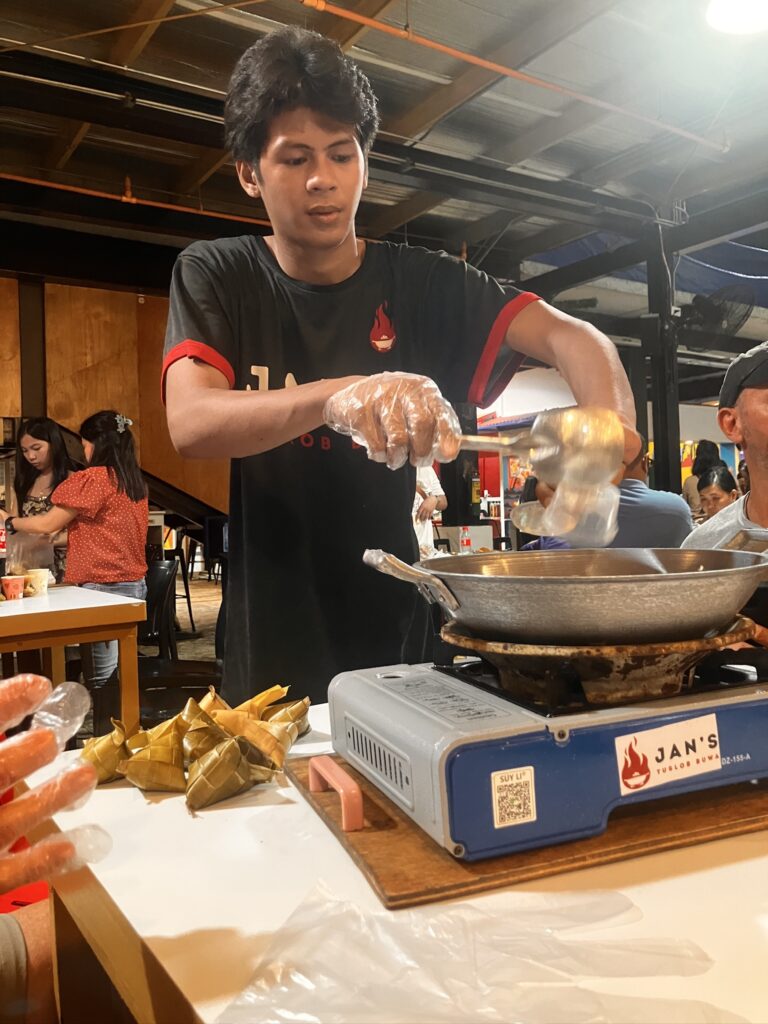
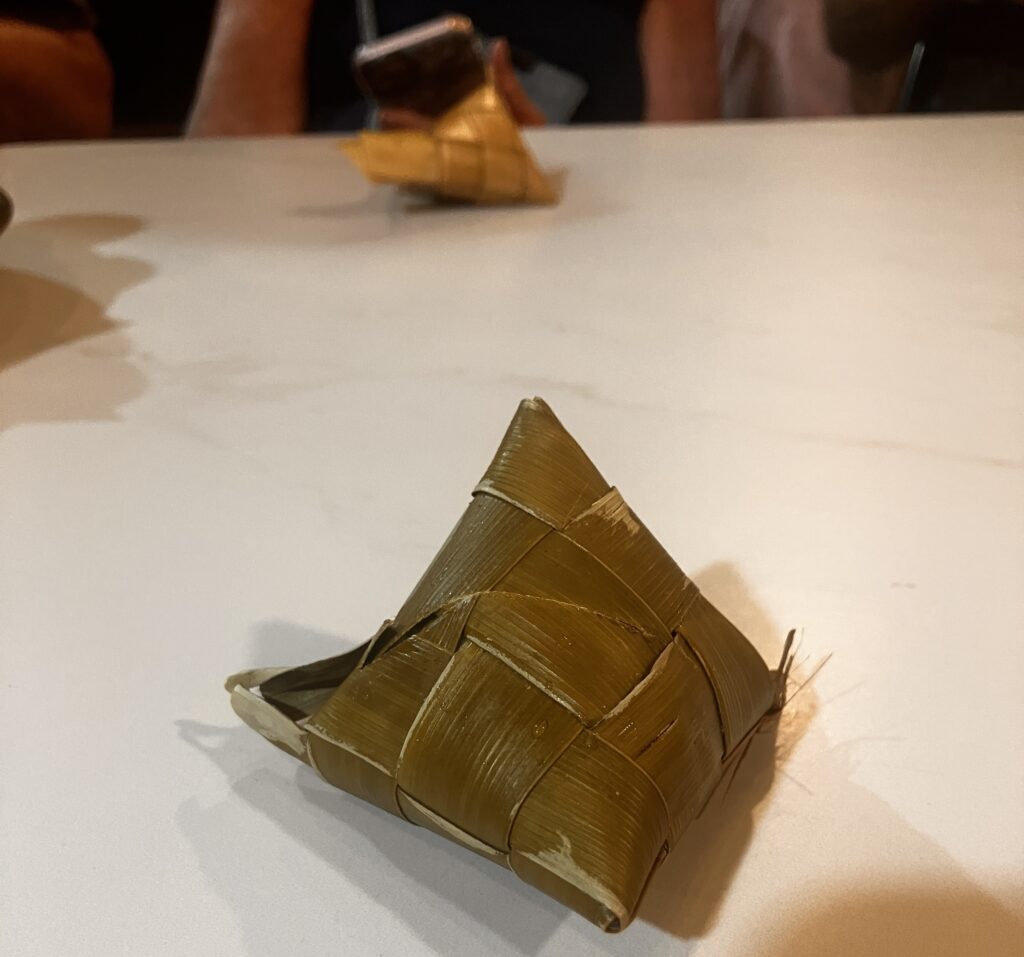
We started at a food hall where groups ordered this dish and cooked it right at the table.
The locals were preparing their own meals, but I think it was obvious that we had no idea what we were doing, so someone came over and cooked ours for us.
Next, we walked to a market.


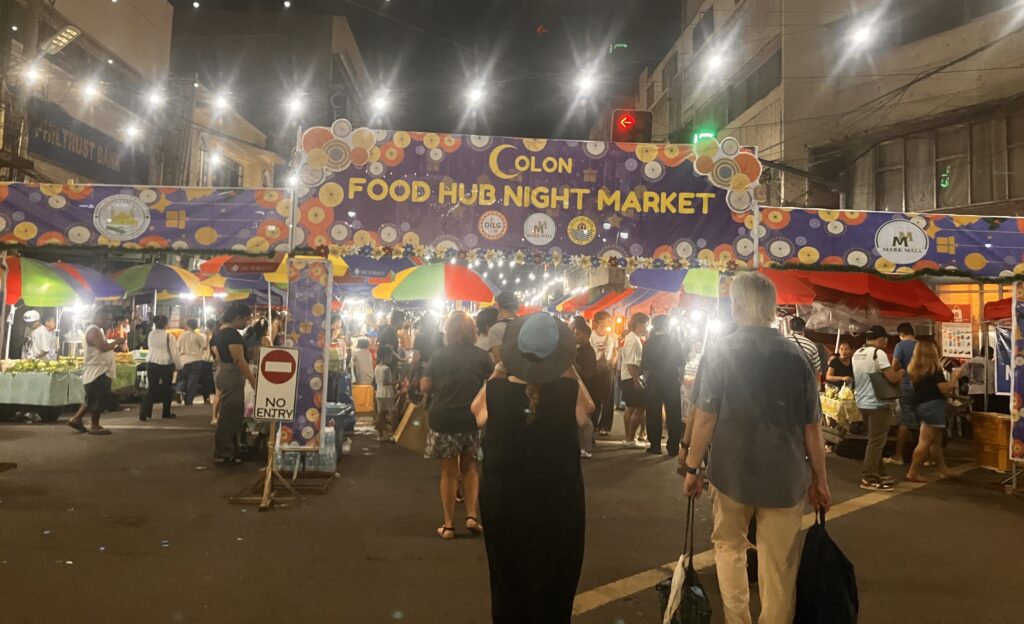
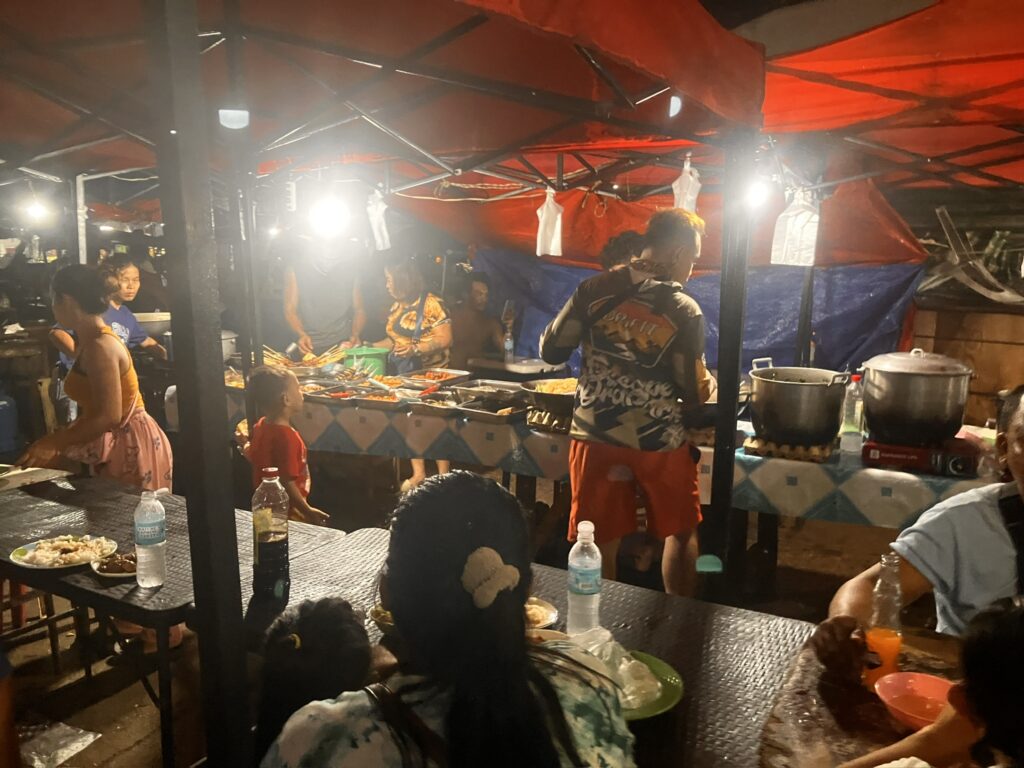
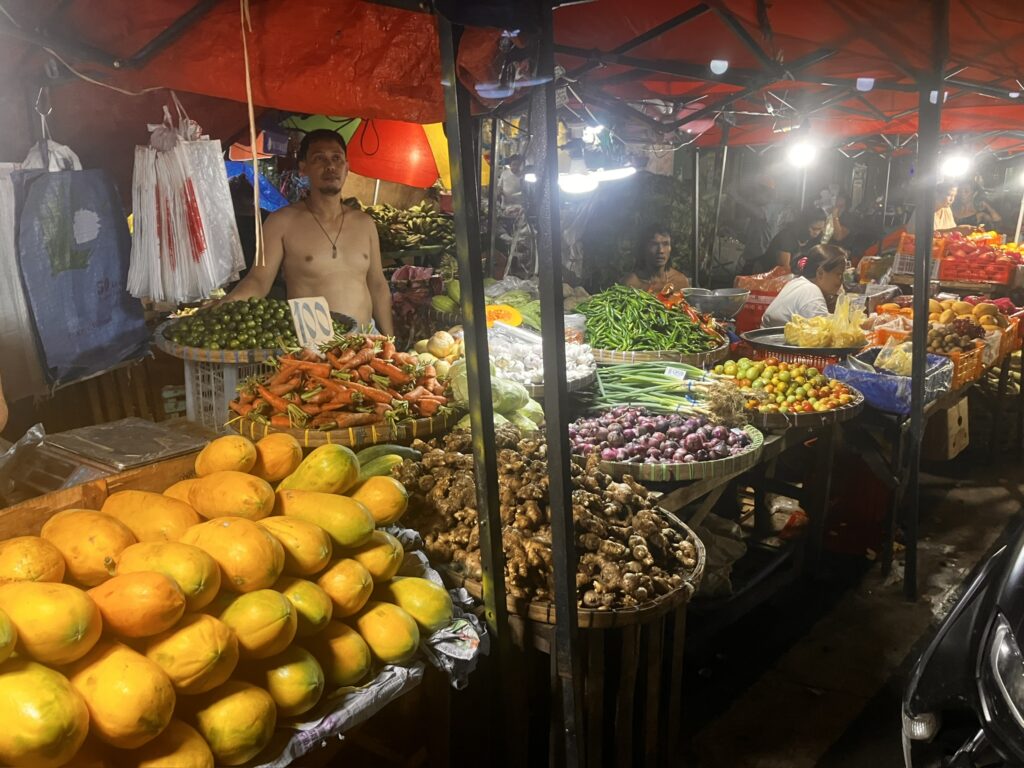
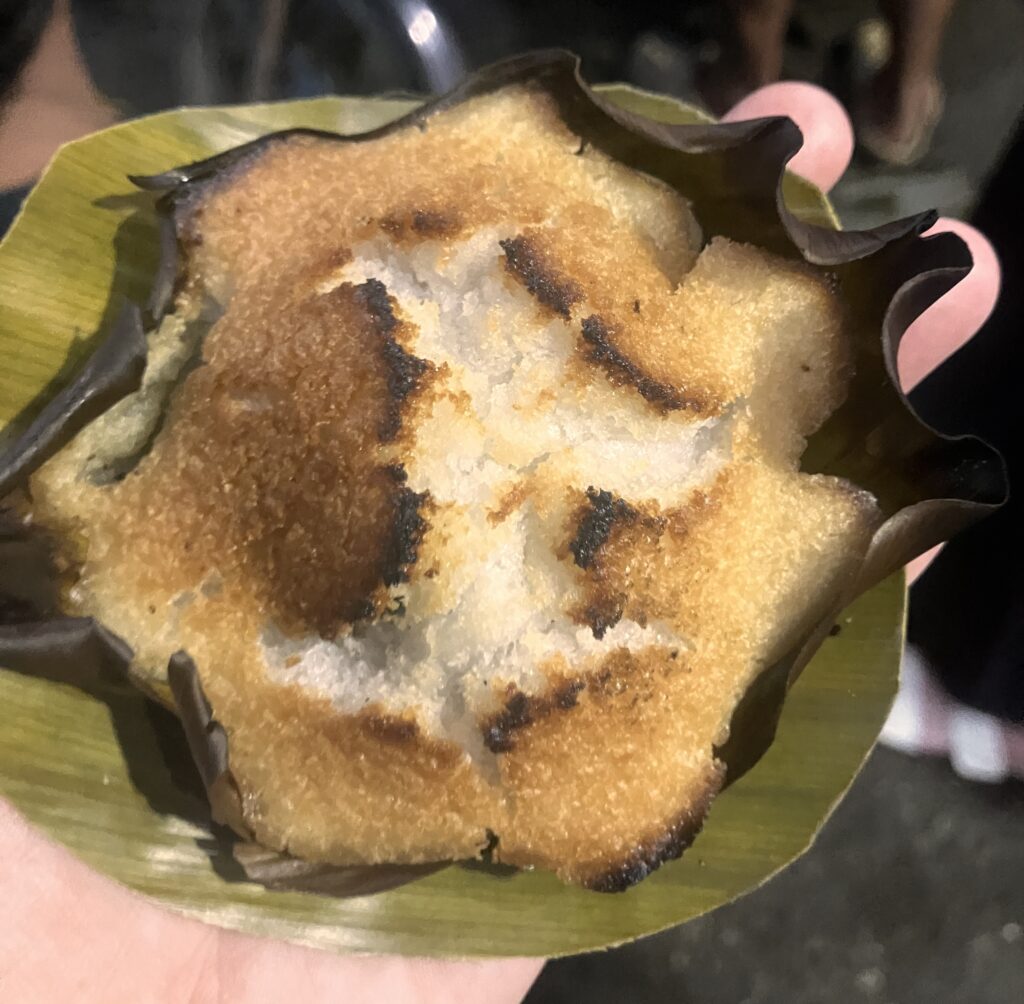
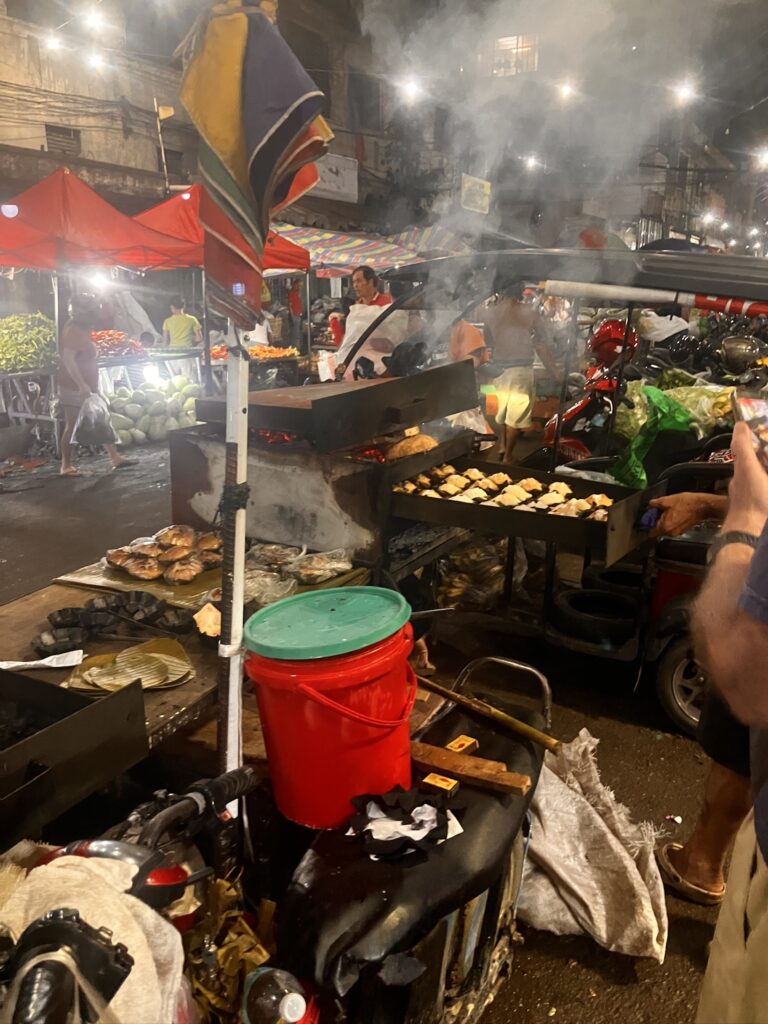
Our group made our way through the food market. Unlike other tours I’d been on, there didn’t seem to be a strict plan – if something caught our interest, our guide would get some for whoever wanted to taste it. There were so many things to try!
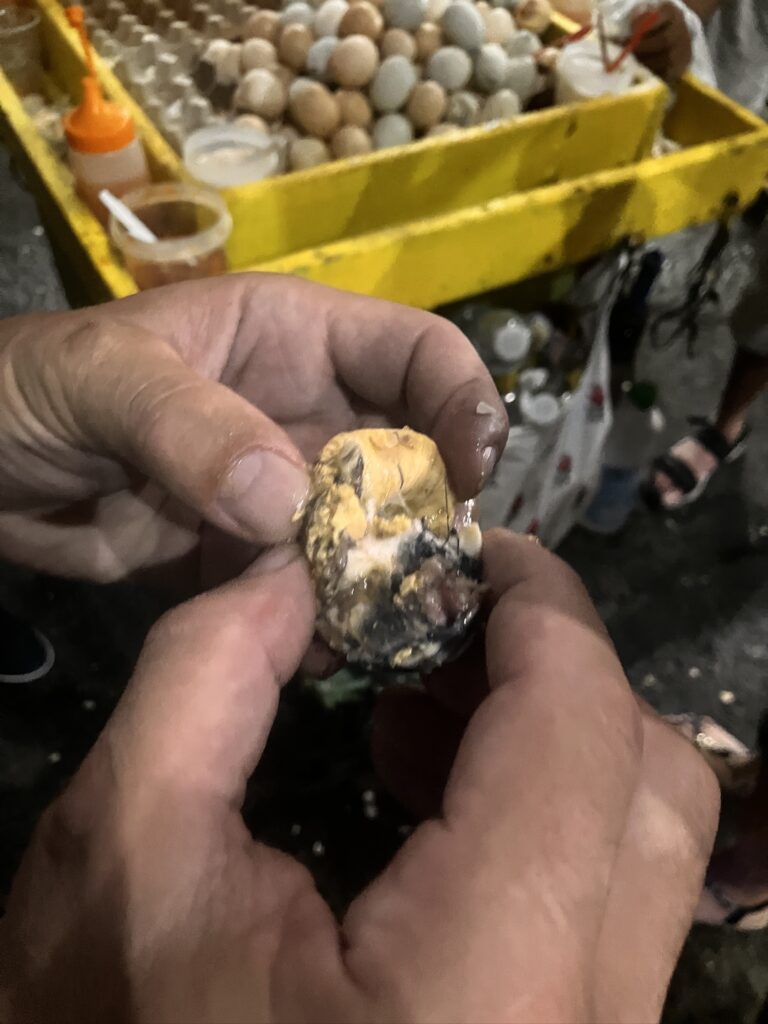
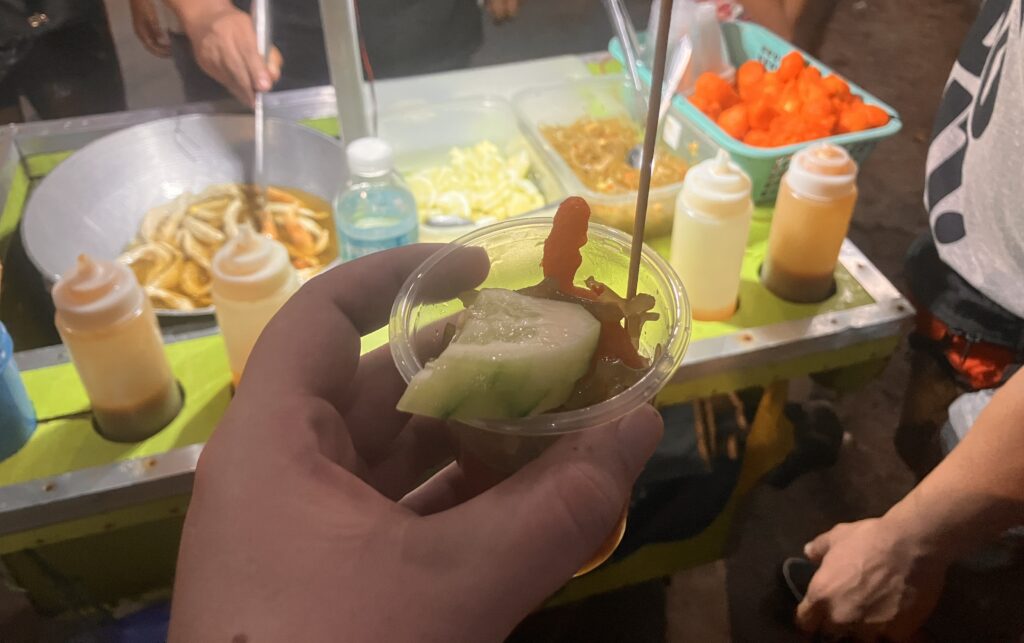
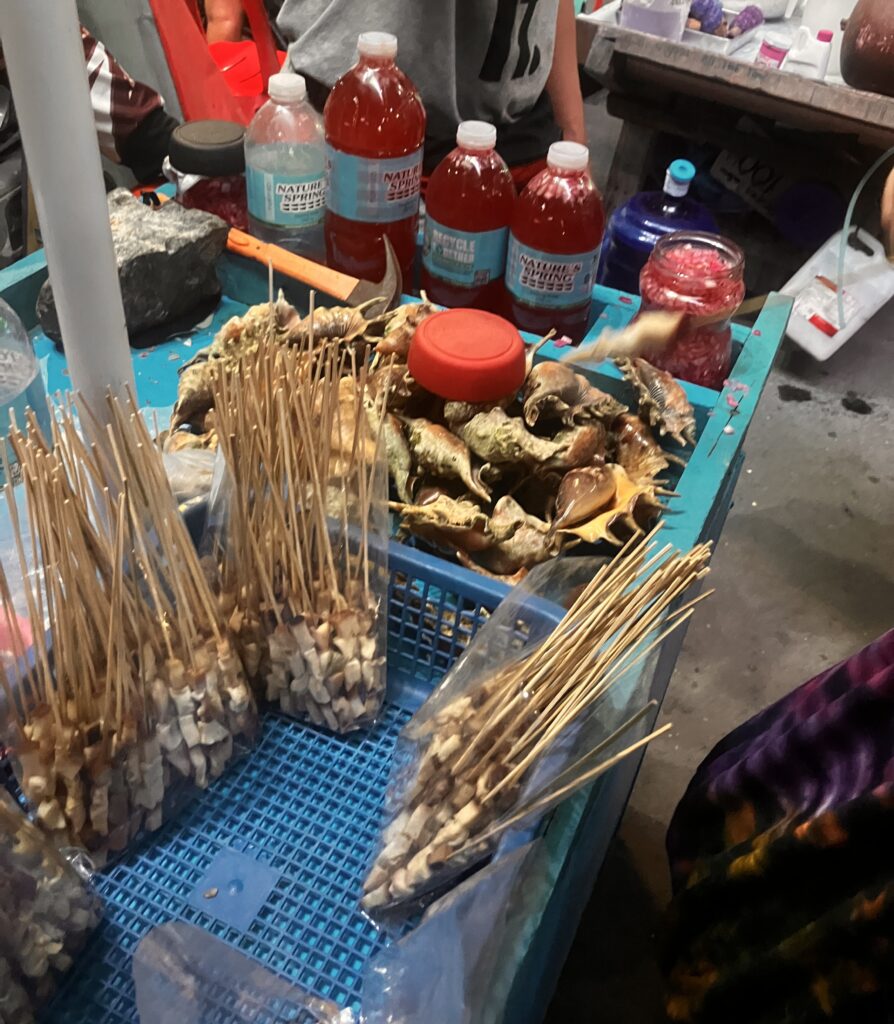
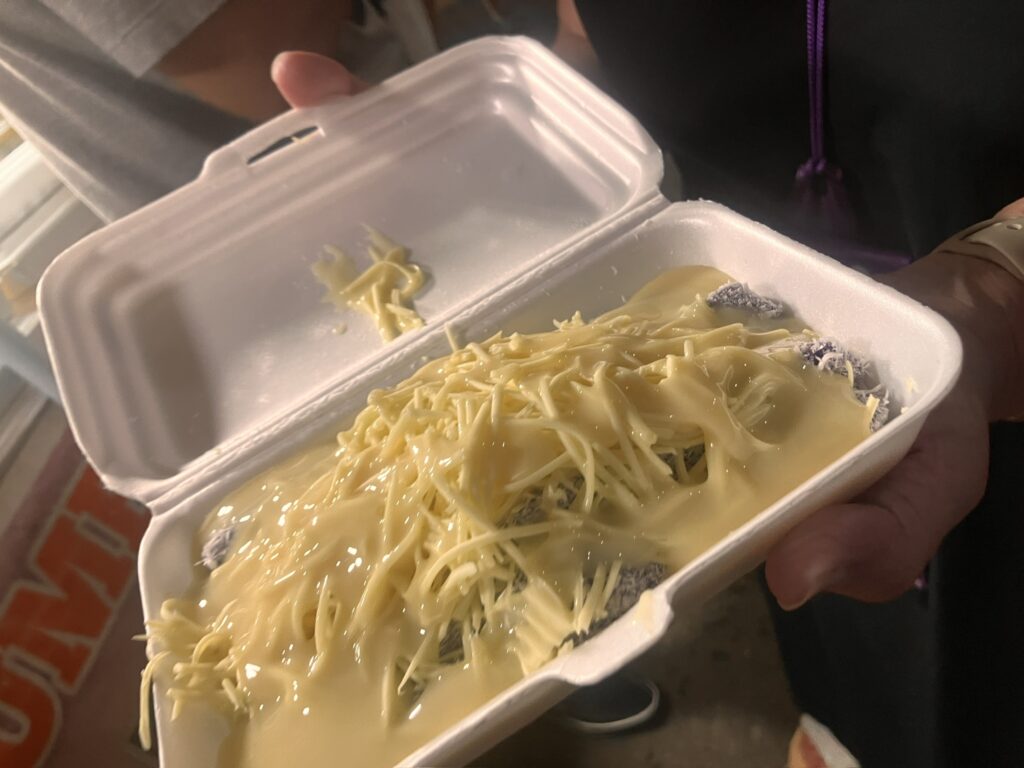
It was a fantastic tour. It wasn’t very expensive, and we ate so much that I was completely stuffed by the end of the night – even though I still wanted to try more things!
I can’t remember everything we sampled now, but I always love having a local guide me toward the foods that locals actually eat.