My views do not necessarily reflect the views of my employer.
November 2, 2025
Darwin, Australia
Darwin (Larrakia: Garramilla) is Australia’s northernmost capital and gateway to the Top End, home to ~140,000 people in the Greater Darwin area. Expect a tropical waterfront city shaped by Indigenous Larrakia culture, WWII history, and a rebirth after Cyclone Tracy (1974). Darwin also serves as the jumping-off point to UNESCO World Heritage–listed Kakadu National Park, famed for its living Aboriginal culture and wetlands. Stroll the redeveloped Waterfront, then head to sunsets at Mindil or the mangrove-lined foreshore—this is the relaxed, outdoorsy Australia with a distinctly Asian-Pacific flavor.
History:
For tens of thousands of years, the Larrakia have cared for this sea country, trading along the coast and inland. Their presence underpins Darwin’s identity today. Europeans arrived in the 19th century; a settlement named Palmerston (later Darwin) took root as a telegraph and pearling outpost. WWII brought a shock: on 19 February 1942, Japanese aircraft launched the largest-ever attack on Australia, the Bombing of Darwin, sinking ships and destroying aircraft with hundreds killed; raids continued into 1943. Sites and museums around the harbor commemorate this turning point. In 1974, Cyclone Tracy devastated Darwin—about 70–80% of buildings were destroyed and 66 people died—prompting one of Australia’s biggest airlifts and a total rebuild to cyclone code. The city’s modern look, defense presence, and multicultural population stem from that reconstruction. Today Darwin blends Larrakia culture, Southeast Asian connections, defense logistics, and eco-tourism as a launchpad to Kakadu, Litchfield, and the Tiwi Islands.
Itinerary:
Arrival: Sunday November 2, 10:00am (please allow time for port clearance)
Departure: Monday November 3, All aboard: 5:00pm Sail away: 6:00pm
Weather
- Average High/Low (Nov): ~33°C/25°C (91–92°F/77°F). Humidity high; afternoon storms possible (“build-up” season).
- Climate: Tropical monsoon. Wet season typically Nov–Apr with high humidity, lightning, and heavy downpours; dry season May–Oct is sunny and mild.
- What to Wear: Light, breathable clothing; hat, sunglasses, reef-safe sunscreen, and a small umbrella/poncho. Grippy sandals or breathable walking shoes; carry water. (If swimming at natural beaches during the Wet, heed local advice due to stingers/crocodiles; the Wave Lagoon is the safe option.)
Near the Pier:
Cruise Ship Dock: Fort Hill Wharf (adjacent to Stokes Hill & Waterfront Precinct)
Address: 1 Anchorage Court, Darwin City NT 0800, Australia (waterfront area)
Address in local language: 1 Anchorage Court, Darwin City NT 0800, Australia
Nearby Essentials
- Pharmacy: Blooms The Chemist – Darwin Galleria, 5–7 min drive / ~20–25 min walk, CBD.
- ATM: ATMs are available within the Waterfront Precinct (Kitchener Dr) and at Smith Street Mall (CBD).
- Grocery/Snacks: Woolworths Darwin City, 2 km (~7–10 min by car).
- Nearest Church: St Mary Star of the Sea Cathedral, Sunday Mass typically 7:30 am, 9:30 am, 6:00 pm(confirm locally). ~6–8 min drive.
- Nearest Golf: Gardens Park Golf Links (par-3/9-hole), near Botanic Gardens; ~10–12 min drive. Darwin Golf Club (Marrara) ~15–20 min.
- Nearest Shopping (mall/market): Smith Street Mall (pedestrian shopping spine), ~1.2 mi/2 km from wharf.
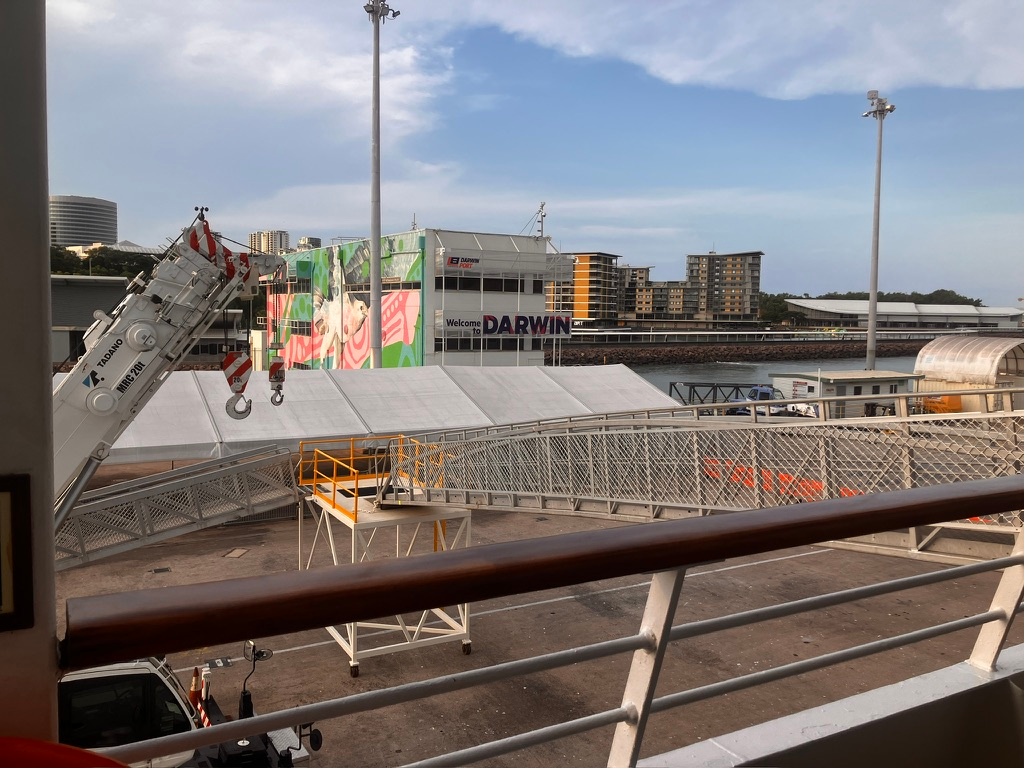
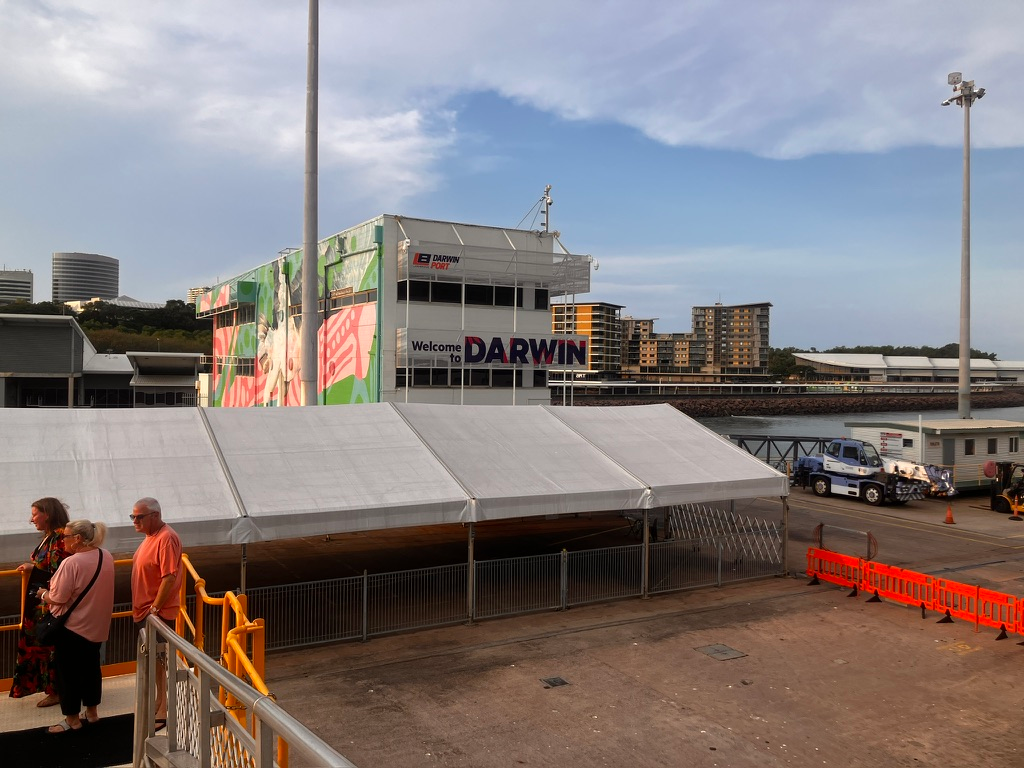
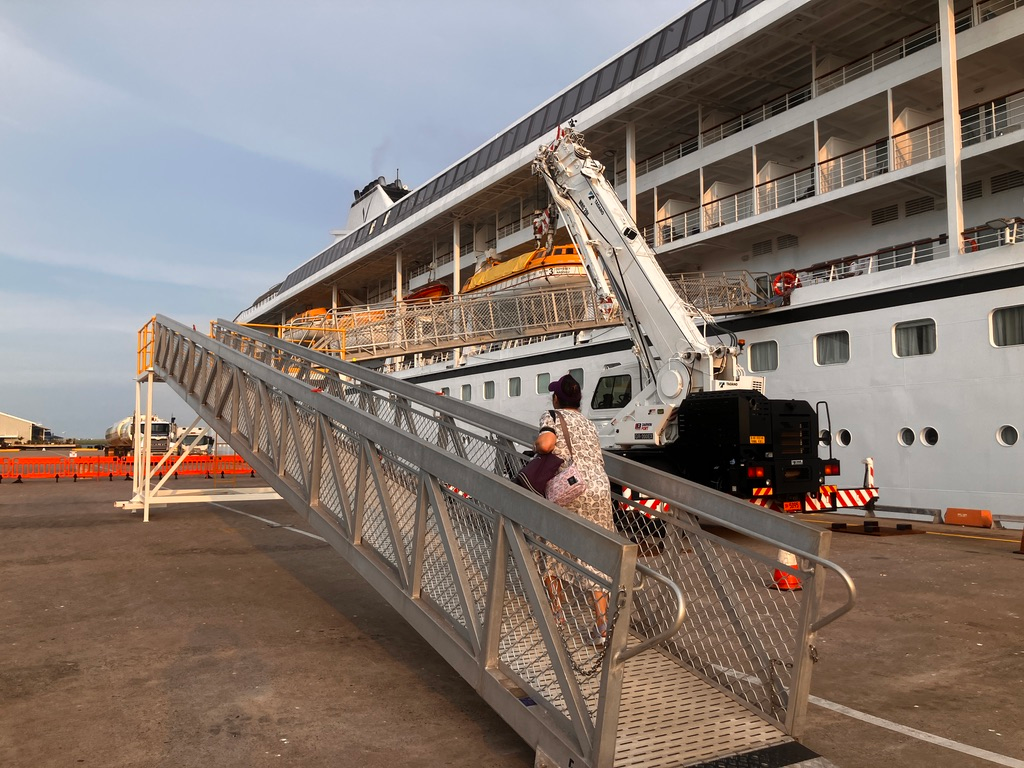
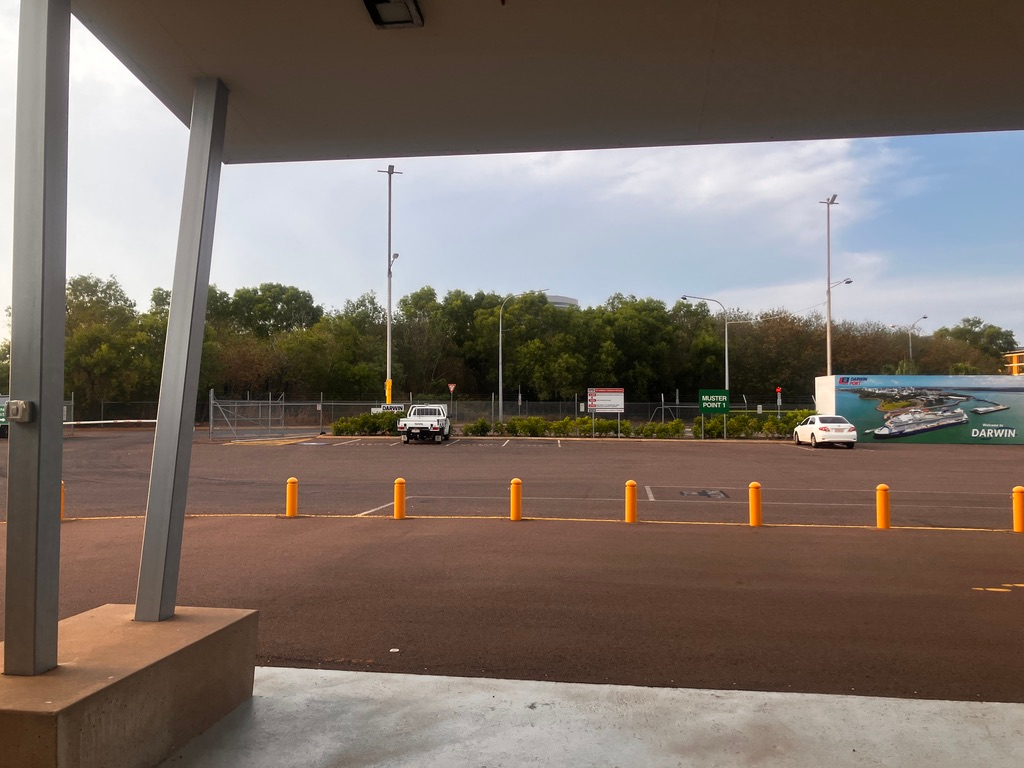
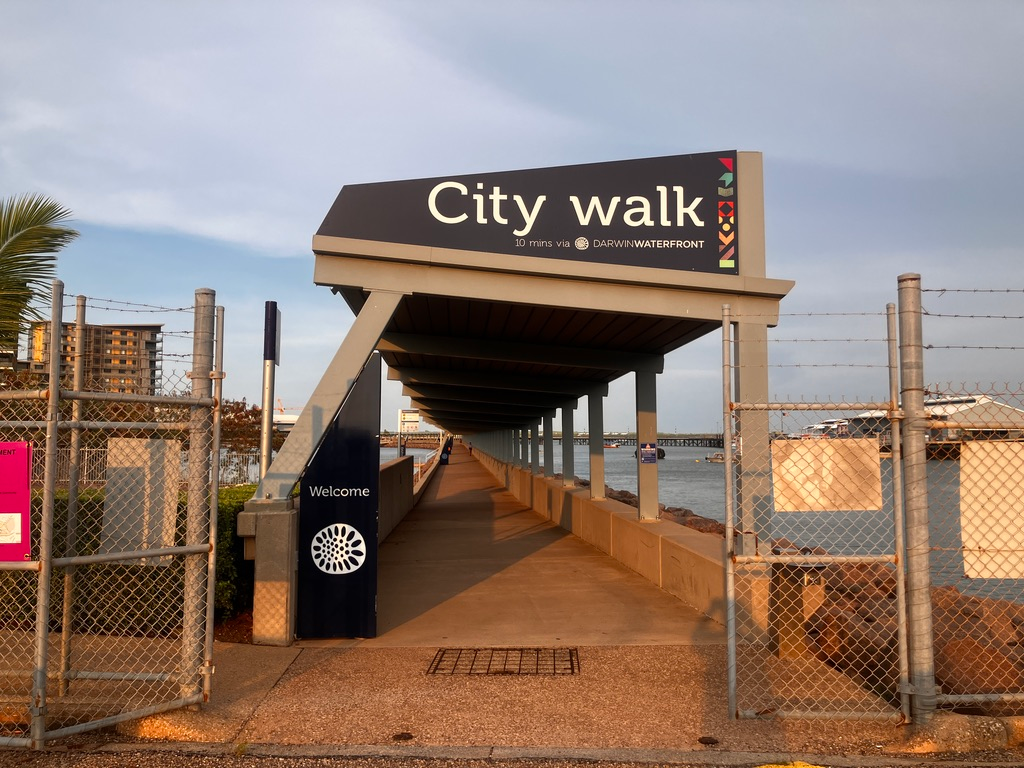
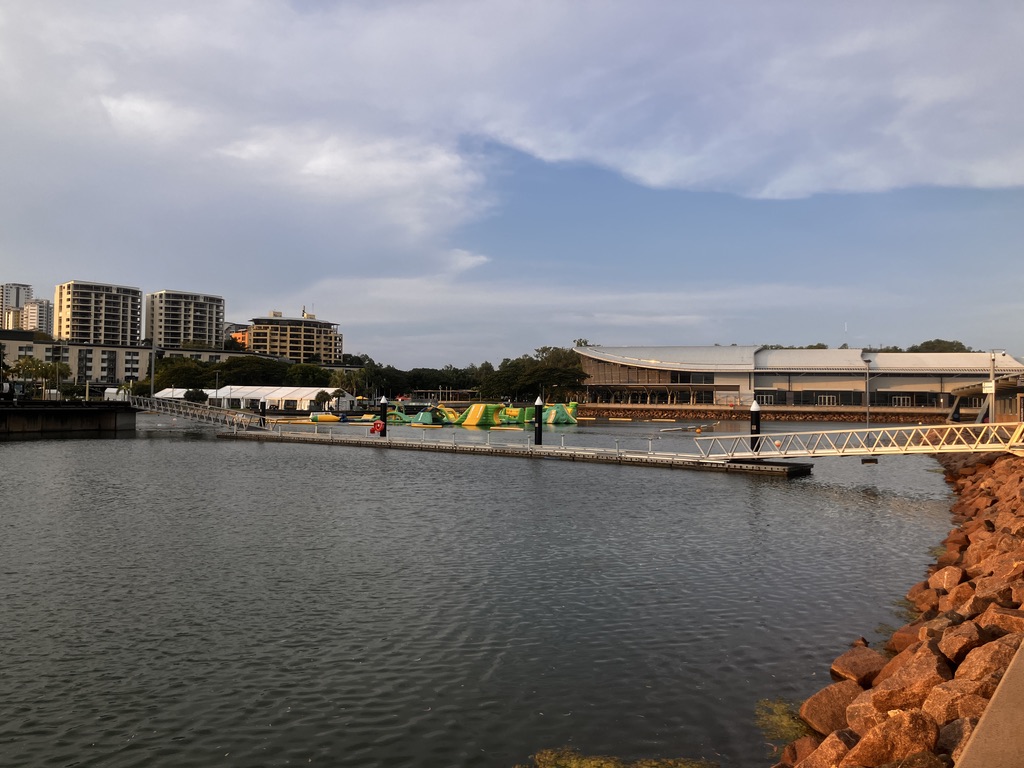
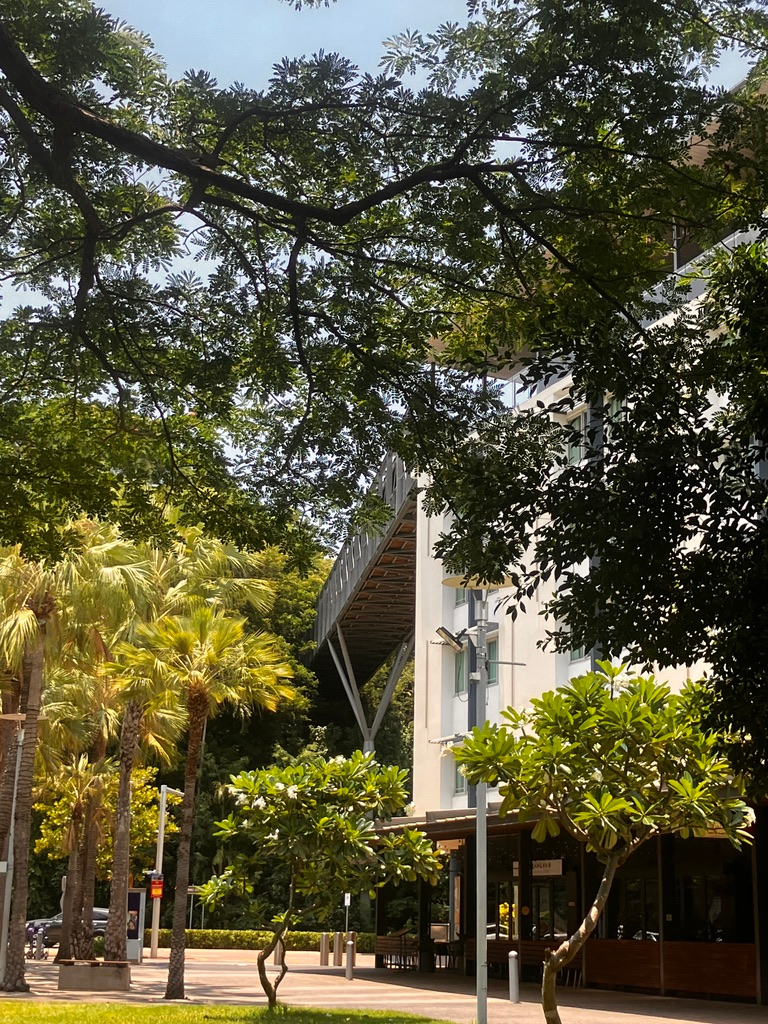
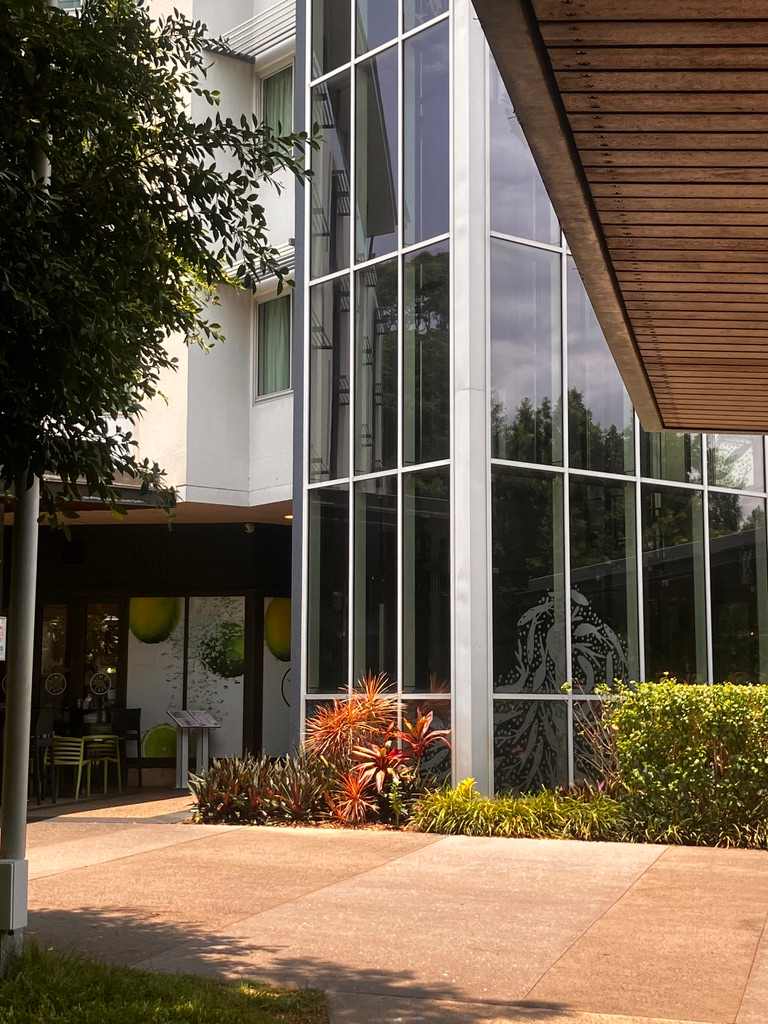
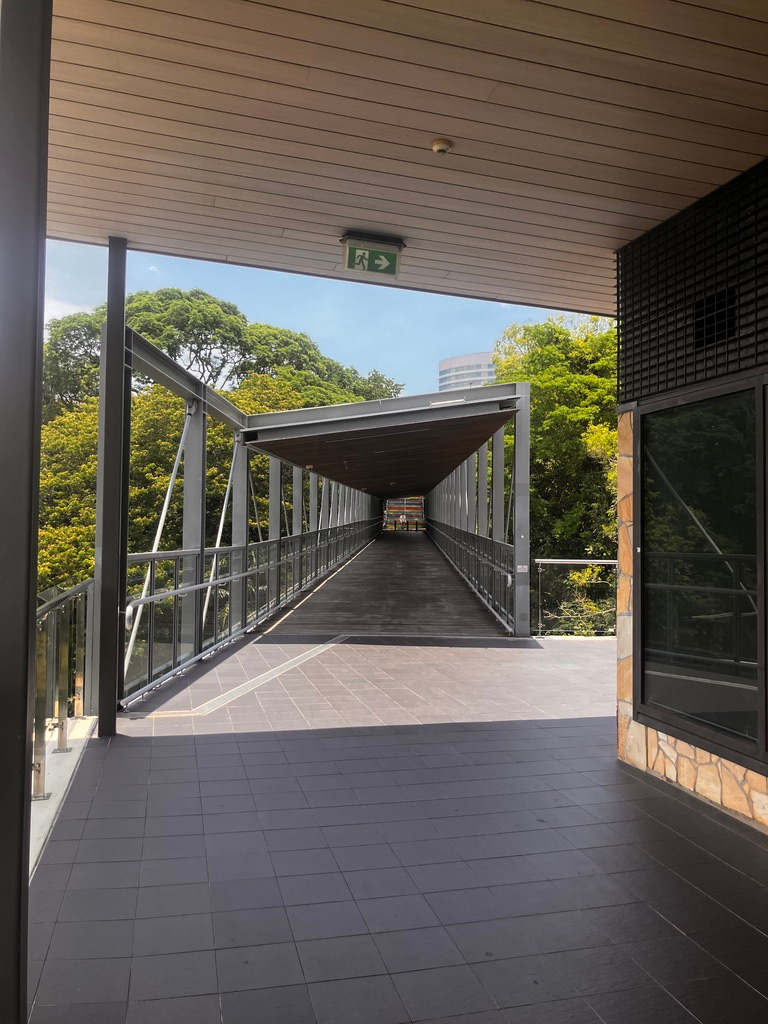
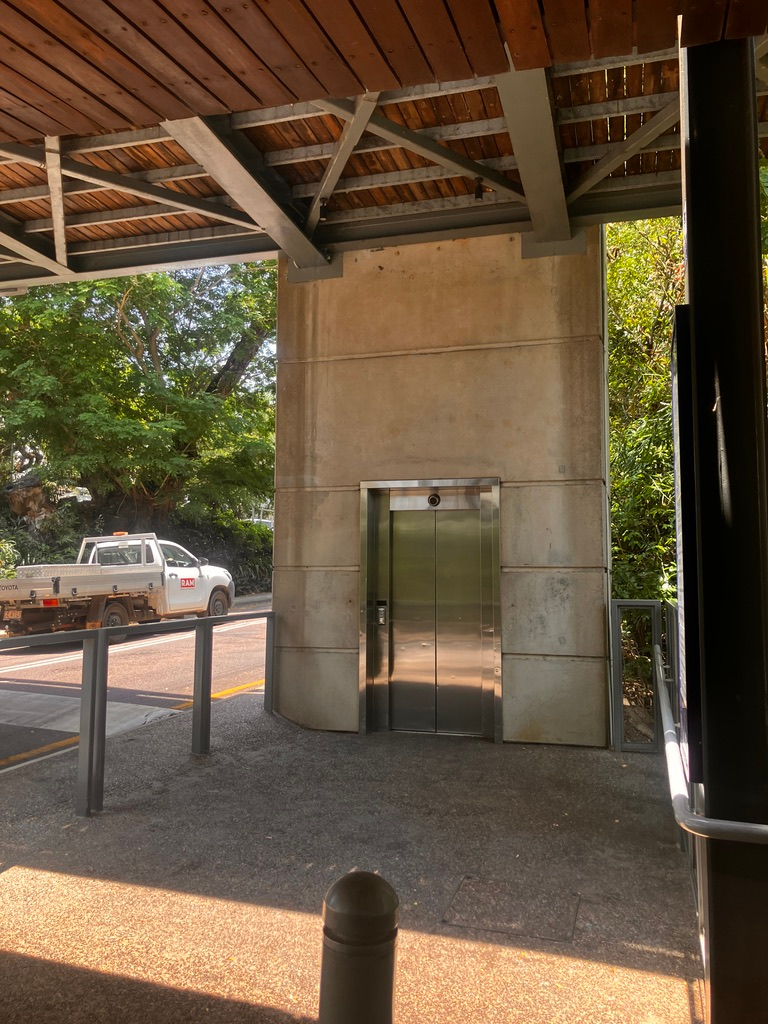
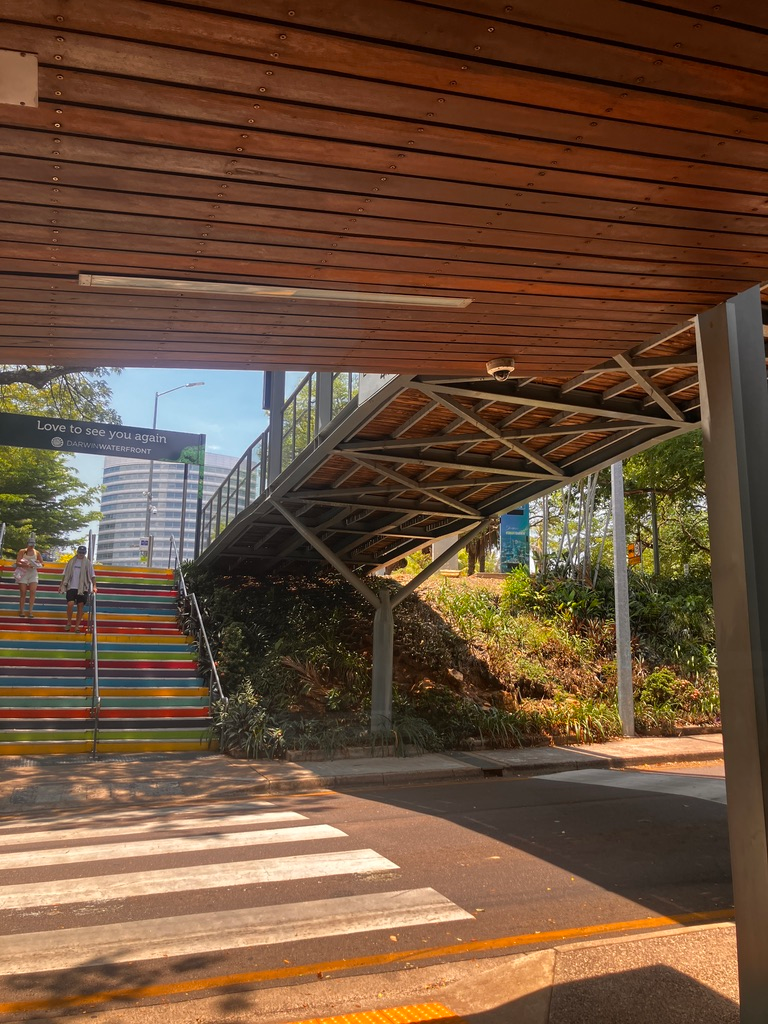
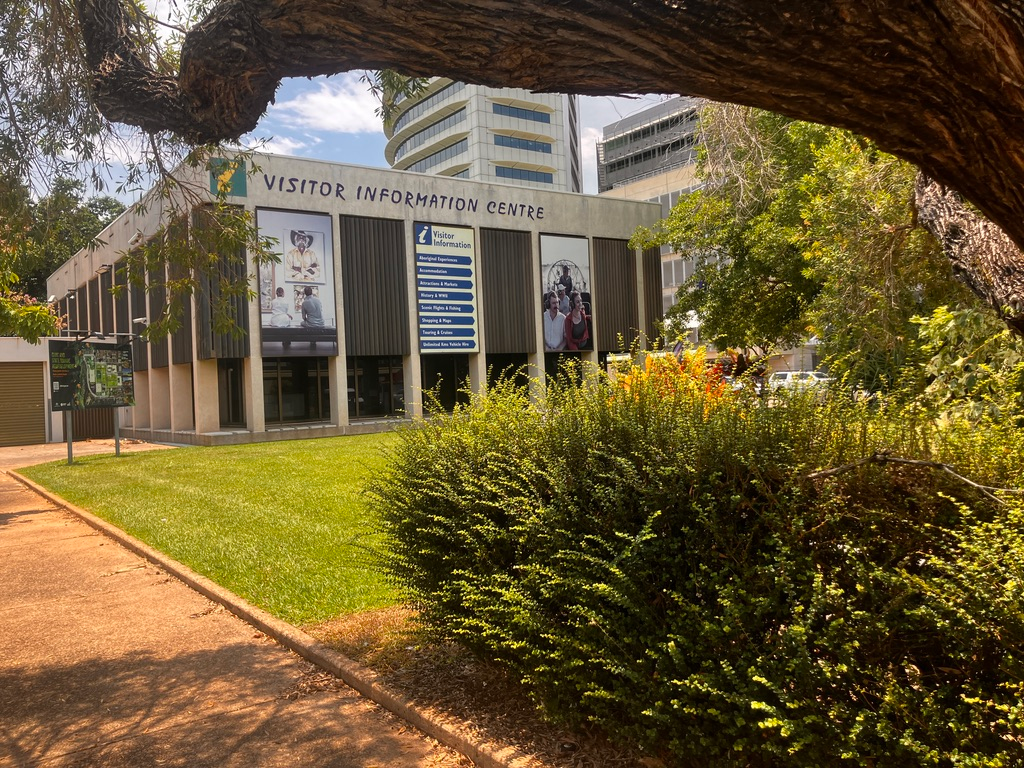
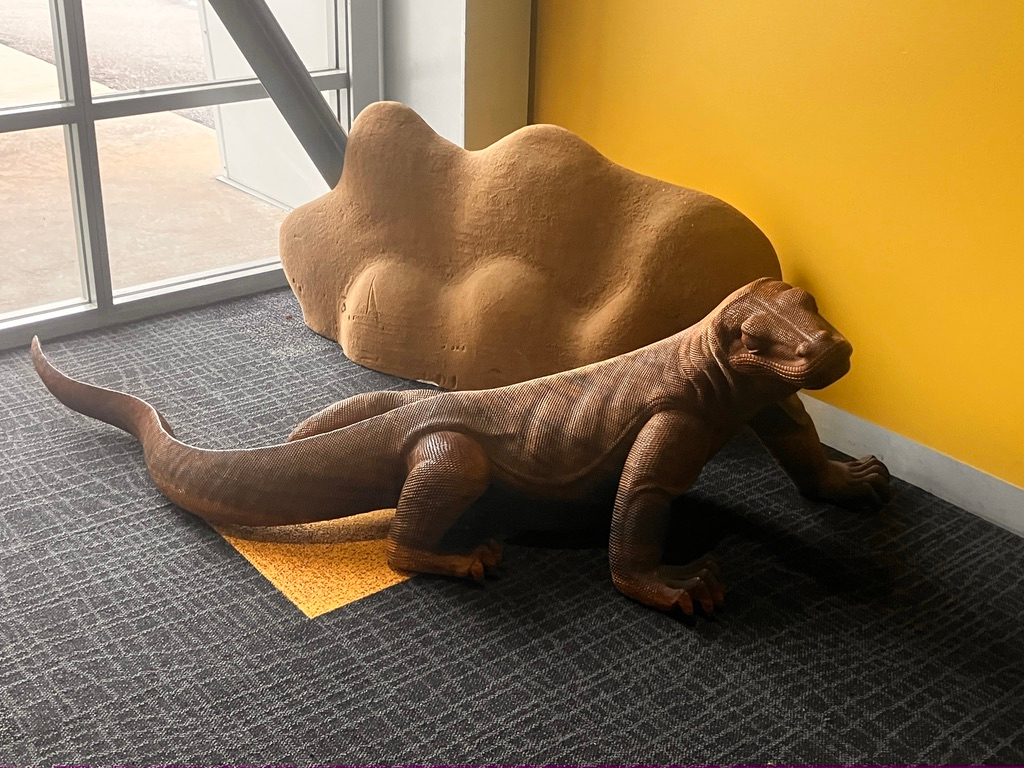
When we arrived, as an excellent Destination Manager, I took a bunch of pictures for my next presentation of our surroundings:
Getting Around:
- 🚶 Walking: It’s a pleasant, flat 5–10 min walk to the Waterfront dining and Wave Lagoon; CBD/Smith St Mall is 20–25 min on foot.
- 🚌 Public Transit: FREE buses across the NT (no fare) since 1 July 2025. The Waterfront/CBD is on main routes; typical daytime frequencies 15–30 min. Use the Journey Planner/Darwin bus timetables.
- 🚖 Taxis/Rideshare: Taxis rank in the Waterfront & CBD; Uber also operates. Wharf → CBD ~5–10 min, ~A$12–20 depending on traffic.
- 🚴 Bike/E-scooters: Shared e-scooters/e-bikes operate in Darwin (CBD/Waterfront). Check in-app parking rules and helmet requirements.
- 🚗 Car Rentals: Airport and downtown agencies; many will deliver to Waterfront on request.
- Hop-On Hop-Off: Big Bus Darwin serves the cruise terminal stop when operating; typically does not run on Sundays (Mar–Nov). First bus ~9:00 am, last ~4:15 pm on operating days; full loop 60–90 min. Verify service on the day.
Witnessing:
Darwin Waterfront & Wave Lagoon — Palms, lawns, and sea-breeze promenades unfurl right below the ship, with cafés, gelato stands, and shady benches for people-watching. The salt-chlorinated Wave Lagoon pulses through gentle swells and boogie-board sets on a timed cycle, so even non-swimmers can cool off without worrying about stingers or crocs. Lifeguards, showers, and lockers keep it hassle-free, and the adjacent swimming “Recreation Lagoon” and splash areas give kids room to play while adults linger over iced coffee or a cold beer.
- Practical: A$8 adults / A$6 under-15 / Family A$25; open 10:00–18:00. 5–10 min walk from the ship. Bring a hat, water, and a quick-dry shirt—the “build-up” heat is real, but shade sails and mist fans help.
✨ Tip: Pop out at midday for a dip, then retreat to an indoor museum during the hottest hour.
Royal Flying Doctor Service (RFDS) Darwin Tourist Facility + Bombing of Darwin Experience — Two stories of the Top End under one roof: the RFDS’ lifesaving outback aviation (then and now) and an immersive retelling of 19 Feb 1942, when Japanese raids hit Darwin’s harbor. Expect engaging displays, short films, and Virtual Reality that places you on the wharf during the attack and in the cabin with RFDS crews. It’s compact, air-conditioned, and ideal for all ages—deeply informative without being overwhelming.
- Practical: A$30 adult; Oct–Mar hours often 9:00–16:00 (last entry 15:00). 5–7 min walk from the ship. Allow 60–90 min.
✨ Tip: Do this first if storms threaten—nearly everything is indoors, and you’ll walk out with powerful context for the harbor views outside.
Crocosaurus Cove (Mitchell St) — A downtown reptile showcase where the Top End’s salties loom just a pane away. Boardwalks circle massive croc pools, smaller exhibits introduce freshwater species and reptiles, and daily ranger talks demystify croc behavior. Brave souls can book the “Cage of Death” for a close-up, while everyone else enjoys feeding shows, photo ops with (small) scaly ambassadors, and excellent air-con between outdoor moments.
- Practical: A$40 adult (general admission); daily 9:00–18:00 (last entry 17:00). 7–10 min drive / ~25 min walk from the ship. Plan 60–90 min.
✨ Tip: Check the feeding/keeper-talk timetable at entry and build your visit around it—those sessions are the highlight.
Learning:
Museum & Art Gallery of the Northern Territory (MAGNT) — Darwin’s flagship museum brings the Top End to life: step into the darkened Cyclone Tracy gallery to hear winds roar and see everyday objects twisted by the 1974 storm; wander past pearl-luggers, Aboriginal bark paintings, ceremonial poles, and contemporary works that speak to Larrakia Country and beyond. Don’t miss “Sweetheart,” the legendary 5-meter saltwater crocodile, now preserved in all his hulking glory. Light, airy galleries and waterfront breezes make this an easy, restorative stop between outdoor sights.
- Practical: Free general entry. ~8–10 min by car from Fort Hill Wharf (HOHO stop when operating). Allow 60–90 min.
✨ Tip: The Cyclone Tracy sound booth is intense—warn sensitive ears and step out if needed; afterward, the adjacent gallery contextualizes the city’s rebuild.
George Brown Darwin Botanic Gardens & Mindil Precinct — A lush, sea-breeze garden where the Top End’s plant worlds meet: wander from coastal monsoon forest (thick with pandanus and paperbarks) into airy palm lawns, past the baobab grove with its bottle-shaped giants, and through orchid, ginger, and bromeliad beds buzzing with butterflies. The shady Rainforest Gully offers a cool, ferny pause; open lawns catch ocean air and kookaburra calls. Benches, boardwalks, and a small café make it an easy, restorative stop between city sights, and you’re a stone’s throw from Mindil Beach—famous for sunset color and its seasonal night markets (typically Dry season).
- Practical: Free entry; 10–12 min drive from the cruise wharf. Good paths but they can be steamy and slick after rain; bring water and wear grippy shoes. Allow 45–90 min. Restrooms and a café on site; plenty of shade but limited rain cover.
✨ Tip: Go early or late for cooler temps and prolific birdlife (rainbow bee-eaters, honeyeaters). If timing suits, finish at Mindil Beach for sunset—an easy add-on from the gardens.
Discovery:
Aquascene (Doctors Gully) Fish Feeding — A Darwin original where the tide brings the fish to you. At selected high tides, shoals of milkfish, mullet, bream, batfish—and the odd ray—glide over the shallow sand to nibble bread from your hand. It feels part wildlife encounter, part living classroom: clear water, gentle swirls at your ankles, kids squealing as silver flashes dart between toes. Terraced platforms and a small boardwalk keep things easy for non-waders, while staff share quick facts about tides and Top End marine life. Great photos, better memories—especially for families.
- Practical: 10 min drive from Fort Hill/Stokes Hill Wharves (taxi/ride-share typically A$12–20). Entry fee applies; sessions run only at set high-tide windows (arrive 15 min early). Expect 45–60 min on site. Basic shade, seating, and restrooms available; some slopes/steps. Wear shorts and secure sandals/reef shoes if wading; bring a small towel and hand sanitizer.
✨ Tip: Check the day’s tide schedule before you go (Visitor Information Centre or venue feed). For the calmest water and best visibility, aim for a mid-to-late rising tide—and keep cameras/wallets in a zip pocket or dry bag.
Sunset Cruises
- Charles Darwin Sunset Cruise (Darwin Harbour Cruises) – Large, air-conditioned catamaran with top-deck views; 2–2.5 hr sunset cruise, with commentary and bar on board. Dinner/buffet options on select departures. Departs Stokes Hill Wharf (5–10 min walk from the ship).
- Spirit of Darwin – Sunset Dinner Cruise – 3-hour harbour sunset with a relaxed vibe (beanbags on the bow are a thing). Dinner and non-dinner options; family-run.
- Cape Adieu Sunset Dinner Cruise – Smaller vessel (ketch) doing intimate sunset dinners from Stokes Hill Wharf; typically ~2.5–3 hrs.
- Sail Darwin “Champagne Sunset Sail” – 3-hour sailing on a 50-ft catamaran; includes food and a glass of bubbly—great for photos. Departs Cullen Bay (short taxi from the wharf).
Hiking
- East Point Reserve Coastal Walk — shady WWII sites + sea views. 15–20 min drive; easy.
- Charles Darwin National Park — boardwalks, WWII bunkers, city skyline lookouts. 10–12 min drive; easy–moderate.
- Nightcliff Foreshore Path — long, breezy seafront path with cafes. 20 min drive; easy.
- Casuarina Coastal Reserve — beaches, dunes, and casuarina groves. 25–30 min drive; easy.
Shopping
- Smith Street Mall (CBD) — Aboriginal art galleries, pearl boutiques (Paspaley), tropical apparel, cafes. 7–10 min drive / 20–25 min walk. ✨ Tip: Slip into arcades off the mall for indie shops and air-con breaks.
Exploring:
Berry Springs + Territory Wildlife Park — A gentler combo ~45–60 min from town. Berry Springs offers shaded pools for a lazy float when open (may close after rain or for safety checks). Next door, Territory Wildlife Park showcases Top End habitats, a nocturnal house, billabong boardwalks, and a popular free-flight bird show; an internal shuttle helps with distances. Plan 3–5 hrs for both.
✨ Tip: Ask rangers about stingers/croc conditions during the Build-Up, bring reef-safe sunscreen, and pack a picnic for the grassy BBQ areas.
Litchfield National Park — Classic Top End day trip (~1.5 hrs each way on sealed roads). Highlights include Wangi and Florence Falls and the Buley Rockholes for refreshing dips (conditions permitting), plus the eerie north–south–aligned magnetic termite mounds. Short, well-signed walks (10–45 min), lookouts, picnic areas, and basic kiosks at popular sites. Park entry is free; cruise-timed day tours run ~A$100–200. Feasibility: long but doable as a full-day Monday excursion—leave early, carry water/repellent, and expect site closures after heavy rain.
✨ Worth it: iconic waterfalls, easy access, big payoff.
Katherine Gorge (Nitmiluk National Park) — A jaw-dropping series of sandstone gorges on Jawoyn Country. From Darwin it’s ~310–320 km (about 3.5–4 hrs each way) via the Stuart Hwy; doable but long as a day trip, or stay overnight in Katherine. Classic options include 2- to 3-gorge cruises (about 2 hrs; ~A$80–90 pp via Nitmiluk Tours/OTAs) and short walks/lookouts; wet-season flooding can affect access, so check conditions. Visitors to the NT need an NT Parks Pass (day pass A$10 adult). ✨ Tip: book early in peak season; consider a scenic flight to see the full gorge system.
Edith Falls (Leliyn) — Palm-fringed plunge pools and a cascading falls complex ~60 km north of Katherine on sealed road; popular for swimming when open, plus easy loops and longer trails. Swimming may be restricted in the Build-Up/Wet or after incidents; always follow ranger advice and closures. There’s a kiosk and campground; NT Parks Pass applies. ✨ Tip: carry plenty of water and check safety updates on the day.
Jumping Crocs (Adelaide River, near Darwin) — The classic Top End thrill: wild saltwater crocodiles powering vertically out of the Adelaide River to snatch bait—close enough for jaw-drops, but viewed safely from purpose-built boats with trained guides. Expect big “salties,” raptors circling for scraps, and a running natural-history commentary. Most cruises are ~1 hour on the river; with transfers, plan ~4 hours door-to-door. Driving is straightforward: ~64–75 km southeast of Darwin, 50–75 min each way along the Arnhem Highway.
Operators & times:
- Spectacular Jumping Crocodile Cruise — typically 4 departures daily (9am, 11am, 1pm, 3pm).
- Original Adelaide River Jumping Crocodile Cruises — long-running operator at the bridge (clear directions on their site).
- Adelaide River Cruises (Indigenous-owned “Jumping Crocodile” brand) — adult tickets from ~A$55 if self-drive; city transfer tours commonly ~A$90+.
Practical: Self-drive or book a transfer. Arrive 15–20 min early for check-in; sun hat, water, insect repellent recommended. If you’re pairing it with other stops, Fogg Dam and Humpty Doo Hotel make easy add-ons.
Safety (important): Follow crew instructions; keep hands/arms/cameras inside the boat and never feed crocs outside regulated tours. For general water awareness in the NT, see Be Crocwise guidelines.
Kakadu National Park (UNESCO) Australia’s largest national park and one of the few dual-listed UNESCO World Heritage sites for both culture and nature—think ancient rock art, vast wetlands packed with birdlife, and towering sandstone escarpments. It’s ~250–300 km / 2.5–3 hrs by road from Darwin to the northern park hubs (Ubirr/Jabiru), so Kakadu works best as a full-day or overnight from Darwin.
Essentials
- Park Pass (7-day): A$25 (Nov–May) / A$40 (May–Oct) adult; family & concession options available. Buy online or at visitor centres.
- Seasonality: Build-up/wet starts around Nov—some 4WD tracks and waterfalls can close or be 4WD-only. Always check the Kakadu Access Report before you go.
- Feasibility from Darwin: Self-drive 2WD reaches many highlights in a long day; remote waterfalls (e.g., Jim Jim) need 4WD in Dry and are usually closed or unsafe once the Wet builds. Consider a guided day tour or an overnight.
Can’t-Miss (doable in a long day)
- Ubirr Rock Art & Nadab Lookout — Short, spectacular loop past multiple galleries; finish with a 250 m climb to a sunset panorama over the Nadab floodplain. Allow 1–1.5 hrs.
- Burrungkuy (Nourlangie) Rock Art — An “outdoor museum” tracing stories from 20,000 years to first European contact; easy 1.5 km circuit with shelters and lookouts nearby. Allow 1–1.5 hrs.
- Yellow Water (Ngurrungurrudjba) Wetlands Cruise – Cooinda — Dawn or dusk cruises (90 or 120 min) for crocs, jabiru, sea eagles, and mirror-calm billabongs—iconic Kakadu. Year-round; multiple daily departures.
Stretch Goals (Dry-season or overnight)
- Jim Jim Falls — 4WD-only track, then a rocky walk to soaring cliffs and a deep plunge pool. Dry season access only; always check road conditions and rental rules.
- Gunlom Falls (Waterfall Creek) — Famous infinity-style rock pools; status has changed repeatedly due to cultural site protection and wet-season impacts—check current opening before planning.
Practical tips
- Heat & hydration: November is hot/humid—plan early/late walks, carry 2–3 L water pp, hat, and sun protection.
- Crocwise: Obey signs; do not swim unless an area is clearly designated safe. Rivers/billabongs are crocodile habitat.
- Respect culture: Many sites are sacred—stay on tracks, follow photography guidance, and read interpretive signs at art shelters.
- Logistics from Darwin: A realistic DIY day pairs Ubirr + Burrungkuy (and maybe Yellow Water if you leave pre-dawn). Otherwise book a guided day tour that handles park pass, timings, and commentary.
Wurrumiyanga (Bathurst Island, Tiwi Islands) — The Tiwi cultural capital: welcoming art centres, a mission-era precinct, and coastal village life where Tiwi language, ceremony, and Australian-rules football shape the rhythm of the day. Expect vivid screen-printed textiles, ironwood carvings, ochre paintings, and a warm community vibe in a compact, walkable township.
Getting there (day trip from Darwin): The SeaLink ferry runs Cullen Bay ⇄ Wurrumiyanga, typically ~2.5 hours each way (check current timetable). Their Tiwi by Design full-day tour (about 9 h 45 m total) pairs the ferry with a guided cultural program—most effortless option for cruise calls. Independent visits may require a permit; tours handle permissions.
What to see & do (walkable from the wharf):
- Tiwi Design Art Centre — One of Australia’s great Indigenous art centres (painting, carving, screen-printed fabrics). Watch artists at work; shop direct.
- Patakijiyali Museum — Community museum founded by Sister Anne Gardiner: Tiwi history, language, mission era, WWII stories; small but potent.
- Ngaruwanajirri (“The Keeping Place”) — Intimate studio nicknamed the “Tiwi Sistine Chapel” for its painted ceiling; morning hours are common.
- Early Mission Precinct & Church — Learn how Tiwi culture interweaves with Catholic traditions on guided walks (often included on tours).
Practical
- Time & Feasibility: A DIY same-day look is tight; the SeaLink guided day tour is designed to fit ferry times and is safest for tight cruise schedules.
- Etiquette: Always ask before photos, especially of people or ceremony. Dress modestly for church/indoor spaces. Buy art direct to support artists. (Most centres accept card.)
- Weather & gear: It’s hot and humid—carry water, hat, sunscreen, and a light rain layer in Build-Up season (Nov). Be Crocwise near tidal edges.
Tip: If you’re in Darwin on limited time, lock in Tiwi by Design early; it bundles ferry tickets, cultural welcomes, art workshops, museum entry, and guided walking—zero permit admin, maximum insight.
Hidden Gems:
- Cage of Death – Visitors can swim with vicious predators in Crocosaurus Cove’s plastic daredevil enclosure
- Darwin Oil Storage – World War II ended before these tunnels built to protect vital oil from Japanese bombs were ever used
- About 20 minutes outside of Darwin is the Strauss Airstrip – This preserved site served as part of Northern Australia’s defense in WW2
- Lyons Cottage (BAT House) — historic 1920s telegraph house by the Esplanade.
- Cullen Bay — marina cafes and calm sunset views, 10 min drive.
- Parap/Ludmilla art spaces — small galleries featuring Top End artists.
Tasting:
Barramundi (grilled/beer-battered), Northern Territory mud crab, crocodile tastings, tropical mango desserts, and Darwin’s beloved laksa (November often features laksa events). Expect mains A$20–40 in casual venues.
Laksa is practically a local obsession in Darwin — a fragrant, spicy noodle soup rooted in Southeast Asian cuisine (especially Malaysian and Singaporean), but perfected in the Northern Territory with a Top End twist.
🍜 What It Is: Darwin’s laksa usually combines rice noodles or vermicelli, tender chicken, prawns, or tofu, and crisp vegetables, all swimming in a rich coconut curry broth flavored with lemongrass, chili, and spices. Locals top it with bean sprouts, fried shallots, boiled egg, and a squeeze of lime.
🌞 Why It’s a Big Deal: Darwin’s multicultural mix — Malaysian, Indonesian, Chinese, and Thai influences — makes it the laksa capital of Australia. Many locals claim the city’s best versions rival those in Southeast Asia.
🍲 Where to Try It:
- Mary’s Laksa (Parap & Karama Markets) – cult favorite; queues start early.
- Chow! (Darwin Waterfront) – modern take with prawns and roast pumpkin.
- Hanuman Restaurant – refined coconut laksa in an elegant setting.
- Darwin Laksa Festival (each November) – a citywide celebration where eateries compete for the “Golden Bowl” award.
✨ Travel tip: Go early to Parap Markets (Sat mornings) — locals swear by a bowl of laksa with a fresh fruit smoothie under the banyan trees.
- Specialty Markets/Food Halls: Stokes Hill Wharf food arcades (right by ship); Smith St Mall for snacks.
- Stokes Hill Wharf Dining
Casual eats over the water right by the ship—sea breezes, sunsets, and kid-friendly options. ✨ Tip: Look for Sancho’s Taco Bar on the wharf for quick, tasty Mexican.
Batfish challenge: Darwin Waterfront minimart sells dried crickets in a variety of flavours.
Irish Pubs: Shenannigans (live music, big screens), 69 Mitchell St, open daily to late.
Mexican: Hot Tamale (Waterfront; tacos & 250+ agave spirits) and Sancho’s Taco Bar (on Stokes Hill Wharf). Typical tacos A$6–8, mains A$20–30.
Events:
- Sunday, Nov 2 — Church Services: St Mary Star of the Sea Cathedral (CBD) typically 6:00 pm evening service (verify locally).
Nightlife:
- Mitchell Street bar strip (5–10 min drive): pubs, live music, and casual dining—Shenannigans often has bands; check the Gig Guide.
- Waterfront Bars (walkable): sunset drinks without leaving the precinct.
Deckchair Cinema (outdoor movies)
Beloved open-air cinema (Dry-season evenings into mid-Nov). 5–7 min drive / 25 min walk.
Sun, 2 Nov 2025 – 7:00 pm: Grease — Fundraiser for the Classic Holden Car Club NT. Gates usually open 5:45 pm.
✨ Tip: If a screening runs while you overnight, bring mossie repellent.
Travel Tips:
- Cash vs. Card: Cards widely accepted; ATMs at Waterfront/CBD.
- Build-Up Heat: Hydrate, wear light fabrics, and plan indoor sights midday. Storms can pop up—carry a compact poncho.
- Water Safety: For safe swims, choose the Wave Lagoon; heed all beach and croc/stinger warnings elsewhere.
- Local Respect: You’re on Larrakia land—treat cultural sites (e.g., Stokes Hill) with care; some areas have special significance.
Darwin’s flies (plus midges/sandflies):
- Wear a hat net—cheap, light, and blissfully effective on bush walks and at waterfalls.
- Use repellent: DEET (20–40%) or picaridin (20%) on exposed skin; permethrin-treated clothing if you’re very bite-prone. Reapply after swimming/sweating.
- Cover up: light-colored, loose, long sleeves/pants; avoid perfume/scented lotions (they attract insects).
- Chase breeze: eat in airy spots; set up picnics away from still water and mangroves (midges thrive there), especially dawn/dusk.
- On excursions: keep food covered, bin rubbish promptly, and keep vehicle windows up.
- After-bite care: cold compress, calamine, 1% hydrocortisone, or an oral antihistamine for itch/swelling.
- Handy locals: Bushman, Aerogard; most supermarkets/chemists stock hat nets.
In Darwin I headed straight to Woolies to stock up on snacks.
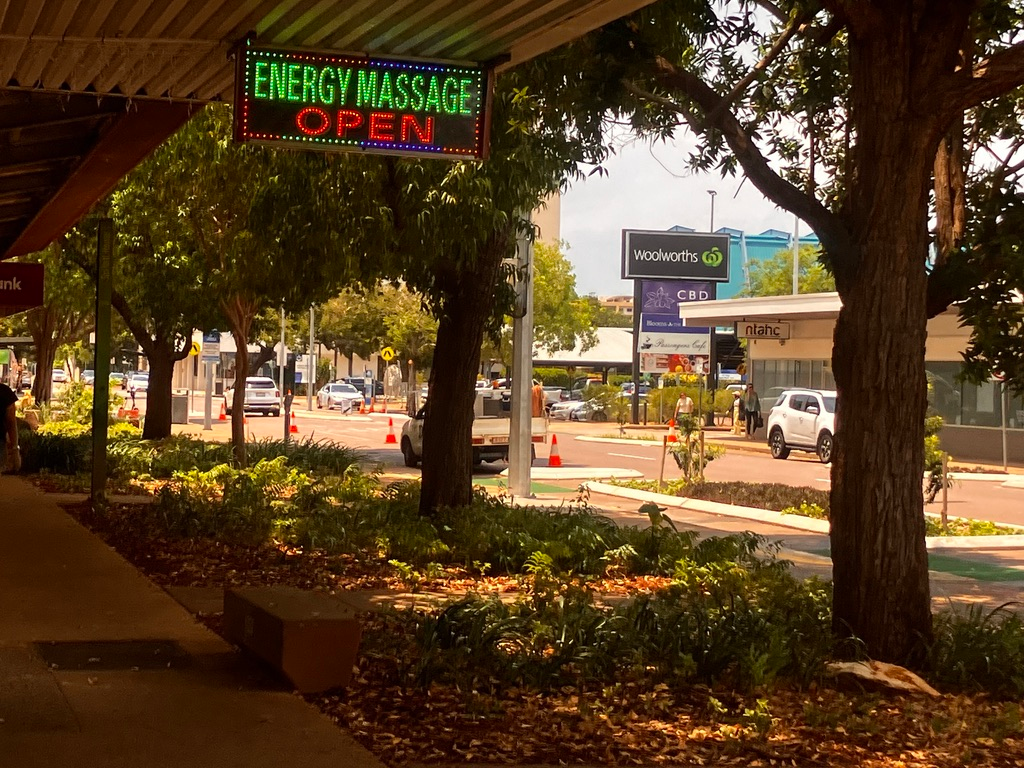
When I came out of the grocery store, it was pouring rain, so, like a rich person, I took an Uber back to the ship.
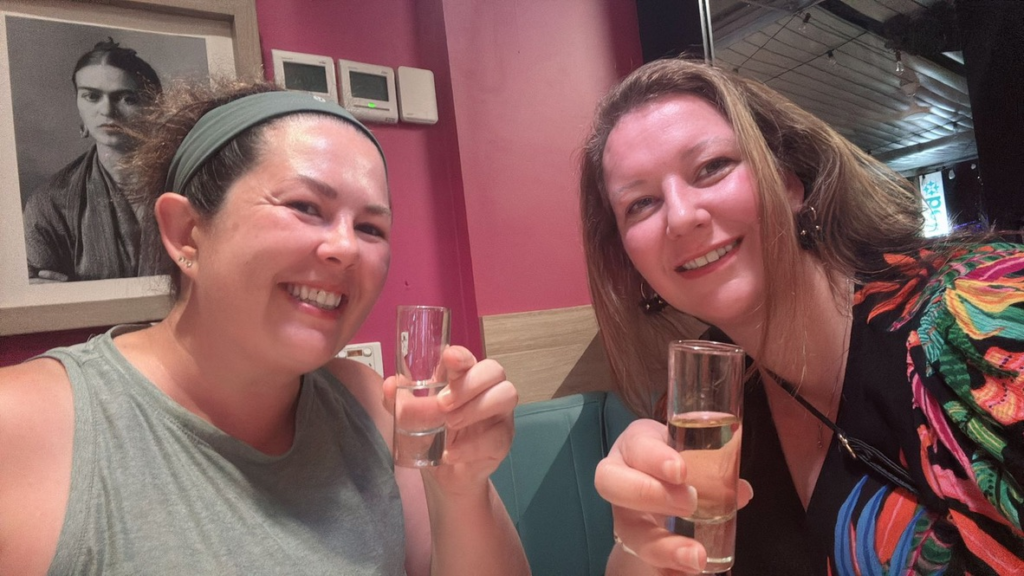
That evening, Gidea, Steven, Michele and I went out for Mexican food by the pier.
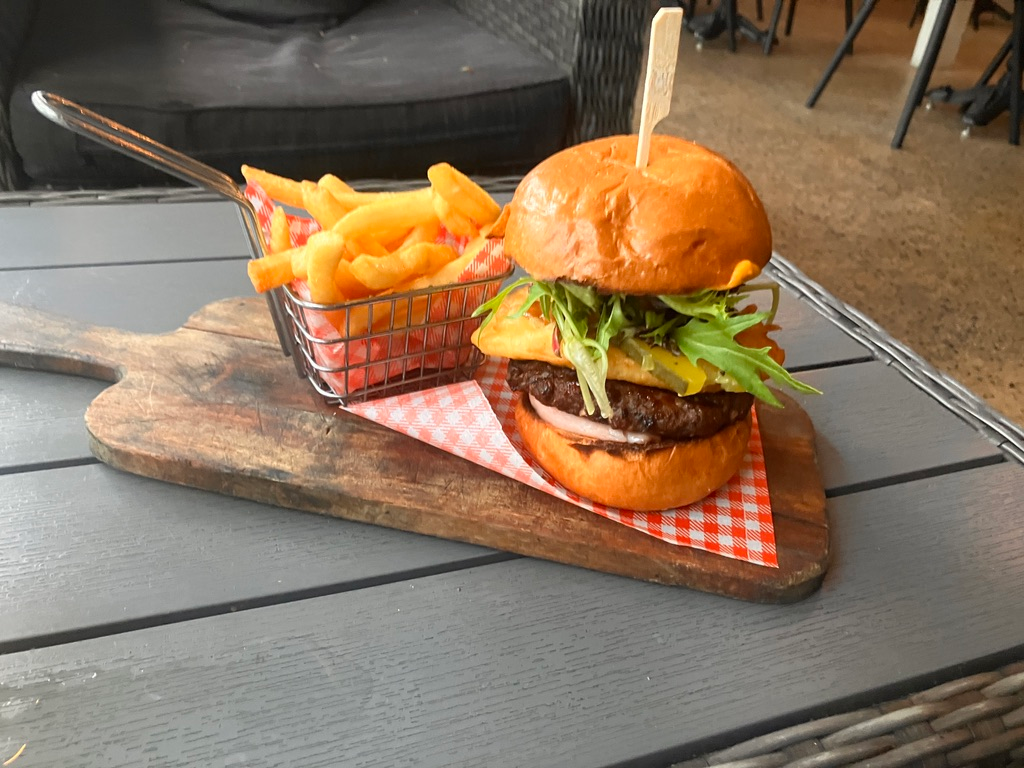
The next day I took advantage of being ashore and walked all over town. On the way back, I stopped for a huge burger.
As I wandered around, I kept spotting people in the distance. Out of habit, I would try to figure out whether I recognized them.
After months of traveling through Asia, most of the western people I saw in port were people from the ship.
In Australia, they weren’t.
It was a bit disorienting and fun.
This was a port we were planning to visit again in April, so it was fun to think I might actually get to use my presentation again.