My views do not necessarily reflect the views of my employer.
Colonia (Yap), Micronesia
Colonia is the compact capital and harbor town of Yap State (population ~11,600; Colonia itself ~3,100), one of the four states of the Federated States of Micronesia. Expect a deeply traditional Pacific culture—famously the rai (stone money) banks—alongside world-class reefs and manta encounters. There are no UNESCO World Heritage Sites in Yap (FSM’s sole UNESCO site, Nan Madol, is in Pohnpei). Life centers on Tomil/Tamil Harbor, low-rise shops, the Yap Living History Museum, and village lanes shaded by breadfruit. Daily highs hover around 30 °C / 86–88 °F with warm seas year-round—perfect for easy walking, snorkeling, and gentle island time.
History:
Yap’s story blends seafaring prowess, inter-island tribute networks, and colonial eras. For centuries, Yap’s chiefs in Gagil maintained influence over outlying atolls through an exchange system of goods, voyaging, and obligation sometimes called the “Yapese Empire.” The island’s distinctive rai stones—carved on Palau and sailed to Yap—served as high-value currency whose ownership could change without moving the stone itself, reinforcing social memory and status. Spain established a Catholic mission in Colonia in 1885; Germany purchased Yap in 1899; Japan administered it from World War I until 1944, when U.S. forces took control and Yap entered the postwar U.N. Trust Territory. In 1986 the Federated States of Micronesia (FSM) became self-governing in free association with the United States; Colonia remained Yap State’s capital and harbor. Today, stone money banks, men’s houses, and customary dress coexist with U.S. dollars, small banks, and a boutique dive scene built around manta channels and pristine reefs.
Itinerary:
Arrival: Wednesday October 15, 7:00am (please allow time for port clearance)
Departure: Thursday October 16, Last tender: 5:15pm Sail away: 6:00pm
Weather
- Average Temps (Oct): High ~30 °C / 86–87 °F; Low ~26–27 °C / 78–79 °F; humid with frequent showers.
- Climate: Equatorial maritime—warm seas, high UV, sudden downpours; typhoon risk is lower than W. Pacific averages but squalls are common.
- What to Wear: Light, breathable clothing; sunhat/sunglasses; reef-safe sunscreen; packable rain shell; sturdy sandals or walking shoes (sidewalks can be uneven).
Language:
- Official: English (nationwide); Yapese, Ulithian, Woleaian & Satawalese are co-official in Yap State.
- Widespread: Yapese in town and villages; English understood at hotels/shops.
Helpful Phrases (Yapese)
- Hello — Mogethin
- Good morning — Fal’e kadbul
- Thank you — Kammagar
- “How much?” — Guwoor k oom? (ask in English if unsure)
- Toilet — ask “Restroom?” or “WC?” (English is fine)
Currency:
US Dollar (USD); very limited card acceptance—carry small bills. Bank of Guam operates a branch/ATM in Colonia; outages are possible. There is only one ATM, so bring cash.
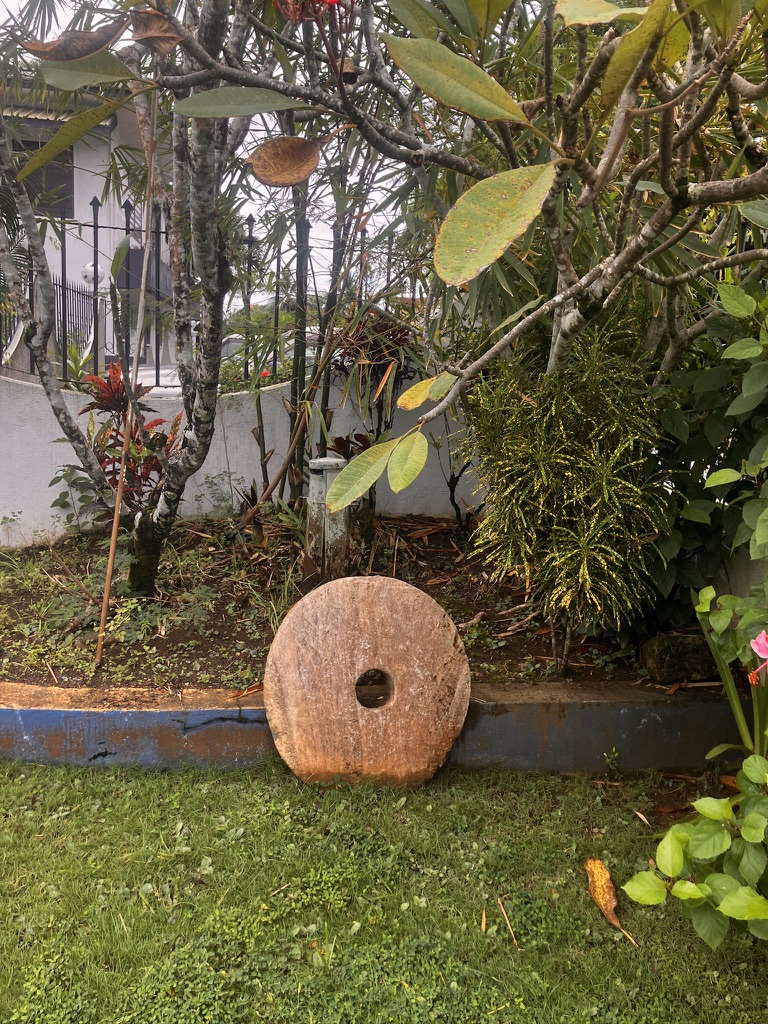
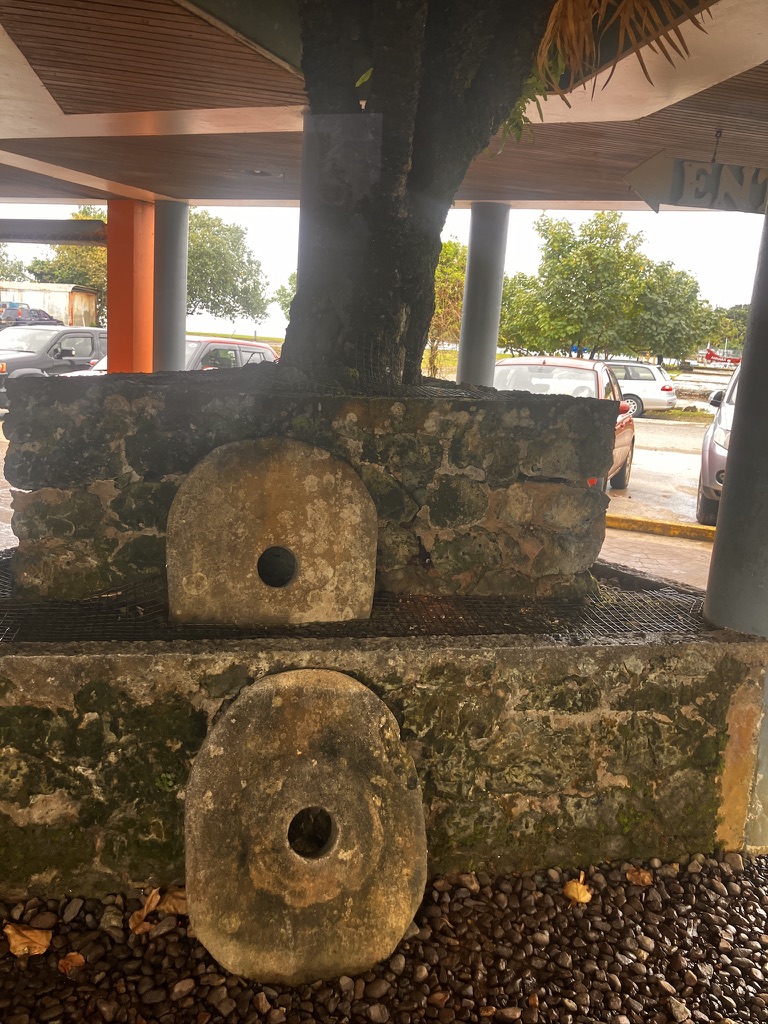
While the U.S. dollar is the official currency of the Federated States of Micronesia, Yap is famed for its traditional rai—large, donut-shaped limestone disks used in ceremonial and social transactions. Rai are not everyday legal tender like cash; instead, they function in customary exchanges (e.g., marriages, land transfers, dispute settlements). Their value isn’t determined simply by size, but by provenance and story—where the stone came from, how difficult it was to quarry and transport, and who has owned it. Today most rai remain in place by roadsides or village platforms; ownership can change without moving the stone, recorded within the community.
Tipping is not expected nor encouraged in FSM; small gratuities for exceptional service (e.g., guides) are appreciated but purely discretionary.
Near the Pier:
Cruise Ship Dock (Tender/Port): Yap International Sea Port (Tamil Harbor / Colonia Harbor). Address: Tamil Harbor, Colonia, Yap 96943, FSM. (UN/LOCODE FMYAP). Town center distance: ~0.5 miles.
Further docking information to follow…
The Yap International Seaport had never allowed a ship as large as ours to dock; larger vessels typically tendered in. When Captain Val reviewed the plan, he determined it wasn’t safe to anchor where suggested – the ship could swing on the anchor and drift too close for comfort to land. The next safest option was open water, but it was too deep to anchor, meaning we’d need to use the ship’s engines continuously, day and night, to maintain position. It was also 3 km to the dock, with a tender ride of more than 30 minutes (not including loading and unloading). Our tenders have no lights, so they operate only in daylight, which would limit possible time spent ashore. Captain Val spent days trying to persuade the local authorities to let us dock. Ultimately, the decision was left to the local pilot to determine whether it was safe to enter the channel and berth. We didn’t know until the morning of our arrival whether we’d be able to dock – or would be using tenders.
Nearby Essentials
- Pharmacy / Medical: Yap State Memorial Hospital, Keng Rd., Colonia (basic pharmacy on site).
- ATM: Bank of Guam (Ait Bldg., Colonia) — ATM/branch.
- Grocery/Snacks: Yap Cooperative Association (YCA) Store, 159 Main Dr., Colonia.
- Nearest Church: Multiple Christian churches in Colonia (Catholic predominates).
- Nearest Golf: None on Yap.
- Nearest Shopping (mall/market): YCA Business Center (general store/market hub).
Getting Around:
- 🚶 Walking: Flat, hot, and very walkable in Colonia; museum, YCA, waterfront all within 10–20 minutes.
- 🚌 Public Transit: No city buses.
- 🚖 Taxis: Scarce; arrange via hotel desk or prebook driver; short hops around town typically $5–10 (ask before boarding).
- 🚴 Bike Rentals: Not common.
- 🚗 Car Rentals: Available locally (e.g., ESA Bay View/ESA Rental Car, Colonia). Driving is right-hand traffic; many cars are right-hand-drive imports—caution in rain
- Hop-On Hop-Off: Not available.
Is the water safe to drink?
No—per U.S. State Dept, visitors should not drink tap water; choose bottled/treated water. (Local systems may meet standards at times, but reliability varies.)
Public Toilets
Limited outside hotels and government buildings; plan to use facilities at museums, hotels, and restaurants (ask first).
LGBTQ+ Travelers
Yap is conservative and community-oriented. Discretion and cultural sensitivity are advised in public displays of affection regardless of orientation. (No specific LGBT nightlife.)
Witnessing:
Manta Ray Bay & Reef Sites (by boat) — Classic half-day snorkel or intro-dive runs with Yap Divers (Manta Ray Bay Hotel) to calm lagoon reefs and, conditions permitting, manta “cleaning stations.” Expect vibrant bommies, reef fish, and a real chance of manta fly-bys when tides align.
Practical: 3–4 hrs dock-to-dock. Meet at the tender landing → short vehicle transfer to the marina (10–15 min). All gear available; bring towel, water, reef-safe sunscreen, and a dry bag. Weather/tide dependent.
Etiquette & Safety: Stay low and still at cleaning stations; keep ~10 ft/3 m from mantas; no chasing or flash.
✨ Worth it: This is the signature Yap experience when seas are kind—book early for best tide windows.
Yap Living History Museum —in central Colonia, is an open-air complex of traditional structures (including a men’s house and meeting house) that hosts demonstrations of living Yapese culture—dance, weaving, canoe craft, and stone-money lore. Conceived to preserve and promote heritage, it opened in 2011 through the Yap Visitors Bureau and partners, and often serves as a venue for festivals like Yap Day and canoe events. Expect displays of rai (stone money), platforms, and a small collections center reflecting colonial-era history.
- Practical: Small donations/events; 45–60 min; ~10–15 min walk from tender landing.
✨ Tip: posted hours commonly show daytime opening, but recent local updates suggest variable/lunch-hour access—check the museum/VYB Facebook before you go.
Stone Money Banks (Rai) — Stroll or drive through village “banks” where massive donut-shaped limestone disks line shady lanes. Each stone’s value comes from its origin story and the effort it took to quarry and transport it; ownership is tracked through community memory rather than paperwork.
- Practical: Several banks near Colonia may ask a small fee (about $2.50). Allow 60–90 minutes with photo stops. Dress modestly and be respectful in villages.
✨ Fun Fact: Rai often change owners without ever moving—the community simply acknowledges the transfer, and the stone stays put.
Learning:
Men’s Houses & Traditional Platforms — You’ll spot these emblematic thatched meeting houses (and stone platforms) along village lanes and tidal channels. They serve as centers for ceremony, storytelling, and community decisions, reflecting deep Yapese traditions and craftsmanship.
- Practical: Free to view from the outside; always ask permission before entering
✨ Tip: Be courteous with photography—request consent before photographing people or private structures, and avoid intruding during gatherings
Village Culture Tour (2–3 hrs) — ready to book
What guests experience: weaving, coconut husking, dance/storytelling beside stone-money platforms.
Operators you can contact now:
- Nature’s Way (Colonia-based; culture tours & skills demos). Page shows sample program elements.
- Yap Visitors Bureau (POIs & cultural tour overview; can connect you to licensed guides if you need overflow capacity).
Payment: Village fees/gifts are cash only; bring small USD bills.
Discovery:
Snorkeling from Shore (tide-dependent): Protected bays near Colonia can be accessible with local guidance; visibility best on slack tides; 1–2 hrs.
Hiking
- Harbor Promenade & Village Lanes: Easy, 1–3 miles round-trip on paved/coral lanes; shade and sea views.
- History Walk of Colonia — Mission sites from the Spanish era, WWII remnants, harbor viewpoints. 1.5–2 hrs; gentle.
- Out-of-Town Green Lanes: Arrange with a guide for custom 2–4 mile walks linking stone money sites and men’s houses; easy-moderate (humidity).
Shopping
- YCA Business Center / Store: Groceries, basics, some local produce and crafts; 10–15 min walk. ✨ Tip: Supplies are island-priced; carry small USD bills.
Hidden Gems:
- Village Stone Money Alley at Ruul/Weloy: Close to town yet photogenic, especially in late afternoon light (ask first; small fee may apply).
- Ghost Fleet of Truk Lagoon – Tropical paradise strewn with hundreds of World War II wrecks.
- Rai Stones – Giant money stones of Yap.
Tasting:
Local plates: Tuna/reef-fish, taro, breadfruit, coconut crab (seasonal/regulated), tropical fruits, Taro cooked in coconut milk
Where: Hotel restaurants (e.g., Mnuw at Manta Ray Bay) and simple cafés around YCA. Typical meals $9–11 (local cafés), $20–30 (hotel restaurants).
Harbor Sunset & Microbrew: Stone Money Brewing Co. at Manta Ray Bay Resort—Yap’s microbrewery; rooftop “Mnuw” restaurant on a moored phinisi. ✨ Tip: Try Manta Gold while watching fruit bats at dusk.
Irish pubs/Mexican restaurants: none on Yap.
Nightlife (if staying ashore overnight):
Very low-key. Hotel bars (e.g., Mnuw/Crow’s Nest at Manta Ray Bay) are the main options; most venues wind down early.
Travel Tips:
- Cash first: ATMs/processing downtime happens; carry small USD notes.
- Water safety: Tap water is not potable for visitors—use sealed bottled or properly treated water; be cautious with ice.
- Dress & etiquette: Modest dress is appreciated in town and villages; swimwear only at beaches/resorts; ask before photos.
- Heat & rain: Hydrate, use reef-safe sunscreen, and expect squalls; sandals with grip help on coral-surfaced lanes.
- Driving: Right-hand traffic; many vehicles are right-hand-drive; roads can be slick after rain—go slow.
Thursday October 16, 2025
It was a gray day when I was free to explore Colonia, on the island of Yap in Micronesia. I wanted to check out the brewery (we’d been visiting islands with large Muslim populations, and, oddly enough, I hadn’t come across many microbreweries lately) and find the island’s fascinating stone money.
Steven had bought the new Meta Ray-Ban glasses, and he let me borrow them to play with.
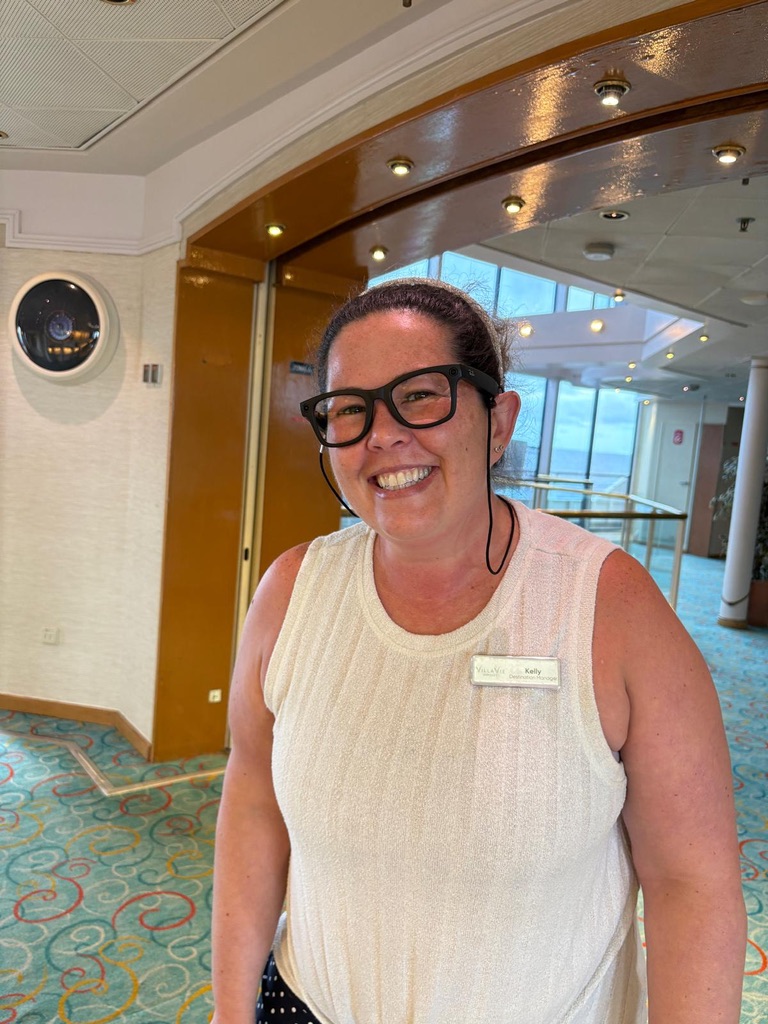
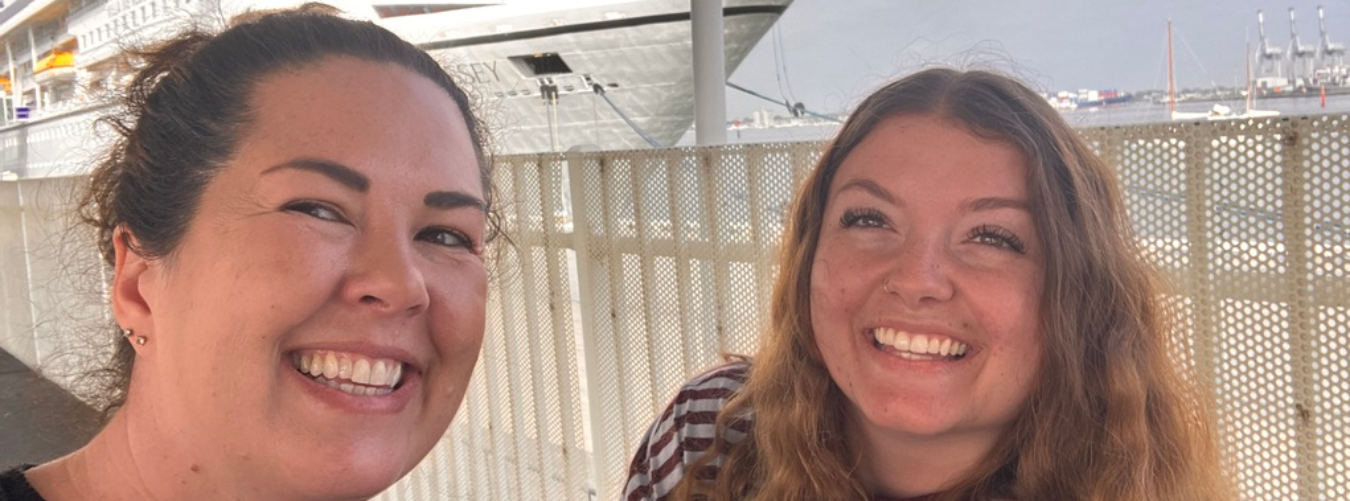
I set out with Michele, Gidea, and Alisa, the Captain’s daughter, who was working on board as the Senior Receptionist.
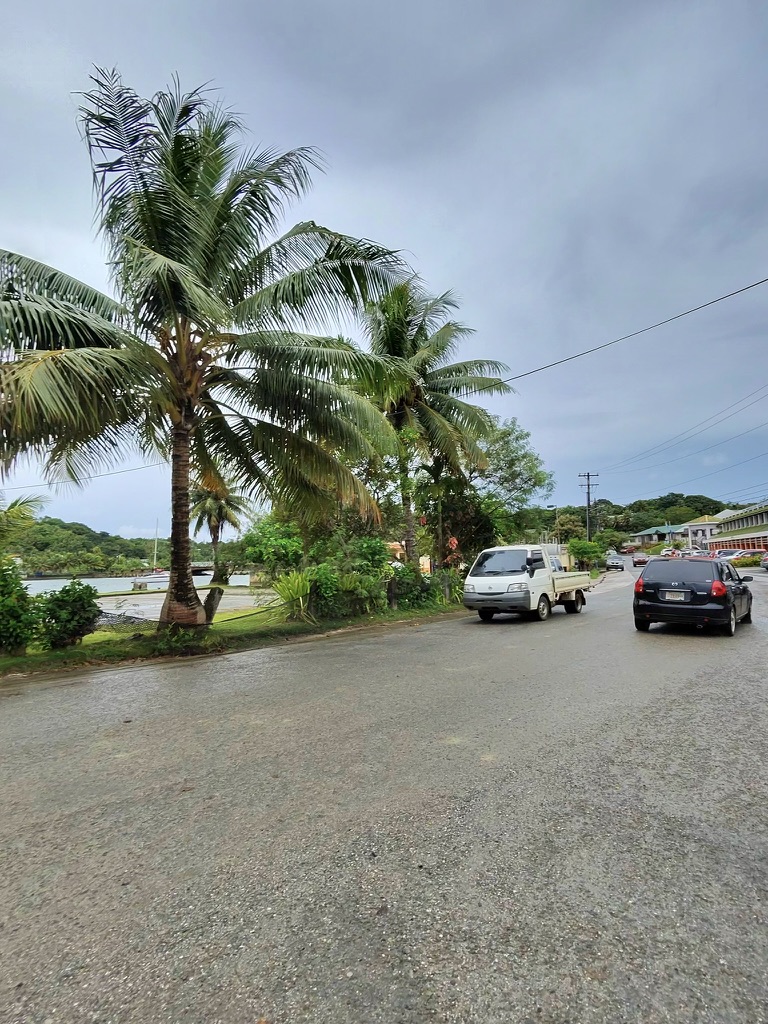
The hotel in front of the brewery was not as conspicuous as I though it would be.
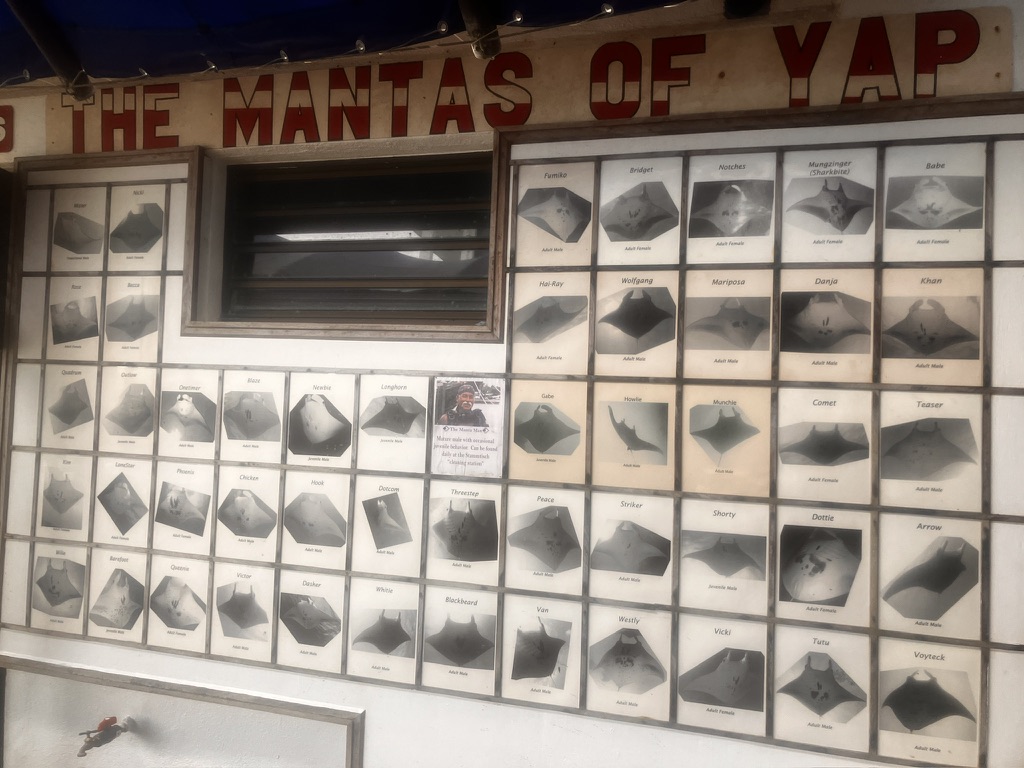
But check out this brewery!
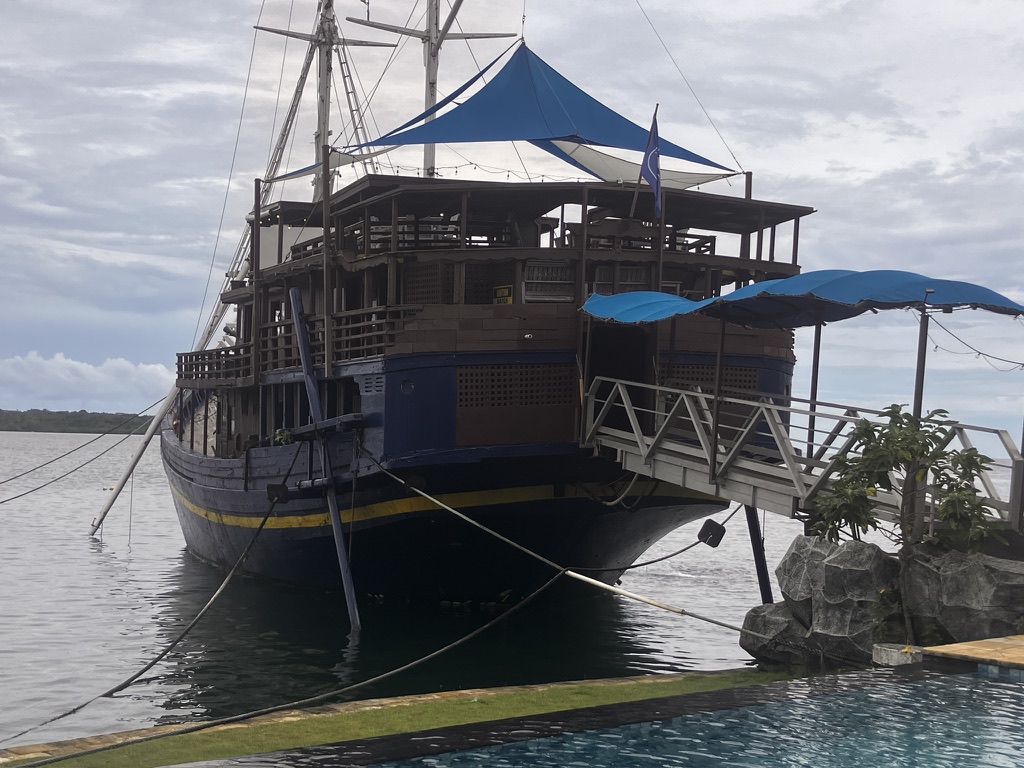
I know we get to eat and drink on a ship all the time, but this boat was way more fun!
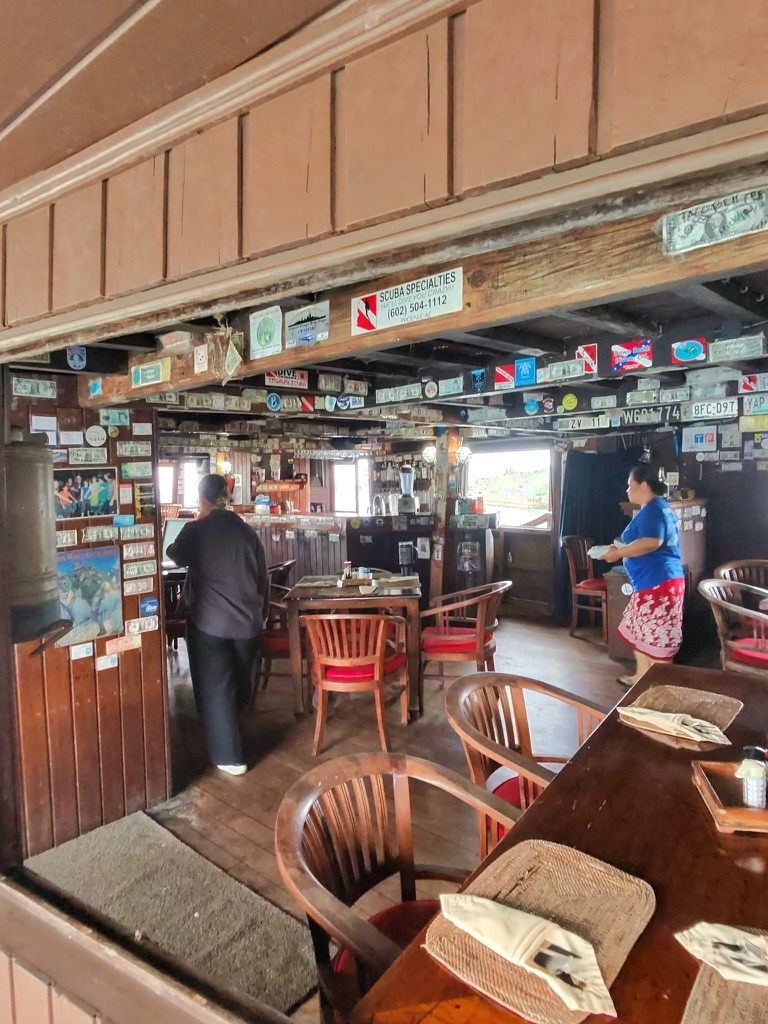
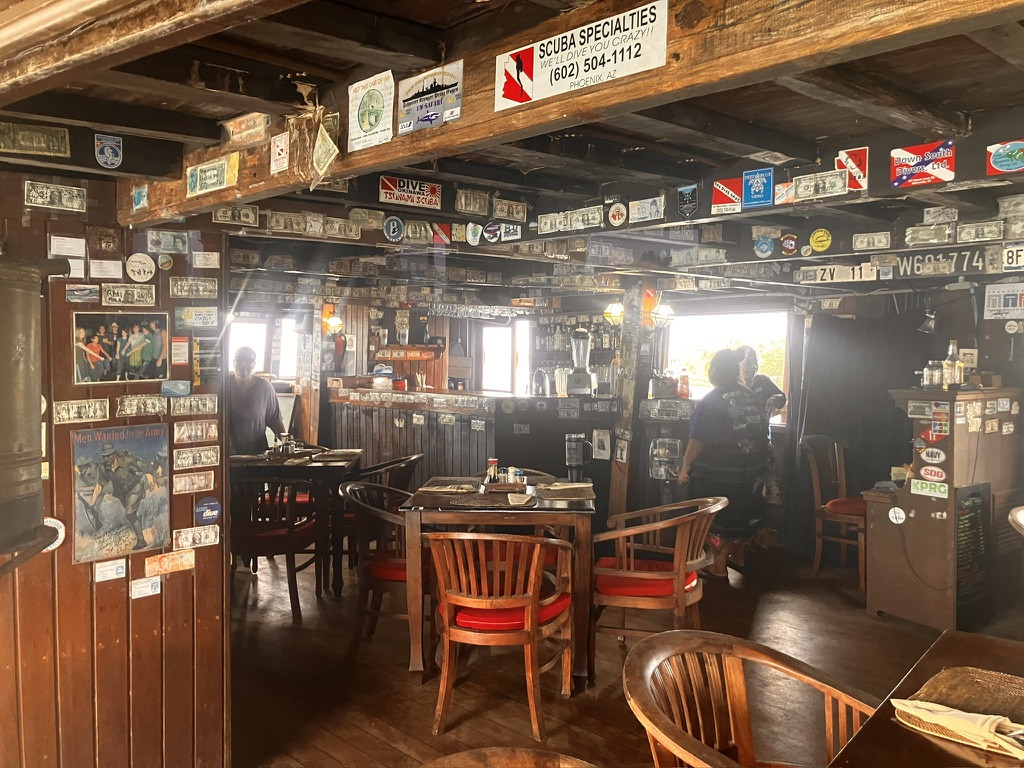
The brewery had three beers: a light beer, a dark beer, and the two mixed together. I asked if they offered a flight – they made it happen.
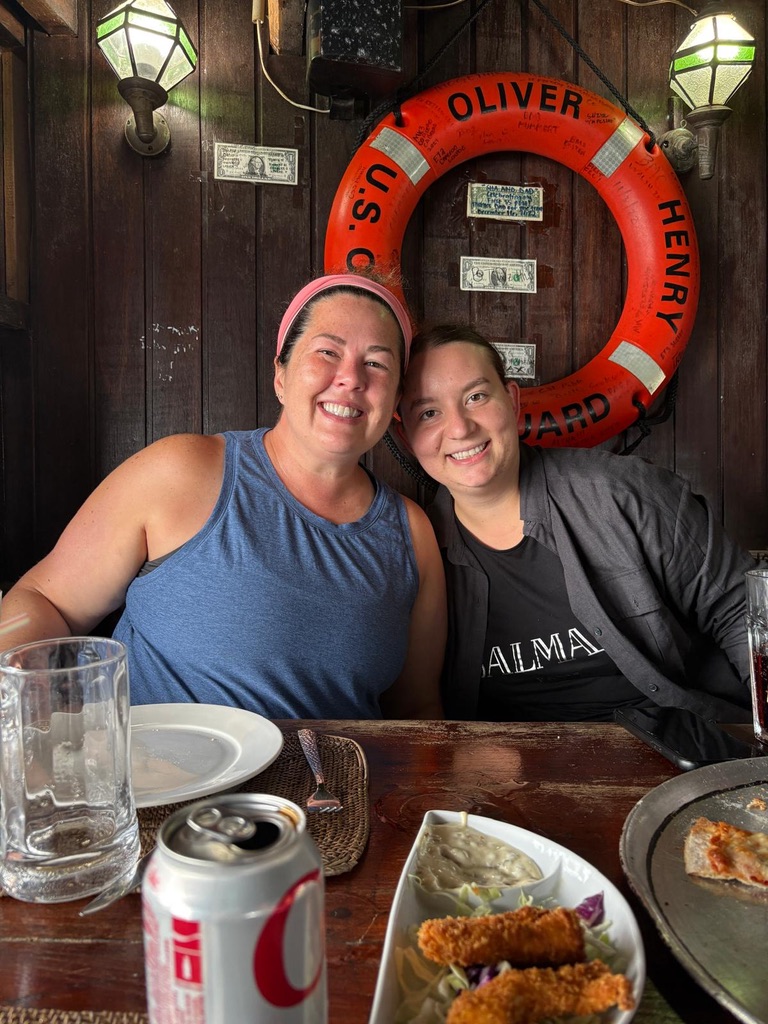
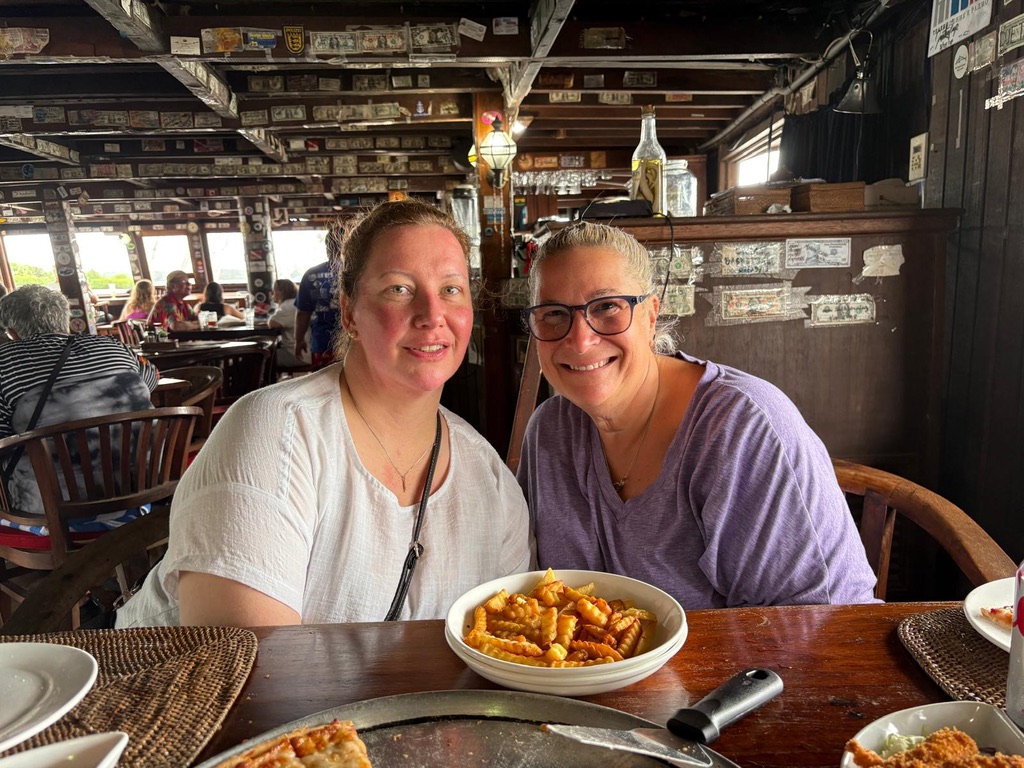
We ordered chicken fingers, fish fingers (which both tasted like chicken), and pizza.
On the way back to the ship, we found the stone money!