My views do not necessarily reflect the views of my employer.
September 25, 2025
As I’ve mentioned in previous posts, I spent my only other visit to Manila going to a mall (which is a very Filipino thing to do). Since I’d been organizing tours for the residents, I decided to reap the benefits and sign myself up as an escort for one of them.
But first, here’s my presentation:
Manila, Philippines
Manila is the Philippines’ capital and cultural crossroads, where Spanish-walled Intramuros faces a neon skyline across Manila Bay. The City of Manila counts ~1.85 million residents within a wider Metro Manila of ~13.5 million, so expect big-city buzz with historic pockets to wander. Within Intramuros stands San Agustin Church—part of the UNESCO-listed Baroque Churches of the Philippines—alongside leafy plazas, museums, and the bay’s famous sunsets. Food is a mix of Filipino, Chinese-Filipino, and global flavors; English is widely spoken; and cashless apps make getting around easy. Your ship docks close to Intramuros, putting the city’s highlights within a short ride.
History:
Manila grew from a fortified Tagalog settlement at the mouth of the Pasig River into the Spanish colonial capital after 1571. The Spanish built Intramuros as a walled city of churches, convents, and administrative halls; commerce flourished via the Manila–Acapulco galleon trade. In 1898 the Spanish–American War shifted control to the United States, ushering in American urban planning (think wide boulevards like Roxas) and public education. World War II devastated the city, especially Intramuros and its districts during the 1945 Battle of Manila. Independence followed in 1946; the postwar decades saw rapid urbanization and the emergence of Metro Manila as the nation’s political and economic hub. Today’s Manila blends restored heritage—like Fort Santiago and San Agustin—with new art spaces, malls, and a spirited dining scene. You’ll feel the city’s layered identity in Binondo (the world’s oldest Chinatown), in Rizal Park’s national monuments, and along the sunset-lined baywalk that’s been Manila’s living room for generations.
Itinerary:
Arrival: Thursday September 25, 8:00am (please allow time for port clearance)
Departure: Friday September 26, All aboard: 7:00pm Sail away: 8:00pm
Weather
- Average Temps (late September): highs ~31 °C / 88 °F; lows ~25–26 °C / 77–79 °F.
- Climate: Late southwest-monsoon (wet) season—hot, humid, and often rainy with occasional downpours; UV remains high.
- What to Wear: Light, breathable clothing; a compact umbrella/poncho; sun hat; comfortable walking shoes or sandals that dry quickly.
Near the Pier:
Cruise Ship Dock: Pier 15 (Eva Macapagal Super Terminal), Berths #1–5
Address: Eva Macapagal Super Terminal, Pier 15, Port Area, City of Manila, Metro Manila
Filipino: Terminal na Eva Macapagal, Pier 15, Lungsod ng Maynila, Kalakhang Maynila
- Distances: Ship ⇄ terminal building ~30 m; ship ⇄ port gate ~100 m; to Intramuros/city center ~2 km.
- Port gate will be open 24 hours
Nearby Essentials
Pharmacy & ATM & Grocery: Robinsons Place Manila (Watsons pharmacy, BPI ATMs, Robinsons supermarket), ~2 km / 10–15 min by taxi.
Nearest Church: Manila Cathedral (Intramuros), ~2 km.
Nearest Golf: Club Intramuros Golf Course, ~1.5–2 km.
Nearest Shopping: Robinsons Place Manila (~2 km); SM Mall of Asia (~5 km); Lucky Chinatown (~3.5 km).
Getting Around:
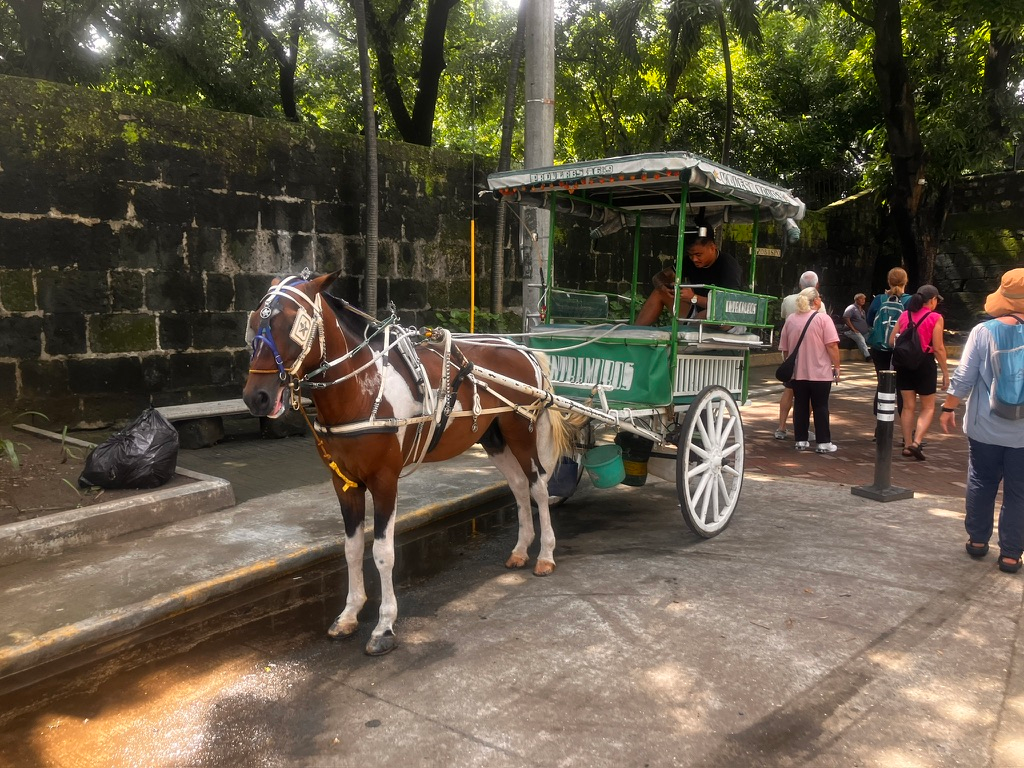
- 🚶 Walking: Intramuros is about 2 km (25–30 min) from Pier 15. Once inside, sidewalks are decent; expect heat/humidity.
- 🚌 Public Transit: No train at the pier. LRT-1 (Central Terminal) is ~2 km away; fares now start around ₱20+ after April 2025 fare changes. Buses/jeepneys run on major roads but are crowded and not ideal for short visits.
- 🚖 Taxis & Rideshare: Grab (ride-hailing app) is the hassle-free choice with upfront pricing—great for avoiding taxi scams. Typical off-peak rides: Pier 15 → Intramuros ₱120–200; → Mall of Asia ₱150–300; → Makati ₱250–450 (traffic-dependent).
- 🚴 Bike Rentals: Bambike Ecotours rents bamboo bikes in Intramuros; guided loops available (fun and photogenic).
- 🚗 Car Rentals: Available at city/airport locations; not recommended for first-timers due to traffic/parking.
- Hop-On Hop-Off: Philippines HOHO – Manila runs app-based loops with timed stops; passes available in-app. Useful for a curated overview if you’ll be in town all day.
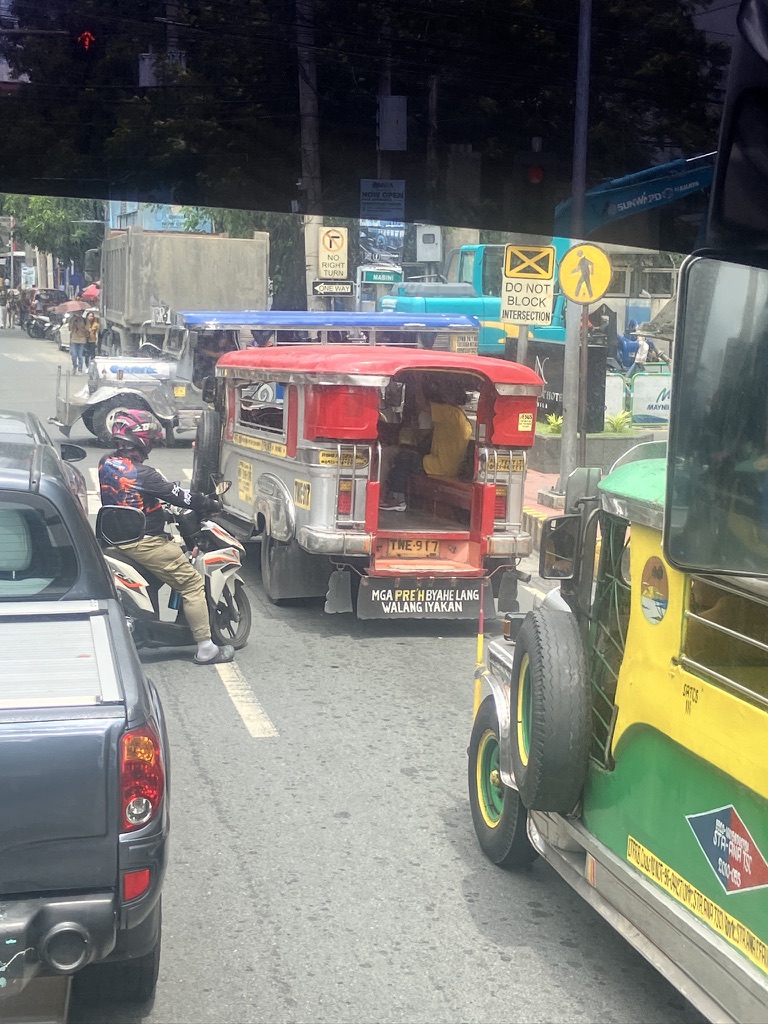
Much better to use Grab Taxi Mobile App or Joyride to move around Manila. Hassle Free, Passengers need not to worry about getting scammed by regular taxi. Minimum Php 80
If you’re in a hurry, you can get a pickup on a motor cycle (Joyride)
Witnessing:
Intramuros & Fort Santiago (San Agustin inside Intramuros is UNESCO)
A cobblestoned Spanish-era walled city: stroll ramparts, plazas, and the riverside bastion where national hero José Rizal was imprisoned. Atmospheric stone gates and leafy courtyards make this the city’s historical heart.
Practical: Fort Santiago daily; published fee around ₱75 (local) with higher rates for foreigners; allow 1.5–2 hrs. From the dock: 10–15 min by Grab (₱120–200).
✨ Tip: Start early to beat heat and school tour crowds.
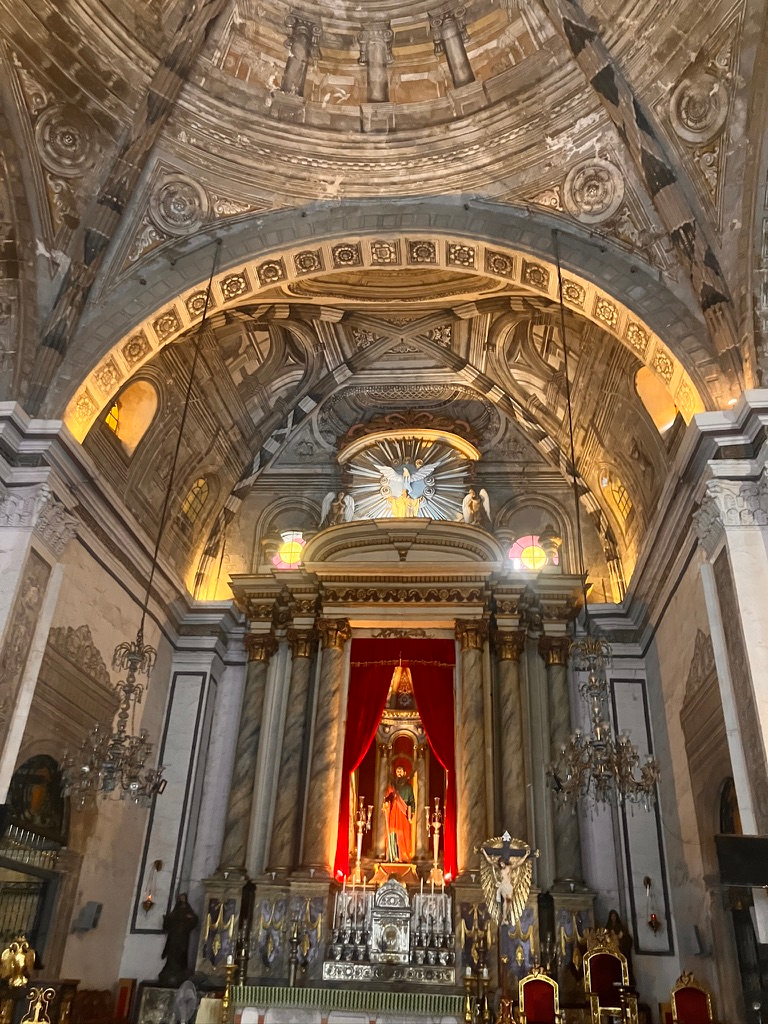
San Agustin Church & Museum (UNESCO)
The country’s oldest stone church (1607) with trompe-l’œil interiors and a treasure-filled museum next door. A serene counterpoint to busy streets outside.
Practical: Open most days; museum operates set hours with a separate ticket; plan 60–90 min. 10–15 min from the pier by Grab.
✨ Tip: Check for weddings; brief closures can occur.
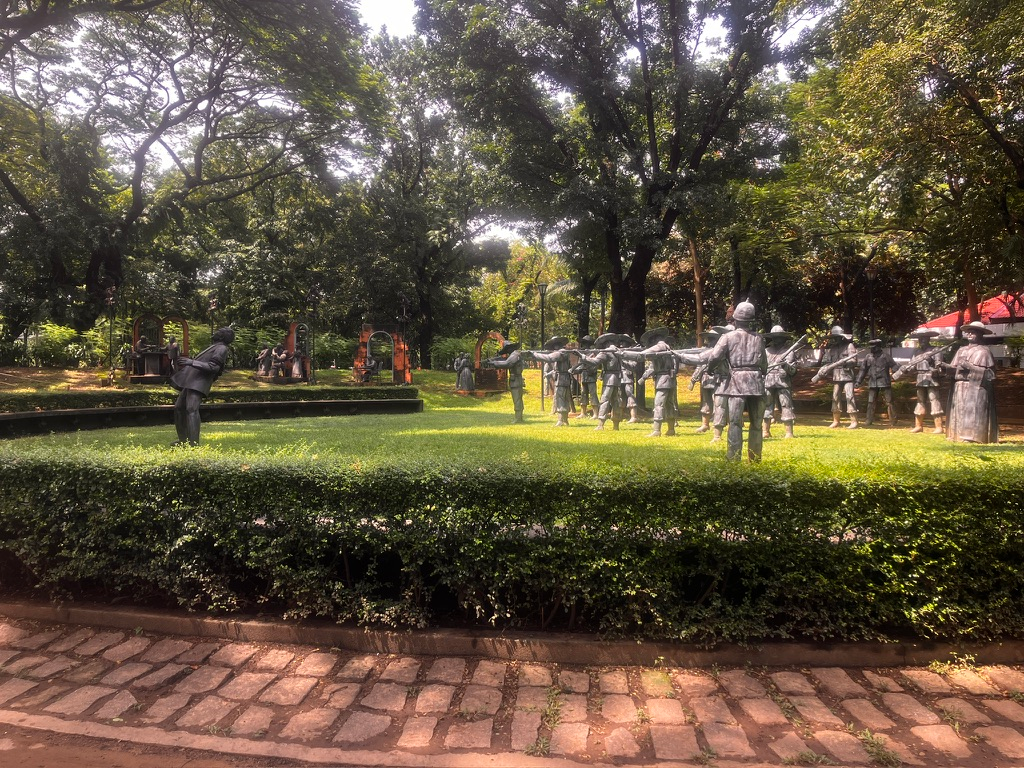
Rizal Park (Luneta) & National Museum Complex
Landmark park with monuments, fountains, and lawns, steps from three major National Museum buildings (Fine Arts, Anthropology, Natural History), many galleries free to enter.
Practical: Museums generally Tue–Sun; free general admission; 1.5–3 hrs. 10–15 min from the pier.
✨ Tip: Pair with a sunset walk along nearby Baywalk on Roxas Boulevard.
Learning:
National Museum of Fine Arts / Anthropology / Natural History
Philippine art, pre-colonial gold, natural history dioramas—ideal for an air-conditioned cultural deep dive.
Info: Free admission; Tue–Sun; 1.5–3 hrs total. 10–15 min from pier.
✨ Tip: Bring a light jacket; galleries can be cool.
Ayala Museum (Makati)
Renowned dioramas of Philippine history and the “Gold of Ancestors” collection in a slick, modern space.
Info: Tue–Sun; recent tickets reported around ₱425–₱750; pre-book timed slots when busy. 25–40 min by Grab.
✨ Tip: Combine with a Greenbelt café break.
Bahay Tsinoy (Intramuros)
A focused look at the Chinese-Filipino story—lifelike tableaux and artifacts connect Chinatown’s past to present.
Info: Typical hours ~10am–5pm (closed Mon); recent adult tickets ₱100–₱200; 10–15 min from pier.
✨ Tip: Visit before a Binondo food walk for context.
Discovery:
Manila Ocean Park (near the pier)
Aquarium and family attractions on the bay.
Info: Promos around ₱820 per person (Sept 2025 promo); 5–10 min ride from pier; 1.5–2.5 hrs.
✨ Tip: Go early to avoid school groups.
Binondo (Chinatown) Food Walk
Hopia, dumplings, lumpia, and heritage bakeries in the world’s oldest Chinatown—DIY or guided.
Info: Allow 2–3 hrs; 15–25 min from pier by Grab. Guided tours widely available.
✨ Tip: Bring small bills; lines move fast.
Manila Bay Sunset & Sky Deck Rooftop
Golden-hour stroll on Baywalk, then rooftop views at Bayleaf Intramuros’ Sky Deck—close to the ship and perfect before all-aboard.
Info: Sky Deck typical seatings 4–7pm & 7–11pm; reserve. 10–15 min from pier.
✨ Tip: Weather can change quickly—carry a light rain shell.
Hiking & Green Walks
Arroceros Forest Park (Ermita) — Pocket “city lung” with shaded paths; easy 45–60 min visit; ~10 min by Grab. Free entry; daylight hours.
La Mesa Nature Reserve (Quezon City) — Forest trails/birding on the metro’s northern edge; guided access; ~60–90 min by Grab each way.
Ninoy Aquino Parks & Wildlife (QC) — Lakeside paths and rescued-fauna center; ~45–60 min drive; easy walking.
Shopping
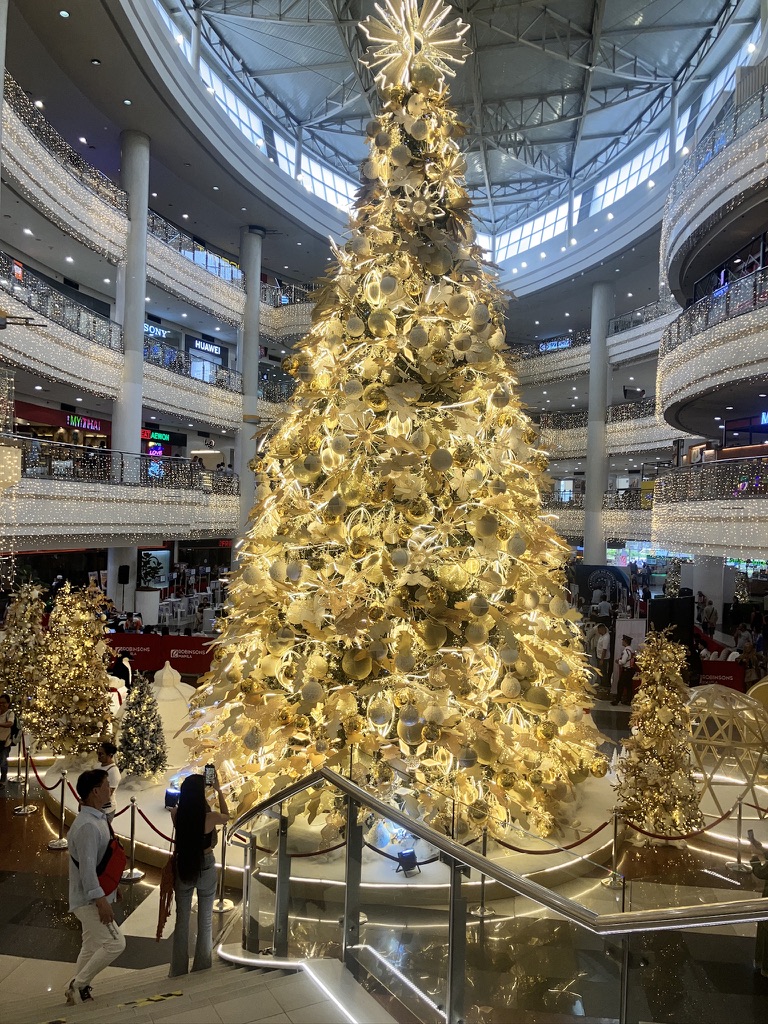
Robinsons Place Manila (Ermita) — One-stop for pharmacy, supermarket, ATMs, and mid-range shopping; ~10–15 min ride.
SM Mall of Asia (Pasay) — Massive bayside mall with dining and entertainment; ~20–30 min (traffic-dependent).
Escolta/First United Building (weekends) — Creative studios and pop-ups in an Art Deco landmark; check if a market is on. ~20 min ride.
Exploring:
Corregidor Island (WWII “Gibraltar of the East”)
Tunnel tours, batteries, and memorials on a scenic island at Manila Bay’s mouth. Feasible as a full-day tour if ferry schedules align; most tours run 8–9 hrs with round-trip boat from Manila or Mariveles. Expect dynamic schedules—book ahead.
Note: Departure points/schedules change; confirm a few days in advance.
Bataan — Mt. Samat National Shrine
A moving hilltop memorial to the Bataan Death March with sweeping views. ~2–3 hrs each way by car; best as a private tour from the pier or Makati.
Hidden Gems:
San Sebastian Church – A church made of steel.
Paco Park Cemetery – The cemetery was built for the Spanish colonial elite, but its most famous residents were all buried in unmarked graves
Manila Clock Tower – This iconic clock tower is the largest in the Philippines
Lagusnilad (Manila City Hall Underpass) – Once a crime hotspot, this refurbished underpass is now home to a bookstore and a mural celebrating the history of Manila
Gomburza Monument – Dedicated to the three priests whose execution inspired author Jose Rizal
Bahay Nakpil-Bautista – A century-old ancestral home was home to some of the key figures of the Philippine Revolution
Burke Building – The first building in the Philippines with an elevator
Bellevue Theater – Once an art-deco theater, now a supermarket.
Tasting:
Adobo / Sinigang / Kare-kare / Lechon
- Adobo: soy–vinegar–garlic braise (pork or chicken), tender and savory. ₱150–300 at casual spots.
- Sinigang: tamarind-sour soup with pork, shrimp, or fish; bright, comforting. ₱180–320.
- Kare-kare: peanut stew (oxtail/beef/tripe) with bagoong on the side. ₱250–450.
- Lechon: crackly roasted pork; by the plate in city restos or by weight at roasteries. ₱250–450 per plate.
Near the pier: intramuros/Ermita restaurants and mall food courts (Robinsons Place Manila) are easy wins.
Halo-halo & Bibingka
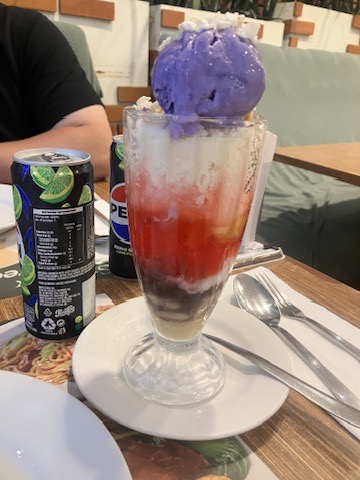
- Halo-halo: shaved ice, milk, fruits, jellies—summer in a glass. ₱120–220 (add ice cream +₱30–50).
- Bibingka: rice-flour cake baked in banana leaves; buttery, slightly smoky. ₱80–150.
Find them in mall cafés, old-school bakeries, or seaside kiosks near Baywalk.
Binondo treats (perfect for a Chinatown walk)
- Lumpia: fresh or fried spring rolls; ₱80–150.
- Hopia: flaky mung-bean pastry; ₱20–35 each.
- Siopao: steamed buns (asado/bola-bola); ₱50–90.
Tip: Go mid-afternoon to dodge lunch crowds; bring small bills.
Street & market snacks to spot
- Isaw (grilled chicken intestines), kwek-kwek (quail eggs in orange batter), turon (banana spring roll), taho (silken soy with syrup). ₱20–80.
Seafood call-outs
Along the bay and in mall restos, look for inihaw (grilled squid/fish) and sinigang na hipon (shrimp). Ask price per 100 g and total before ordering.
Drinks
Local beers (San Miguel Pale/Light, Red Horse) ₱80–180 in bars; fresh calamansi juice ₱70–120; barako coffee (strong, nutty) ₱100–180.
Day-trip Western cravings (Makati; 25–40 min by Grab, traffic-dependent)
- Murphy’s Irish Pub: hearty pies, fish-and-chips, whiskey/“Guinness vibe.”
- El Chupacabra: cult-favorite street tacos, al pastor, quesadillas; casual, lively.
Quick ordering tips
- Many menus are bilingual; point-and-order works.
- Spiciness is mild by default—ask for extra chili if you like heat.
Nightlife:
- Baywalk (Roxas Blvd) – sunset stroll + casual bites. A 2-km seaside promenade from the U.S. Embassy toward the CCP Complex—great at golden hour before dinner. 10–15 min from Pier 15 by Grab.
- Sky Deck View Bar, Bayleaf Intramuros – rooftop views. Two seatings 4:00–7:00 pm and 7:00–11:00 pm; reserve for the first seating to comfortably make all-aboard. 10–15 min from the pier.
- Tap Room, The Manila Hotel – piano/vocal sets, classic lounge. Smart-casual dress; typical hours Sun–Wed 12:00–24:00; Thu–Sat to 2:00 am with nightly live performers. 5–10 min from the pier.
- The Roadhouse Manila Bay (SM By the Bay) – blues/rock bar. Regular live bands (often from ~8:30 pm). Good for a pint after sunset; allow extra time for MOA traffic. 20–30 min from the pier off-peak.
Pro tips: Book Sky Deck’s early seating; carry a light layer (venues run cold A/C); Grab is the quickest hop between Pier 15, Intramuros, and the bayfront.
Jazz: I can’t find a confirmed, dedicated jazz gig in Manila on Thu, Sept 25, 2025. The most reliable options for live music with jazz standards that evening are:
- Tap Room, The Manila Hotel – open Thursdays until 2:00 am with nightly live performances (often standards/swing in a classic lounge). It’s 5–10 minutes from Pier 15. Call ahead to confirm the night’s band.
- Pardon My French (Makati) – restaurant–music venue with frequent jazz/fusion sets; lineups are posted on their social pages and site, but no 9/25 bill is listed yet. ~25–40 minutes by Grab from the pier.
- Tago Jazz Café (Quezon City) – Manila’s purest jazz room; their feed lists gigs Sept 26–28, with nothing announced for Sept 25 at time of checking. ~40–60 minutes by Grab.
Travel Tips:
Use your best big-city (Brazil-level) travel smarts. Crowd awareness, firm “no thanks,” and pre-planned rides go a long way.
Rides: Book Grab door-to-door. Avoid hailing on the street if you can.
Bags: Skip shoulder bags that can be yanked. Wear a cross-body kept in front, or a slim waist/neck wallet under clothing. Clip your zippers.
Pockets: Keep only essentials on you; nothing in back pockets. Split cash/cards in two places.
Jewelry & watches: Don’t wear them—leave anything flashy aboard.
Phones: Use discreetly; don’t text while walking curbside.
Crowds & churches: Be extra alert around Quiapo Church (very busy)—zip bags closed, keep space, move with the crowd.
Children & solicitations: Don’t give money to kids (it can draw a swarm). Donate to vetted charities instead.
Vendors & taxis: Confirm total price before you order or ride. Street taxis must use the meter.
Water & heat: Stick to bottled/filtered water; hat, sunscreen, and electrolytes help.
Night returns: Choose well-known venues; prebook your Grab back to the pier.
My experience:
One by one, the Filipino crew members pulled me aside and suggested that I really prepare the residents for Manila. This wasn’t Japan, where people would chase you down if you dropped money on the street.
So I emphasized the importance of street smarts while traveling in my lecture and told the residents that the Filipino crew genuinely worried about them.
As I stepped off the bus wearing my sneakers and the colorful lanyard I had been given when I stepped off the ship, I considered what I could do to disguise the obviousness that I was a tourist.
I looked around and gave up.
In a group full of Westerners, there was no way I was going to blend in.
Our guide was very entertaining, which is always a win. She told us that the Philippines is home to more than 120 distinct native languages and the official Filipino language, based on standard Tagalog (prounounced Tah GAH loh – not tag a log) is influenced by several of them. English, however, is very widely spoken.
She also told us that the words for desserts in Filipino are bad words in Spanish.
And she told us that the Philippines is the only country without divorce.
It started out as a beautiful day.
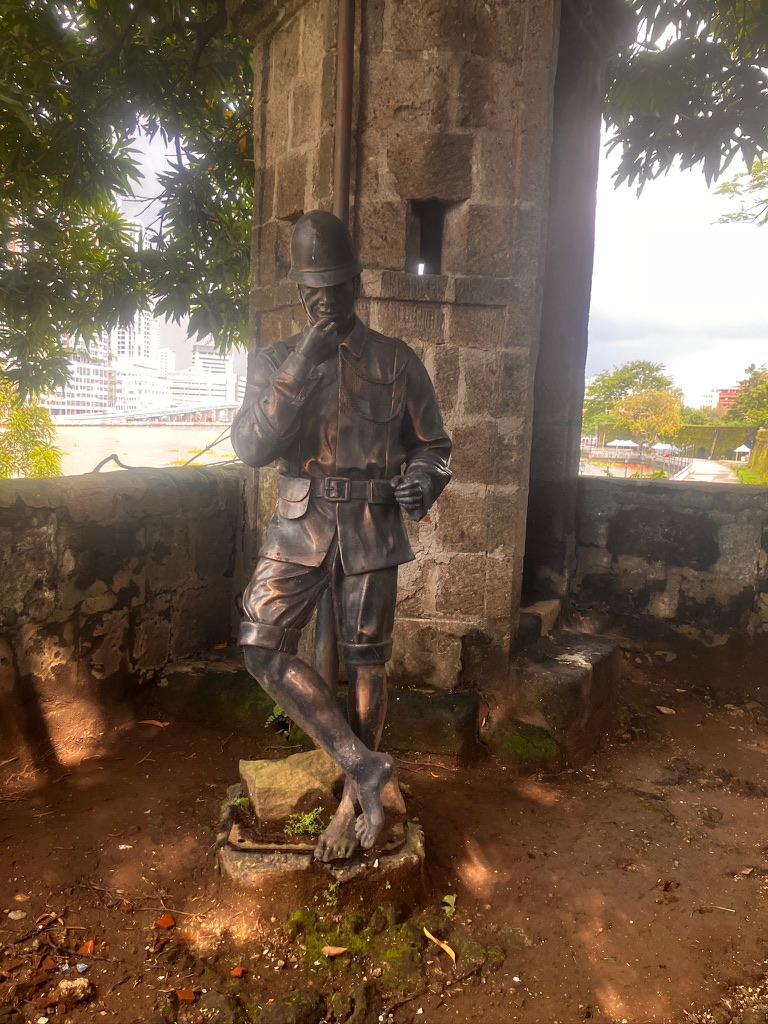
We went to the park and learned all about José Rizal, and how he inspired a revolution (monument pictured above).
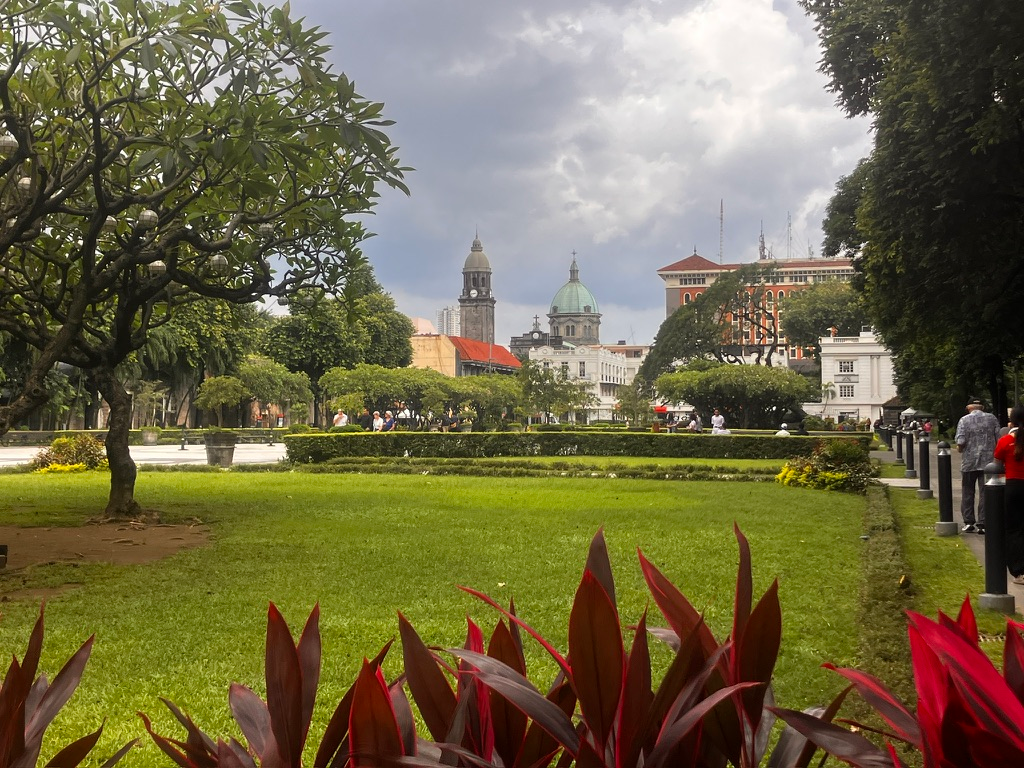
Then we walked around the historic walled city of Intramuros.
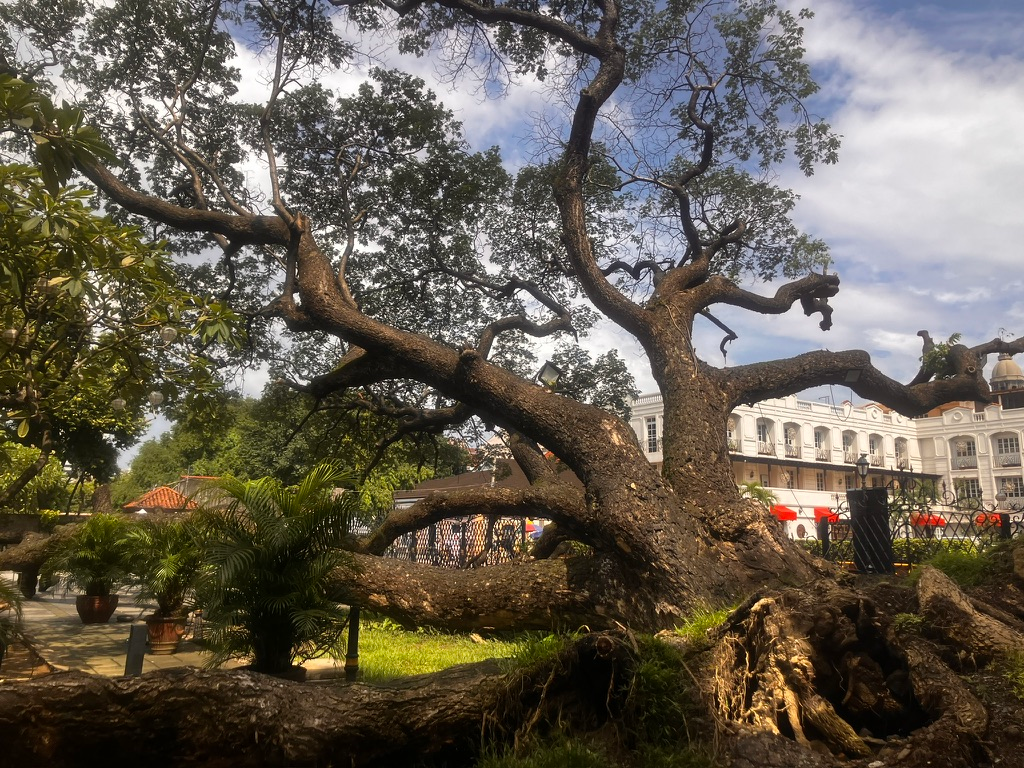
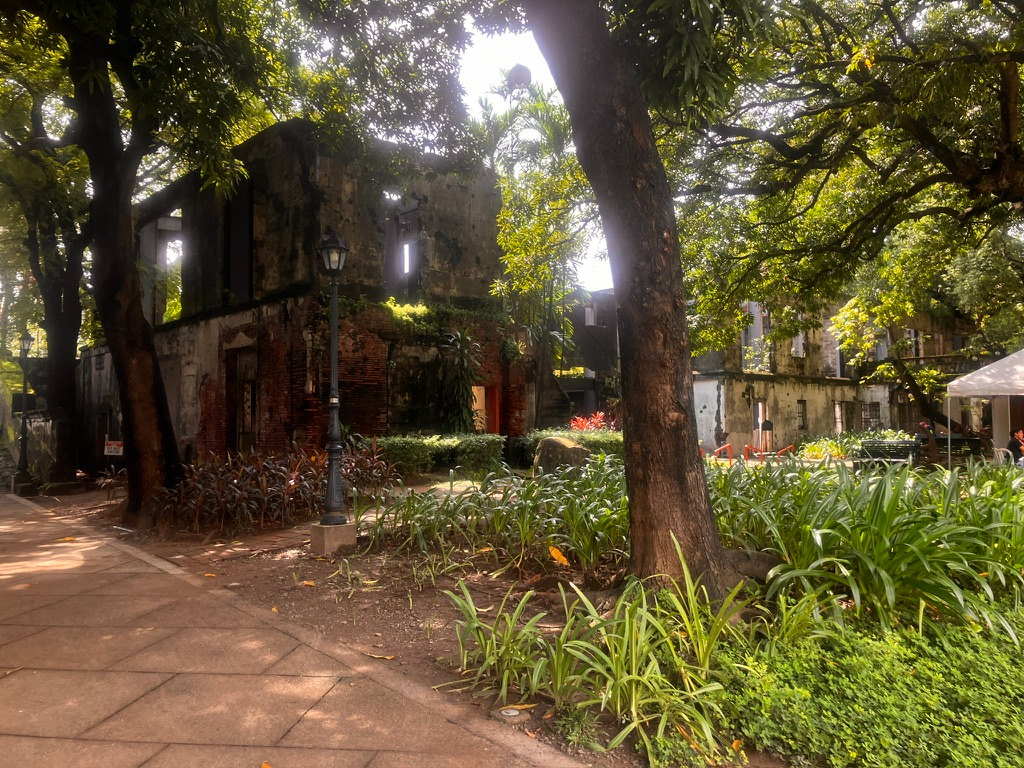
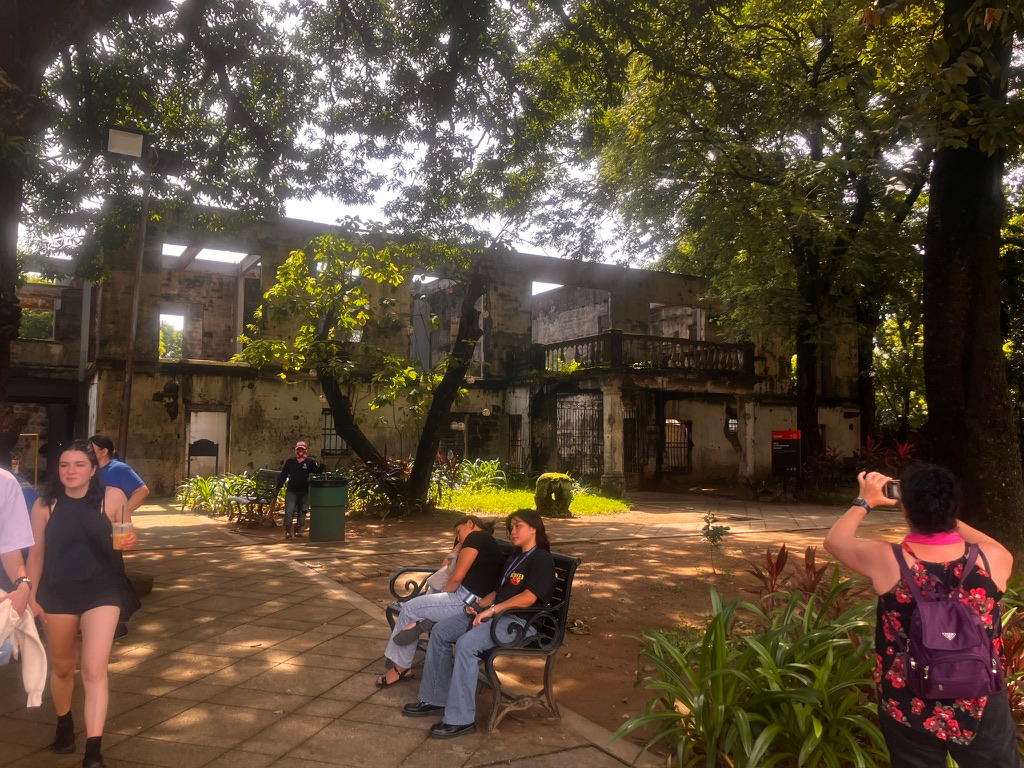
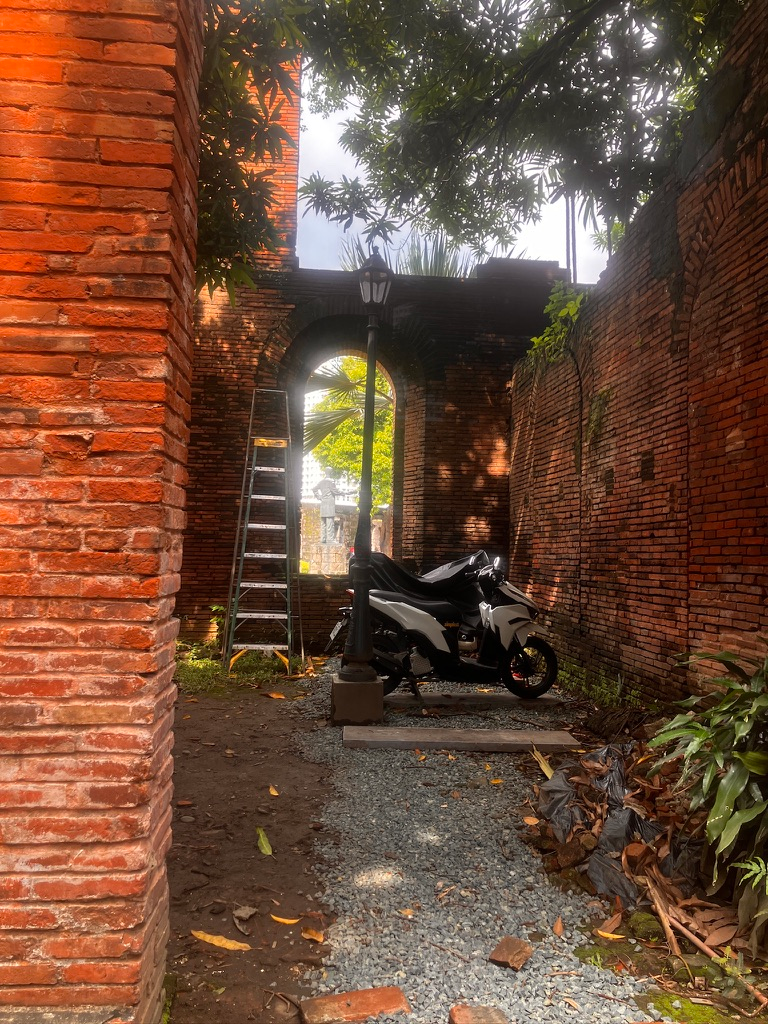
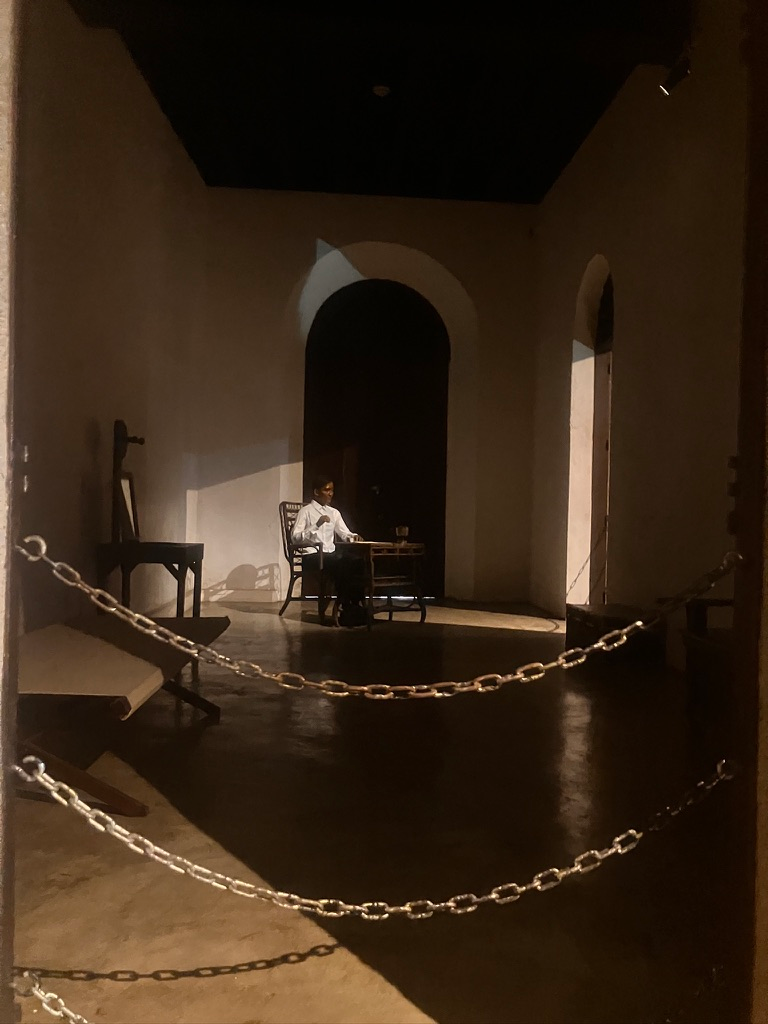
We all noted that the room was bigger than our cabins on the ship.
We walked through Fort Santiago and along the walls.
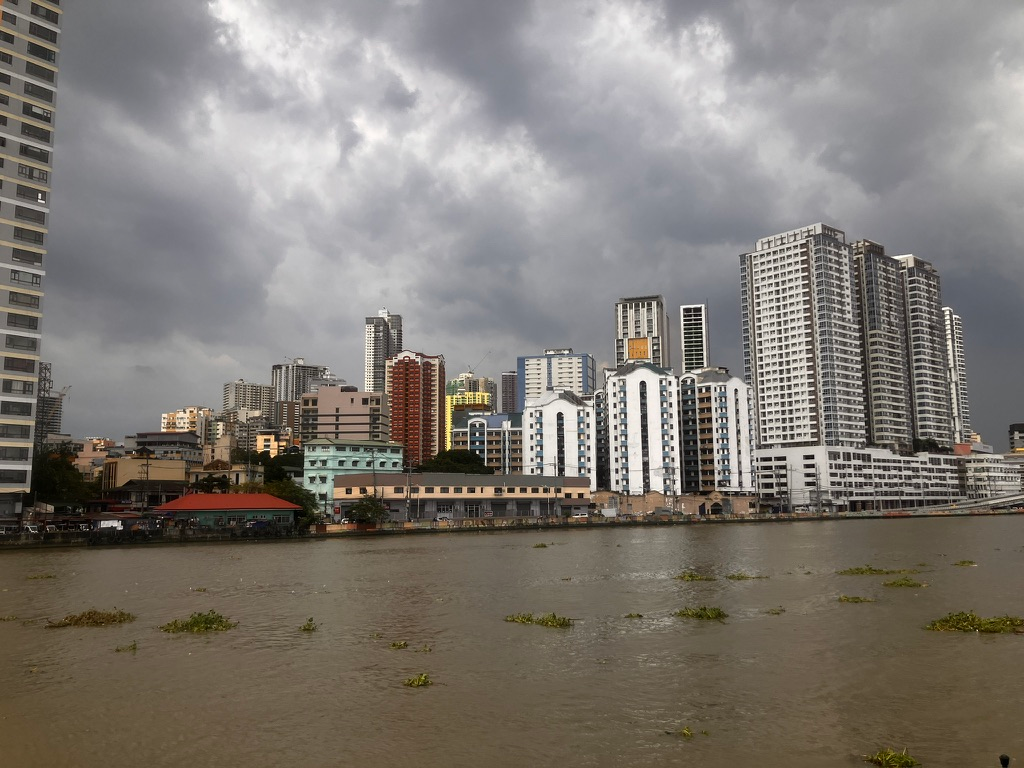
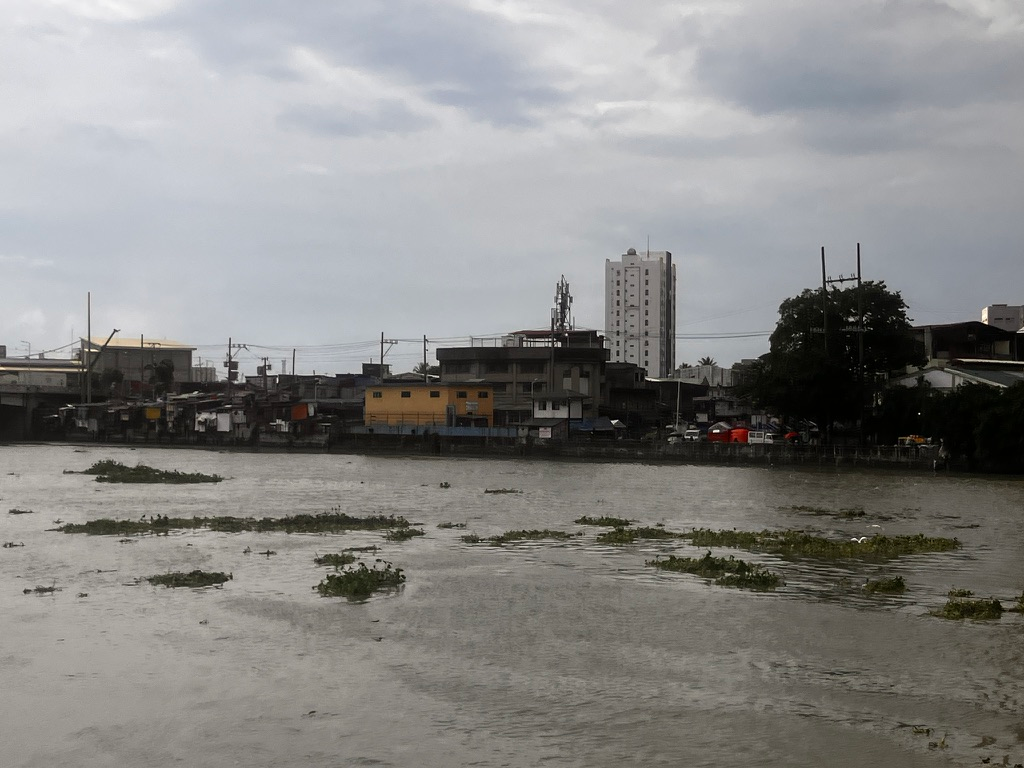
The clouds were rolling in.
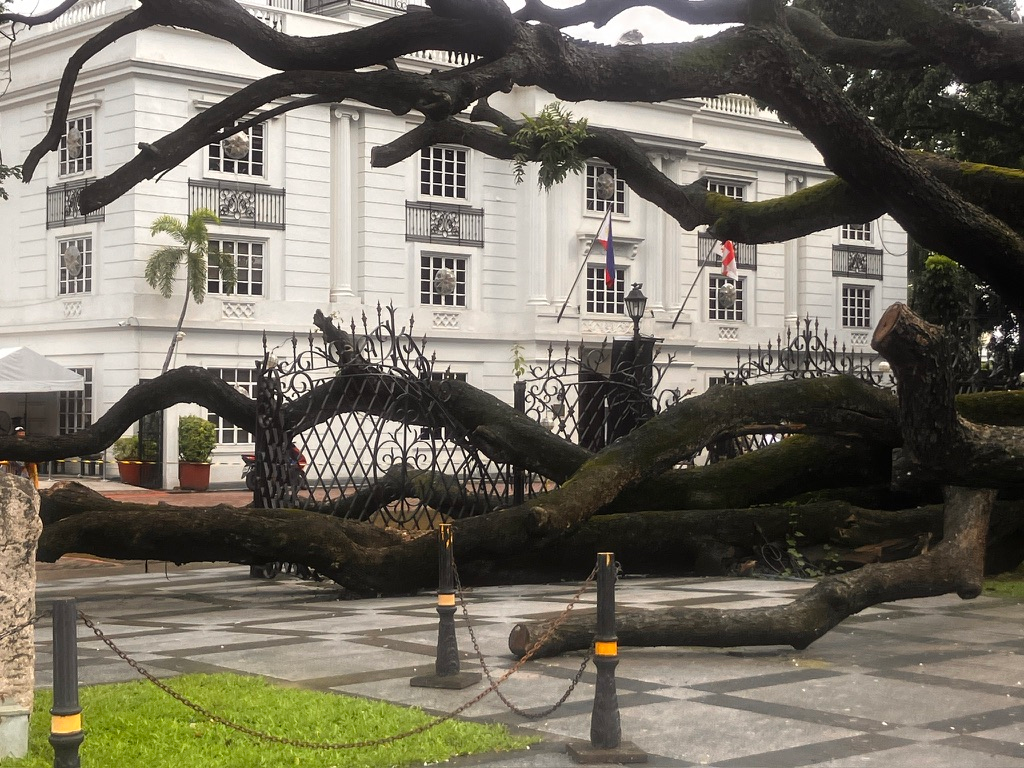
It started raining right as it was time to visit Casa Manila,
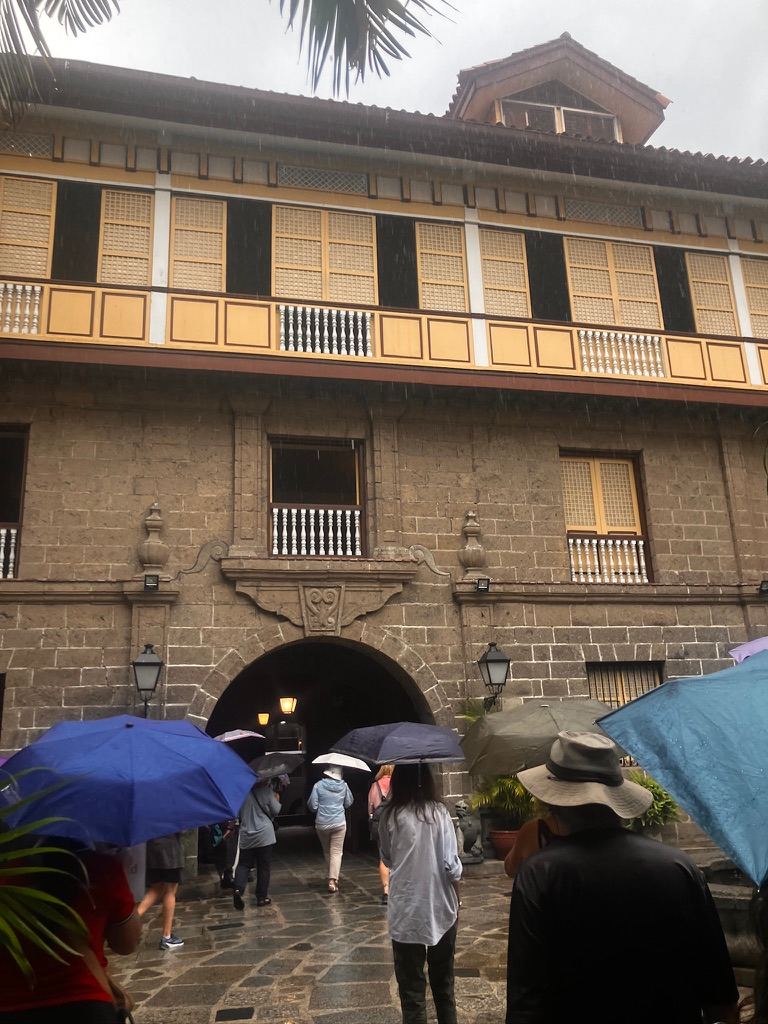
where we got a glimpse of how rich people lived during the Spanish colonial period.
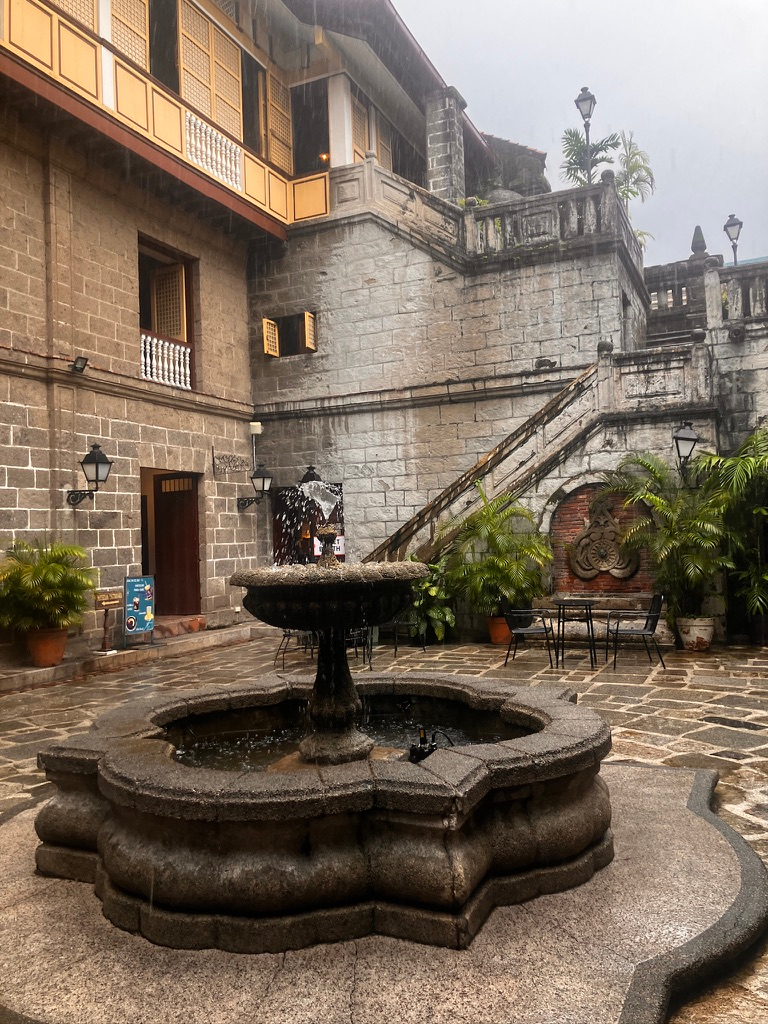
Next door was the San Agustin Church (pictured above).
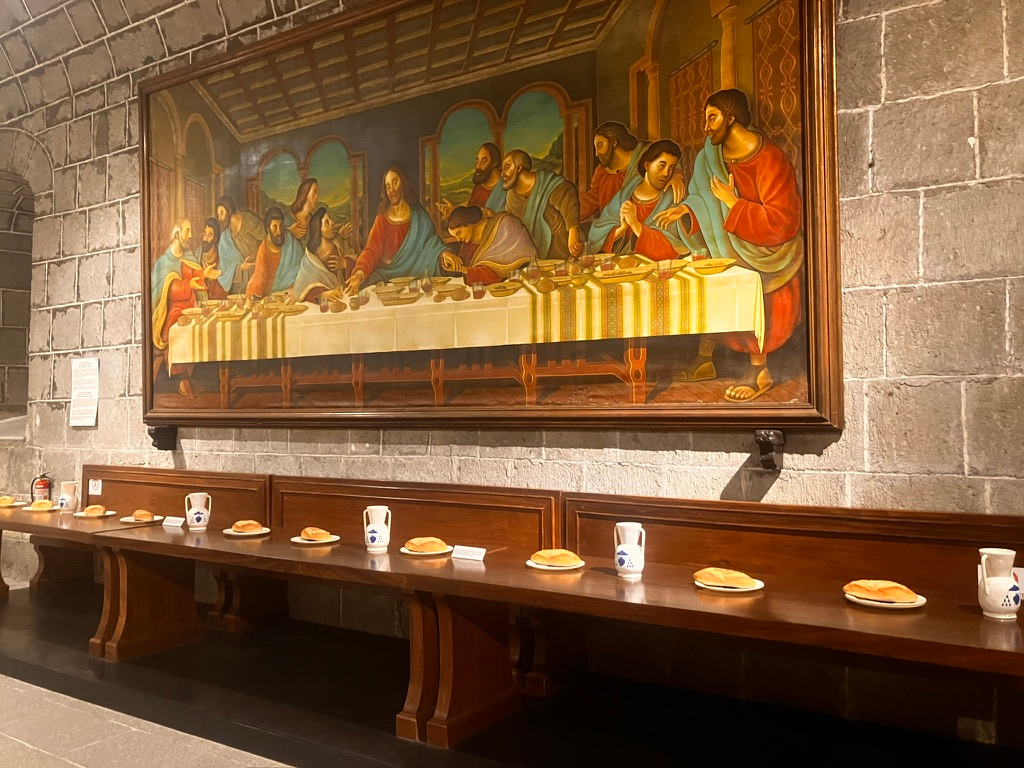
Inside the church, everyone’s phones started pinging.
A typhoon was heading our way, and we needed to get back to the ship as soon as possible. The harbormaster had decided we would be safer at see than in Manila.
So our stay in Manila was much shorter than anticipated.
Back at the ship everyone was trying to reach the people who were still ashore (having beers at Shakey’s Pizza) to tell them to come back so we could get out of there (the ones at Shakey’s Pizza were calling me and telling me to join them).
Safety always comes first.
This time, I was glad I’d had my adventure first and wasn’t waiting to meet up with a friend (although I would have liked to hang out at Shakey’s Pizza).