My views do not necessarily reflect the views of my employer.
October 28 & 29, 2025
I was busy planning a Crossing the Equator Ceremony and a Halloween Party – there was simply too much to do.
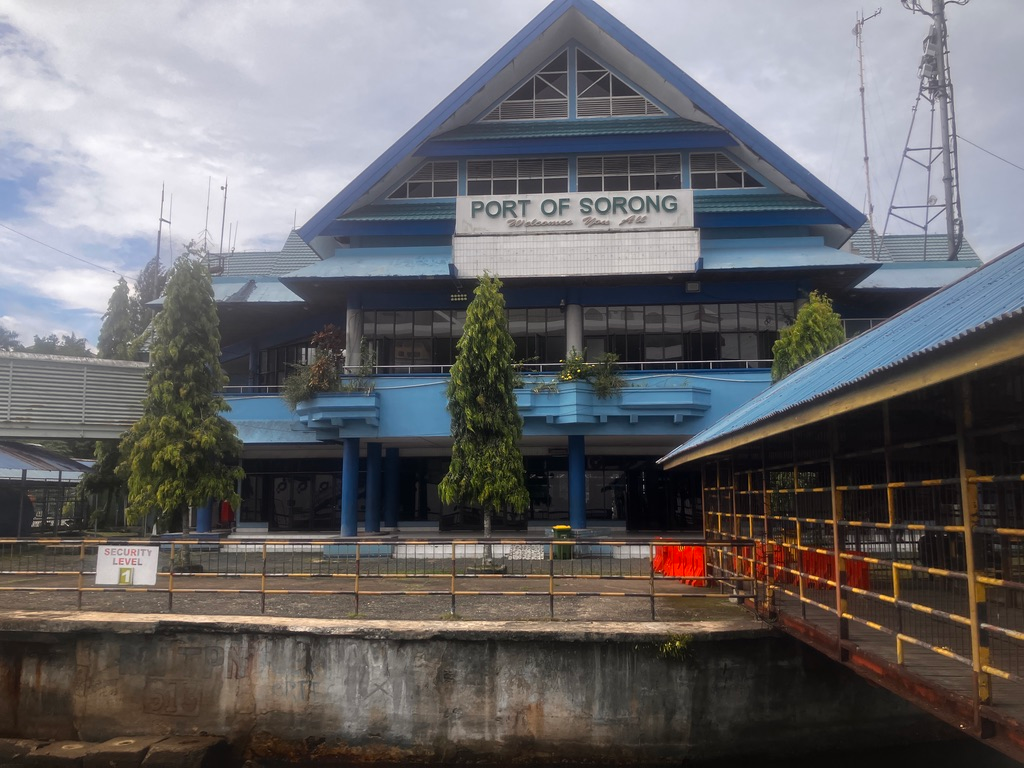
So this is all I saw of Sorong, it’s right (And yes, obviously I wore a sarong for my port lecture).
Sorong, Indonesia
Sorong is the bustling gateway to Raja Ampat, set on the tip of New Guinea’s Bird’s Head. About 284,000–295,000 people call the city home (2020 census 284,410; 2023 estimate ~294,978). Nearby Raja Ampat was designated a UNESCO Biosphere Reserve in Sept 2025—recognizing one of the planet’s richest coral ecosystems. Expect warm, humid days around 30 °C (86 °F) and nights near 24–25 °C (75–77 °F). Sorong’s identity mixes port energy, Papuan cultures, Chinese-Indonesian heritage (hilltop pagoda views), and easy boat hops to mangrove-lined isles—plus markets stacked with tuna and tropical fruit.
History:
Sorong grew around safe anchorages facing Salawati and Doom (Pulau Doom) Islands—key stepping stones for spice and copra routes. Dutch control folded the area into the Netherlands East Indies; Doom Island became an administrative hub with colonial buildings and later Japanese occupation in WWII. After independence, Sorong expanded as a logistics port for Papua and Raja Ampat, handling inter-island shipping, fuel, and fish. In recent decades, growth accelerated with air links, the busy public ferries to Waisai (Raja Ampat’s capital), and steady port upgrades. Today, Sorong is a staging point for world-class diving and a service center for Southwest Papua, with a street-level culture that moves between markets, hilltop temples, waterfront mosques and churches. Many travelers overnight here before ferries or liveaboards; others take day forays to Doom Island for colonial relics and harbor views or browse Pasar Remu for produce and smoked fish. The city’s modern identity is practical and maritime—an “in-between” that’s also worth exploring if you like working ports and local food.
Itinerary:
Arrival: Tuesday October 28, 8:00am (please allow time for port clearance)
Departure: Thursday October 30, All aboard: 5:00pm Sail away: 6:00pm
Weather
- Average Temps (Oct): High ~30 °C / 86 °F, Low ~24 °C / 75 °F; humid, frequent showers.
- Climate: Equatorial rainforest (Af)—no true dry season; brief squalls mixed with sun.
- What to Wear: Light, breathable layers; hat; reef-safe sunscreen; compact rain jacket/poncho; sturdy sandals or sneakers (wet pavements/steps).
Near the Pier:
Cruise Ship Dock: Port of Sorong (Pelabuhan Sorong)
Address: Jl. Jend. A. Yani No. 13, Sorong
Address (Bahasa Indonesia): Jalan Jenderal Ahmad Yani No. 13, Sorong
Distances: Ship → terminal ~100 m; ship → port gate ~200 m; ship → town center ~5 km.
Nearby Essentials:
- Pharmacy/Clinic: Small apotek and clinics along Jl. A. Yani / Jl. Basuki Rahmat; larger services around city center.
- ATMs: BRI/Bank Papua/Bank Mandiri ATMs across downtown; machines near markets and malls.
- Grocery/Snacks: Pasar Remu (traditional market; mornings best).
- Nearest Church: Numerous Protestant/Catholic churches in central Sorong.
- Nearest Golf: None in Sorong; golfers typically play in Manokwari or elsewhere in West Papua (not day-trip friendly).
- Nearest Shopping: Pasar Remu; small plazas; most travelers shop essentials before ferries to Raja Ampat.
Getting Around:
- 🚶 Walking: The port is industrial; sidewalks patchy. City center is ~5 km—best to ride.
- 🚌 Public Transit: Angkot/bemo minibuses run fixed routes; short hops typically Rp 5,000–6,000 when boarding on the main roads.
- 🚖 Taxis / Ride-hailing: Only online taxis (Grab/Maxim/ojek) are practical; they cannot enter the secure port area—meet your driver at the port gate (~200 m) and have the gate name pinned.
- Typical in-town car rides Rp 30k–60k; motorcycle ojek Rp 5k–30kdepending on distance and surge.
- 🚴 Bike Rentals: Not common.
- 🚗 Car Rentals: Available via hotels or local agencies; drivers often included.
- Hop-On Hop-Off: Not available.
Witnessing:
Sapta Ratna Pagoda (Hilltop Pagoda & Temple) — A serene, seven-tier Chinese pagoda perched above town with sea breezes and wide views—golden hour is gorgeous for photos. Inside the compound you’ll find tidy gardens, prayer halls, and tinkling wind chimes; expect light incense and a calm, devotional atmosphere.
- Practical: Small entry fee (around Rp 10,000); plan 30–40 min. From the port gate: 15–25 min by car/taxi, ~Rp 30k–60k. Steep access road; modest steps at the site. Dress modestly; remove shoes in temple interiors.
✨ Tip: Pair the visit with a quick waterfront warung stop for fresh sirsak (soursop) or mango juice.
Doom Island (Pulau Doom) — Once the Dutch administrative center, today a mellow island of colonial-era houses, shady lanes, and harbor panoramas. Walk the waterfront, peek at old government buildings, and chat with locals for stories about wartime days and the island’s famed seawater-to-freshwater plant.
- Practical: Taxi/ojek to the small-boat piers in Sorong, then local boat ~10 min across. Allow 1.5–2 hrs to wander. Public boats run frequently; charters are negotiable (agree price/time before boarding). Light sandals are fine; carry sun/heat protection.
✨ Tip: Ask your boatman to point out the best lookouts—views back to Sorong are excellent.
Pasar Remu (Central Market) — The city’s beating heart: stacks of yellow-fin and skipjack tuna, smoky ikan asap(smoked fish), pyramids of chilies and limes, plus textiles and housewares. It’s energetic, aromatic, and wonderfully photogenic.
- Practical: Best early morning; allow 30–60 min. From the port gate: 15–20 min by car or angkot (shared minivan). Bring small bills; keep valuables zipped; ask before photographing vendors.
✨ Tip: Try a small portion of ikan asap or a cup of sweet, strong coffee from a stall—simple, local, and delicious.
Hidden Gems:
- Back-alley Food Stalls near the Ferry Jetty — Satay, mie goreng, fresh fruit shakes—local, fast, cheap.
- Neighborhood Warungs at Sunset — Order grilled fish and sambal dabu-dabu-style relishes; watch port lights flicker on
Learning:
Traditional Papuan Houses & Small Museum (city area) — A compact, low-key stop that neatly frames West Papua’s cultural mosaic before you roam farther afield. Inside, you’ll find scale models and photos of rumah adat (traditional houses) from coastal islands to highland valleys, alongside woven noken bags, shell ornaments, and bark-cloth attire. Labels are simple but illuminating, and staff are usually happy to point out regional differences—roof pitches, stilt heights, and carving motifs that signal clan or landscape.
- Practical: Plan 45–60 min. From the port gate it’s typically 10–25 min by taxi/ojek (budget Rp 30k–60k each way, negotiate first). Expect a modest entry fee; hours often morning–late afternoon. Etiquette: Dress modestly, remove hats inside exhibit rooms, and ask before photographing staff or visitors.
✨ Tip: Ask a guide to contrast island stilt houses (for tides/ventilation) vs highland ridge-beam houses (for cool nights)—it makes later village visits more meaningful.
Discovery:
Harborfront Photo Walks — Sorong’s waterfront is a living stage: purse-seiners unloading the night’s catch, inter-island ferries belching horn and diesel, mechanics tuning outboards on the quay, and vendors selling iced drinks under bright tarps. The textures are fantastic—peeling paint, coils of rope, painted hulls, and reflections on oily water—set against a skyline of cranes and low mountains.
- Practical: Plan 30–60 min around golden hour (early morning or late afternoon). From the port gate, the most photogenic stretches are typically 5–15 min by taxi/ojek along the central wharf. Wear closed-toe shoes and keep a respectful distance from active loading zones. Always ask before photographing people.
Local Boat Ride toward the Salawati Channel — Charter a small boat for a slow cruise along mangrove-fringed shores toward the Salawati Channel. You’ll pass stilted villages, shrimp nets, and quiet creeks where kingfishers, mudskippers, and the occasional monitor lizard reveal themselves. When the light mellows, ripples turn copper and the forest mirrors perfectly in the water—serene and very photogenic.
- Practical: Arrange at local piers (e.g., Ruko/Pateten). Typical charters run 60–90 min; expect ~Rp 200k–400k per boat depending on distance and negotiation. Go at slack tide for smoother water; bring a hat, sunscreen, and a dry bag for spray. Confirm life jackets are on board and agree the route, duration, and total price before departure.
✨ Tip: Ask your boatman to nose into a mangrove creek for still water and birdlife—then cut the engine and drift for a few minutes to let wildlife settle back in.
Hiking (day-trip friendly)
- Pagoda Hill Stairs (Sapta Ratna) — Short stair sections; easy.
- Doom Island Loop Walk — Flat coastal lanes and village paths; easy; bring sun/heat protection.
Bukit Alang-Alang (Sorong) — Grassy Ridge Sunset Hike — A low, wind-brushed hill of alang-alang (cogongrass) that rises just outside the city, with open ridgelines and wide views over Sorong, forested foothills, and the inlet. It’s a quick leg-stretcher rather than a full trek—great for golden-hour photos when the grass glows and the city lights flicker on. Expect a simple footpath up through scrub and grass, with a few short, steeper pitches near the top.
- Practical: From the port gate, plan 15–25 min by car/ojek to the trail area (the hill is ~4–5 km from central hotels such as the Aston). Budget Rp 30k–60k each way by ride-hail/ojek, then 10–20 min on foot to the ridge. No facilities or ticket booth (occasionally a small local fee/parking). Go in closed-toe shoes, bring 1L water pp, hat, and insect repellent; grass can be sharp and trails slippery after rain. Avoid midday heat.
Access notes: There’s no formal park entrance—ask your driver to wait or arrange a return pickup; local ojek riders know the usual starting lanes. Be respectful around any farm plots or fenced areas (private land). Sunset is stunning, but begin your descent before dark.
Shopping
Pasar Remu (Central Market) — Best for fruit, spices, textiles, and snapshots of daily life; cash only. ✨Tip: Yellow angkot minibuses are cheap and frequent.
Small Plazas & Minimarts (citywide) — Handy for stocking up on bottled water, soft drinks, snacks, sunscreen, and basic toiletries before excursions. Many have cold cases and ATMs nearby; some stay open late.
- Practical: From the port gate, most central options are 10–20 min by car/ojek. Prices are posted; cards accepted at larger shops, but cash is still useful.
SAGA Supermarket & Department Store — A reliable one-stop for travel essentials: groceries, bakery items, toiletries, simple clothing, flip-flops, power adapters, and household odds-and-ends. It’s air-conditioned, organized, and a calmer alternative to the market when you just need supplies.
- Practical: 15–25 min by car from the port gate depending on traffic. Expect a mix of cash and card acceptance (have cash as backup).
✨ Tip: Look for locally made snacks (cassava chips, banana crisps) and small packets of kopi (Indonesian coffee) to take back to the ship.
Exploring:
Raja Ampat (Waisai, Waigeo) — A dreamscape of karst islets, glassy lagoons, and manta-rich channels now recognized as a UNESCO Biosphere Reserve (2025), complementing its UNESCO Global Geopark status. It’s spectacular—but logistics from a cruise call are demanding. Public fast ferries Sorong ⇄ Waisai run ~2–2.5 hrs each way with fixed departures; once in Waisai, you’ll still need pre-arranged resort/boat transfers to reach prime snorkel or viewpoint spots. With check-ins, transfers, and weather margins, a single full day ashore is usually too tight unless you charter a private speedboat (pricey) and line up pier-to-pier handoffs. Seas can be lumpy in changeable weather; always build contingency time.
- Practical: Walk from the cruise dock or take a short taxi to Sorong’s Reef/Ferry terminal; carry passport, cash (for tickets/porters), and a dry bag. Confirm marine-park tag requirements with your operator.
- Ferries to Waisai are popular; check same-week schedules and buy tickets early.
✨ Note: The new UNESCO Biosphere Reserve designation underscores extraordinary biodiversity—plan with reputable operators who follow reef-safe practices and have weather backup plans.
Tasting:
- Papeda (sago porridge) with ikan kuah kuning (turmeric fish broth): classic Papuan combo.
- Ikan bakar (grilled fish) & tuna steaks: plentiful in a fishing hub like Sorong.
- Ayam/ikan rica-rica, sate, mie goreng: Indonesian favorites common in warungs.
- Typical prices: warung mains Rp 25k–50k ($1.50–3); simple seafood plates Rp 60k–120k ($3.50–7); fresh juices Rp 10k–20k.
Irish pubs / Mexican: Not present in Sorong; selection skews Indonesian/seafood.
Nightlife:
Low-key and early: cafés and small eateries close around 9–10 pm; some hotel lounges stay open later. Best options are relaxed dinners near the waterfront with a stroll back to the gate.
Travel Tips:
- Spend your Indonesian cash – this is our last port in Indonesia until April
- Cash vs Card: Bring cash (IDR) for markets, boats, angkot, and smaller eateries; cards accepted at some hotels/shops.
- Etiquette: Ask before photographing people/boats; modest dress away from beaches/boats.
- Language help: Bahasa phrases go far—Permisi (excuse me), Terima kasih (thank you), Berapa harganya? (how much?)