My views do not necessarily reflect the views of my employer.
The first time I visited Jeju was last summer- it was the first day I was able to get off the ship while working on the Diamond Princess. If you recall, I took the shuttle to the fish market, went for some Korean BBQ (though I suppose it’s just called BBQ in Korea) and then managed to get lost and turned around in the fish market. After more moments of panic than I preferred, I managed to find my way back to the ship.
The Diamond returned to Jeju nearly every other cruise after that, but I was either IPM or too busy with responsibilities (like stepping up as Cruise Director) so I don’t think I had another chance to explore this island. Now, though, I know of many more things to do!
Jeju-do, Korea
Jeju-do—commonly called Jeju Island—is South Korea’s largest island, known for its volcanic landscapes, lush countryside, and unique cultural heritage. Designated as a UNESCO World Natural Heritage Site, Jeju is often described as the “Hawaii of Korea,” with its beaches, waterfalls, lava caves, and the towering peak of Hallasan, South Korea’s highest mountain. Beyond natural beauty, Jeju has its own dialect, traditions, and food culture, offering visitors a distinct experience from mainland Korea.
Jeju-do is home to around 670,000 residents. It holds multiple UNESCO designations:
- Jeju Volcanic Island and Lava Tubes – World Natural Heritage Site (2007)
- Biosphere Reserve – recognized for its ecological importance
- Global Geopark – for its unique volcanic features
History:
For centuries, Jeju developed separately from the Korean mainland due to its geographic isolation. It was once home to the Tamna Kingdom, an independent culture that maintained close trade ties with neighboring countries. Over time, Jeju was absorbed into Korean dynasties but kept much of its distinct identity, from language to shamanistic rituals. During the 20th century, the island endured hardship, including the Jeju Uprising of 1948, but it has since become a premier domestic and international tourist destination—celebrated for its peace, beauty, and unique traditions.
Itinerary:
Possible Visit: August 26
Arrival: Saturday August 30 10:00am (please allow time for port clearance)
Departure: Sunday August 31 All aboard: 5:00pm Sail away: 6:00pm
Weather
- Average Temps (August): 25°C–30°C (77°F–86°F)
- Climate: Subtropical; hot, humid, with occasional rain showers or typhoons in late summer
- What to Wear: Light, breathable clothing, a hat, sunscreen, and comfortable shoes for walking or hiking. A light raincoat or umbrella is advisable.
Currency: The local currency is the Korean Won (KRW). Credit cards are widely accepted, but carrying some cash is useful for smaller shops, markets, and taxis.
Korean is the official language of Korea. While English is taught in schools and used in some public signage, it is not widely spoken in daily life. In major cities and tourist areas, basic English is often understood, but outside these areas, communication in English may be limited.
Near the Pier:
Cruise Ship Dock: Seogwipo Gangjeong Cruise Terminal (Berth No. 1 & No. 2)
Address: 261 Maljil-ro, Seogwipo-si, Jeju, South Korea
Address in Korean: 제주특별자치도 서귀포시 말질로 261
Distances:
- Ship to Port Gate: ~20–50m
- Ship to Terminal: 1,200m (connected by an automated moving walkway)
- To New Town: 4 km (~6–8 min by taxi)
- To Downtown Seogwipo: 9 km (~15–20 min by taxi) or 12km (about 30 minutes by car)
- About 45km from Jeju city center.
Nearby Essentials
- Port Facilities: Currency exchange, Tourist Information, Convenience store, Lounge, Departure hall, Tax refund
- Pharmacy: Pharmacies available near E-mart in New Town (~10 min taxi)
- ATM: Hana Bank and Jeju Bank (across from E-mart)
- Grocery/Snacks: E-mart or convenience stores inside the terminal
- Nearest Church: Gangjeong Church
- Nearest Golf: Jungmoon Golf Club (~20 min by car)
- Shopping: E-mart Shopping Center (7–10 min by taxi); souvenir, cosmetics, and convenience stores available in terminal
Getting Around:
- 🚶 Walking: Limited near the port; attractions require transport.
- 🚌 Public Transit: City buses run regularly; Bus 680 connects Seogwipo and southern Jeju.
- T-Money Card: Prepaid transport card usable on buses and taxis.
- 🚖 Taxis: Readily available; metered and reliable—best option for short visits.
- 🚴 Bike Rentals: Possible in Seogwipo; not common near port.
- 🚗 Car Rentals: Widely available, popular with visitors; international license required.
- Hop-On Hop-Off Bus: Available around Jeju City (northern side of the island), less convenient from Seogwipo.
🚐 Transportation from Gangjeong Cruise Terminal (Seogwipo)
📍 Cruise Dock: Gangjeong Cruise Terminal, Seogwipo
🚖 By Taxi / Car
- To Seogwipo Downtown (市中心 / 서귀포시청 일대)
- Distance: ~9 km
- Time: 15–20 minutes
- Cost: ~₩8,000–12,000 (USD $6–9)
- To Jeju City Downtown (제주시 / 市中心)
- Distance: ~40 km
- Time: 50–70 minutes (traffic dependent)
- Cost: ~₩35,000–50,000 (USD $26–38)
🚌 By Bus
- To Seogwipo Downtown:
- Local bus service available
- Time: ~25–35 minutes
- Fare: ~₩1,200–1,500 with T-Money card
- To Jeju City Downtown:
- Local / express buses available but slow
- Time: ~90–120 minutes
- Fare: ~₩3,300–4,500
💡 Travel Tips
- Taxis are plentiful and reliable—best option for cruise passengers with limited time.
- Carry small bills or a T-Money card for buses.
- For August heat/humidity, taxis save time & energy compared to waiting outdoors for buses.
- Allow extra time for traffic, especially near Jeju City.
Witnessing:
Seongsan Ilchulbong (Sunrise Peak, UNESCO): One of Jeju’s most iconic landmarks, Seongsan Ilchulbong is a dramatic volcanic tuff cone formed by an underwater eruption more than 100,000 years ago. Rising 182 meters above sea level, its vast crater is surrounded by steep cliffs on three sides and grassy meadows on the fourth, creating a striking contrast against the blue sea.
The site is a designated UNESCO World Natural Heritage Site, recognized for its unique geology and scenic beauty. It is especially famous at dawn, when visitors climb the well-maintained trail to the summit for breathtaking views of the sunrise over the East China Sea.
- Height: 182 meters
- Climb Time: ~20–30 minutes on paved steps and paths
- Best Time to Visit: Early morning for sunrise, or late afternoon for cooler temperatures
- Access: About 1 hour from Jeju City or Seogwipo by bus or taxi
✨ Fun Fact: The name “Ilchulbong” literally means “Sunrise Peak,” and the view from the top is considered one of Korea’s most beautiful natural sights.
Manjanggul Lava Tube (UNESCO World Natural Heritage) The Manjanggul Lava Tube is one of the longest lava tunnels in the world, stretching over 7 kilometers, though about 1 kilometer is open to the public. Formed by volcanic activity around 200,000 years ago, this underground marvel showcases dramatic lava stalactites, flowlines, and the world’s largest known lava column—measuring 7.6 meters high.
Designated a UNESCO World Natural Heritage Site, the cave is both geologically significant and visually stunning. With its cool underground temperatures, it also provides a refreshing escape from Jeju’s summer heat.
- Length: 7.4 km (1 km open to visitors)
- Highlight: The 7.6 m lava column at the end of the public route
- Visit Time: ~40 minutes round-trip walk
- Access: About 40 minutes by car or bus from Jeju City
✨ Travel Tip: Bring a light jacket—the temperature inside is a cool 10–15°C (50–59°F) year-round.
Jeongbang Waterfall Unique in all of Asia, Jeongbang Waterfall is the only waterfall on the continent that plunges directly into the sea. Cascading from a height of 23 meters, it offers a spectacular sight as freshwater tumbles into the waves below. The surrounding cliffs and rock formations make this a dramatic and photogenic location, and on clear days, you can see out to the vast expanse of the ocean.
The waterfall is also steeped in legend—local lore claims that a holy dragon once lived beneath its waters, blessing those who visit.
- Height: 23 meters
- Best Time to Visit: After rainfall, when the flow is strongest
- Visit Time: ~30–45 minutes for the walk and photo stops
- Access: Just 10–15 minutes by taxi from Seogwipo city center, convenient from the cruise terminal
✨ Travel Tip: The approach to the falls involves uneven stone steps—wear sturdy shoes and be cautious if wet.
Learning:
Jeju Folk Village Museum The Jeju Folk Village Museum is a living museum that recreates life on the island in the late 19th century. Set against a beautiful natural backdrop, it features over 100 traditional thatched-roof houses and stone structures, carefully relocated or reconstructed to preserve Jeju’s heritage. Walking through the village feels like stepping back in time, with exhibits highlighting farming life, fishing traditions, shamanistic rituals, and unique island crafts.
Visitors can explore themed areas dedicated to village schools, blacksmith workshops, markets, and even scenes from Jeju’s historical dramas, which are often filmed here. Local staff in traditional attire bring the past to life, offering demonstrations of folk games, handicrafts, and daily customs.
- Tickets: Adults: ~₩11,000 (about USD $8)
- Visit Time: 1–2 hours recommended
- Access: About 40 minutes by car or taxi from Seogwipo; easily combined with a visit to Seongsan Ilchulbong
✨ Fun Fact: The Jeju Folk Village has been a filming site for many Korean historical dramas, making it popular with fans of K-culture as well as history enthusiasts.
Haenyeo (Women Divers) Cultural Experience (UNESCO Intangible Heritage) The Haenyeo of Jeju—literally “sea women”—are legendary free-diving women who harvest abalone, sea urchins, shellfish, and seaweed from the ocean depths without oxygen tanks. This centuries-old tradition is recognized by UNESCO as an Intangible Cultural Heritage of Humanity and is one of Jeju’s most unique cultural treasures.
The Haenyeo are remarkable not only for their diving skill but also for their resilience: many continue diving well into their 60s and 70s. They represent Jeju’s matriarchal heritage, as the women historically supported their families through the harvests while men often stayed ashore.
Visitors can learn about their culture at the Haenyeo Museum, which showcases diving gear, photographs, and stories of their daily lives. In some coastal areas, especially near Seongsan Ilchulbong, you can witness live demonstrations where Haenyeo perform their traditional dives and later serve fresh seafood to visitors.
- Tickets: Adults: ~₩1,100 (about USD $1)
- Visit Time: 1–1.5 hours (museum or demonstration)
- Access: Haenyeo Museum ~1 hour by car from Seogwipo; Haenyeo demonstrations offered at selected coastal points near Seongsan
Where & when
- Seongsan Ilchulbong (Sunrise Peak) seaside show – commonly scheduled daily at 2:00 pm on the beach below the peak. It’s free to watch, but weather/sea conditions can cancel at short notice.
Notes: Some guides/blogs mention additional sessions (e.g., 1:30 pm & 3:00 pm), but the most consistently listed time is 2:00 pm. Plan to arrive a bit early. - Plan-B (indoors, all-weather): Aqua Planet Jeju “Haenyeo” show – multiple performances throughout the day(roughly late morning to mid-afternoon; exact times vary by season). Recent official schedules list 10:50 / 12:50 / 14:50 / 16:20, and tourism pages list 10:40 / 12:30 / 14:10 / 16:00. Check the day-of timetable on the aquarium’s site/foyer.
✨ Travel Tip: When watching live demonstrations, you may hear the sumbisori—the distinctive whistle-like sound Haenyeo make when exhaling after resurfacing. It’s considered a symbol of Jeju’s living heritage.
Discovery:
The Olle Traditional Market in Seogwipo is one of Jeju’s most lively and authentic local markets, offering a true taste of island life. Founded in 1960, it has grown into a bustling hub where vendors sell everything from freshly caught seafood and Jeju’s famous black pork, to tropical fruits like hallabong and tangerines, local snacks, and handmade crafts.
Walking through the covered alleys, you’ll find sizzling street food stalls serving specialties such as Jeju abalone porridge, black pork skewers, bingtteok (mung bean pancakes), and hotteok (sweet pancakes filled with nuts and sugar). The market is also an excellent place to shop for souvenirs like teas, seaweed, honey, and local cosmetics.
- Highlights: Street food tastings, local produce, seafood, handicrafts, and cultural atmosphere
- Visit Time: 1–2 hours
- Access: About 15 minutes by taxi from Gangjeong Cruise Terminal, located in Seogwipo city center
✨ Travel Tip: The market is busiest in the late afternoon and evening, when locals do their shopping and the food stalls are at their most vibrant.
E-mart Shopping Center For a more modern shopping experience, E-mart is Jeju’s largest retail chain and a convenient one-stop shop for both practical items and local souvenirs. Unlike the lively chaos of the traditional market, E-mart feels more like a department store and supermarket combined, offering a wide range of groceries, clothing, cosmetics, electronics, and household goods.
Travelers often visit E-mart to stock up on Korean snacks, teas, instant noodles, cosmetics, and packaged local specialties to take home. It’s also a good spot for everyday essentials—whether bottled water, fruit, or travel toiletries—before returning to the ship.
- Highlights: Wide variety of Korean snacks, cosmetics, daily necessities, and souvenirs under one roof
- Visit Time: ~45 minutes to 1 hour
- Access: About 7–10 minutes by taxi from Gangjeong Cruise Terminal (located in Jeju’s New Town area, near ATMs and banks)
✨ Travel Tip: Bring your own reusable shopping bag—plastic bags may incur a small fee.
Exploring:
The Yakcheonsa Temple is one of the largest Buddhist temples in Asia and a striking example of modern Korean temple architecture. Built in the 1990s, it was designed in the grand style of Buddhist temples from the early Joseon Dynasty, combining traditional aesthetics with impressive scale. Its name, Yakcheonsa, means “Temple of the Medicine Buddha,” reflecting its dedication to healing and compassion.
The temple’s main hall soars four stories high, with richly painted interiors, ornate wooden beams, and a massive golden Buddha statue. Outside, visitors can stroll through serene grounds that include stone lanterns, a peaceful pagoda, and a spring said to have healing properties. While it is relatively new, Yakcheonsa is an active place of worship and a powerful symbol of Jeju’s spiritual life.
- Visit Time: 30–45 minutes
- Access: Located near Jungmun Resort area, about 20 minutes by car from Gangjeong Cruise Terminal
✨ Travel Tip: Visit in the morning for a quieter atmosphere, and remember to dress modestly as it remains an active place of worship.
The Jeju Stone Park is an expansive outdoor cultural and ecological park that showcases the island’s deep connection to stone, nature, and folklore. Jeju’s volcanic origins and rich mythology are reflected here through exhibitions of stone sculptures, dol hareubang (grandfather stone statues), and art installations scattered across tranquil landscapes.
Covering more than 3 million square meters, the park blends natural volcanic terrain with cultural displays, offering walking trails, lakes, and open-air exhibits. The on-site museum provides insight into Jeju’s geology, shamanistic traditions, and legends of Seolmundae Halmang—the giant goddess said to have created Jeju Island.
- Tickets: ₩5,000 (~USD 3–4)
- Visit Time: 1.5–2 hours
- Access: About 45 minutes by car from Gangjeong Cruise Terminal, best combined with other cultural or nature excursions in eastern Jeju
Hidden Gems:
Teddy Bear Museum – The history of the plush toy and South Korea collected under one roof
Jeju Loveland – South Korea’s only sex-themed park
Hiking:
- Hallasan Mountain: South Korea’s highest peak at 1,950m; trails range from half-day hikes to full summit treks.
- Olle Trails: A network of scenic coastal walking routes, with routes near Seogwipo accessible for short hikes.
- Cheonjiyeon Falls & Jeongbang Falls: Accessible natural wonders near the port.
Tasting:
- Black Pork BBQ: Jeju’s most famous dish, grilled at the table.
- Abalone Dishes: Freshly caught and served as porridge, grilled, or raw.
- Jeju Tangerines: Sweet mandarins unique to the island.
- Seafood Stew (Haemul-tang): Rich hotpot with Jeju’s abundant seafood.
- Hallabong Desserts: Citrus-based cakes and sweets named after Hallasan.
Irish Pub: “The Bar” and a few expat-style pubs can be found in Jeju City, though options in Seogwipo are limited.
Nightlife:
Local Nightlife: Seogwipo offers casual bars and karaoke rooms; nightlife is more vibrant in Jeju City.
Harbor Strolls: The waterfront near Seogwipo is pleasant for an evening walk during your overnight call.
Live Jazz & Music in Jeju
MILES Jazz Bar (Aewol) Located in charming Aewol, MILES Jazz Bar offers a stylish setting with ocean views.
- Performance Times: Two sets nightly—8:00–8:40 pm and 9:00–9:40 pm.
- Entrance Fees: ₩20,000 standard; VIP tables for up to three people cost ₩80,000.
- Access: About a 10-minute walk from Aewol High School. ~30–40 min drive from Seogwipo Terminal
Note: If your itinerary includes time in Aewol on August 30 or 31, this is the most reliable live jazz venue available.
Take5 Jazzclub (Jeju City) A cozy, intimate venue in Jeju City offering live jazz nights.
- Details Available: Location confirmed; performance schedules are not publicly listed. Checking directly or upon arrival is best.
Other Venues with Live Music
These venues often feature live music—sometimes jazz—but schedules may vary or be loosely posted:
- Blue Hill (Jeju City): Known for live acts and “Playground Day” open-auditions on Thursdays.
- The Factory (Jeju City): Expats and local musicians host performances here; typically with cover charges.
- Space Marley: Reggae-themed venue with occasional live sets and a vintage gramophone—you can request a track.
Travel Tips:
- Taxis are the most efficient way to explore during short port calls.
- English is less widely spoken; translation apps or phrase cards are useful.
- Carry small amounts of Korean Won for taxis, markets, and local eateries.
- Weather in August can be hot and humid; stay hydrated and pack for sun or sudden showers.
- Jeju is known for its natural beauty—respect hiking trails and cultural sites.
August 30 & 31, 2025
I wanted to do something I hadn’t done before. I wanted to go to the lava caves, but it turned out they were closed until December – I had a chat with my assistant Chad (Chat GPT) about that. My friend Paulo said that I should go to the Jeju Loveland Park – he sent pictures. But it’s over an hour away by car (he suggested renting one, which felt overwhelming as soon as I started researching that option) or over two hours by bus.
I thought the women divers were interesting, but it was so hot. I tried researching how to get to these places, but everything was so far away and harder to navigate than I was used to. It turns out that in South Korea, Google Maps often lacks full functionality, particularly around navigation and directions, due to government restrictions on geographic data being stored on foreign servers. I wish I’d known that sooner! So I downloaded two other apps and tried to figure out how to use them.
The first day in Jeju, we arrived at 10am and didn’t have crew shore leave until all the residents disembarked and passed through immigration. I waited for Victor, the chef, so we could go out together. Our plan was to visit the fish market for lunch (and buy some groceries for the ship), then I’d go on an adventure the next day.
By the time it was our turn, a ship with 5,000 (mostly Chinese) guests had arrived and was now going through immigration. As we waited patiently in line, residents were already returning to the ship in the other direction and gave us advice – don’t bother with the shuttle, just take an uber. So there was a shuttle!
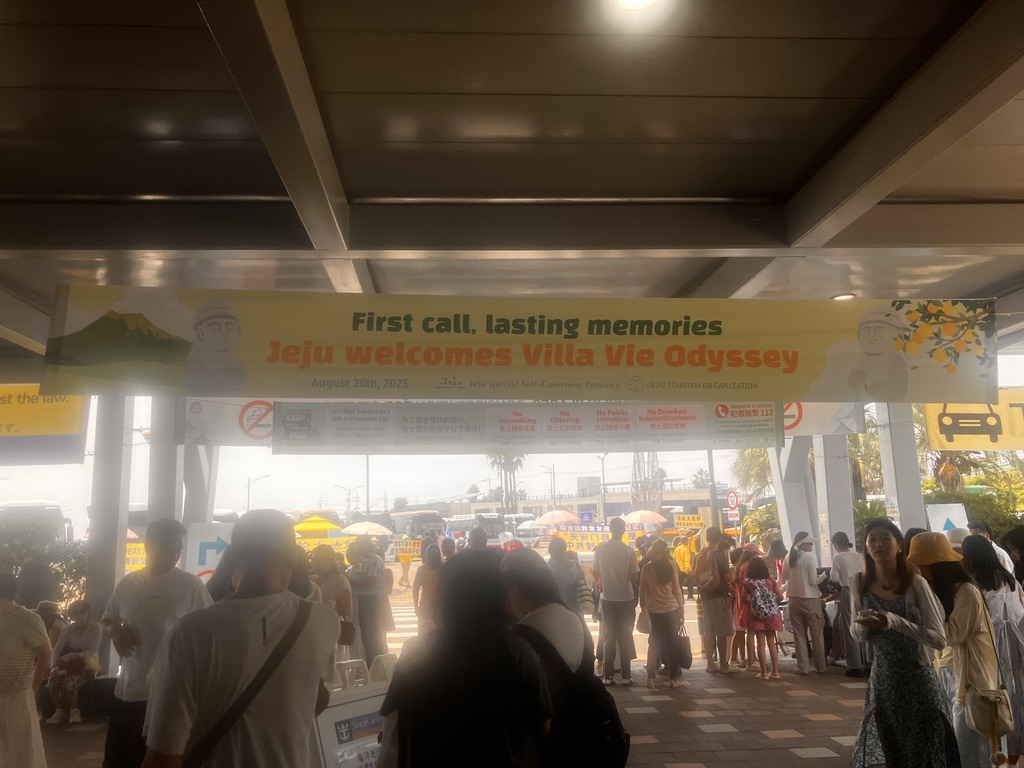
We made it out of the terminal and it was hot. I recieved a “Welcome to Korea” text message telling me I had service in this port, but didn’t have enough signal to look anything up. We went to the taxi line, which was absolute chaos. We found some residents looking for a group to share a ride to the fish market, but the taxi driver wanted to charge twice as much as the other taxis because he had a bigger car. And he only took cash.
We returned to the terminal and waited in line at the currency exchange. Shoot. I had my ATM (and credit) cards but forgot to bring USD to exchange. Luckily Victor had money.
I tried to look up the exchange rate for won but couldn’t find it in my converter app. Later I figured out I was looking under ‘K’ for ‘Korea’ and ‘W’ for ‘Won’, but I didn’t think to look under ‘S’ for ‘South Korean Won.’ AND my data still wasn’t working. I connected to terminal WiFi and tried to call an Uber, but it wouldn’t pick us up because demand was too high. We went back out to the taxi stand and it was still chaos.
I was worried that if it was this much trouble to leave the port, how hard would it be to get back? What if I couldn’t find WiFi? How did I get around so easily a year ago, and why was I now coming up against every obstacle?!
We saw some tents just outside the port entrance and went to go check them out. It turned out to be a Cruise Festival with stalls of sweating locals offering free samples and fanning themselves. It was so hot. We ordered food at a food truck, but my credit card didn’t work, so Victor bought lunch. There was a restaurant beyond the festival so we went there even though we had just eaten a corn dog. They had fans going, which was an improvement from the hot festival.
We were brought a pitcer of ice water and then left alone. What to do now? It wasn’t clear how to order so we connected to the WiFi and regrouped.
We finally figured out how to get service and ordered some more food and drinks and discussed our options for another plan. Victor needed to be back in time for dinner and both of us desperately needed a nap. I concluded that Korea does not like me.
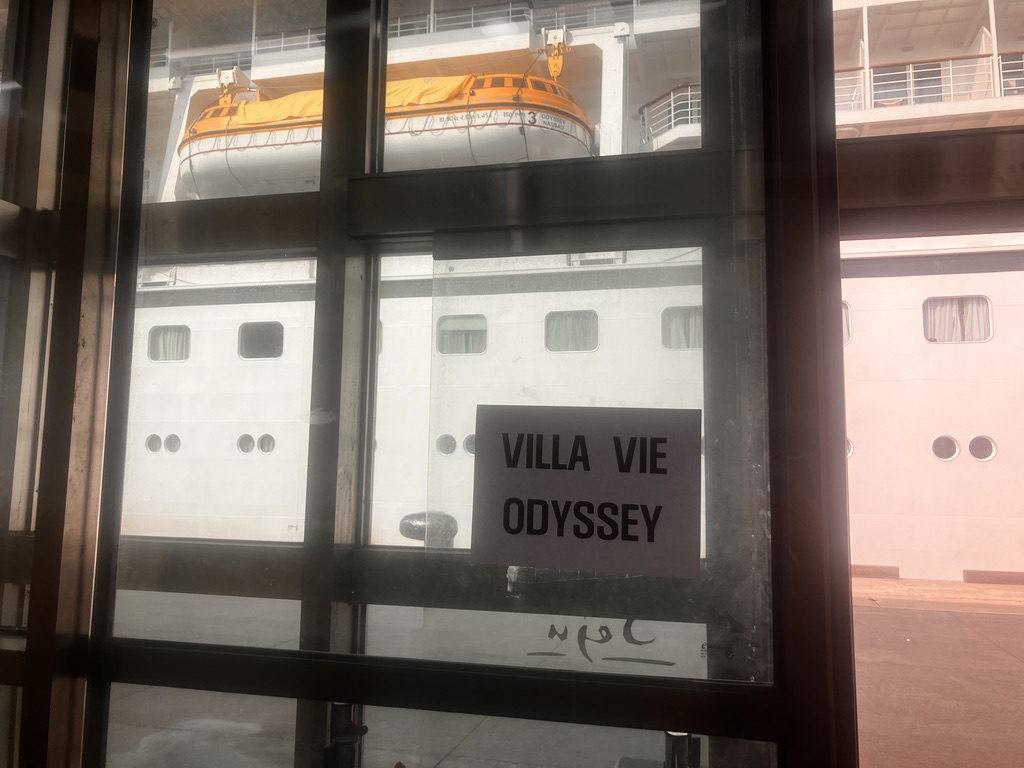
I missed Japan where, though also stupid hot, I at least understood the money, my phone worked, my apps worked, my credit card worked and I knew how to say please and thank you and excuse me. We surrendered and returned to the ship.
That night I had a disturbing dream where I had betrayed people carelessly- not because I wanted something, but simply because I had the opportunity. I scratched my brain trying to figure out what that meant. When I considered the possibility that maybe I was both myself and the people I was betraying it suddenly rang true.
I want to see these places on the other side of the world while I can, but I also need to rest and take care of myself. I need to ask whether I truly want to do these things or if I’m doing them because I feel like I should. Sometimes it feel like I’m betraying myself by resting instead of taking advantage of an opportunity.
I woke before my alarm and decided I wanted to try to go to the fish market again. I could come back early and have a relaxing afternoon. I love a market.
In complete contrast to the day before, the terminal was empty. It was dark and cloudy (with less intense heat). I went to the taxi stand just as rain started pouring down. The taxi driver told me the market wasn’t open yet, but he could take me on a 6-7 hour tour. I didn’t want to do that.
I returned to the terminal, connected to WiFi and called an Uber. This time it worked!
The fish market wasn’t fully open yet, but I enjoyed walking the aisles watching vendors set up. I scoped out where I’d return later. This time I kept my bearings. I was so proud – I knew exactly where I was.
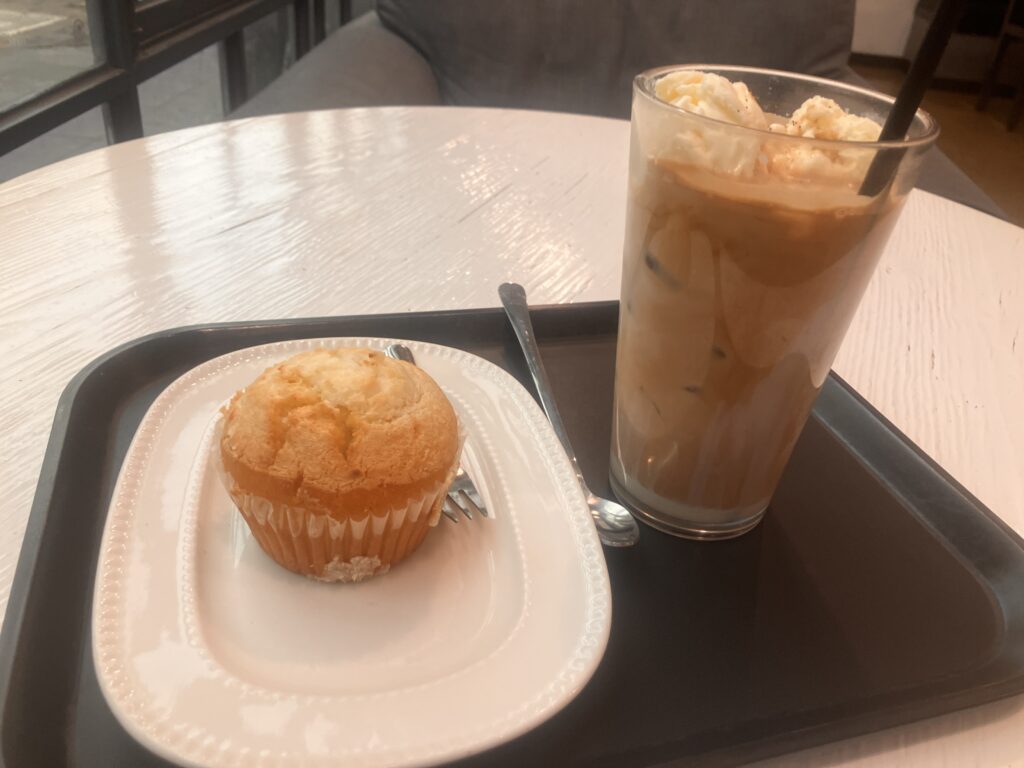
I decided to find a coffee shop.
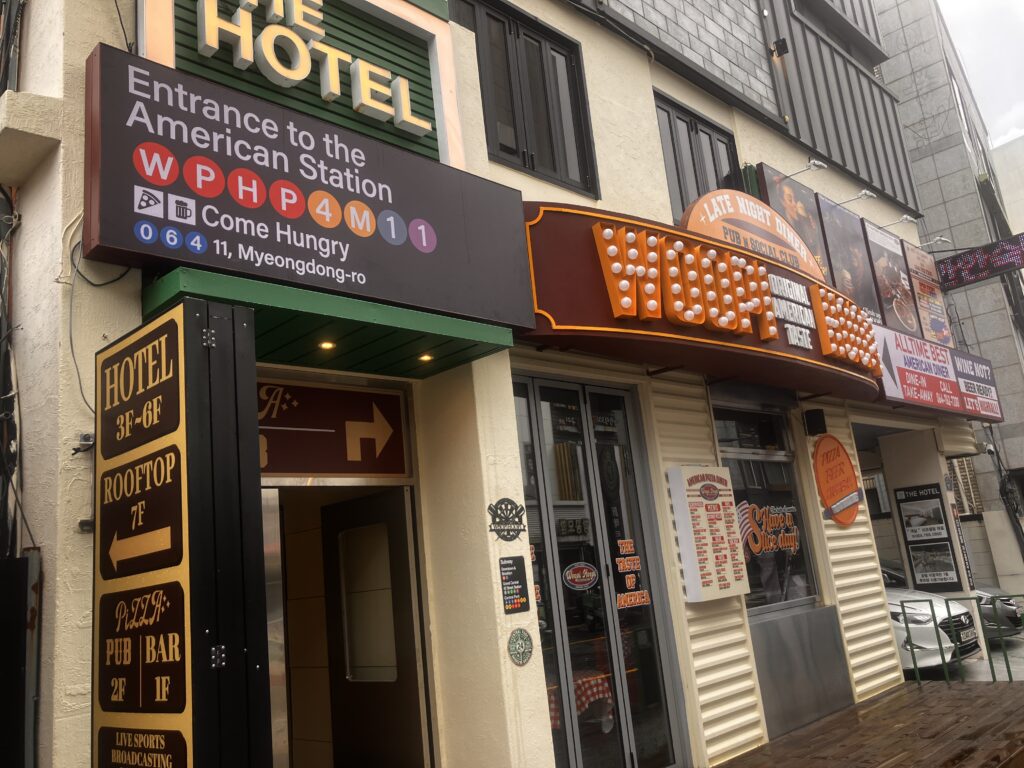
It seemed like a good day to have ice cream in my coffee.
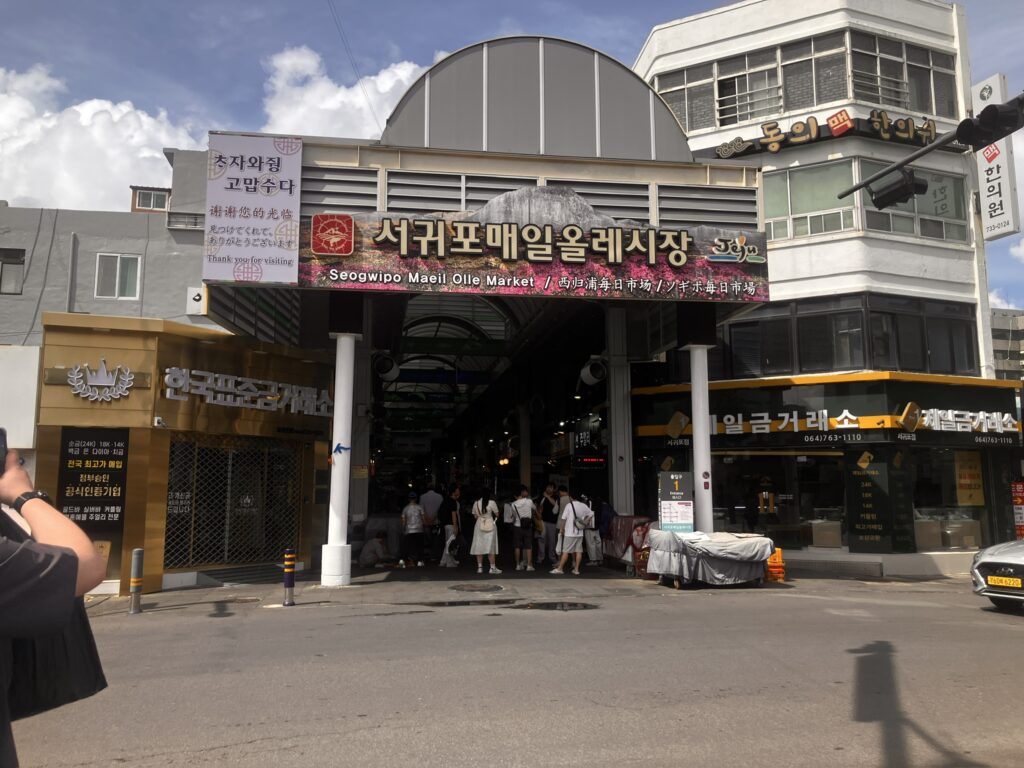
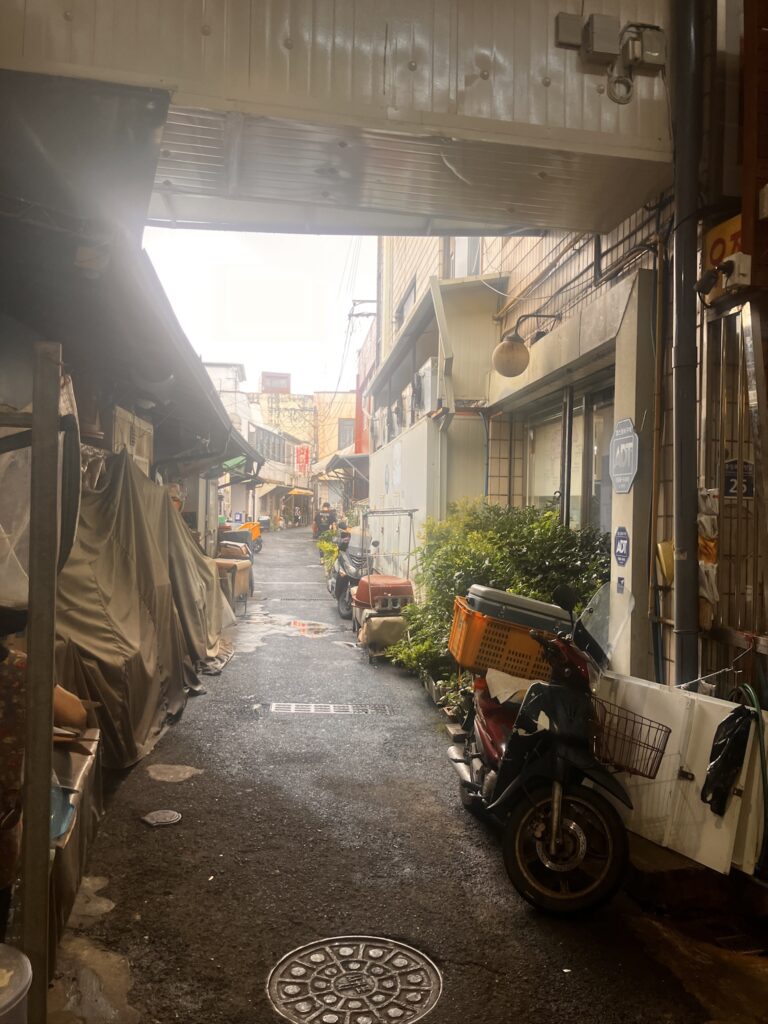
I wandered through the market again, now that the stalls were open.
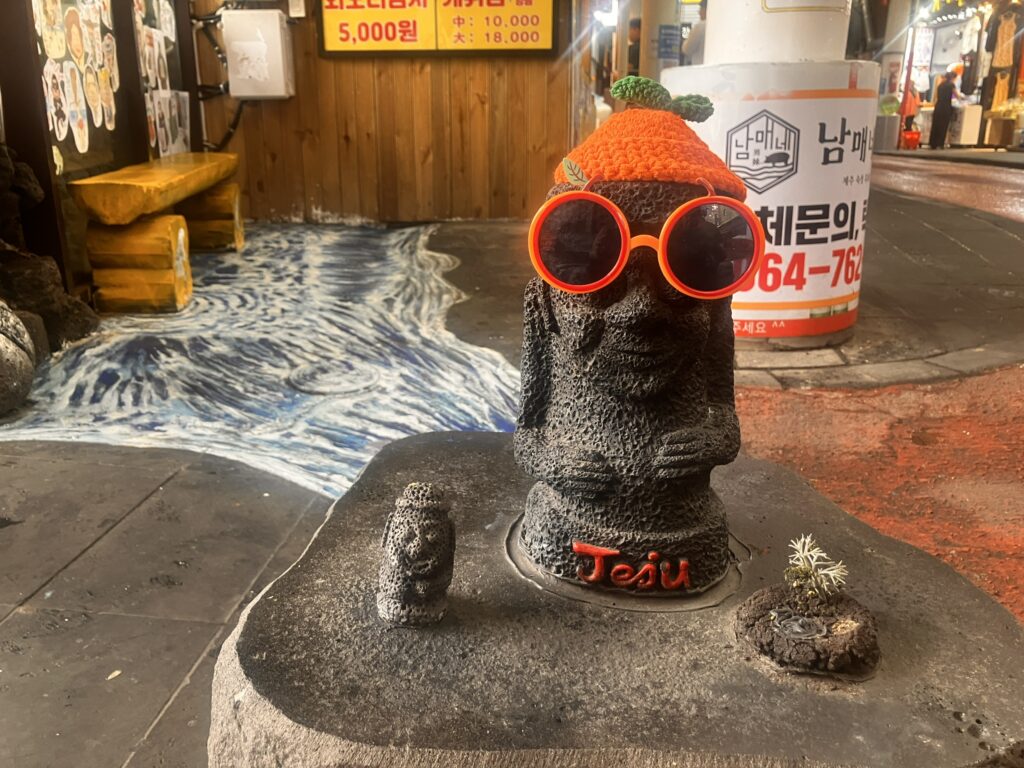
By 11am, I was satisfied. Time for Korean BBQ. I sat down, and a few minutes later some residents came in. I invited them to join me so we could order for four!
When I ate here last year (same restaurant, but by myself) I hesitantly figured out how to grill the food. This time, the server cooked everything for us – we must have looked like tourists.
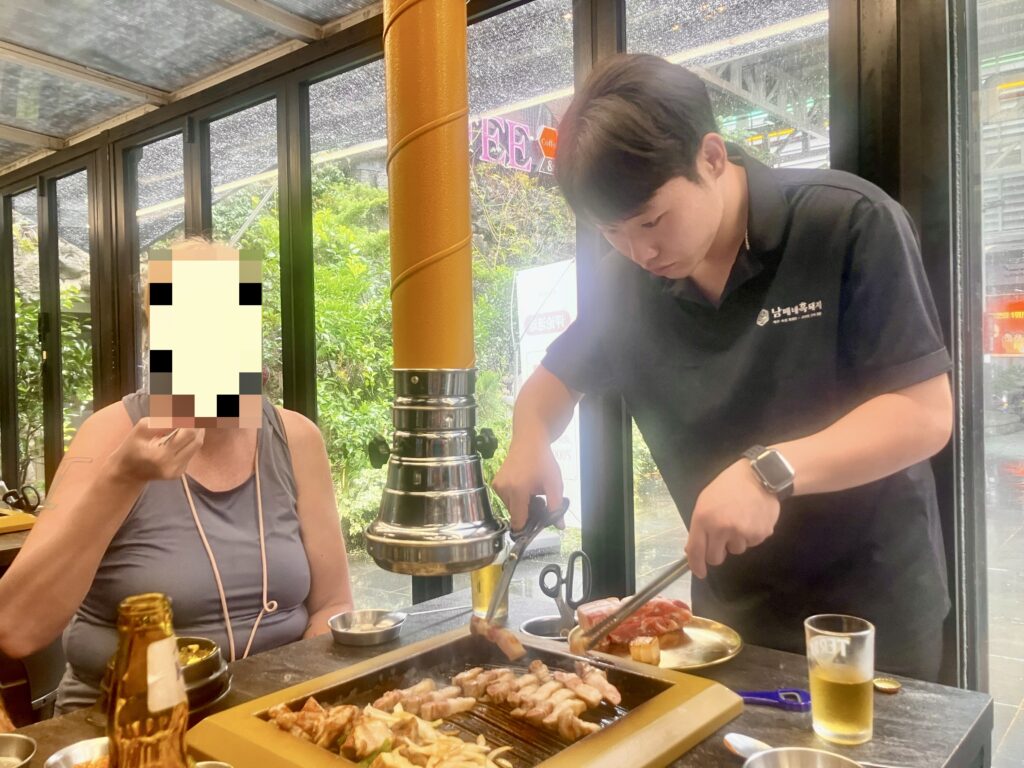
We ordered Kelly Beer and this:
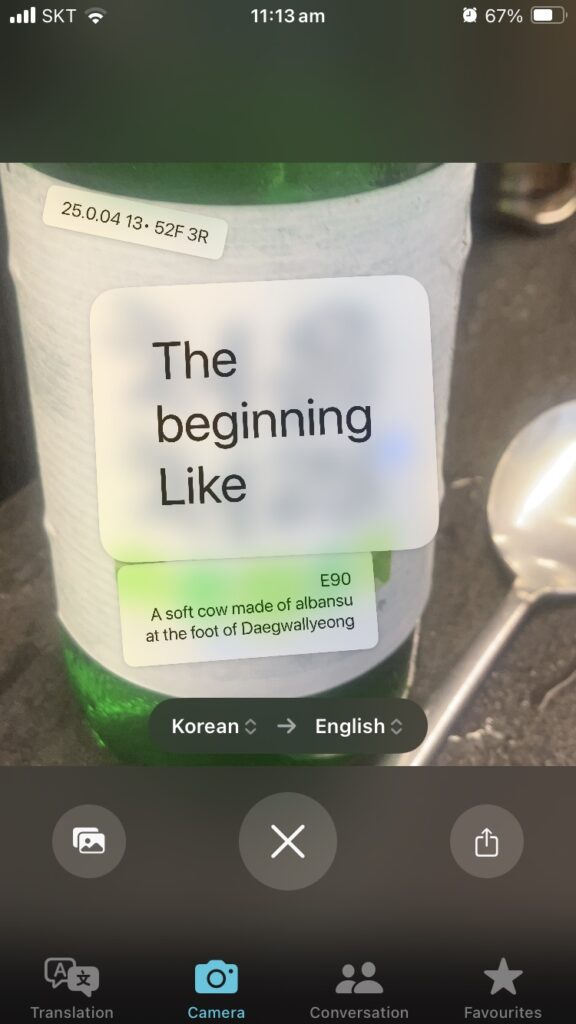
It was Soju – a liquor made from sweet potatoes. The server showed us how to mix it into the beer and ‘pop’ the spoon to blend it. I vaguely remembered doing this last year. Lunch was even more delicious than I remembered.
As I left the restaurant and was about to figure out how to take the bus back, Victor messaged me. I told him to meet me at the market.
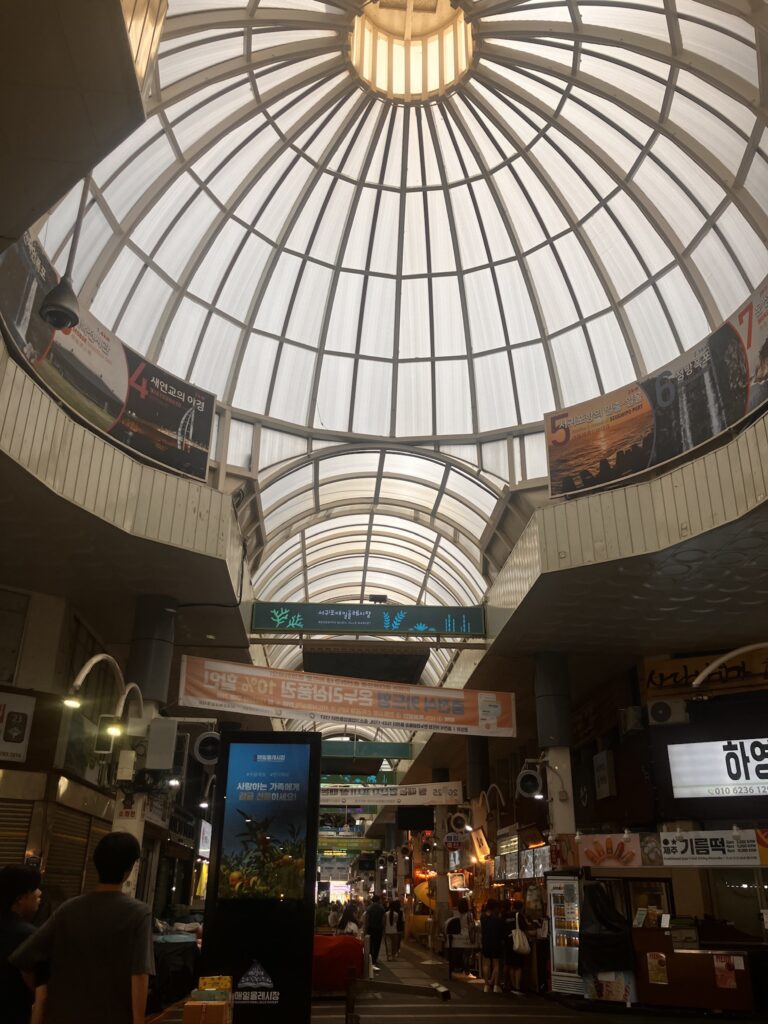
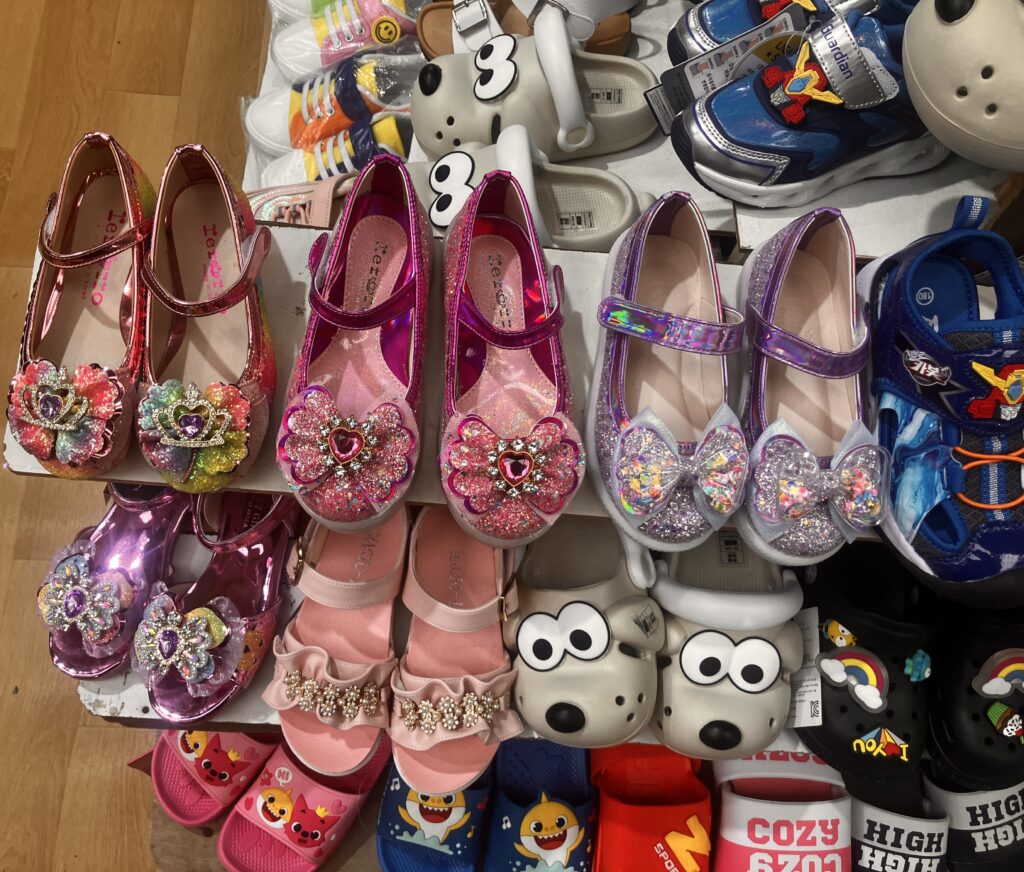
I talked to my mom on the phone and noticed these sparkly shoes that I thought Raeya in England would love.
When Victor arrived, we shopped for food for Korean night onboard. He said fish markets in Brazil don’t have live fish in tanks.
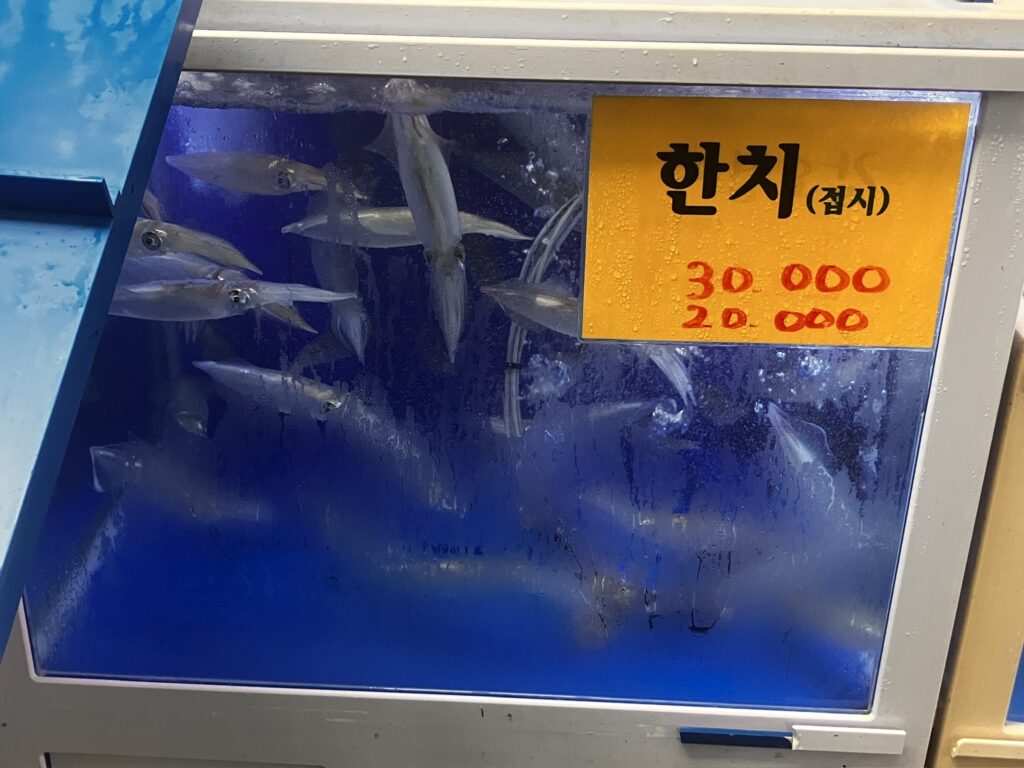
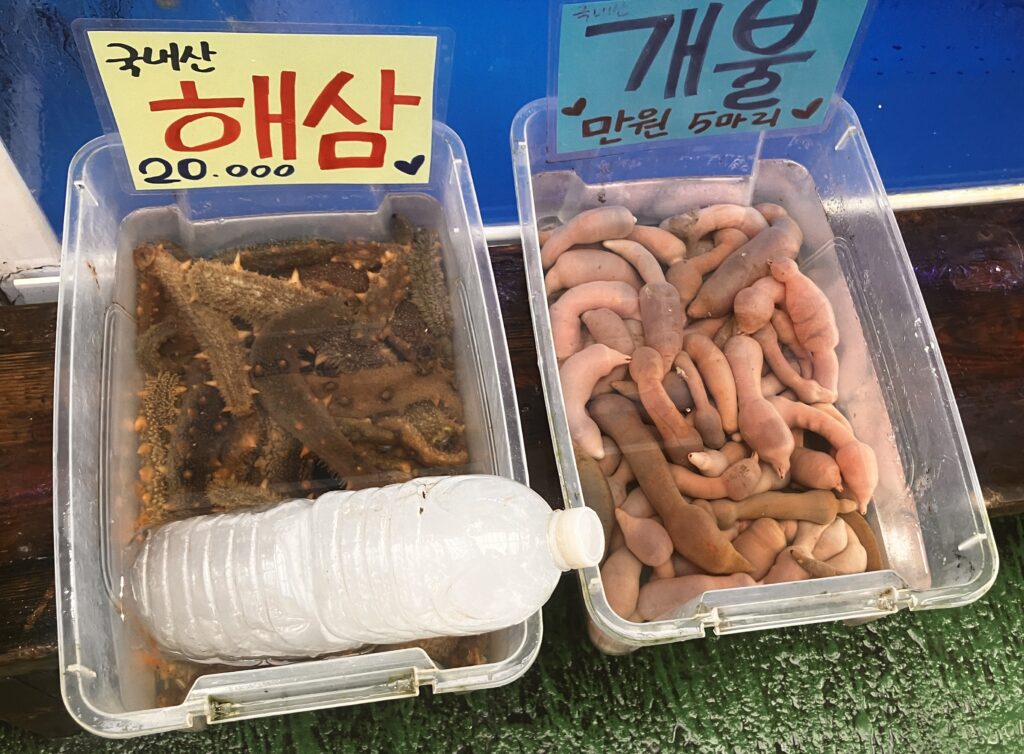
I found more beer with fun names –
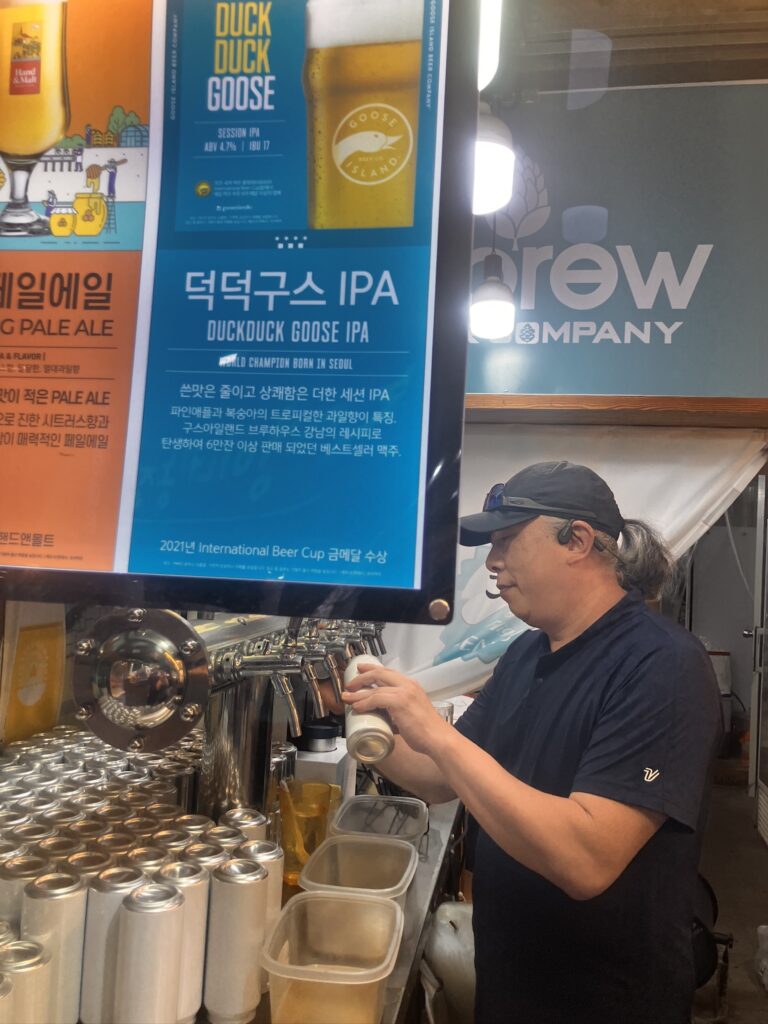
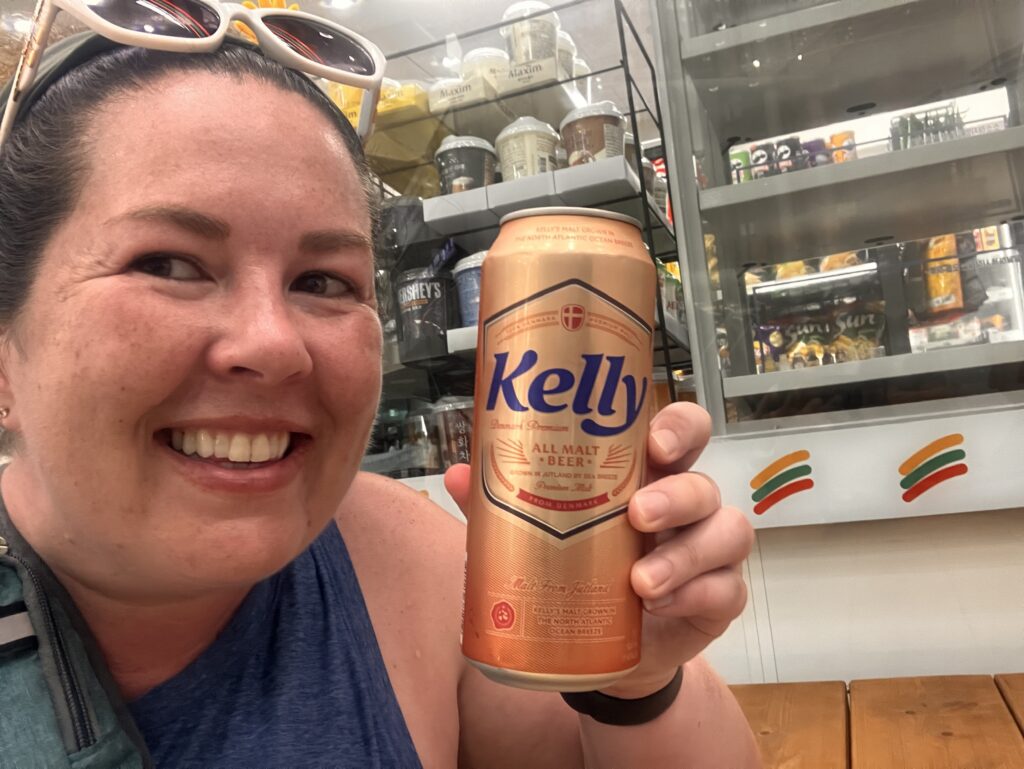
The second day in Korea was much more successful.
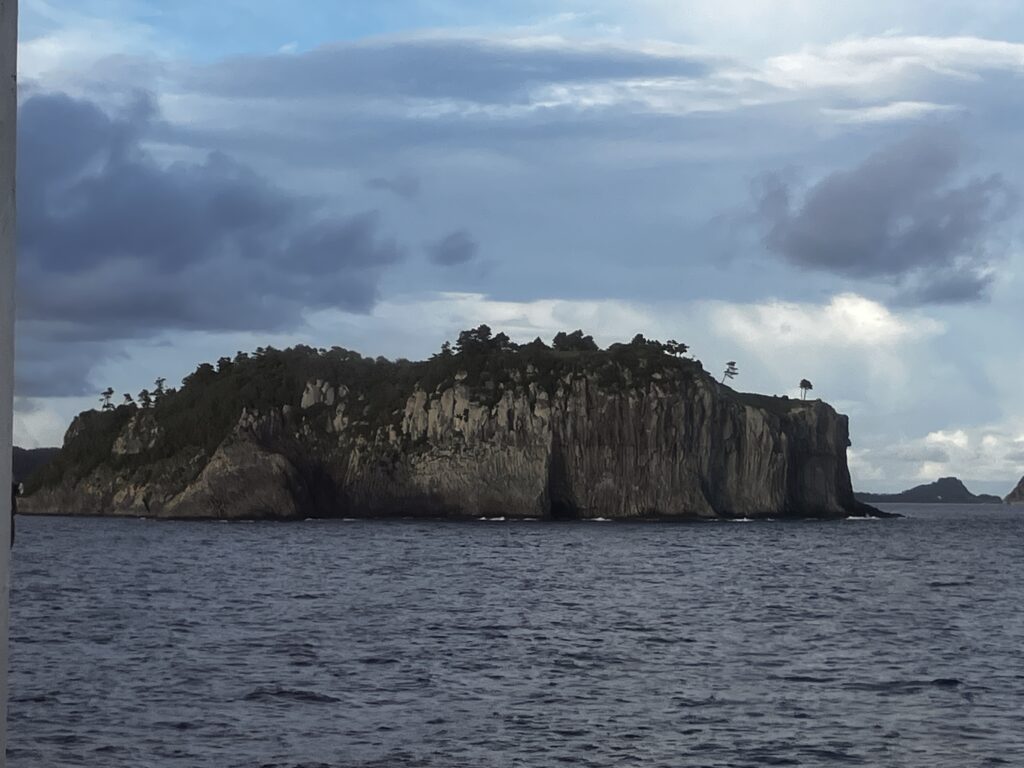
Maybe next time I’ll venture farther out to see more of what Korea has to offer.