
Calving video
My views do not necessarily reflect the views of my employer.
July 13, 2025
Tracy Arm Fjord is one of Alaska’s most breathtaking natural wonders, located about 45 miles south of Juneau. This narrow, 30-mile-long fjord slices through the rugged Coast Mountains and ends at two actively calving tidewater glaciers—North Sawyer and South Sawyer. Towering cliffs, cascading waterfalls, floating icebergs, and abundant wildlife make this a highlight of any Inside Passage voyage.
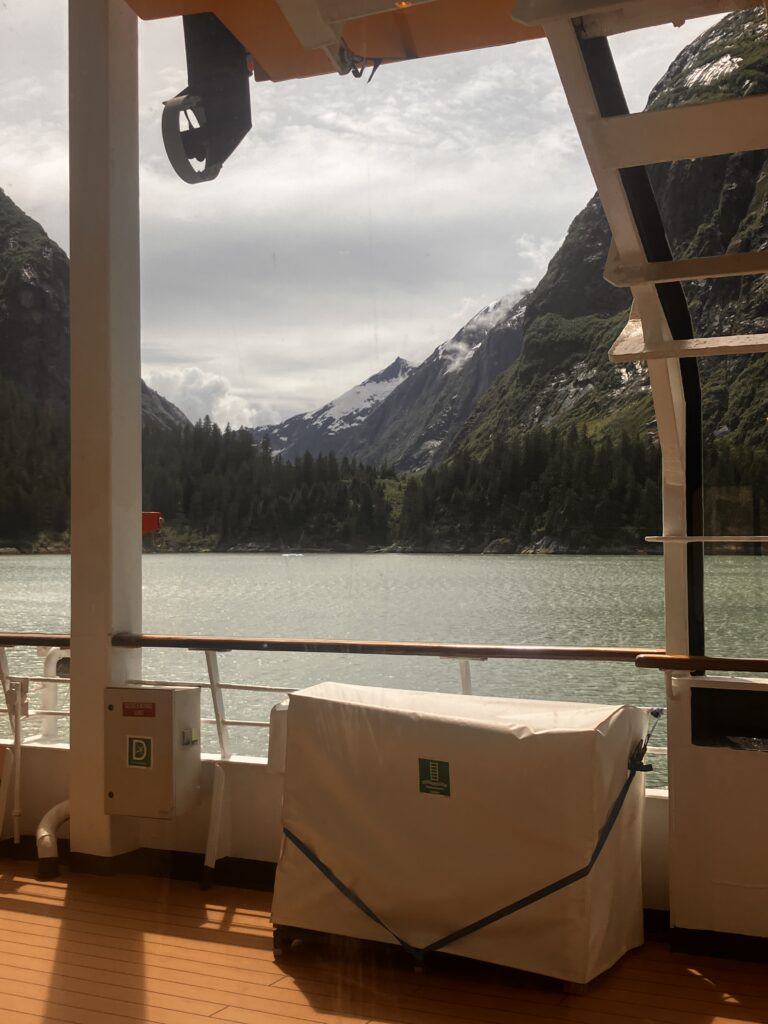
The morning was cloudy when I woke up, but by the time I went upstairs, the view was spectacular. Usually, if I sit up straight at my desk, I can just see out the window above my computer monitor- but today, I grabbed my laptop, turned a chair by the window around, and watched the scene unfold.
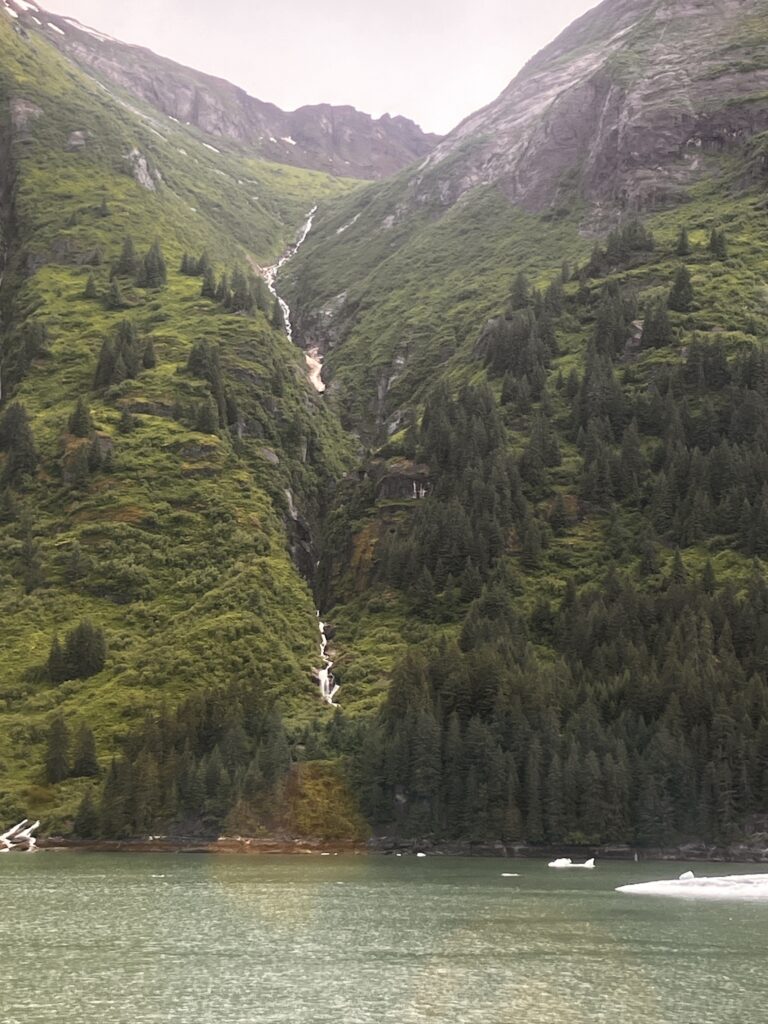
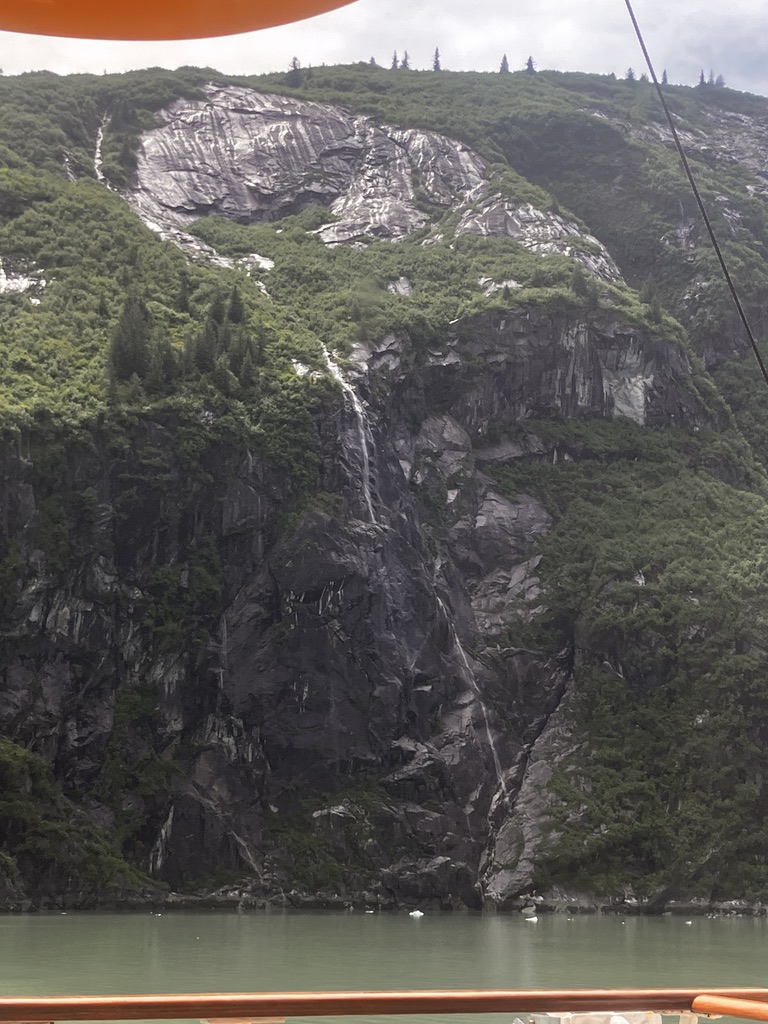
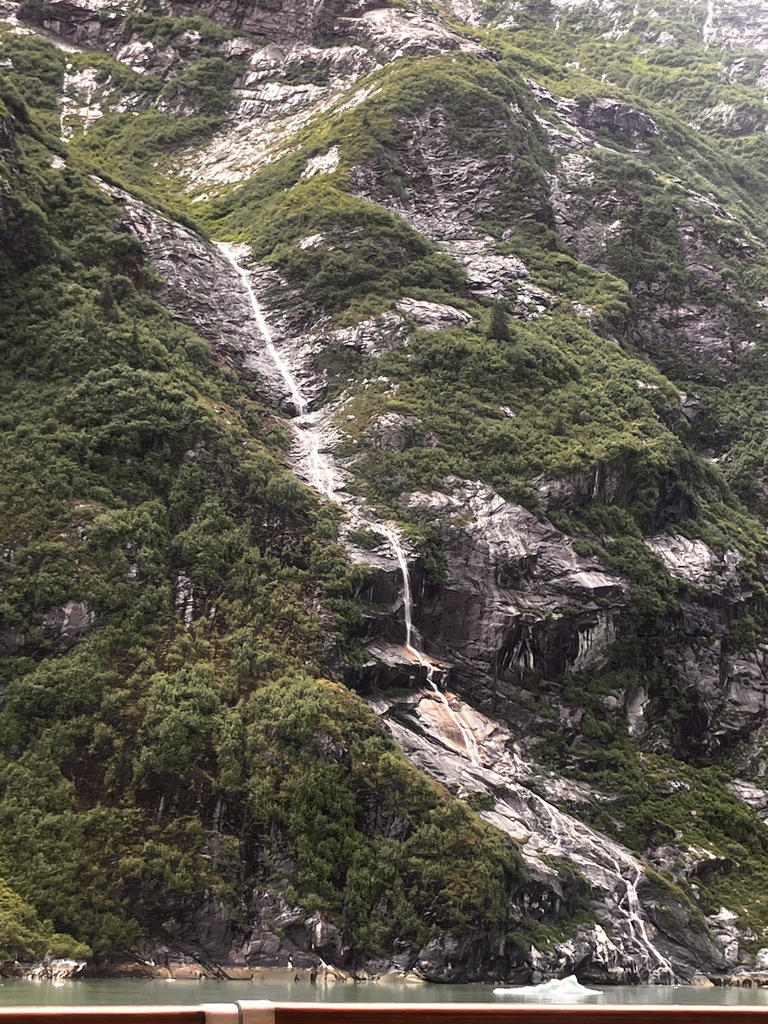
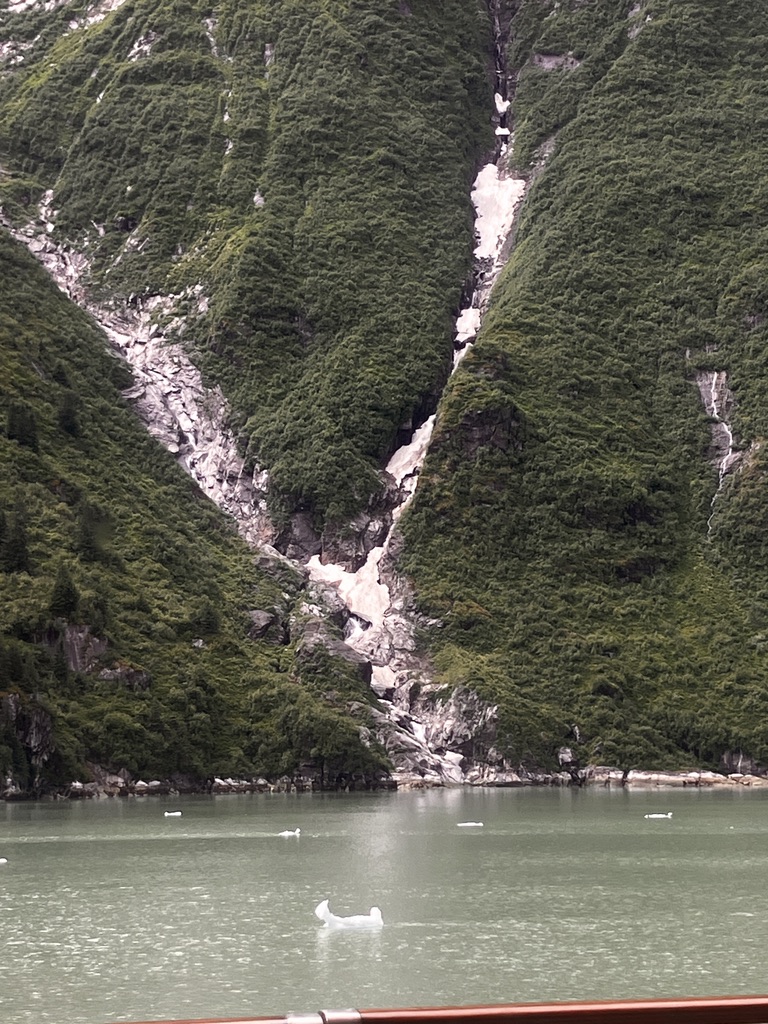
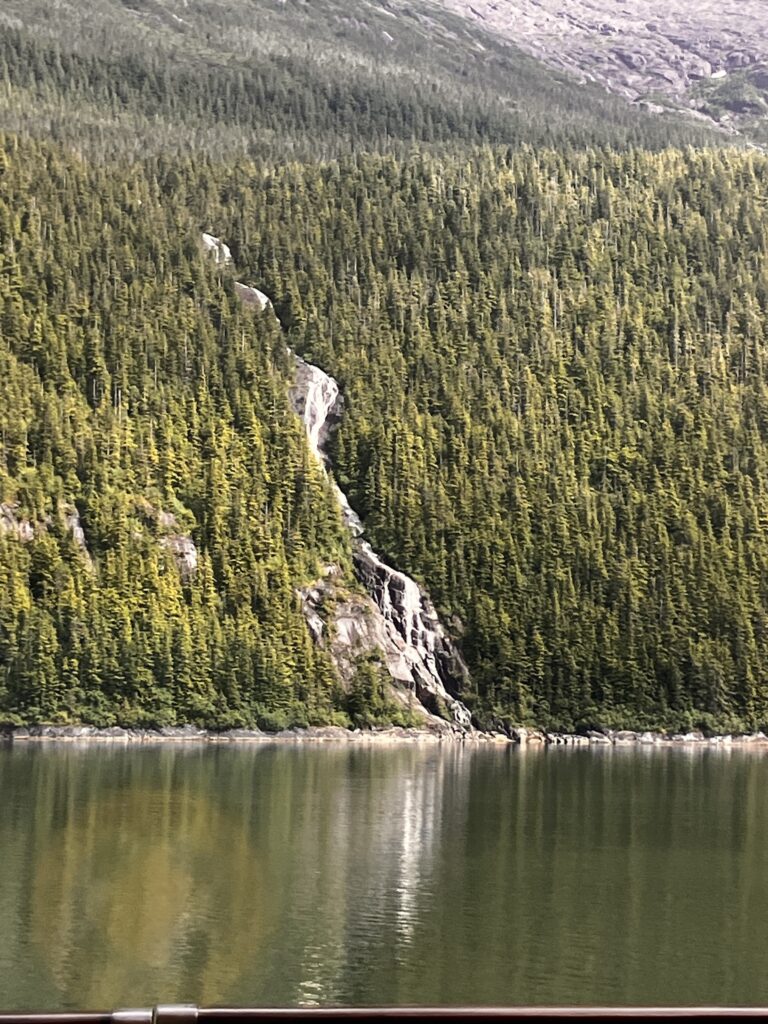
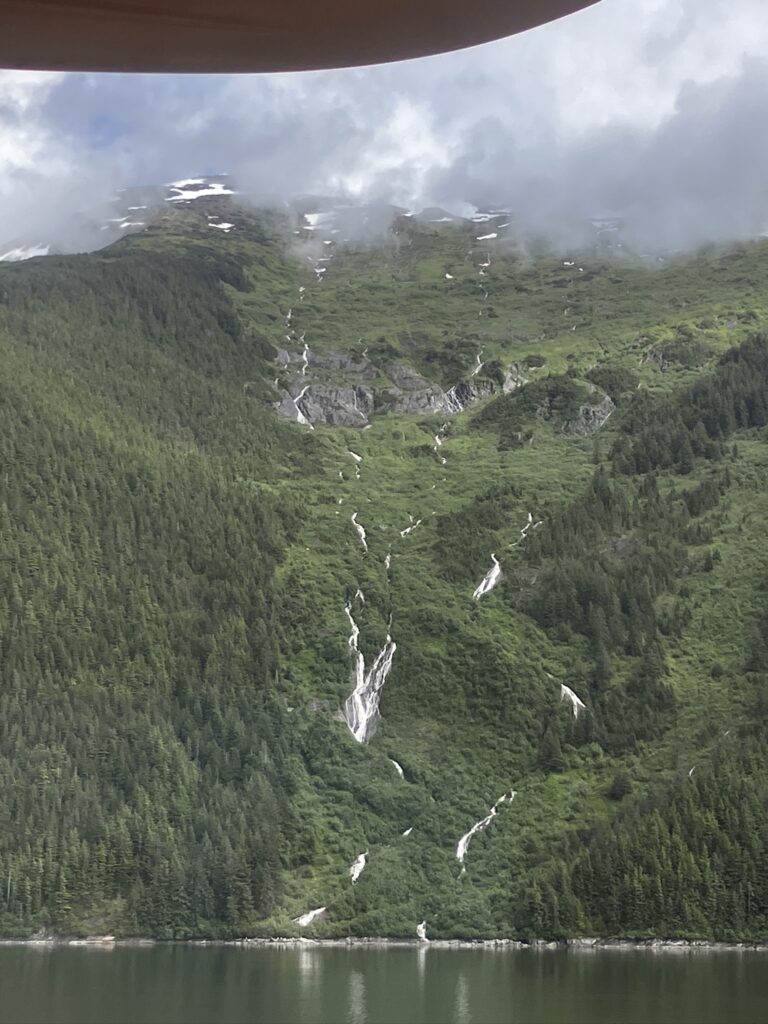
I knew Alaska was spectacular, but this was ridiculous. The cliffs rose sharply on both sides, waterfalls tumbling down every few hundred feet.
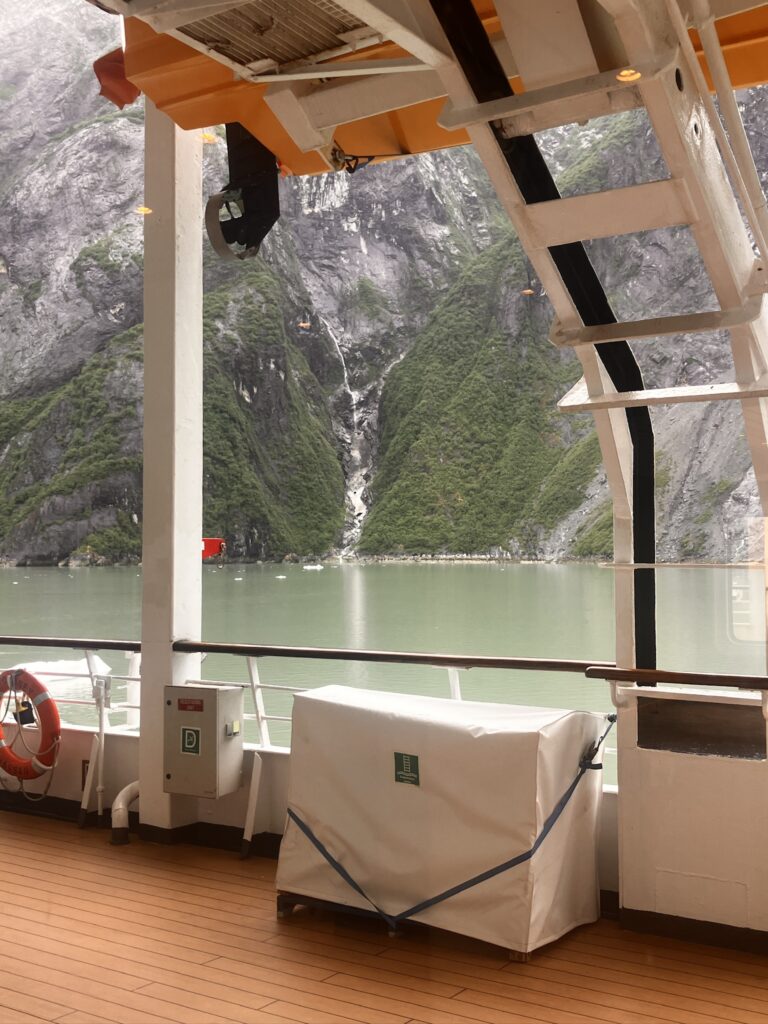
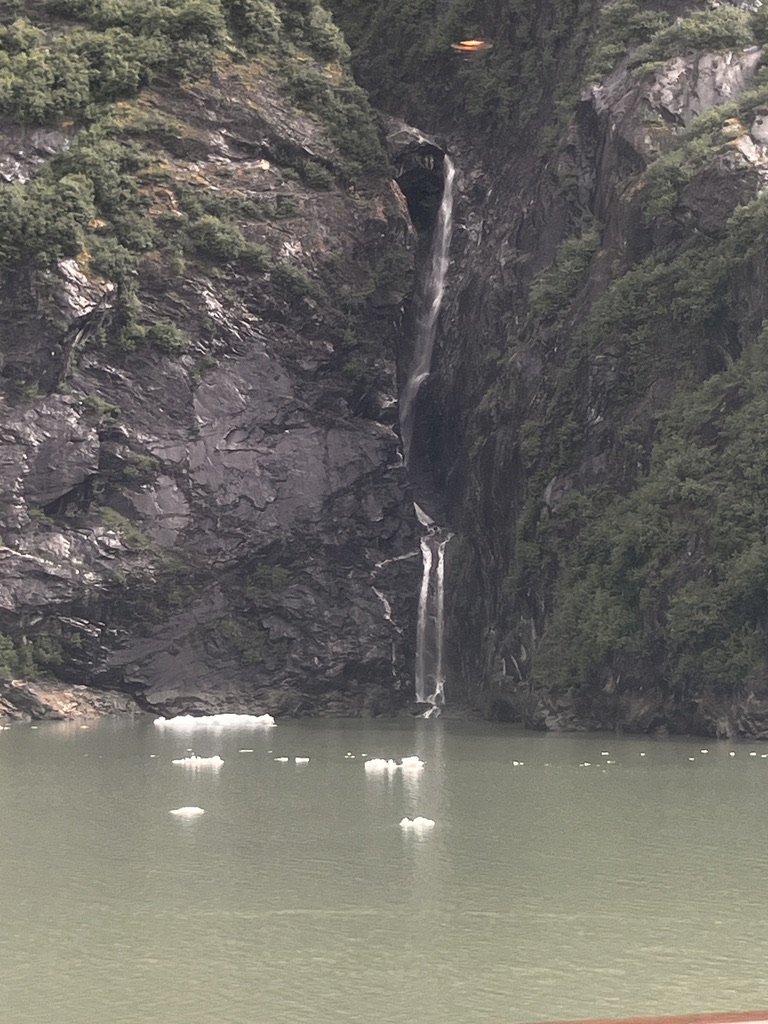
Every time I looked up from my laptop, there was another waterfall.
And the rocks were cool too.
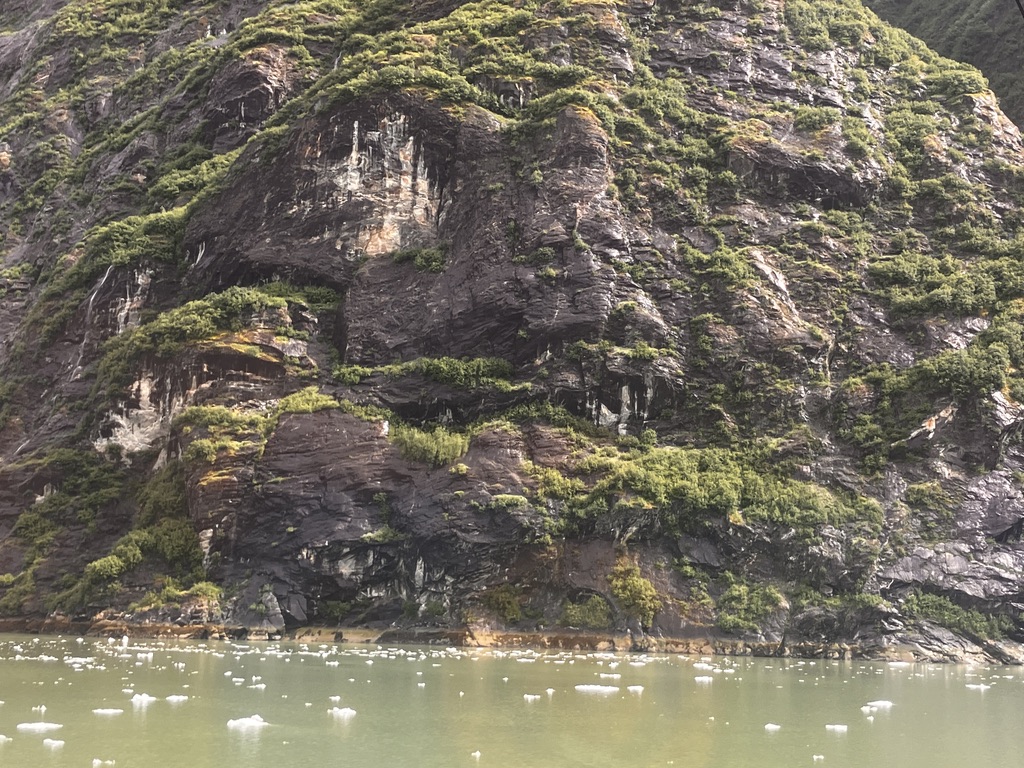
I was able to take all of these pictures, AND sit and enjoy the view without watching it through a camera (phone) lens.
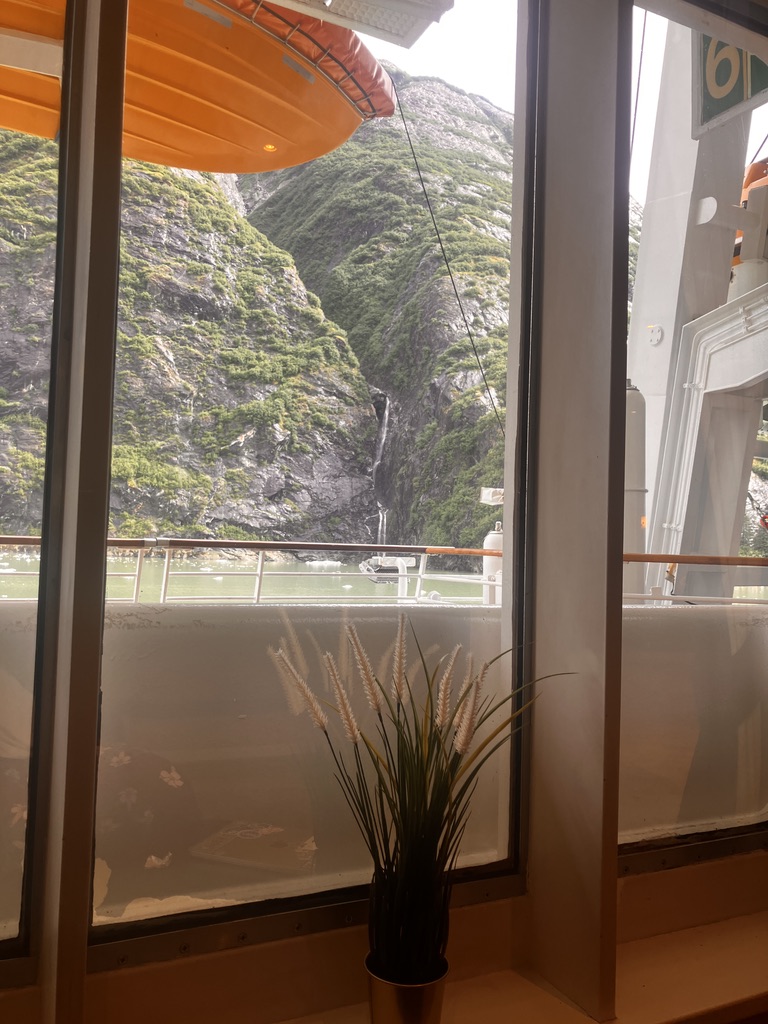
I mean, how many pictures of waterfalls does one really need?
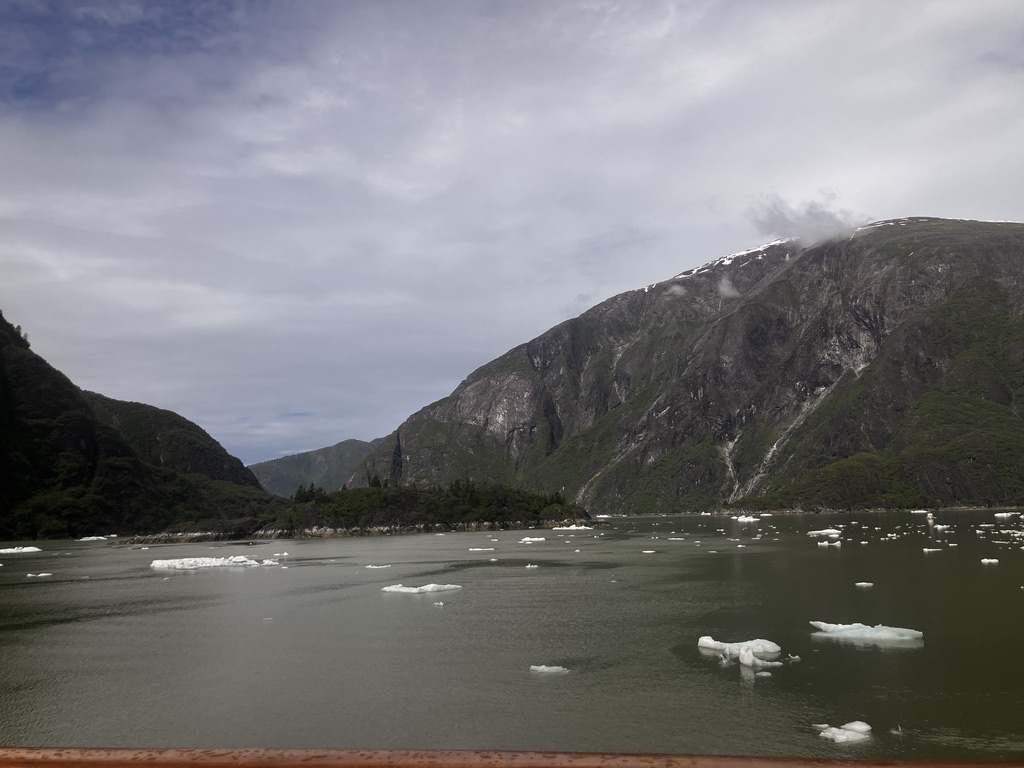
Glacier!
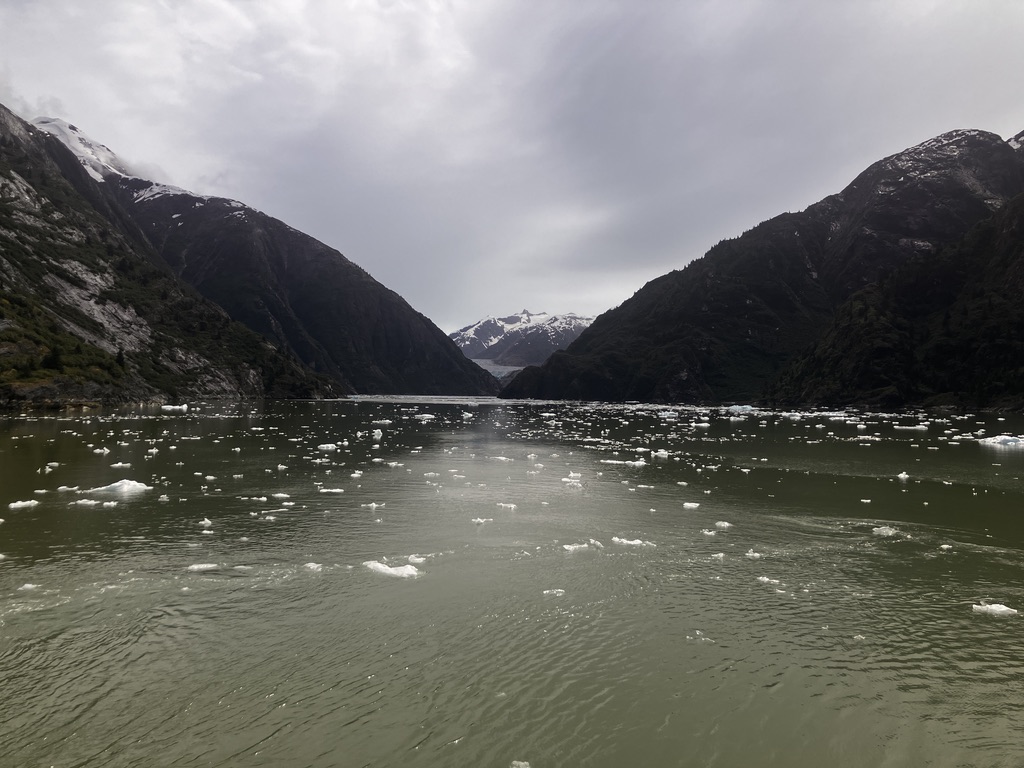
I’ll zoom in.
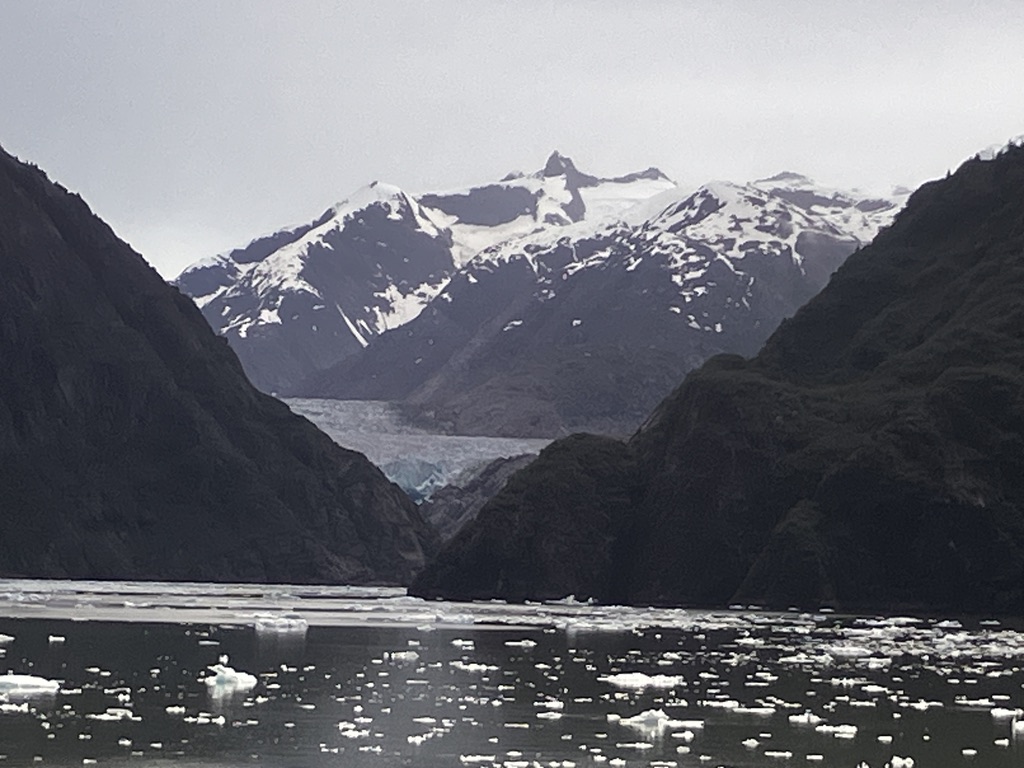
South Sawyer Glacier is often more accessible to cruise ships because there’s less ice congestion.
As we reached the glacier, the ship turned around to exit the fjord so I was able to see both sides without moving my temporary office.
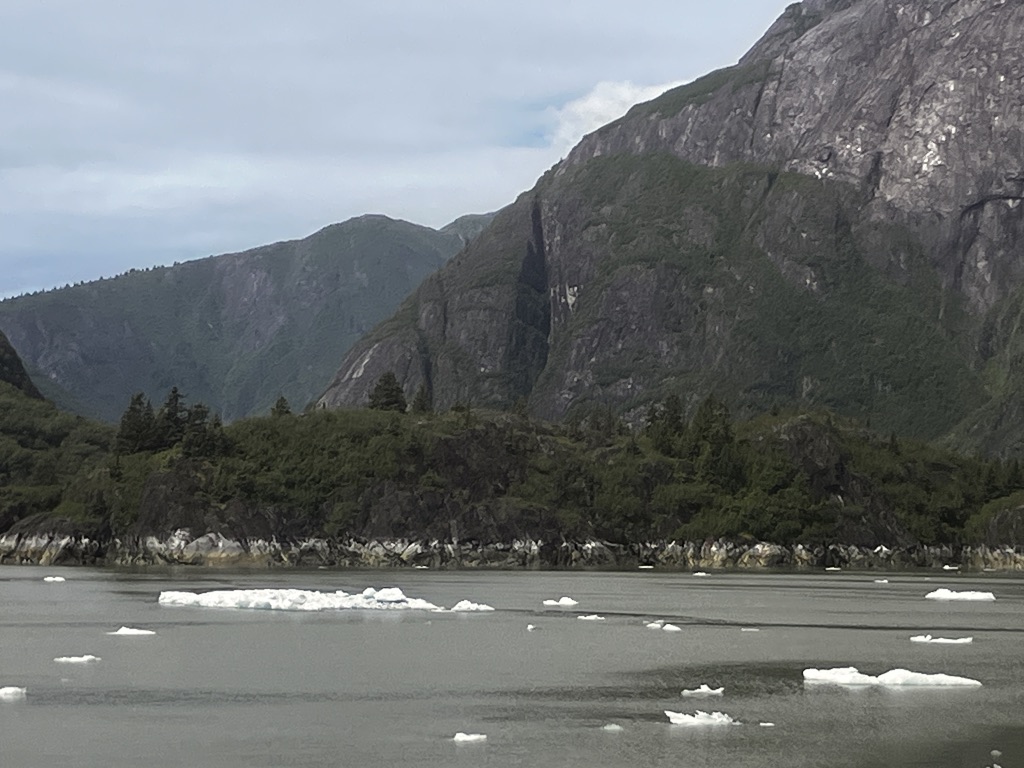
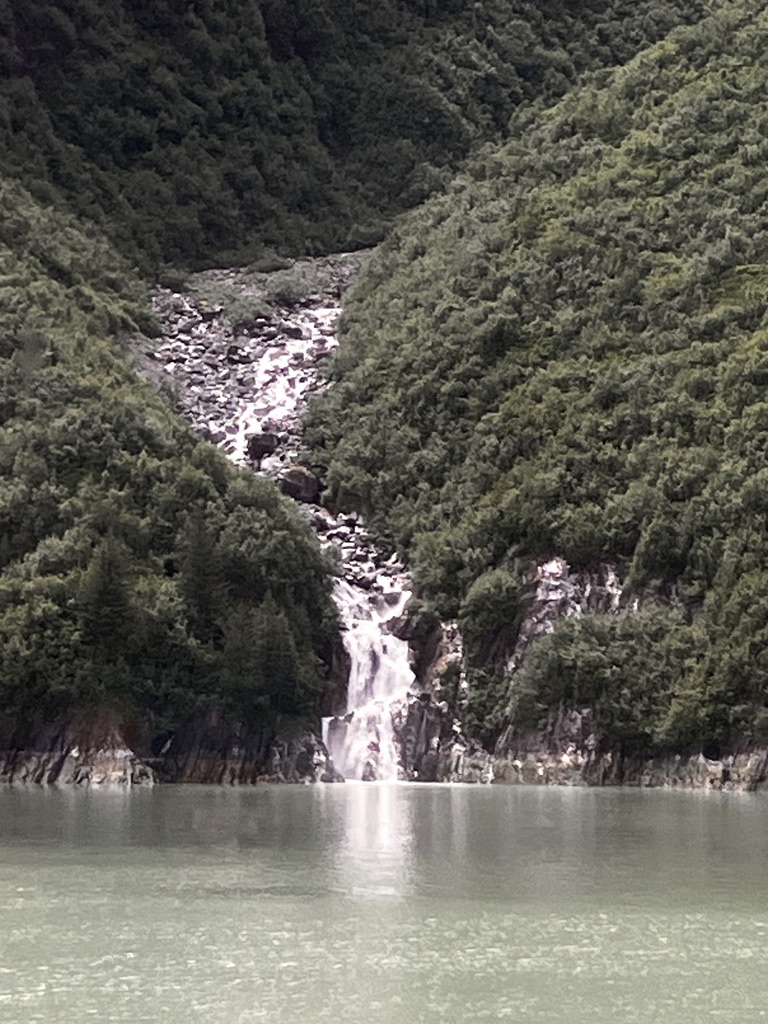
Every time I took a picture it could not do justice to what I was looking at in real life. It was VAST.
Geography & Glaciers:
- Fjord Length: ~30 miles (48 km)
- Glaciers: North Sawyer & South Sawyer Glaciers
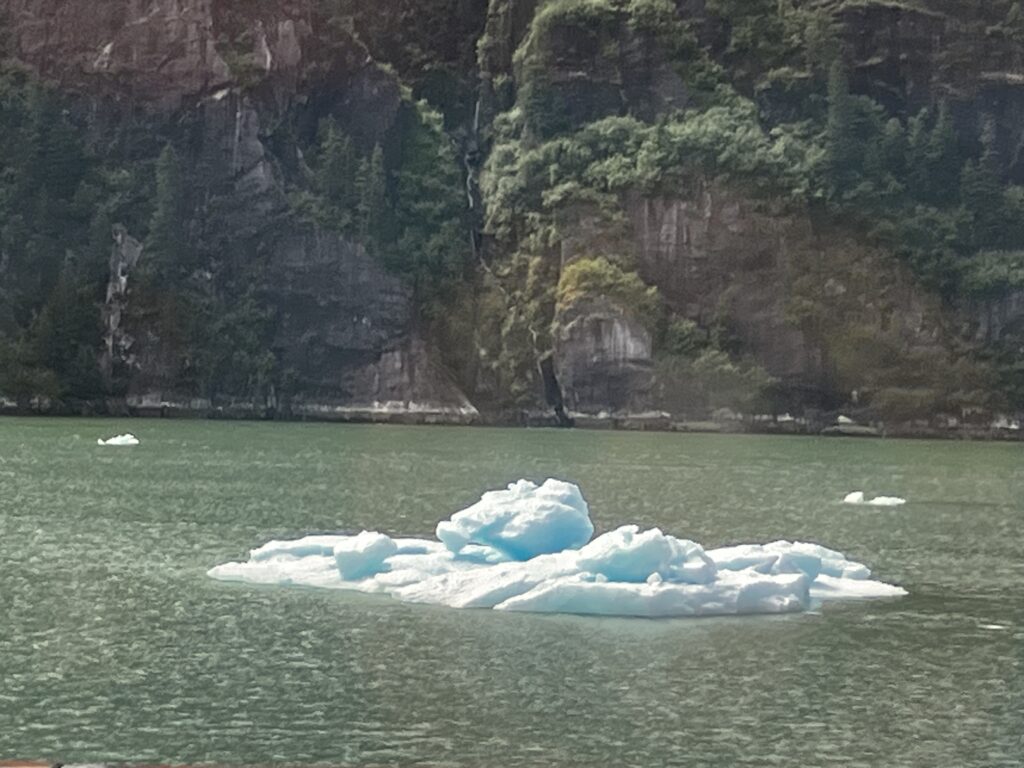
- Icebergs: Calved from the glaciers, often seen floating in the fjord
- Landscape: 3,000-foot granite walls, lush rainforest, glacial valleys
Wildlife Viewing: Keep binoculars handy! Wildlife sightings may include:
- Harbor seals (often hauled out on icebergs)
- Bald eagles soaring above the cliffs
- Mountain goats clinging to steep slopes
- Occasionally black bears or whales near the entrance.
(I didn’t see any)
The fjord was named after Secretary of the Navy Benjamin Franklin Tracy.

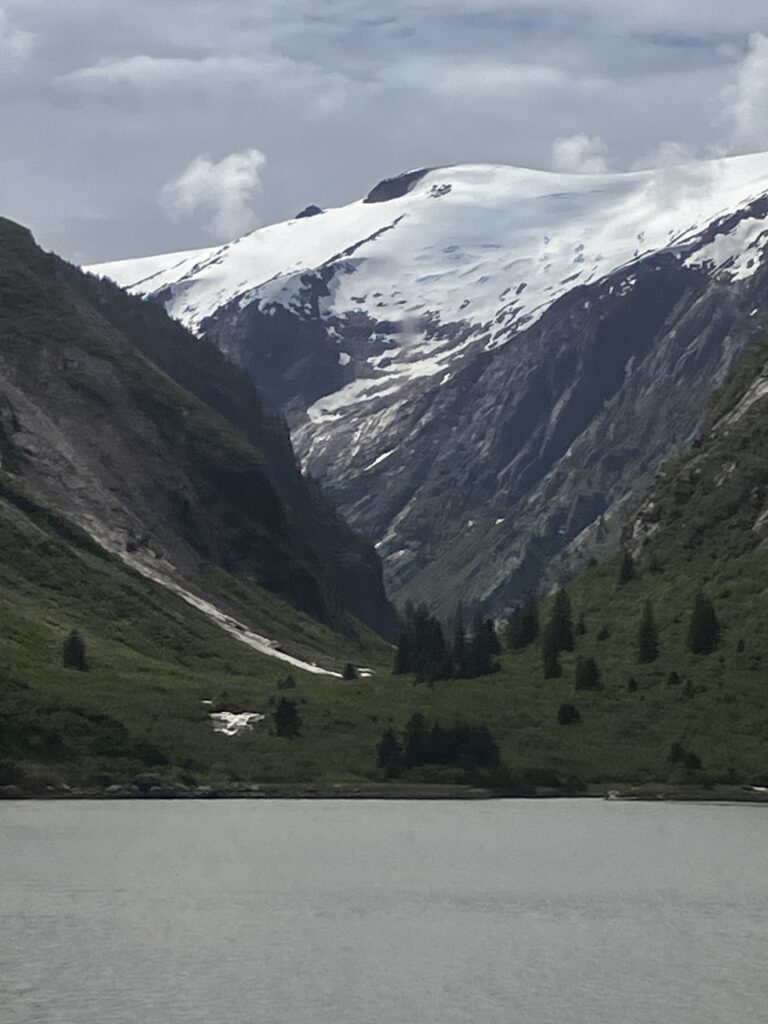
Unlike larger glacier systems, Sawyer’s dramatic blue ice contrasts with the surrounding emerald forest, offering a rare dual view of glacial and temperate ecosystems.
And then we went back out to sea.
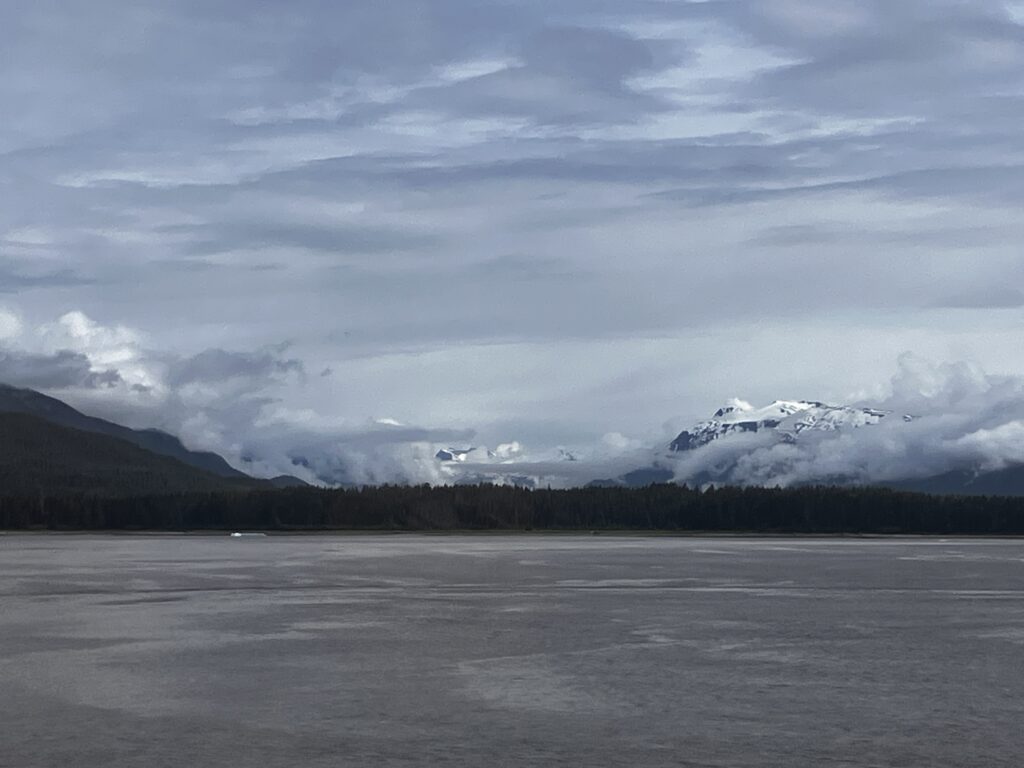
Between Scenic Cruising days, we had incredible views of the mountains
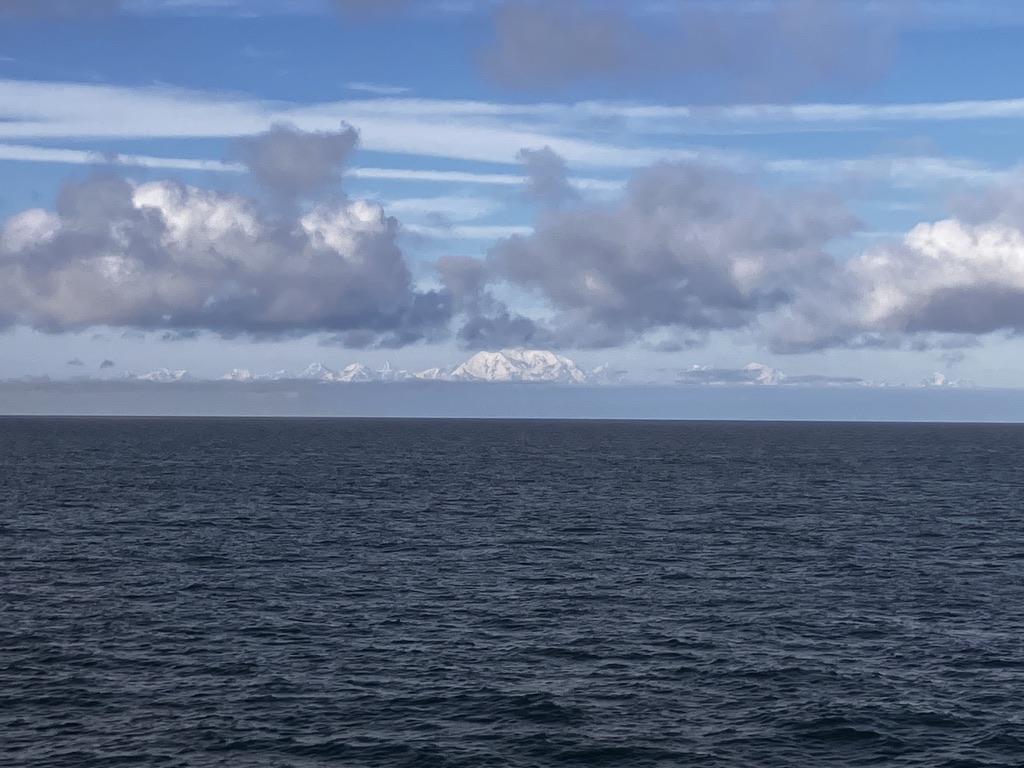
With gorgeous sunsets (close to midnight).
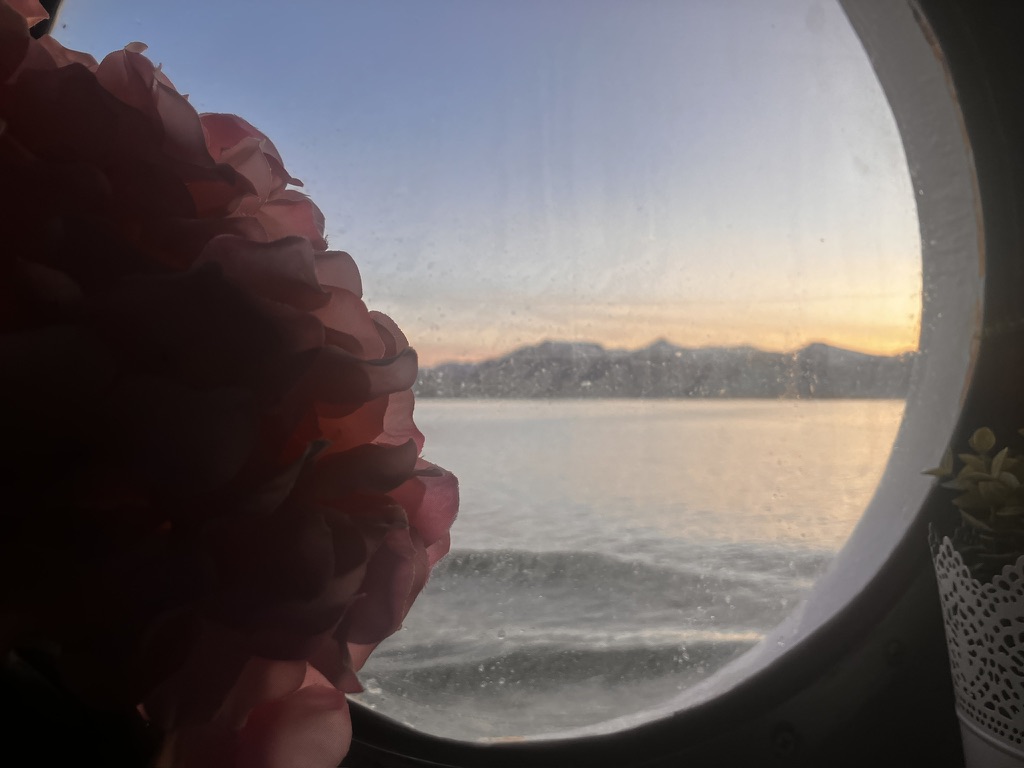
Hubbard Glacier – Tuesday July 15 8:30am to 2:30pm
Estimated time to enter the channel: around 5:30 am
Estimated time to the glacier/viewing area: approximately 8:30 am
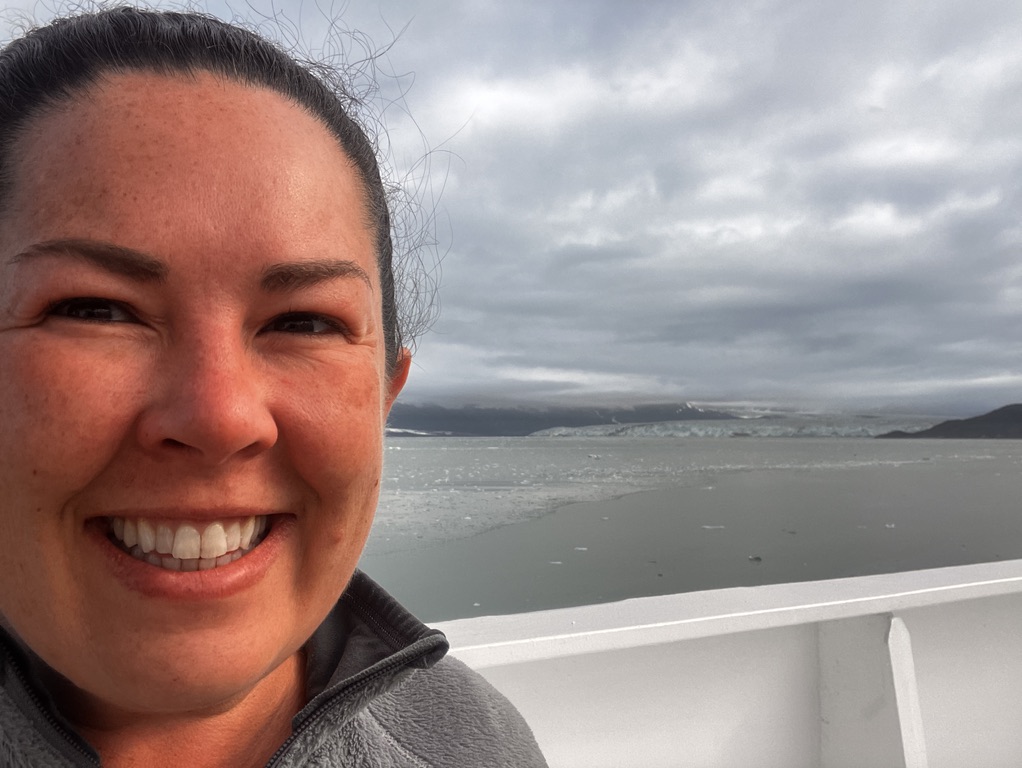
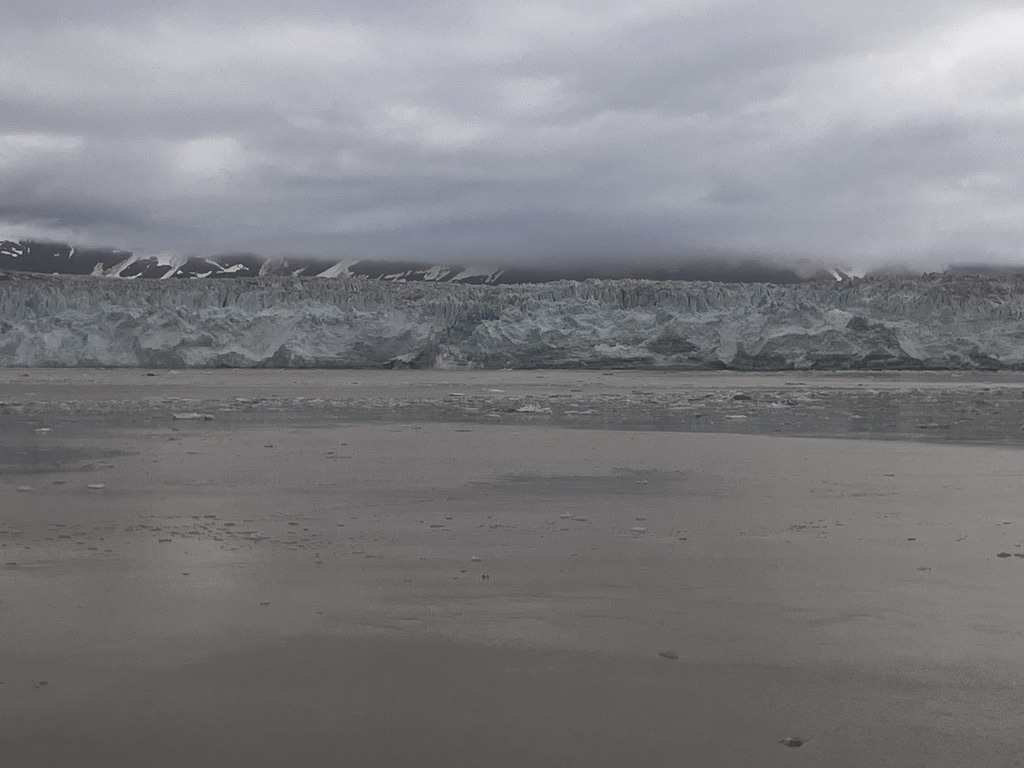
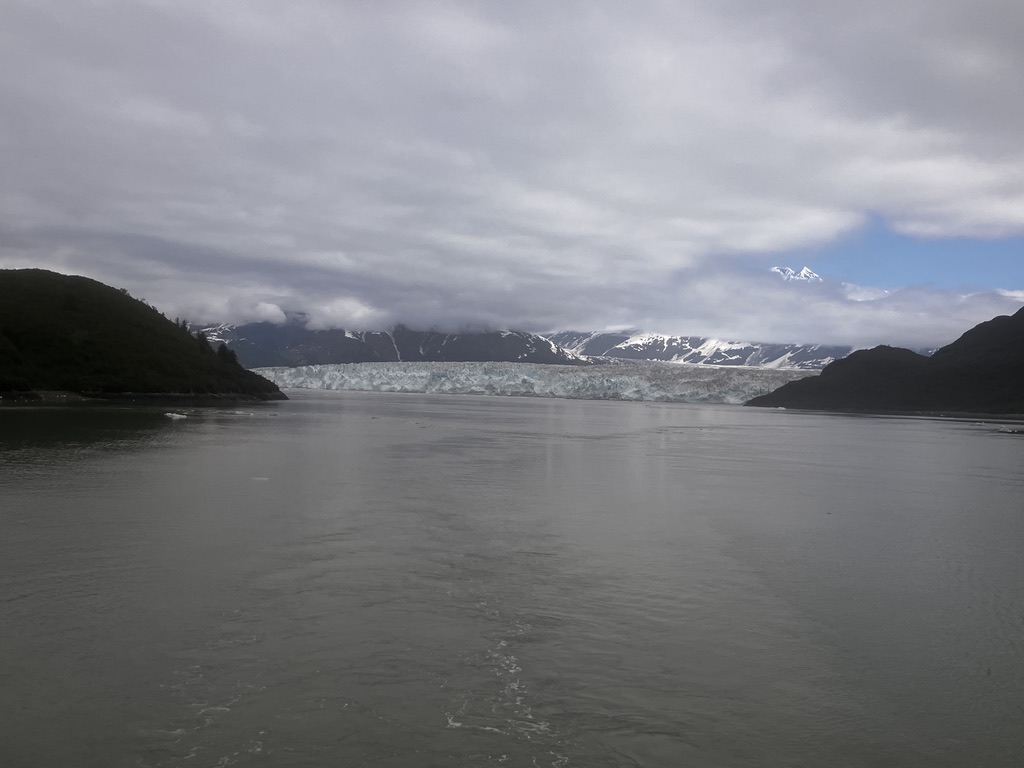
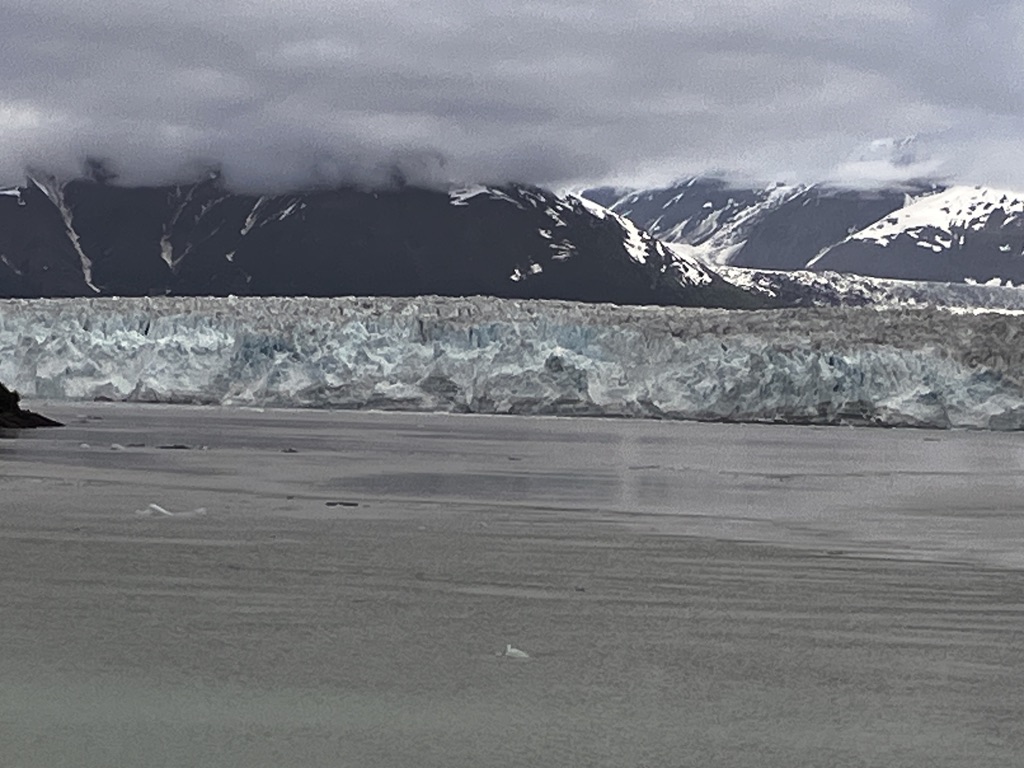
Hubbard Glacier is North America’s largest tidewater glacier, stretching an astonishing 76 miles from its source in Canada’s Yukon to the icy waters of Yakutat Bay in Alaska. Known as the “Galloping Glacier” for its rapid advance, Hubbard offers a thrilling display of raw glacial power, often calving massive chunks of ice into the sea with a thunderous roar.
That morning I woke up early and looked out my porthole to see if I was missing anything. Not yet. So I went back to sleep. Later I saw that we were surrounded by ice.
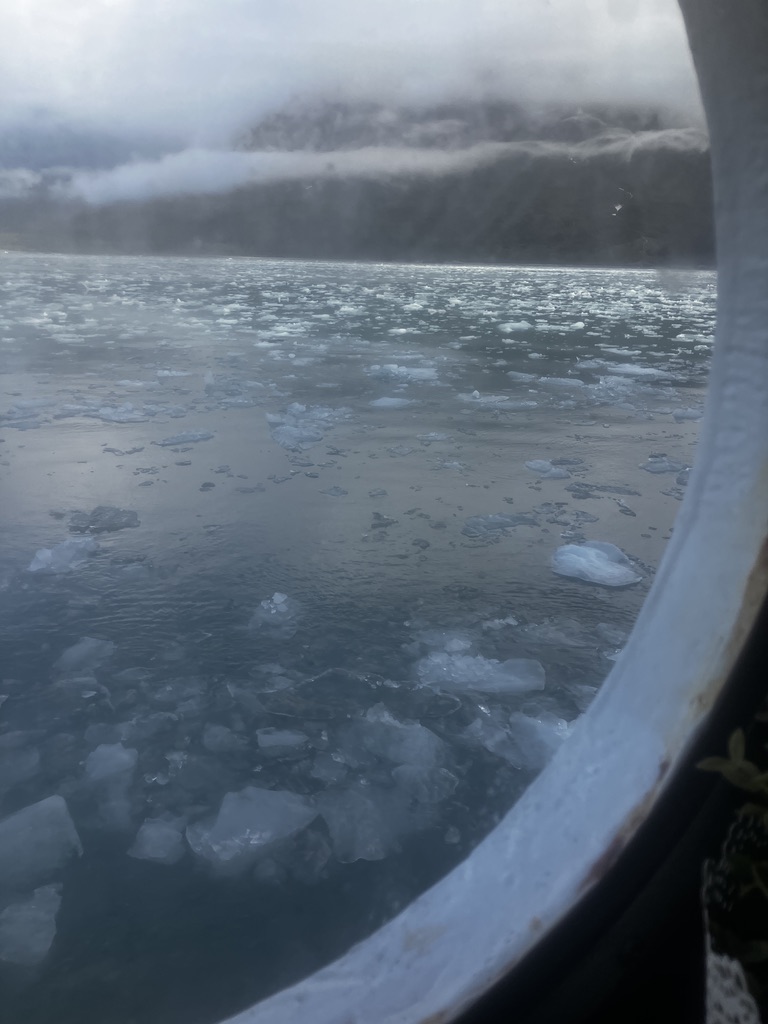
I layered up and went upstairs.
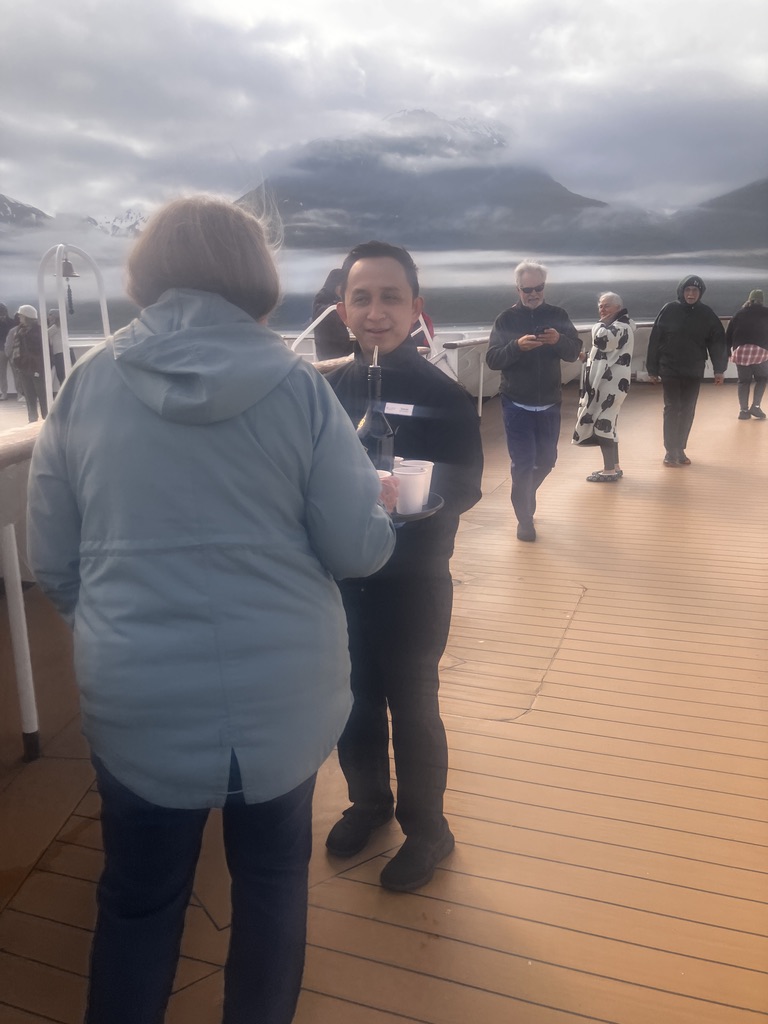
And there it was!
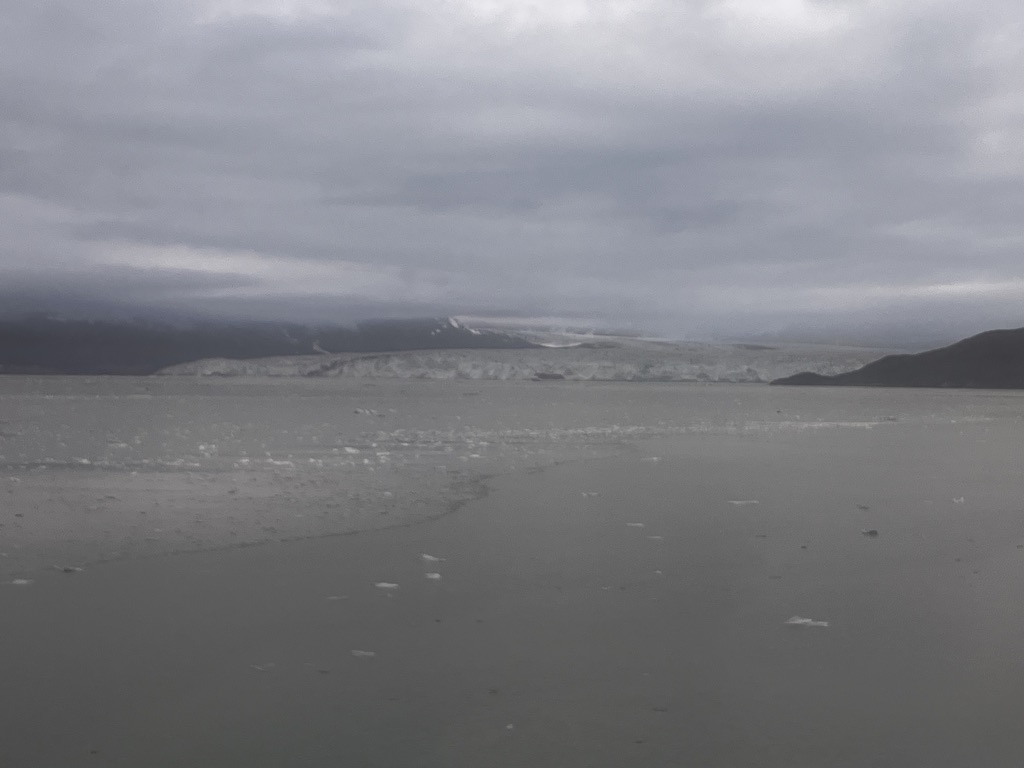
Geography & Glacial Facts:
- Length: ~76 miles (122 km)
- Face Height: ~350 feet above the water; ~250 feet below
- Width at Face: Up to 6 miles
- Origin: St. Elias Mountains, Yukon, Canada
- Flow Rate: Up to 80 feet per day in peak movement
Why It’s Special:
- Active & Advancing: One of the few Alaskan glaciers that is currently growing
- Spectacular Calving: Ice regularly crashes into Disenchantment Bay, creating house-sized icebergs
- Immense Scale: Even from a distance, the glacier face dominates the horizon
Wildlife Viewing: Possible sightings include:
- Humpback and orca whales near the bay entrance
- Harbor seals resting on floating ice
- Bald eagles soaring above
- Sea otters and occasional bears along the shorelines
Supposedly there were sea otters lounging on the ice but I didn’t see them.
🛳 Best Viewing Areas:
- Forward-facing decks, upper observation decks/lounges, or your stateroom balcony
Sound of Ice: The deep rumble and explosive cracking of calving is unforgettable—listen carefully!
Hubbard Glacier was calving every couple of minutes. The crowd exclaimed appropriately to draw attention from our conversations. I’ll link a video on Facebook.
Fun Facts:
- Hubbard once blocked the entrance to Russell Fjord in 1986 and again in 2002, creating a temporary freshwater lake
- Named after Gardiner Hubbard, a founder of the National Geographic Society
- Cruise ships typically remain at a safe distance (around 0.5 miles), but still close enough to witness dramatic calving
When to Visit:
- Morning Light: Illuminates the glacier’s blue hues beautifully, especially on clear days
And then it was time to say goodbye to the glacier.
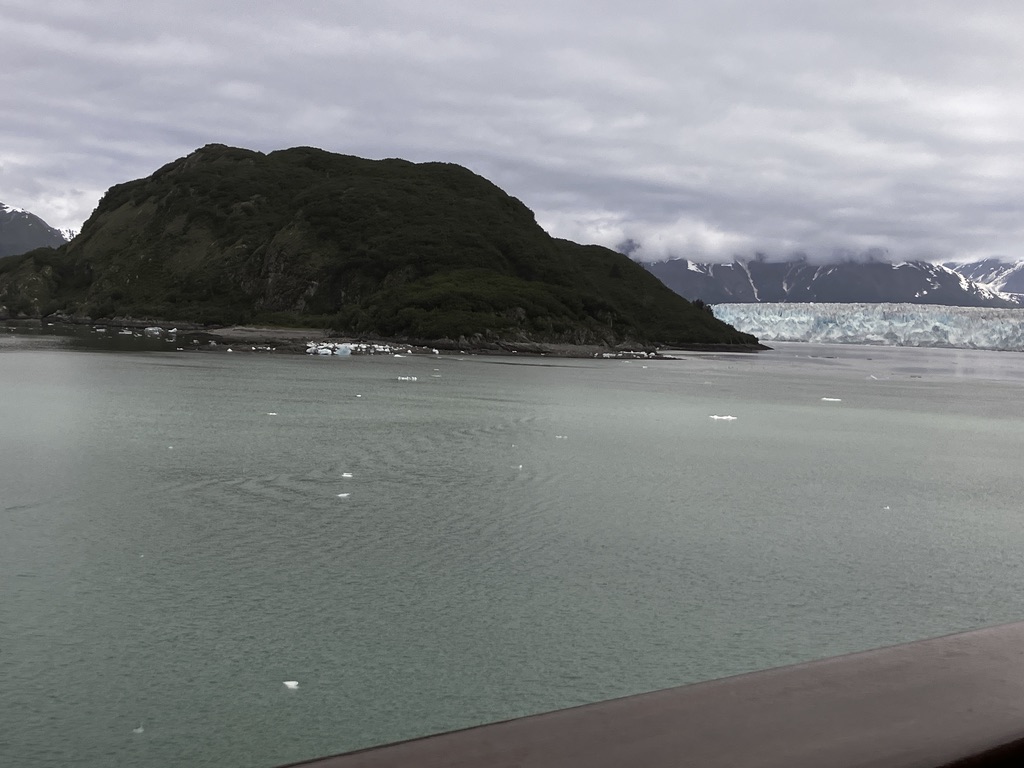
College Fjord – Friday July 18
Optimal viewing times: approximately 9:00 am to 2:00 pm
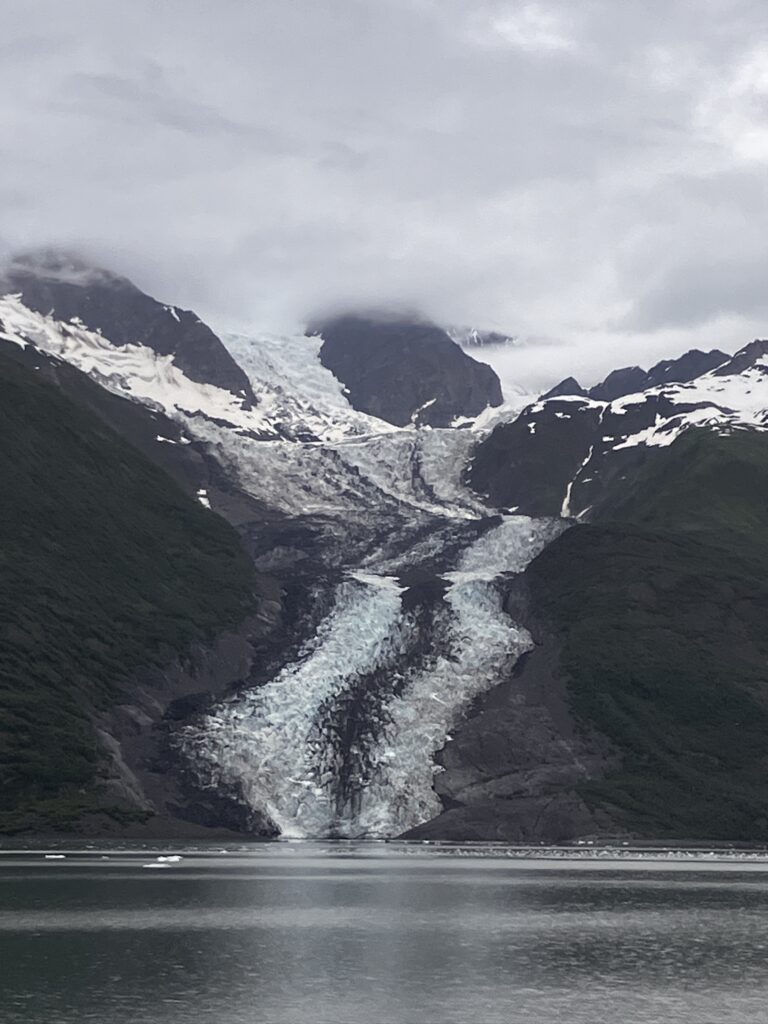
Based on my research, I was guessing that College Fjord would be a combination of what we’d seen so far – beautiful narrow rocky cliffs and a whole bunch of glaciers.
Tucked into the northwest corner of Prince William Sound, College Fjord is a hidden gem known for its dramatic scenery and impressive collection of glaciers—five tidewater glaciers and dozens more nestled into the surrounding mountains. Discovered during the Harriman Expedition of 1899, the fjord was famously named by Ivy League scientists, and its glaciers still bear names like Harvard, Yale, and Wellesley.
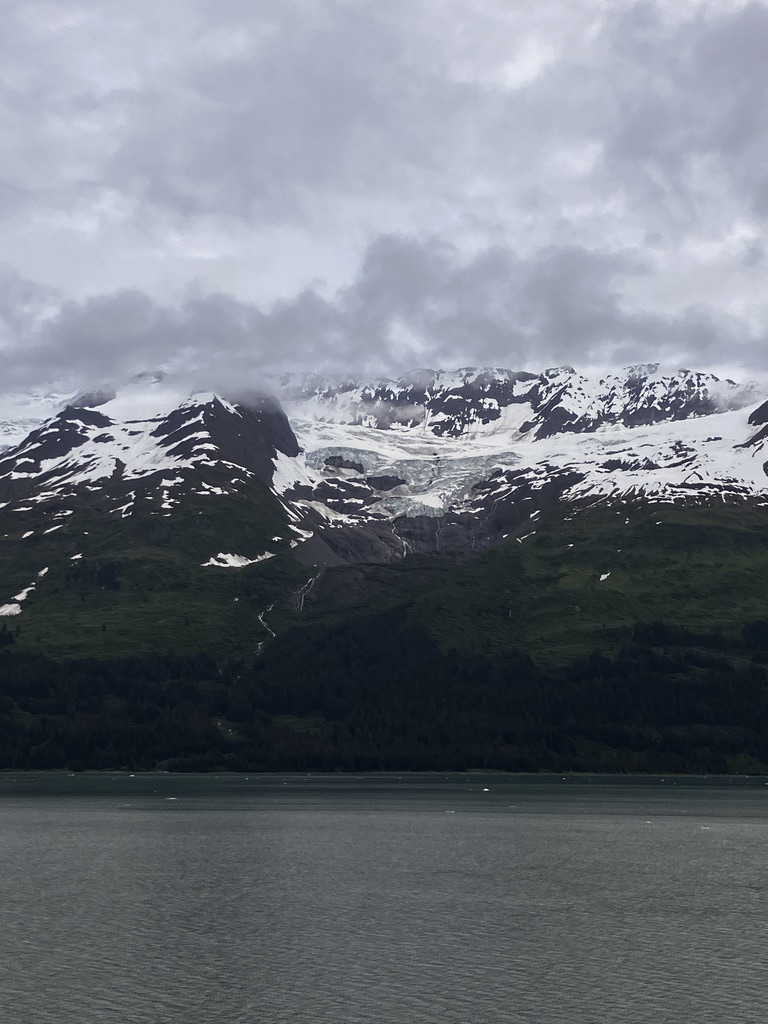
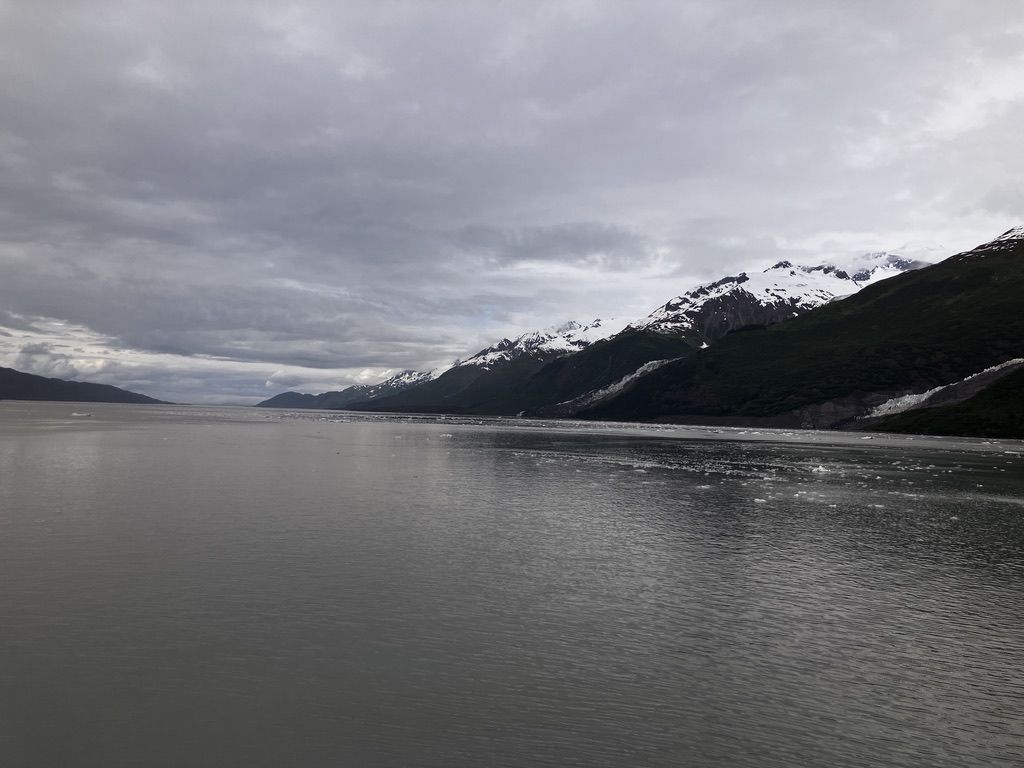
It turned out that the fjords were more open than they were in Tracy Arm, but the views were still spectacular.
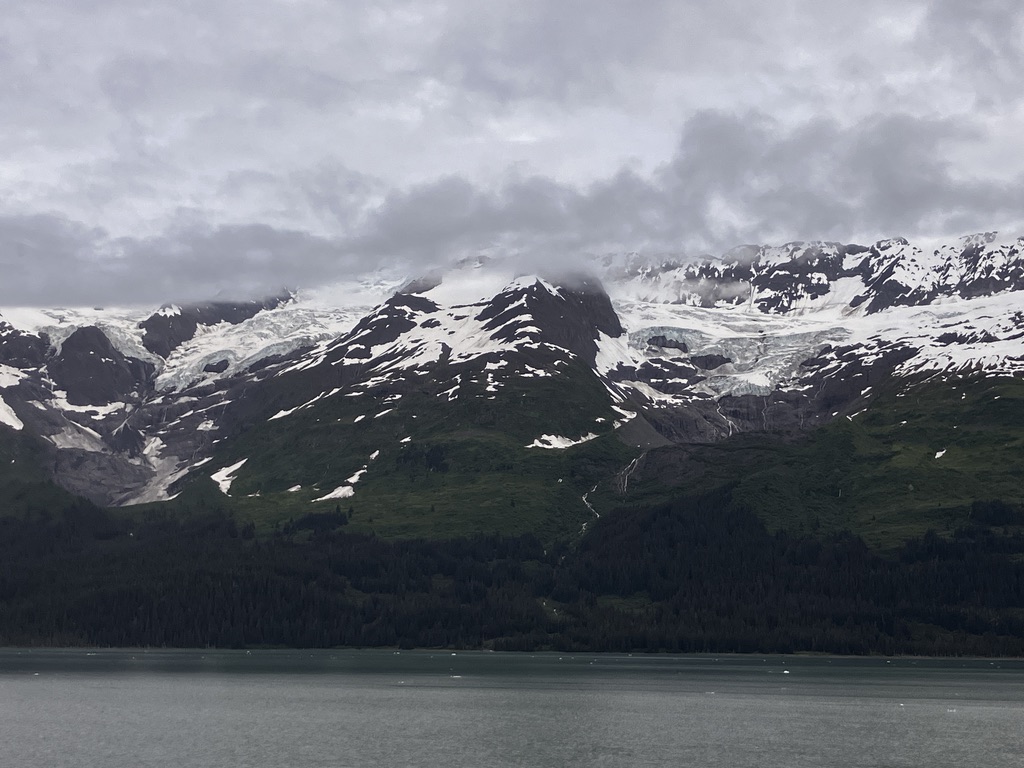
Geography & Glaciers:
- Length: ~20 miles (32 km)
- Number of Glaciers: Over a dozen major glaciers, including:
- Harvard Glacier (most prominent tidewater glacier)
- Yale Glacier
- Smith, Vassar, Bryn Mawr, Wellesley, Barnard (hanging glaciers)
- Glacier Side Note: Women’s colleges were assigned to the northwest side; men’s colleges to the southeast
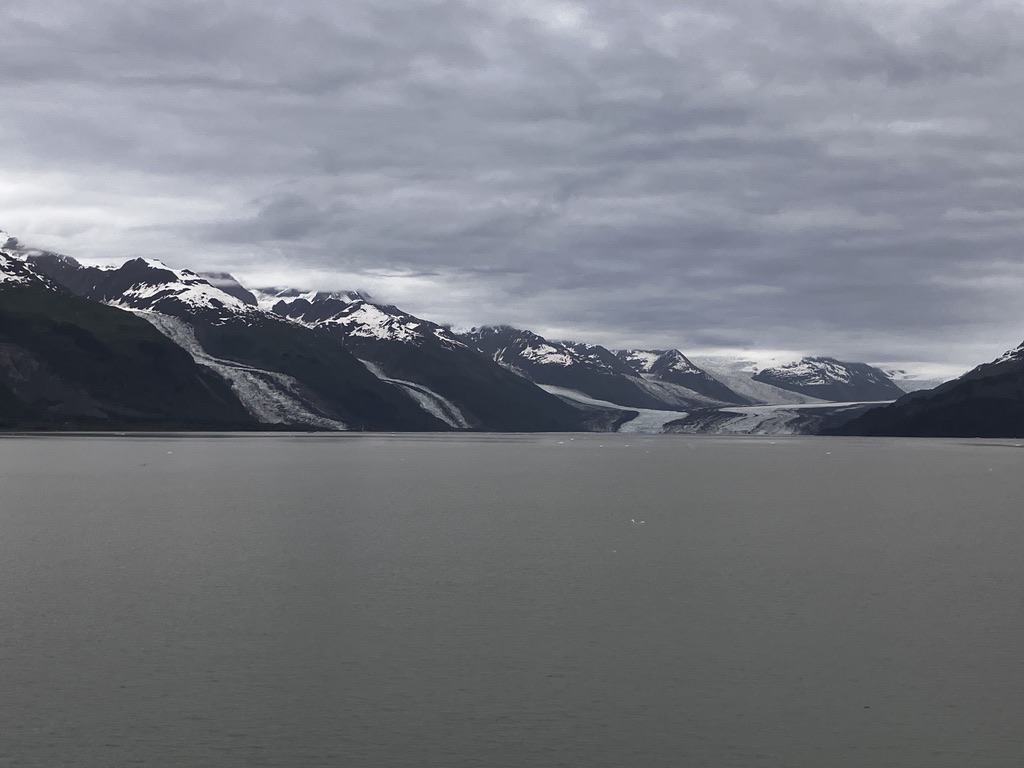
Why It’s Special:
- Multiple Glaciers in One View: Nowhere else in Alaska are so many glaciers so close together
- Pristine Wilderness: Remote and less-visited than Hubbard or Glacier Bay
- Harvard Glacier: Massive and actively calving, often steals the show with its 1.5-mile-wide face
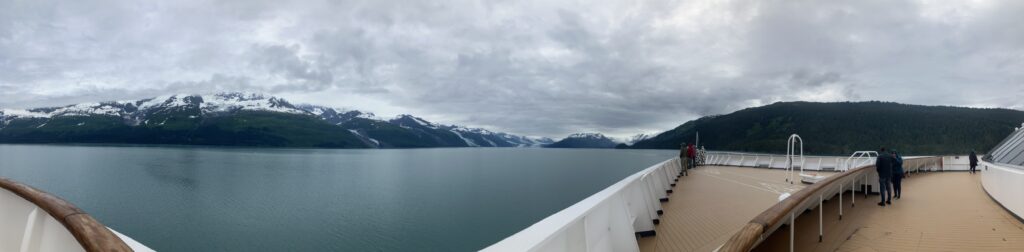
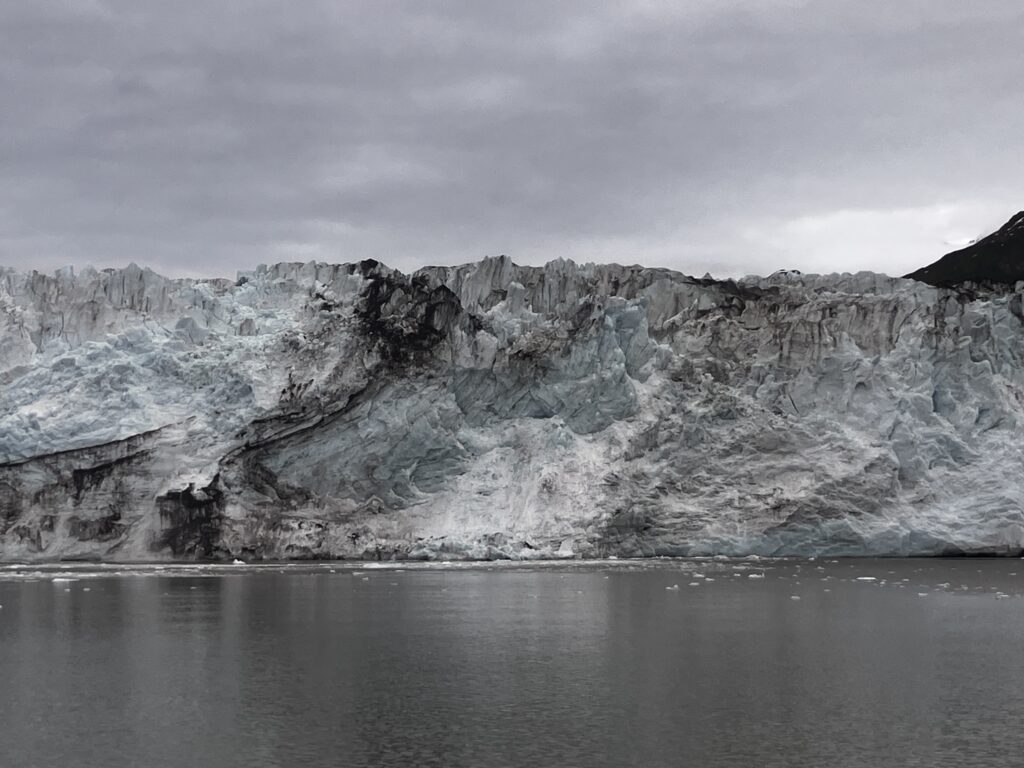
We stood staring at the glacier. We were much closer this time. It calved once when I went downstairs to put my laundry in the dryer (with 10 days at sea I guessed that a scenic cruising day would be the best day to do laundry- I was right). The Captain came on the loud speaker and told us it was time to go… in 5 more minutes. Everyone appreciated being treated like a kid.
Wildlife Viewing: Sightings may include:
- Harbor seals and sea otters on ice floes
- Bald eagles circling overhead
- Black bears along the shoreline
- Porpoises and whales occasionally in the fjord’s deeper waters
This time, on the way out, I finally saw otters sitting on an ice chunk through borrowed binoculars. They looked absurdly comfortable.
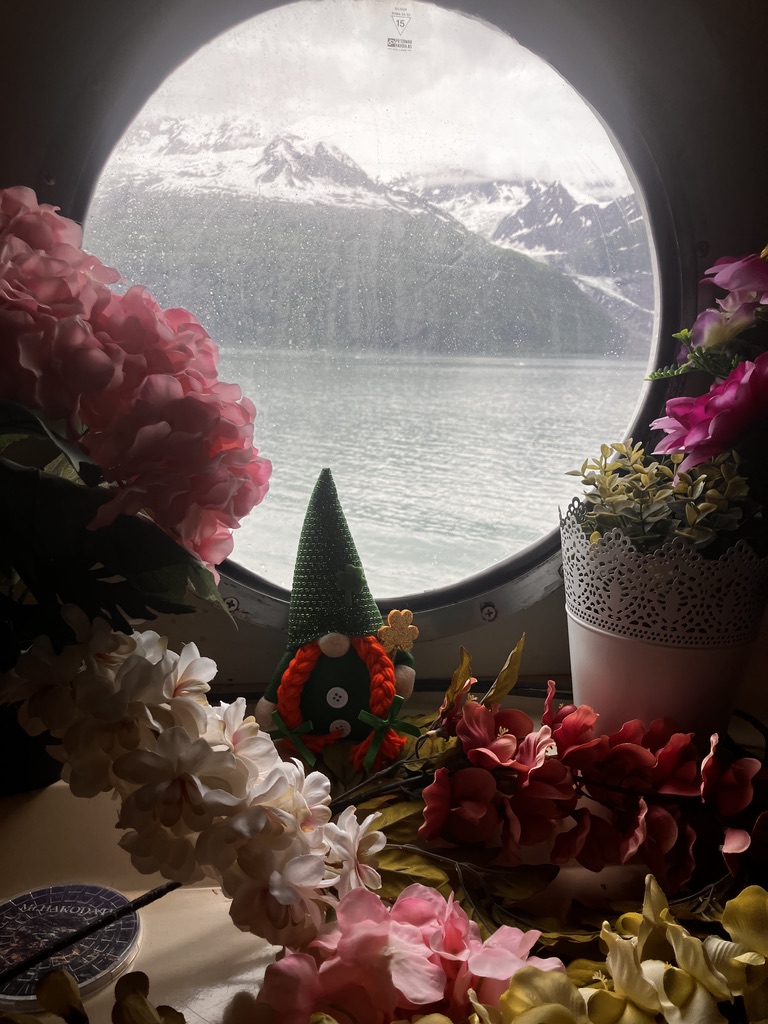
🛳 Best Viewing Areas:
- Forward observation decks and port side when entering the fjord
- Starboard side offers great views of hanging glaciers on the way out
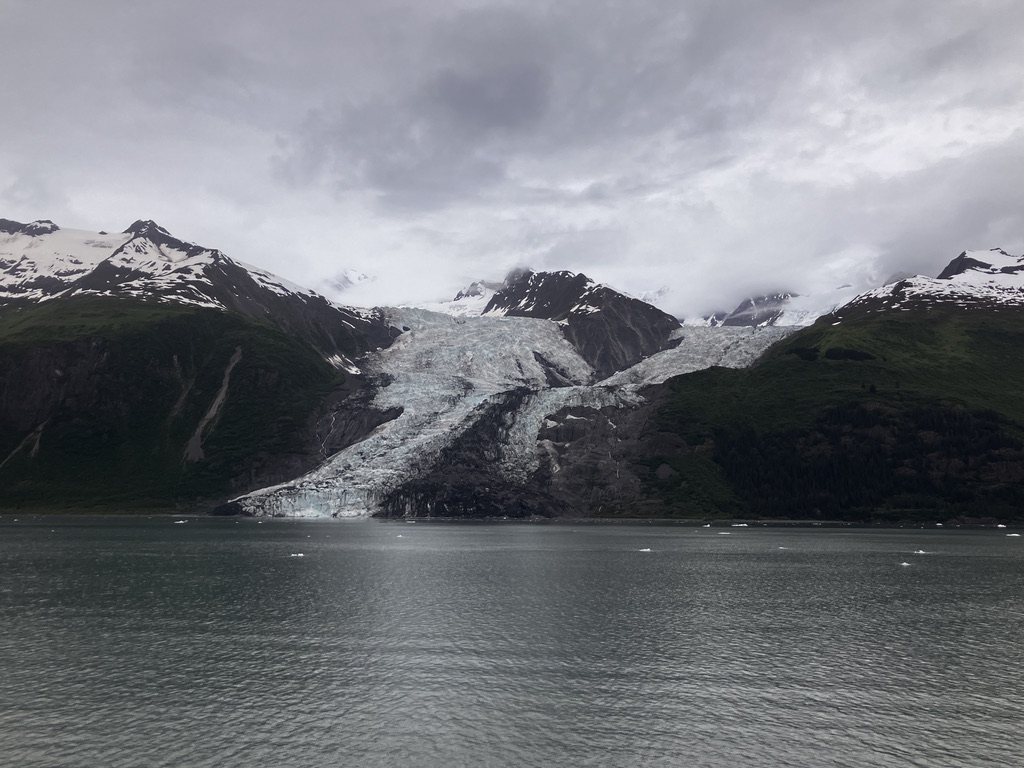
🎧 Enjoy the Stillness: With minimal boat traffic, the quiet is part of the magic—until a glacier calves!
Fun Facts:
- Discovered by the 1899 Harriman Expedition, which included scientists from Harvard and Amherst
- Legend has it they didn’t name any glaciers after Princeton because no one on the expedition went there
- The fjord is a “dead end,” meaning cruise ships must reverse course to exit—offering views in both directions
Best Viewing Time:
- Evening Light: Can cast a golden hue on the glacier walls for breathtaking views (we didn’t stay for these)
Scenic Cruising: What to Wear
- Wear thermal base layers, a warm mid-layer (like fleece or down), and a waterproof outer shell. Glacier areas can be windy and much colder than nearby towns, even in summer.
- Hat, gloves, and scarf are recommended for extended viewing on deck.
- Sunglasses help reduce glare from the ice and water.
- Comfortable, non-slip shoes or boots with good grip for wet deck surfaces.
- Bring a water-resistant jacket—glacial mist, drizzle, or sea spray are common.
📸 Photography Tips for Glacier Viewing
- Use a zoom lens or binoculars to capture wildlife and glacier details from a distance.
- Burst mode is great for catching unexpected calving events.
- Zoom in to highlight the glacier’s deep blue ice—formed by years of compressed snowfall.
- Wide-angle lenses are ideal for capturing the scale of multiple glaciers, especially in College Fjord.
- Reflections on calm water days create stunning mirror images—perfect for landscape shots.
- Look for waterfalls, ice formations, and contrasting textures for dynamic compositions.
In summary, on the first day the rocks were breathtaking and the scenery changed every time I looked out the window. Then when we went to the Hubbard Glacier, there was so much calving that I really felt like I’d had the experience of seeing and hearing the ice crash down into the water with the spontaneous blue waterfalls and a big brown splash. On the last day, while the cliffs didn’t tower above us, the glaciers trickling down the mountain were stunning. We got a lot closer to the glacier than we had been at the Hubbard Glacier, though it didn’t calve as much. Between the three days, I felt like I’d had the ultimate Scenic Glacier Cruising experience.