
My views do not necessarily reflect the views of my employer.
August 27 & 28, 2025
I’d been to Nagasaki a couple of times on the Diamond Princess. Since the Diamond was built in Nagasaki, that made visiting it especially exciting. We docked right in town, which made it another one of my favorite ports. I’d been to the Peace Park before, but not the museum. I was looking forward to exploring what else there was to see in Nagasaki.
Nagasaki, Japan
Welcome to Nagasaki—a port city defined by resilience, diversity, and cultural exchange. Nestled between green hills and a deep natural harbor on Kyushu’s western coast, Nagasaki was Japan’s historic gateway to the outside world during the era of isolation. Portuguese, Dutch, and Chinese traders left a lasting imprint on its architecture, cuisine, and traditions, making Nagasaki unlike any other Japanese city. Equally remembered as the second city struck by an atomic bomb in 1945, it has since rebuilt into a thriving, peaceful city that honors its past while embracing the future.
Home to around 400,000 residents, Nagasaki is a warm and welcoming destination where visitors can explore European-style gardens, moving memorials, temples, markets, and lively neighborhoods—all within easy reach of the port.
History:
Nagasaki rose to prominence in the 16th century, when Portuguese traders and missionaries introduced Christianity, firearms, and new foods. In 1639, as Japan entered more than two centuries of national isolation, the city became the country’s sole point of contact with the outside world. Foreign trade was confined to Dejima, a small artificial island where Dutch and Chinese merchants lived under strict supervision, making Nagasaki a rare cultural and commercial crossroads.
During the Meiji Restoration, Nagasaki emerged as an important shipbuilding and industrial hub, symbolizing Japan’s modernization. On August 9, 1945, the city was devastated by an atomic bomb, just three days after Hiroshima. Despite overwhelming destruction, Nagasaki was rebuilt, and today it stands as a global symbol of peace and resilience. UNESCO has recognized the city’s heritage through two designations: the Hidden Christian Sites, honoring communities that preserved their faith in secret, and the Sites of Japan’s Meiji Industrial Revolution, highlighting its role in modernization.
Itinerary:
Arrival: Wednesday August 27 1:00pm (please allow time for port clearance)
Departure: Thursday August 28 All aboard: 9:00pm Sail away: 10:00pm
Weather
- Average Temps (August): High ~31°C (88°F), Low ~25°C (77°F)
- Climate: Humid subtropical—hot, humid, with occasional rain showers
- What to Wear: Light, breathable clothing, sunscreen, a sunhat or umbrella, and comfortable walking shoes. A light jacket or shawl is recommended for cooler evenings.
Near the Pier:
Nagasaki Cruise Ship Dock: Matsugae International Terminal
Address: 6-17 Matsugae Town, Nagasaki City
Address in Japanese: 長崎県長崎市松が枝町6-17
- Port Hours: Open daily 7:00am – 10:00pm
- Distances: 30m from ship to port gate; 200m to terminal building; 20 minutes on foot to city center
Nearby Essentials
- Pharmacy: Within 10–15 min walk of the terminal
- ATM: At You Me Mall or Amu Plaza near Nagasaki Station
- Grocery/Snacks: 7-Eleven, FamilyMart, and Lawson within short walk
- Nearest Church: Oura Church (UNESCO site, ~10 min taxi)
- Nearest Golf: Nagasaki Country Club (~40 min drive)
- Shopping: You Me Mall & Amu Plaza Nagasaki (at Nagasaki Station)
- Nearest Don Quijote: Near Nagasaki Station (~10 min drive)
Getting Around:
- 🚶 Walking: Compact city; major attractions within 20–30 minutes on foot
- 🚌 Public Transit: Nagasaki Electric Tram – flat fare ¥140; day pass ¥600
- 🚖 Taxis: Readily available at pier and attractions
- 🚴 Bike Rentals: Limited, near Nagasaki Station
- 🚗 Car Rentals: Available at station; generally unnecessary for short visits
- Hop-On Hop-Off Bus: Covers Peace Park, Dejima, Glover Garden, and other highlights
Witnessing:
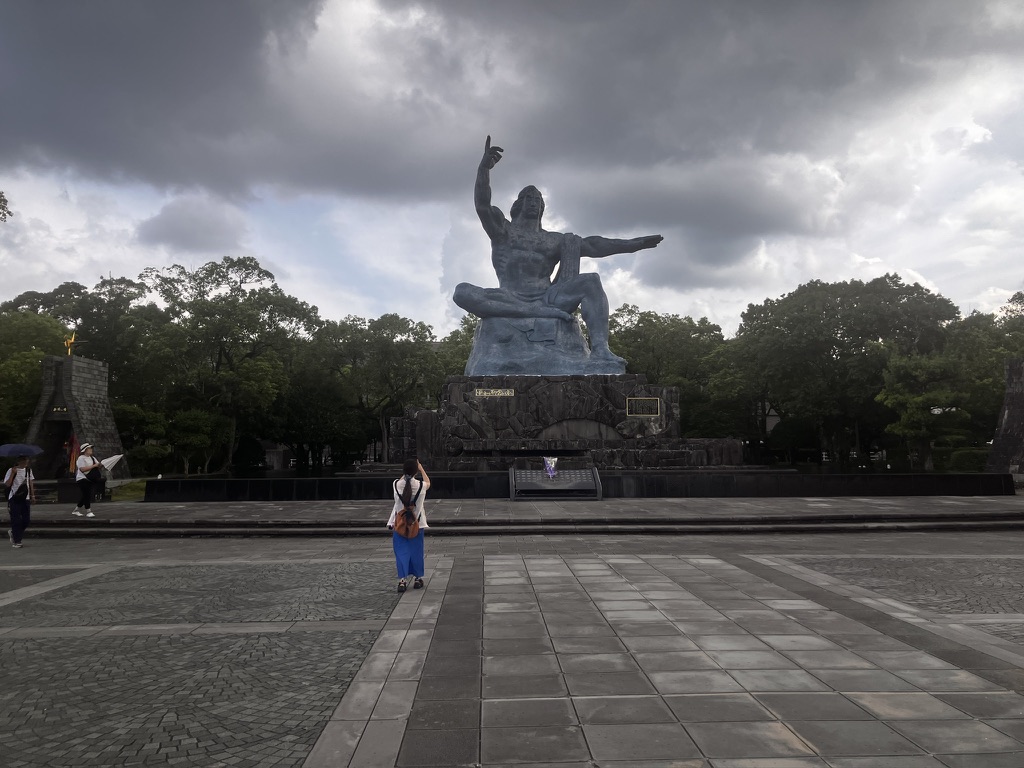
Peace Park & Atomic Bomb Museum (UNESCO): At the heart of Nagasaki’s story is the Peace Park, a serene yet powerful memorial dedicated to the victims of the atomic bombing on August 9, 1945. The park is filled with sculptures and monuments contributed by countries around the world, symbolizing a shared hope for peace. Its centerpiece, the towering Peace Statue, extends one hand upward to warn of nuclear threat and the other outward in a gesture of peace.
Adjacent to the park is the Atomic Bomb Museum, which provides a sobering but deeply moving account of the events leading up to the bombing, the devastation it caused, and Nagasaki’s remarkable recovery. Exhibits include photographs, survivor testimonies, artifacts, and educational displays that emphasize the importance of peace and nuclear disarmament.
The nearby Hypocenter Park marks the exact spot above which the bomb detonated, with a black monolith and preserved ruins serving as quiet reminders of the day.
- Admission: Free (Peace Park & Hypocenter); Museum ticket separate
- Visit Time: 2–3 hours recommended for the park and museum
- Access: Easily reached by tram from Nagasaki Port; ~20 minutes to Peace Park stop
✨ Travel Tip: While photography is allowed in many areas, visitors are encouraged to maintain a quiet, respectful atmosphere.
Glover Garden: Perched on a hillside overlooking Nagasaki Harbor, Glover Garden is an open-air museum of Western-style residences built in the late 19th century for foreign merchants and diplomats. The centerpiece is the former Glover House, built in 1863 for Scottish merchant Thomas Blake Glover, who played a pivotal role in Japan’s modernization, particularly in shipbuilding and the introduction of Western industry. It is the oldest surviving Western-style house in Japan.
The garden grounds feature several restored residences, each showcasing a blend of Western architecture with Japanese influences. Pathways wind through manicured gardens, fountains, and terraces, offering panoramic views of the harbor and city below. In spring, azaleas and wisterias add vibrant color, while evening illuminations make the site especially atmospheric.
- Admission Fee: ¥620 for adults;
- Visit Time: 1–1.5 hours
- Access: About 10 minutes by taxi or ~20 minutes by tram from the cruise terminal
✨ Fun Fact: Glover Garden is said to have inspired the opera Madame Butterfly, as Puccini’s tragic heroine is often linked to the story of a foreign merchant’s Japanese bride in Nagasaki.
Dejima: Once an artificial island and Japan’s sole gateway to Western Europe during the Edo period, Dejima has been restored to reflect its historical significance. Now a fascinating open-air museum, its exhibits bring to life Dejima’s role in commerce and cultural exchange during isolation. Visitors can explore restored merchant buildings and immersive exhibits that showcase Nagasaki’s unique international legacy.
- Visit Time: ~45 minutes–1 hour
- Access: ~5 minutes by tram from Nagasaki Station, or accessible via city bus to Dejima stop
- Admission Fee: Adult ¥520;
Learning:
Ōura Church & Hidden Christian Museum (UNESCO): Standing on a hillside overlooking Nagasaki Harbor, Ōura Church is Japan’s oldest surviving Christian church, built in 1864 by French missionaries. Dedicated to the 26 Christian martyrs executed in Nagasaki in 1597, the church is a striking example of Western Gothic architecture with stained-glass windows, white spires, and a serene interior.
Ōura became world-famous in 1865 when a group of local villagers revealed themselves to the priests as “Hidden Christians” (Kakure Kirishitan)—descendants of believers who had practiced their faith in secret for over two centuries during Japan’s ban on Christianity. This moving encounter marked a turning point in Japan’s religious history.
The adjacent Hidden Christian Museum explores the story of these communities, displaying artifacts, devotional objects disguised as Buddhist statues, and documents that tell the remarkable story of faith preserved in secrecy. Together, the church and museum form part of the UNESCO World Heritage “Hidden Christian Sites in the Nagasaki Region.”
- Visit Time: ~45 minutes–1 hour
- Access: ~10 minutes by taxi from Nagasaki Port, or 20–25 minutes by tram to Oura Cathedral stop
- Admission Fee: ¥1,000 adults; ¥400 children (includes entry to the museum)
The Nagasaki Museum of History & Culture is one of the few museums in Japan devoted specifically to the theme of international exchange. Opened in 2005, it showcases Nagasaki’s unique role as Japan’s sole gateway to the outside world during the Edo period, when the country was largely closed to foreign influence.
The museum houses over 48,000 artifacts, including trade documents, maps, ceramics, and art that reflect the blending of Japanese, Chinese, and European cultures in Nagasaki. A highlight is the reconstruction of part of the Edo-era magistrate’s office (bugyōsho), where visitors can experience the atmosphere of official life in the 17th and 18th centuries. Special exhibitions often highlight Nagasaki’s Christian heritage, maritime trade, and role in Japan’s modernization.
- Visit Time: 1–1.5 hours Admission Fee: ¥630 adults;
- Access: About 10 minutes by tram from Nagasaki Station (get off at Sakura-machi stop)
✨ Travel Tip: English signage is available throughout, making it easy to follow the exhibits without a guide.
Discovery:
Shinchi Chinatown is Japan’s oldest Chinatown, established in the early 17th century by Chinese traders who settled in Nagasaki during the era of sakoku. Although heavily regulated, these merchants played a vital role in sustaining foreign trade and cultural exchange. Today, the district remains a lively center of Chinese-Korean-Japanese fusion culture, marked by ornate gates, red lanterns, and bustling streets filled with shops and restaurants.
Nagasaki Chinatown is particularly famous for its local Chinese-inspired dishes, especially Champon—a hearty noodle soup with seafood and vegetables—and Sara Udon, crispy fried noodles topped with stir-fried toppings. Both dishes originated here and have become Nagasaki’s culinary signatures.
Throughout the year, the neighborhood also hosts vibrant festivals, the most famous being the Nagasaki Lantern Festival, when thousands of colorful lanterns illuminate the streets to celebrate the Lunar New Year. Even outside festival season, the area offers a lively, multicultural atmosphere that reflects Nagasaki’s role as a gateway to the world.
- Highlights: Champon & Sara Udon, shopping streets, Chinese gates & lanterns
- Visit Time: 45 minutes–1 hour
- Access: 5–10 minutes by tram from Nagasaki Station, Dejima, or the port
✨ Travel Tip: Many restaurants are small and fill up quickly at lunch—arrive early or try an afternoon visit for shorter waits.
- Admission Fee: ¥630 adults;
Hiking:
- Mount Inasa: Ropeway or bus to one of Japan’s “Top 3 Night Views.”
- Unzen National Park: Volcanic landscapes and hiking trails (day trip ~1 hr).
Rising 333 meters above Nagasaki, Mount Inasa (Inasayama) offers one of the “Top Three Night Views in Japan”, alongside Hakodate and Kobe. The easiest and most scenic way to the summit is via the Inasayama Ropeway, a cable car that glides above the city to a glass-walled observatory with sweeping views of the harbor and surrounding mountains. By day the panorama is impressive, but at night the city sparkles like a “10 million dollar view,” making this one of Nagasaki’s most memorable experiences.
- Operating Hours: Daily, generally 9:00 am – 10:00 pm (last return ~10:30 pm; hours vary slightly by season)
- Ride Time: ~5 minutes each way
- Fare: ¥1,250 round-trip adults | ¥630 children
- Access: Ropeway base station ~15 minutes by taxi from Nagasaki Port; shuttles and city buses also available
✨ Travel Tip: Sunset and early evening are the most popular times—arrive a little before dusk to watch the city lights slowly illuminate. Bring a light jacket; breezes at the summit can be cool even in summer.
From Lonely Planet: The ropeway is nestled in the Fuchi Shrine. The hardest part about the experience is getting to Fuchi Shrine, which is a good 10-15 minute walk from Takara-machi, the nearest tram stop. From here, you’ll cross over the Uragami river, then veer to the right – even with GPS it’s easy to take a wrong street and have to backtrack.
Shopping
Nagasaki offers a blend of modern shopping centers, lively markets, and specialty stores that reflect its multicultural past.
- Amu Plaza Nagasaki – A large shopping mall directly connected to Nagasaki Station, featuring fashion boutiques, restaurants, souvenir shops, and a department store. Perfect for picking up local snacks and gifts before returning to the ship.
- You Me Mall – A spacious, family-friendly shopping center with a wide range of clothing, cosmetics, electronics, and dining options.
- Don Quijote – A Japanese discount mega-store offering everything from cosmetics and electronics to quirky souvenirs—great for last-minute bargains.
- Hamanomachi Shopping Arcade – A long covered arcade in the city center lined with small shops, cafés, and local eateries. It’s an excellent place to browse everyday Japanese goods alongside regional specialties.
Exploring:
Hashima (Gunkanjima / “Battleship Island”) – UNESCO Just 20 kilometers off Nagasaki’s coast lies Hashima, better known as Gunkanjima, or “Battleship Island,” for its fortress-like silhouette. Once a thriving coal mining facility operated by Mitsubishi, the island was home to over 5,000 residents at its peak in the 1950s, making it one of the most densely populated places on earth. Apartments, schools, shops, and even a cinema stood crammed onto the tiny rock, surrounded by high seawalls.
When Japan shifted from coal to petroleum in the 1970s, the mines closed and the island was abandoned in 1974. The empty concrete buildings have since been battered by typhoons and salt air, leaving an eerie, post-apocalyptic landscape that fascinates visitors today.
Designated as part of the UNESCO World Heritage “Sites of Japan’s Meiji Industrial Revolution”, Hashima symbolizes both Japan’s rapid modernization and the human cost of industrialization. Tours highlight its history, including the difficult conditions of workers—many of them conscripted during World War II.
- Visit Time: 2–3 hours (including boat transfer)
- Access: Guided boat tours depart from Nagasaki Port; ~40–50 minutes by boat each way
- Cost: ~¥4,000–4,500 adults, including landing fee (weather permitting; tours can be cancelled for rough seas)
- Restrictions: Visitors must stay on designated walkways for safety; not all areas are accessible
✨ Fun Fact: Hashima’s haunting landscape appeared in popular culture, including as a villain’s lair in the James Bond film Skyfall.
Lonely Planet says that visiting the island is not for the fainthearted. You’ll be on a boat for about an hour each way, and the seas often make landing impossible… (in which case the craft tours the island from afar.) If you do land, the approximately one-hour walk through ruins can be beastly hot. But the ruins are truly impressive. Outside of war or natural disaster, it’s rare to see this kind of scenery.
Unzen Onsen & Unzen-Amakusa National Park
Located about an hour’s drive from Nagasaki, Unzen Onsen is one of Japan’s most historic hot spring resorts, nestled in the volcanic landscapes of Unzen-Amakusa National Park. The area became Japan’s first designated national park in 1934, recognized for its rugged mountains, volcanic activity, and rich biodiversity.
The town of Unzen is famous for its dramatic Jigoku (“hells”), steaming hot spring vents and bubbling pools scattered through walking paths just steps from traditional inns and ryokan. Visitors can stroll safely among the geothermal fields, enjoying the surreal scenery and sulfur-scented air. Many ryokan offer baths where you can soak in the healing waters, once believed to restore health and vitality.
Surrounding the hot springs, the park offers scenic hiking trails with views of Mount Unzen’s peaks and forests that change beautifully with the seasons—lush green in summer, fiery red in autumn. The area is also rich in history: during the 17th century, persecuted Christians were martyred here, and memorials recall that difficult past.
- Highlights: Unzen Jigoku hot spring fields, ryokan baths, seasonal hiking trails, Christian martyrdom sites
- Visit Time: Half-day to full-day excursion
- Access: ~1–1.5 hours by bus or car from Nagasaki city center
- Cost: Free to walk through Jigoku; hot spring baths available at ryokan for ~¥1,000–2,000
✨ Travel Tip: If visiting on a day trip, combine a walk through the steaming hell valleys with a relaxing soak in a public bath. For those with more time, an overnight stay at a ryokan offers the full hot spring experience.
Hidden Gems:
19 miles from Nagasaki is the Obama Onsen – Japan’s hottest hot spring with a memorable name
Gunkanjima Island – Once the most densely populated place in the world, this island is now a ghost town.
Museum of Tropical Medicine – A hub of information on tropical diseases and their treatments.
Confucius Shrine in Nagasaki – This ornate example of 19th-century Chinese architecture is one of only a handful of Confucius shrines in Japan.
Fukusai-ji Temple – The giant figure on the back of this turtle-shaped temple actually hides a memorial pendulum.
Spectacles Bridge (Meganebashi) Built in 1634 by a Chinese monk, Meganebashi is Japan’s oldest stone arch bridge and one of Nagasaki’s most beloved landmarks. The bridge crosses the Nakashima River with twin arches that, when reflected in the water, resemble a pair of eyeglasses—hence its name, “Spectacles Bridge.”
Originally part of Kōfuku-ji Temple, the bridge showcases elegant Ming-style stonework and has withstood centuries of floods and earthquakes. It remains a symbol of Nagasaki’s international influences during the Edo period, when Chinese merchants played a vital role in the city’s life. Today, the surrounding riverbanks have been restored into a pleasant walking area, with stone lanterns, sculptures, and stepping stones across the river.
- Access: About 10 minutes by tram from Nagasaki Station (Nishihamanomachi or Meganebashi stops)
- Admission: Free
✨ Travel Tip: Visit on a calm day to catch the perfect “spectacles” reflection in the water. Nearby shops sell Castella cake and local snacks, making it an ideal short stop between sightseeing.
Tasting:
- Champon: Hearty noodle dish with seafood and vegetables.
- Sara Udon: Crispy noodles topped with stir-fried seafood and vegetables.
- Yakitori: Grilled skewers in cozy izakayas.
- Castella Cake: Portuguese sponge cake, Nagasaki’s most famous sweet.
- Shippoku Ryori: A banquet-style fusion of Japanese, Chinese, and Western cuisine.
Nikuman (Steamed Pork Buns)
Across Japan, Nikuman (literally “meat buns”) are a popular snack, especially in winter. These soft, fluffy steamed buns are filled with seasoned pork and vegetables, offering a warm, comforting bite. Convenience stores everywhere sell them in heated cases, making them one of Japan’s most accessible street foods.
In Nagasaki, Nikuman are often compared to the city’s larger, richer Butaman. While Butaman are a specialty unique to Nagasaki—hearty, oversized buns rooted in Chinese influence—Nikuman are the smaller, more common version enjoyed nationwide. Both are delicious, but visitors to Nagasaki should be sure to sample the city’s signature Butaman for a truly local twist.
- Where to Try: Convenience stores (¥150–200 each), Chinatown shops, or specialty food stalls
- Flavor Profile: Soft dough with juicy pork filling; sometimes seasoned with onion, garlic, and soy sauce
- Travel Tip: If you’re visiting Nagasaki in summer, Nikuman may be harder to find in convenience stores—they’re most common in cooler months. In Chinatown, however, Butaman are available year-round.
✨ Fun Fact: Nikuman are adapted from the Chinese baozi and have been part of Japan’s culinary landscape for over a century.
Irish Pubs: Irish Pub Nagasaki; “The Shack” and “The Tavern” near Nagasaki Station.
Mexican:
- El DORADO MEXICAN BAR & RESTAURANT
Located near Shianbashi, this vibrant spot blends authentic Mexican cuisine with a fun bar atmosphere. Think tacos, burritos, enchiladas, homemade salsa, cocktails, and Mexican beers — all served in a colorful setting. Open Tuesday through Saturday evenings (from 18:30), cash only. - DIMPLES
A bar and restaurant near Goto Machi Station offering Mexican-inspired dishes alongside European fare. Prices fall in the mid-range.
Nightlife:
Mount Inasa Night View: Perfect for evening excursions.
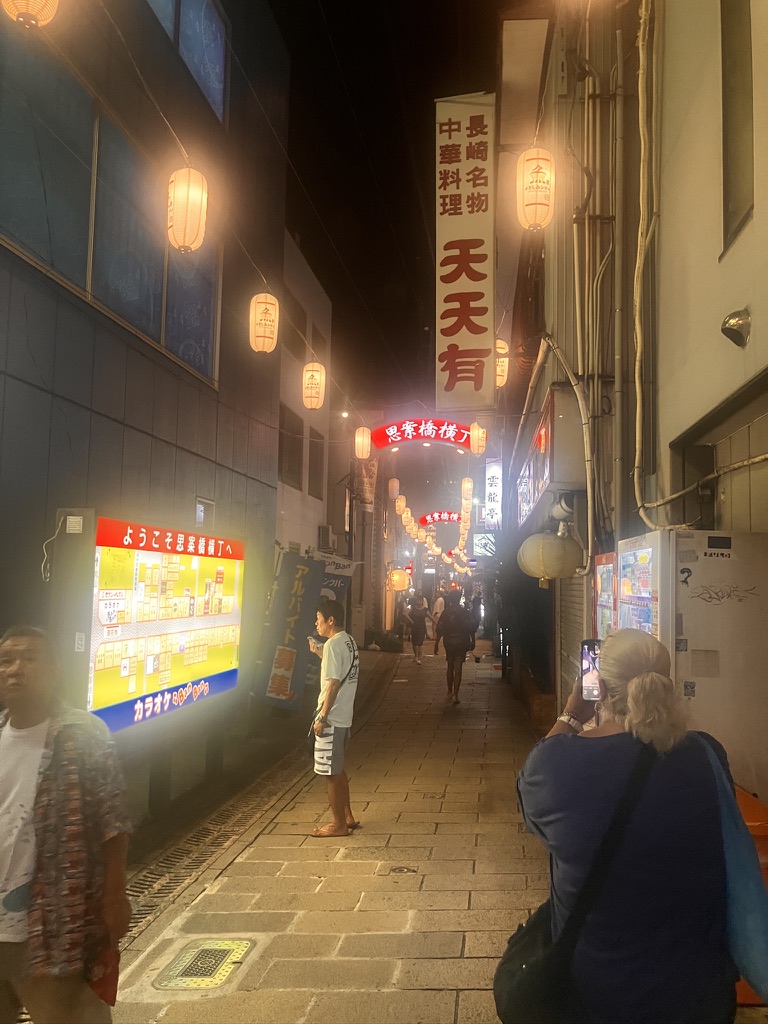
Shianbashi District – Nagasaki’s Nightlife Heartbeat
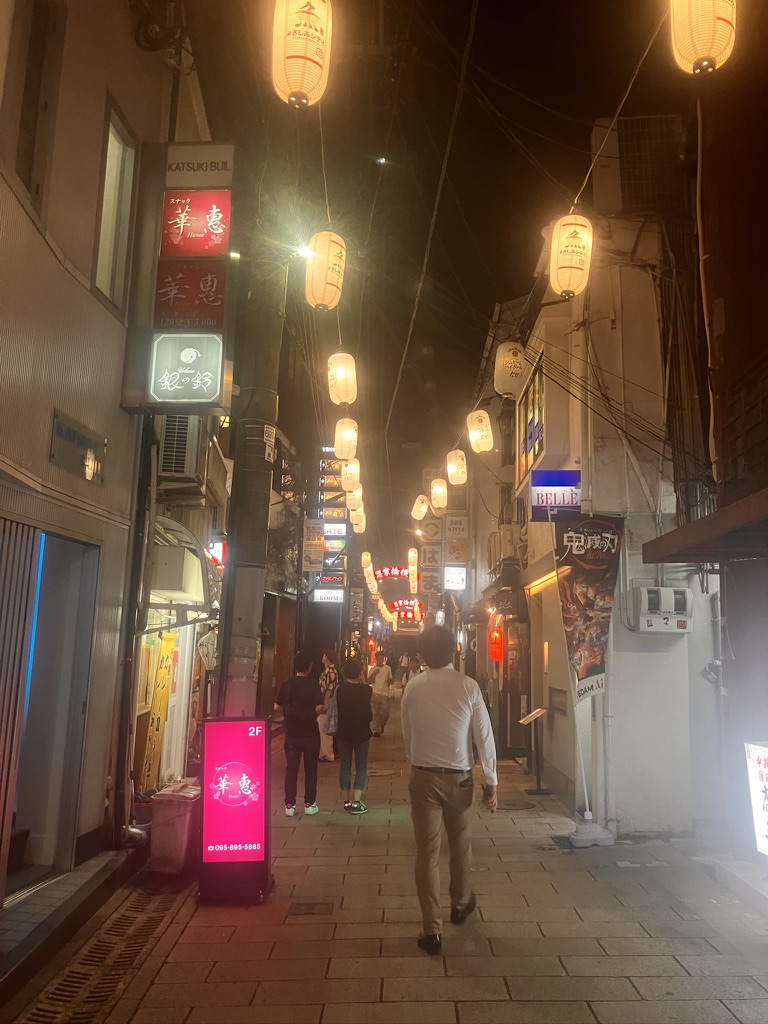
As evening falls, Shianbashi Yokocho—often called “Gourmet Street”—comes alive with retro charm, vibrant lantern-lit alleys, and the mellow hum of jazz, pop, and laughter spilling from bars and izakayas. With over 60 establishments, you’ll find everything from cozy oden stalls and standing izakayas to hidden wine bars and karaoke spots.
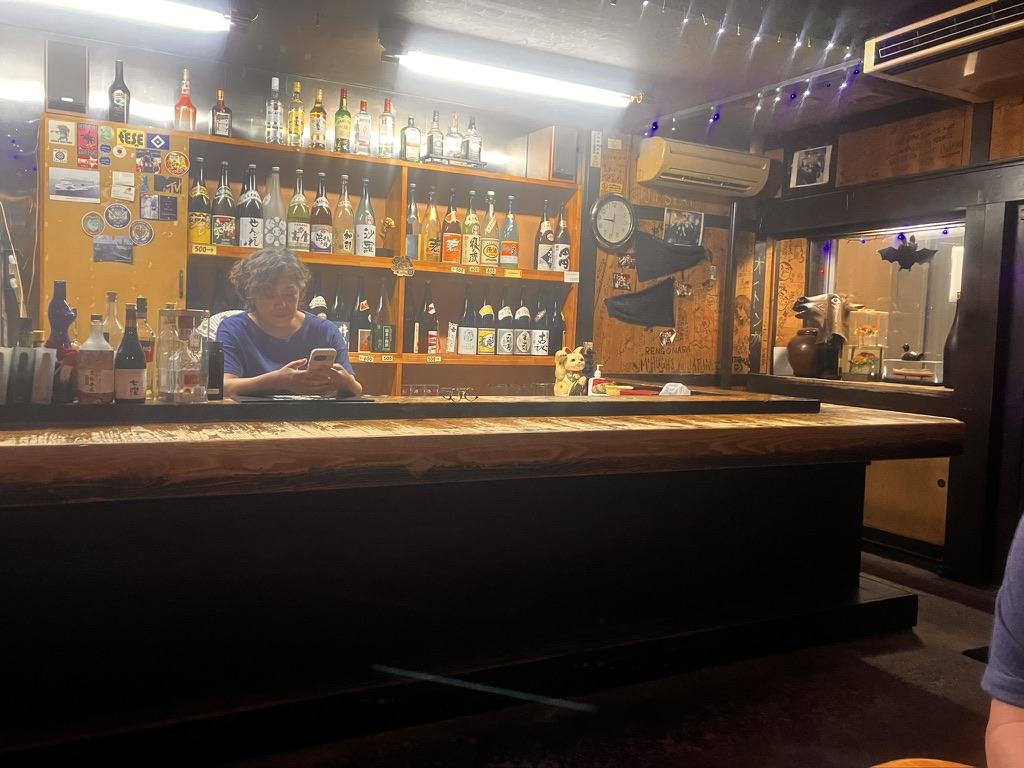
At Momowaka, a beloved oden spot since 1931, try local specialties like dragon-eye fish cakes served in a fragrant dashi broth. For social drinks, the standing bar Tatambaa welcomes you with over 100 alcohol choices and a unique pay-as-you-go system—just drop your cash in a bowl and enjoy.
Locals also recommend Iwi Bar, run by a friendly Kiwi owner, as a welcoming place where visitors and locals mix easily.
Shianbashi’s labyrinthine alleys offer chance discoveries—peek in, let the music guide you, and let the night unfold.
Travel Tips:
- Carry cash—many shops and trams do not accept cards.
- Tram day pass is best value (¥600).
- Expect hills and steps; use trams or taxis if mobility is limited.
- Bring water and sun protection in August heat.
- Visit memorials respectfully—this is a city of remembrance as well as renewal.
August 27, 2025
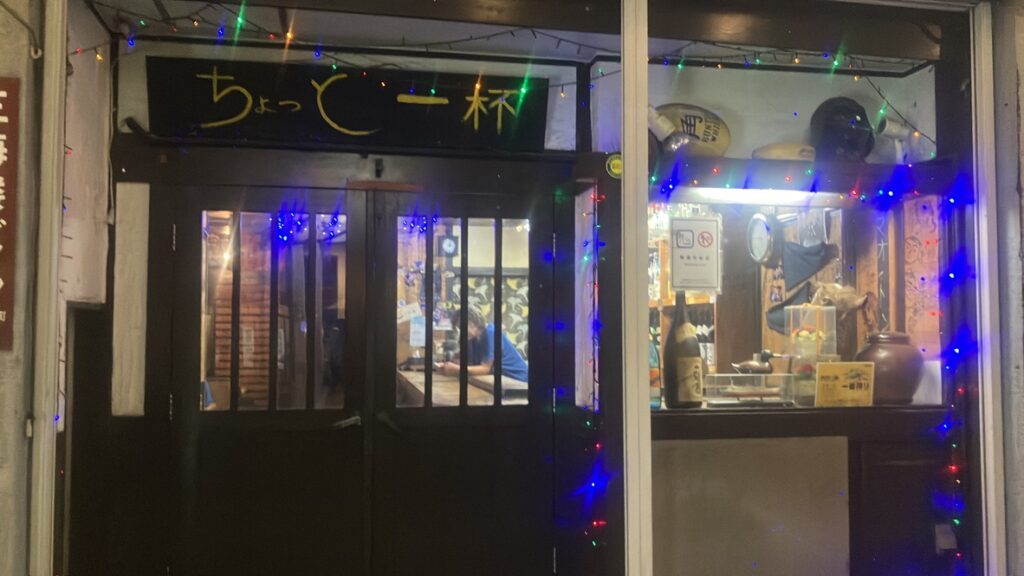
At the top of my agenda was exploring Shianbashi Yokocho. There’s something about a street designed for people to hang out, chat, eat and drink as evening turns to night that really appeals to me. Sometimes my loosely imagined fantasy turns out better than the actual experience, but I still wanted to go.
I loved that our itinerary included so many overnight stays, giving me the chance to truly explore places after dark. Michele and Steven humored my desire to explore dark alleys and came along so I’d have friends to hang out with.
The next day, Michele and Steven invited me along on their tour. I had safety training in the afternoon, but I wanted to make the most of the morning.
Our first stop was the Peace Park.
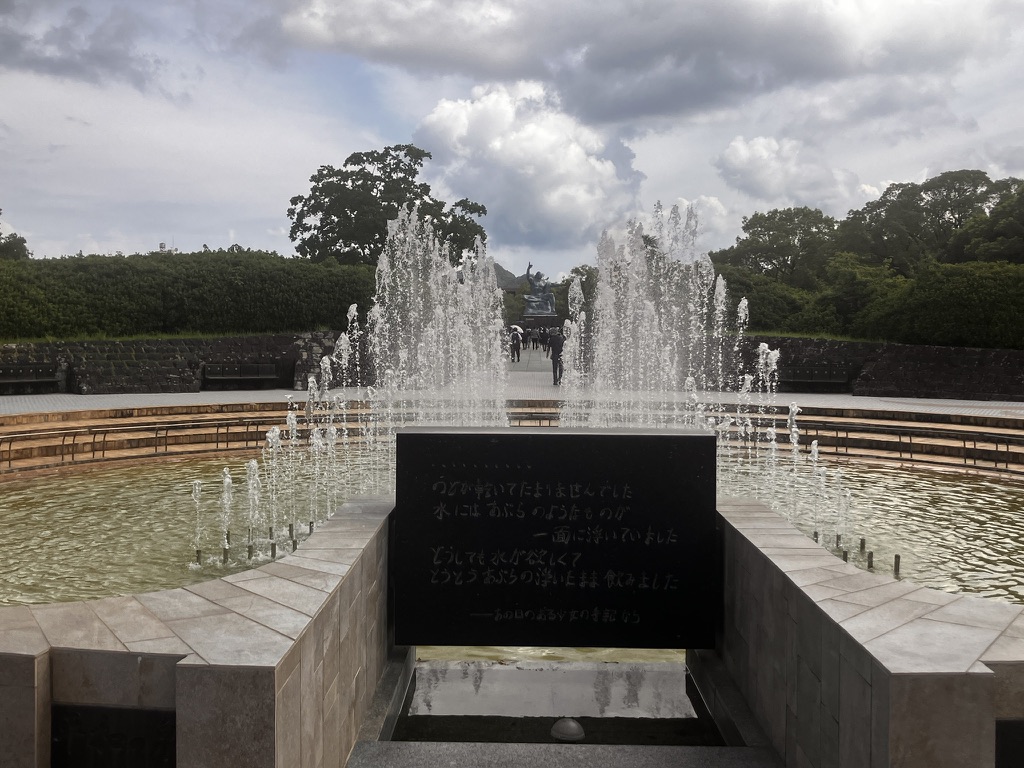
Last time I was here, I was with Andi!
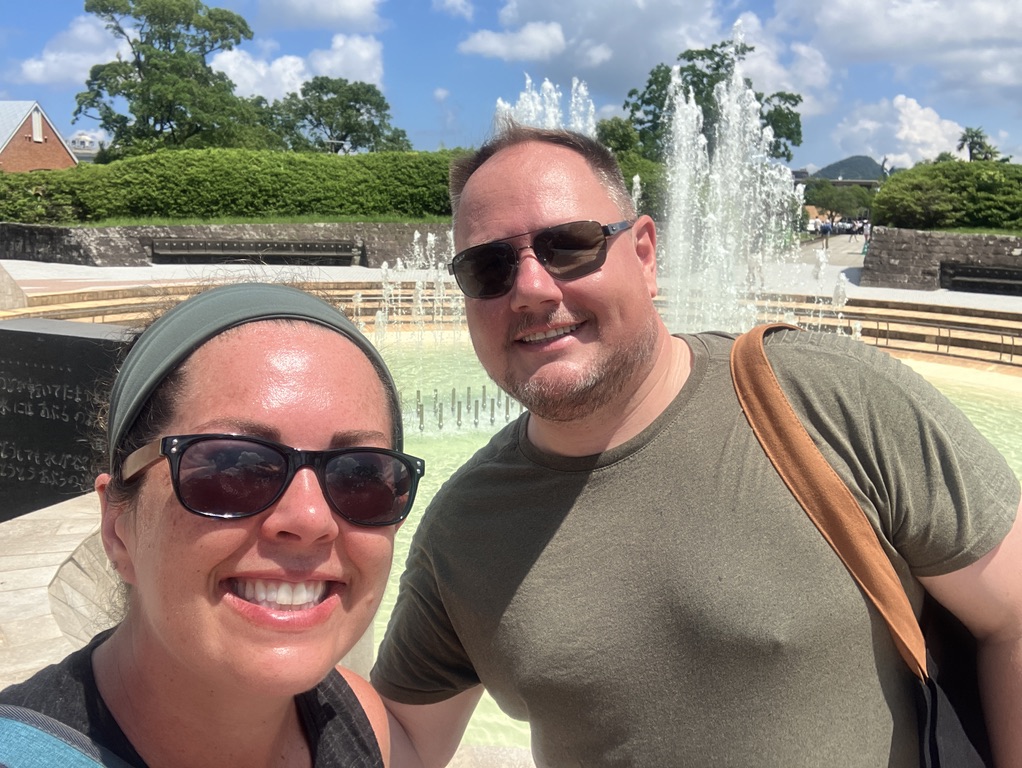
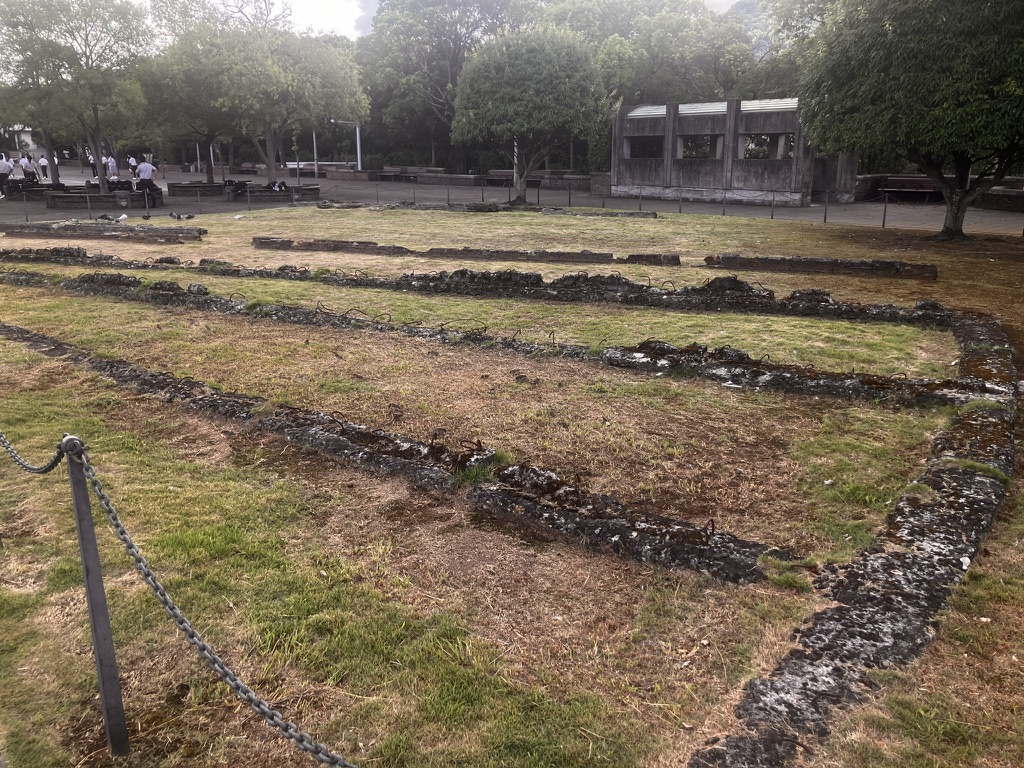
The raised right arm points toward the sky – not toward God, but specifically toward where the atomic bomb was dropped, symbolizing the ongoing threat of nuclear weapons. The left arm represents a wish for lasting world piece. The right leg is bent as if sitting in meditation, while the left leg pushes up from the ground, encouraging humanity to strive for a better world.
When I visited previously, they were restoring the base:
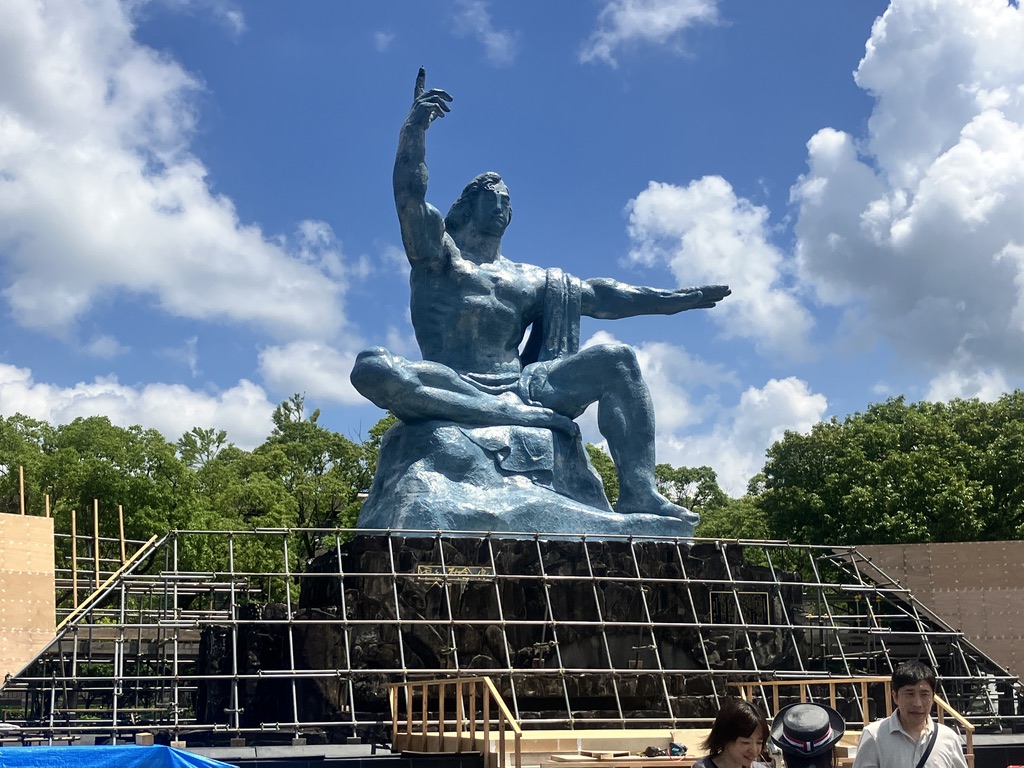
This time, it was still hot an humid, but cloud cover and then pouring rain when we reached the statue provided some relief.
We spent time admiring sculptures donated from around the world.
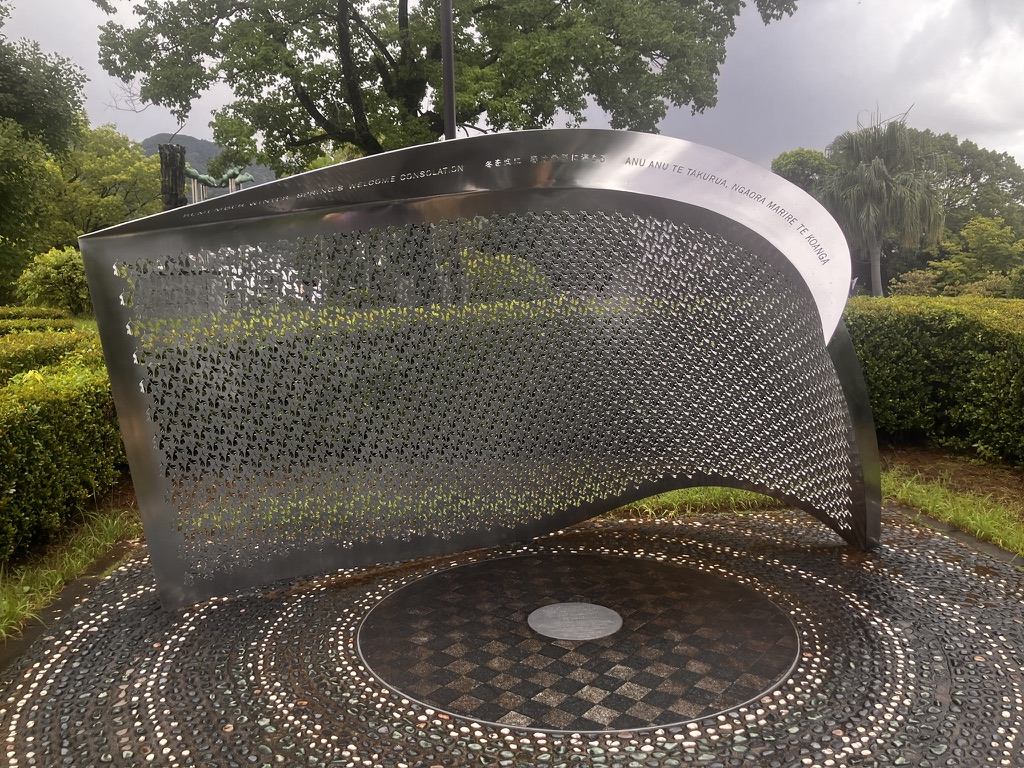
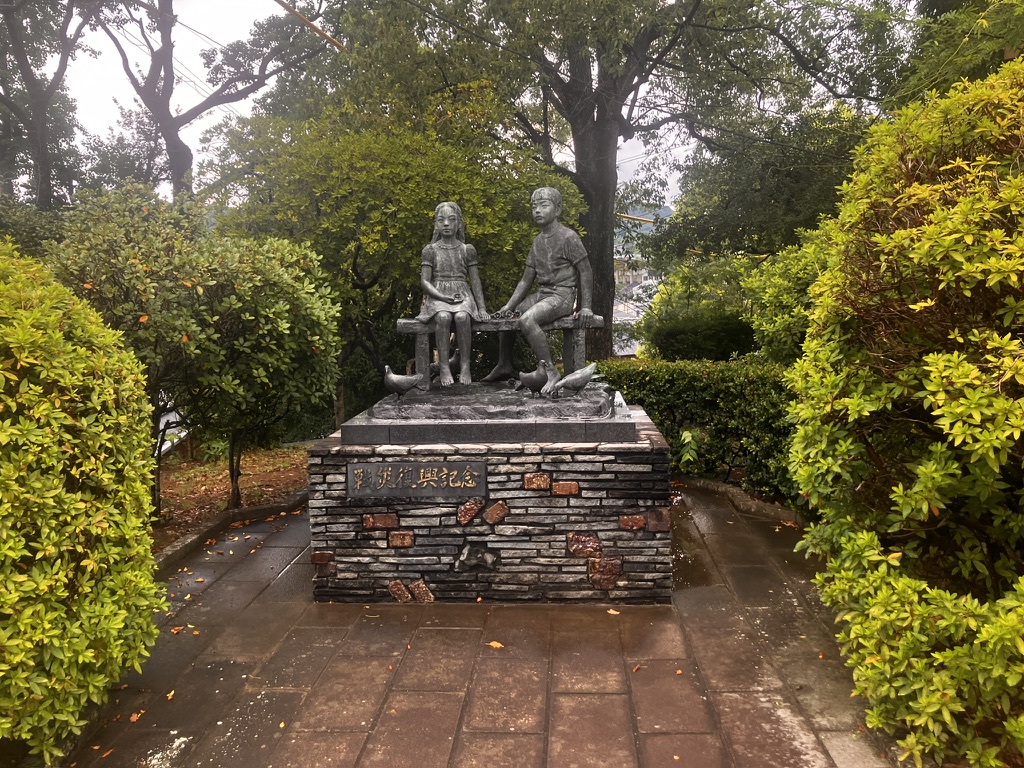
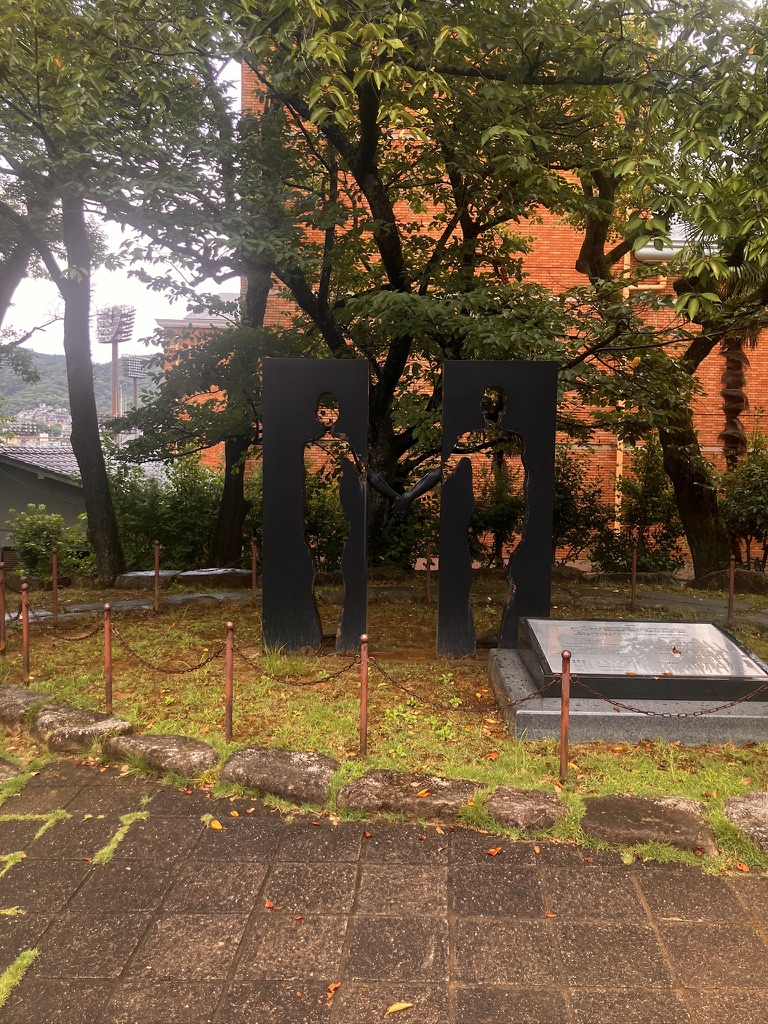
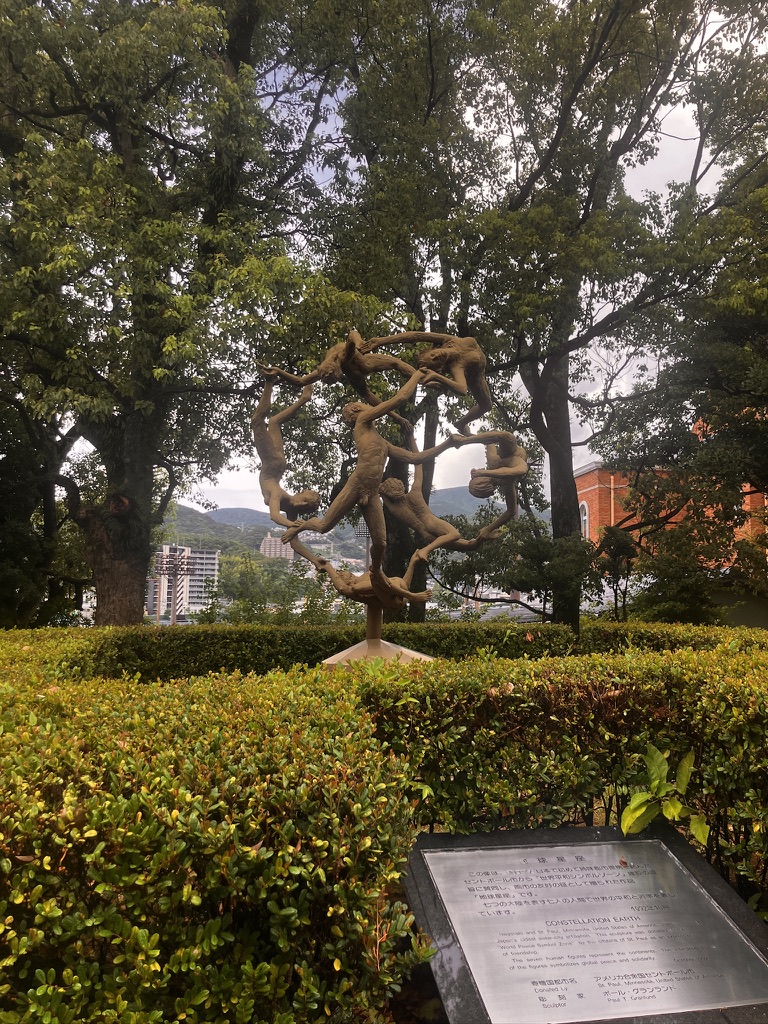
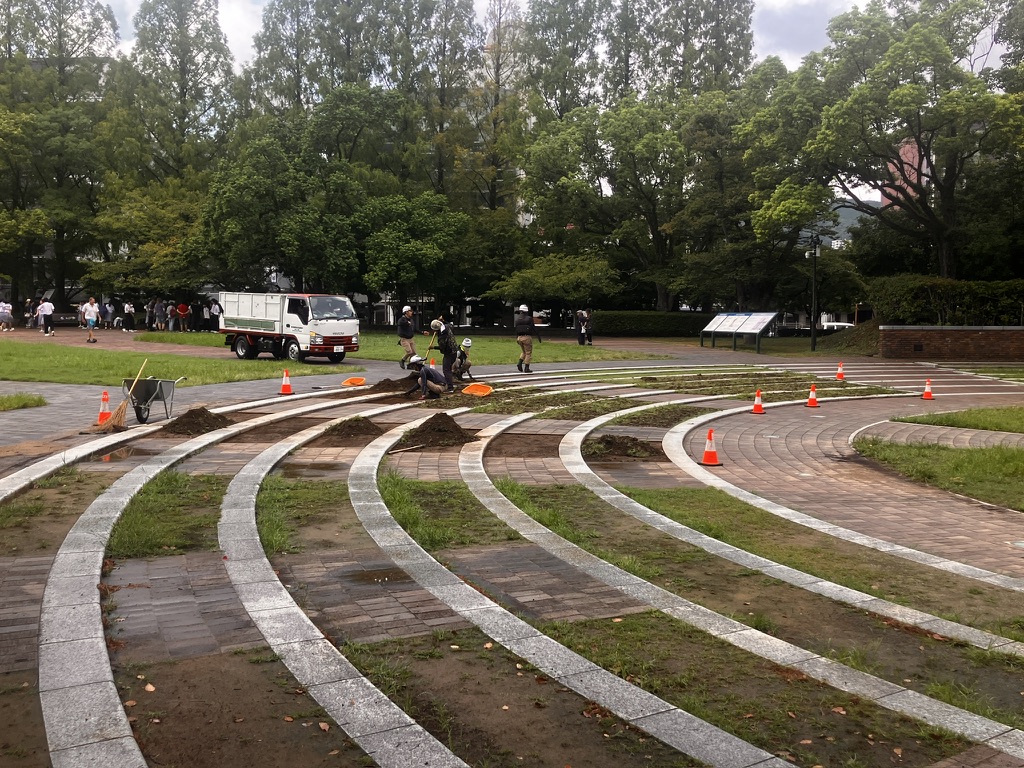
There were middle school students all over the park who, I think, were practicing English by interviewing the tourists and asking questions about peace.
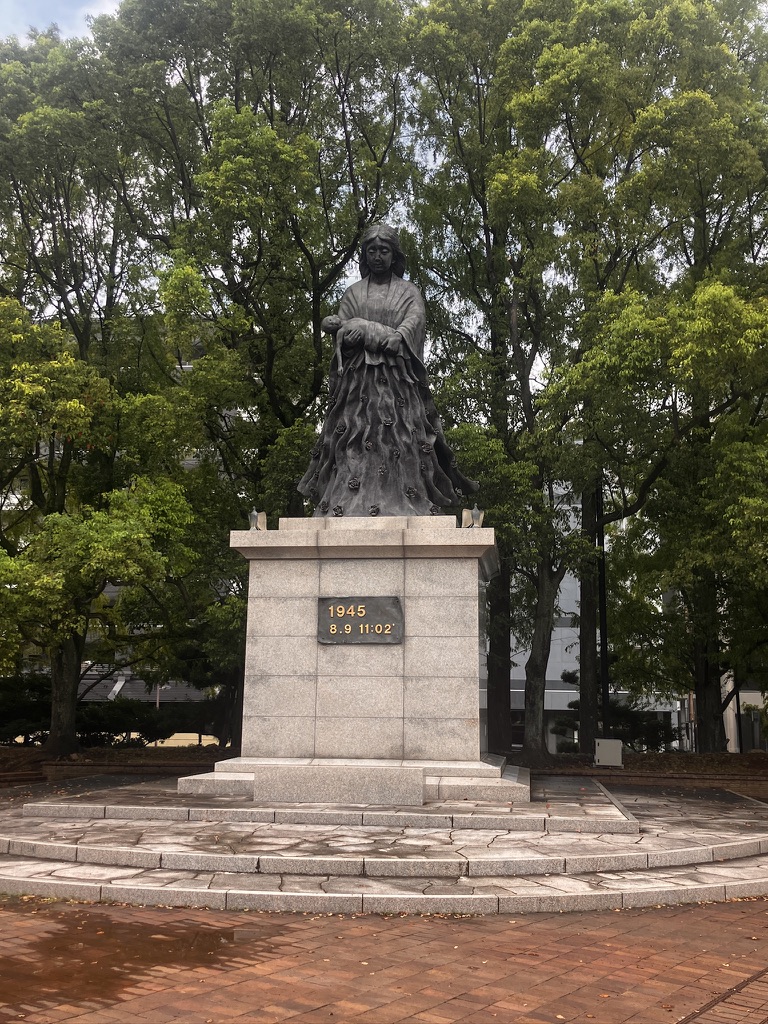
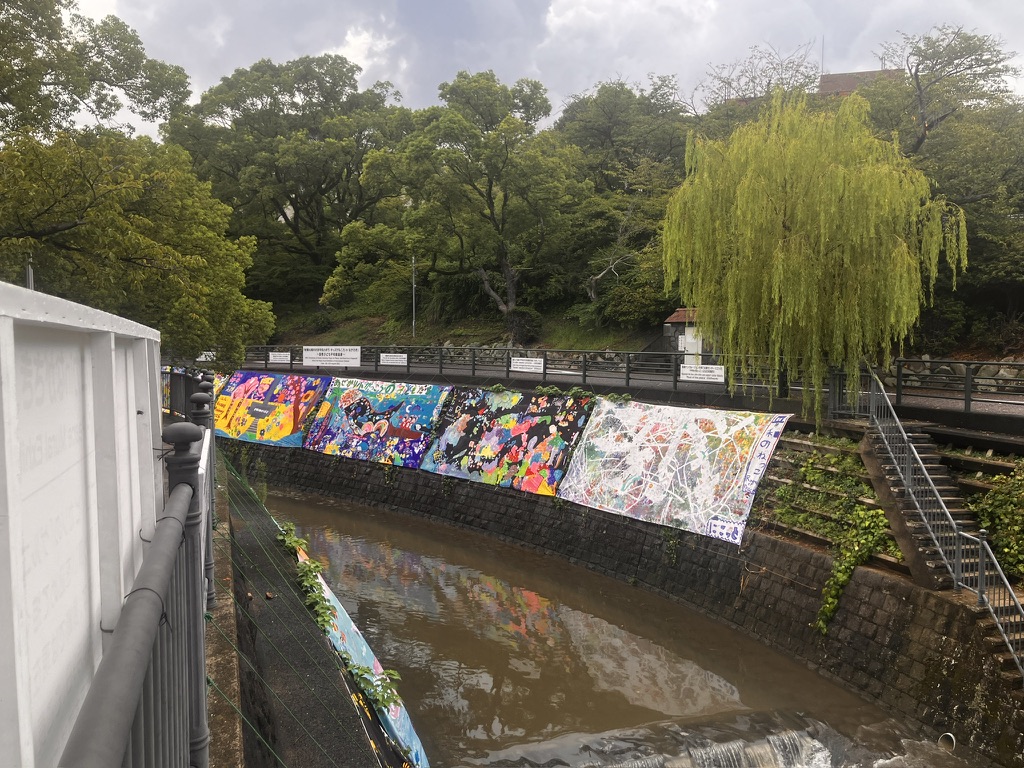
Then we went to the museum.
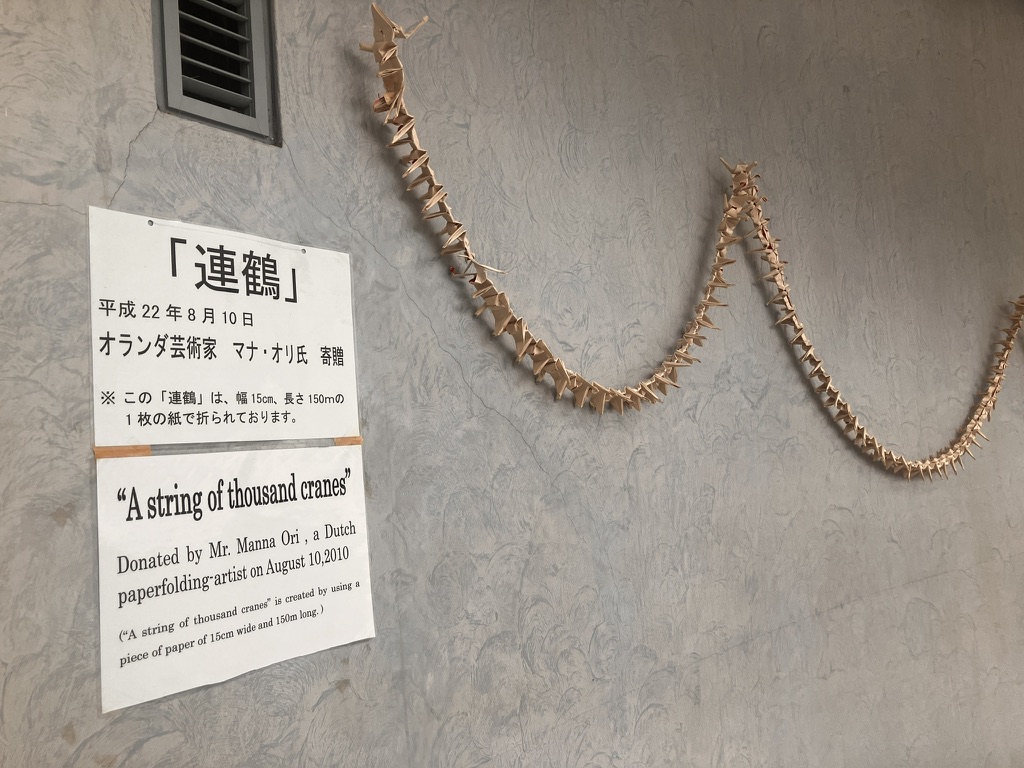
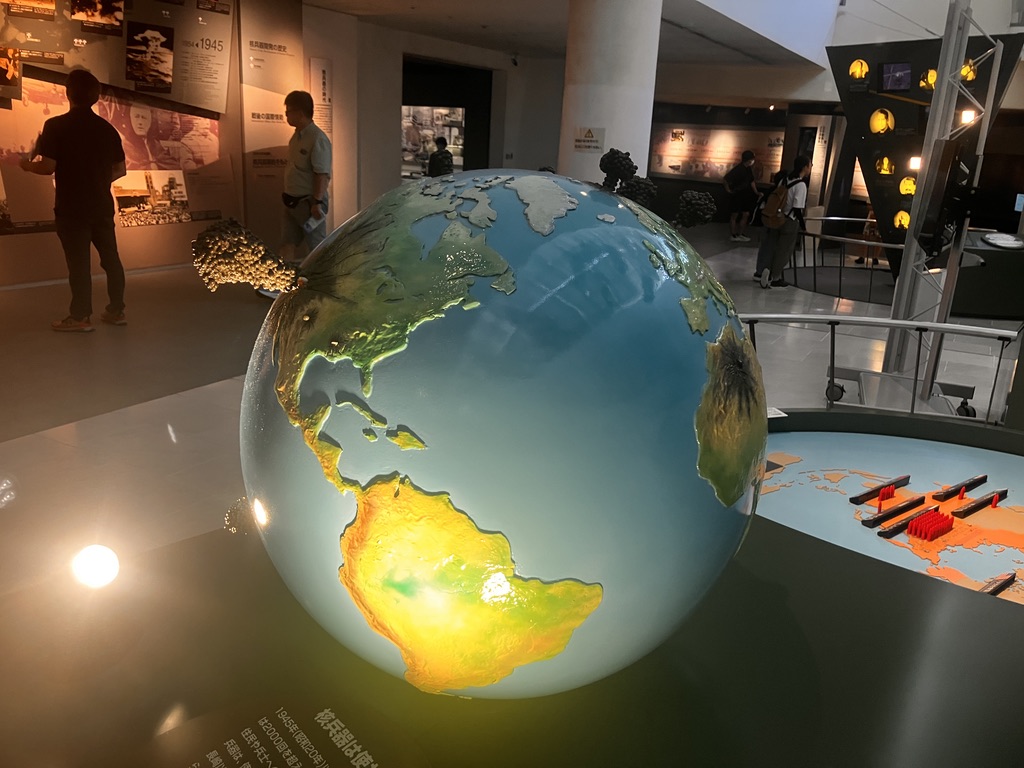
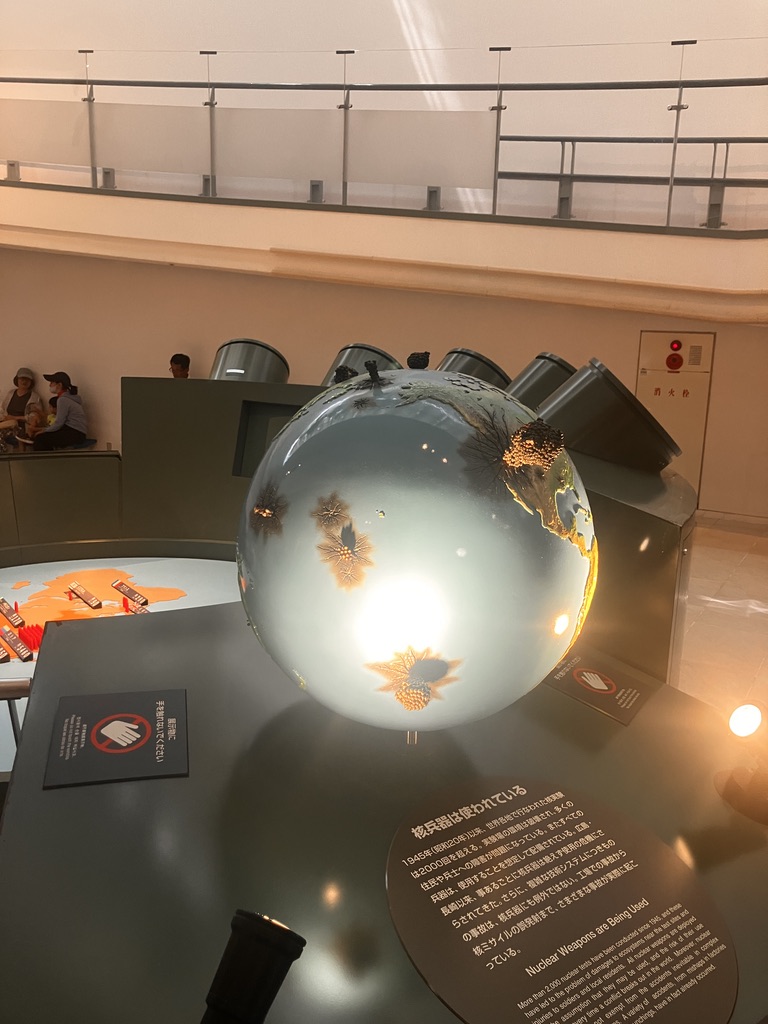
The museum was sobering. I already believed strongly that something like this should never happen again, and the experience only reinformed that conviction.
We stopped in Chinatown for lunch, where I had dumplings, and then I returned to the ship for some quick safety training while Michele and Steven checked out the spectacle bridge (which I still want to see) and the botanical gardens that are right by the ship.
After the training, I headed back out with Victor!
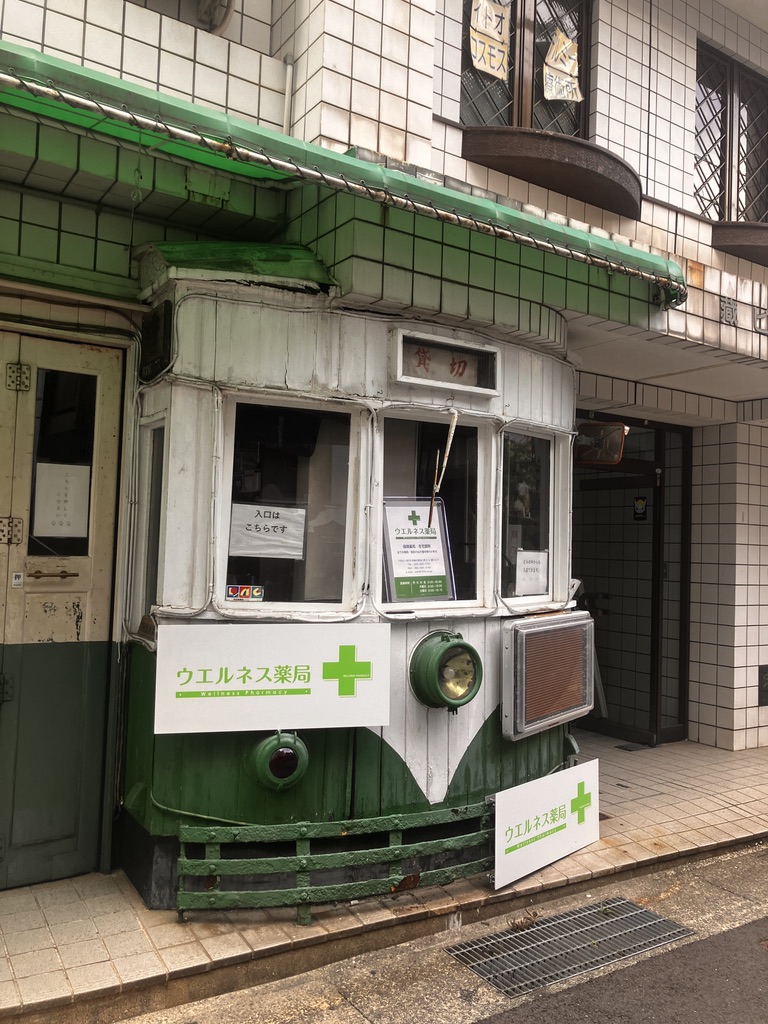
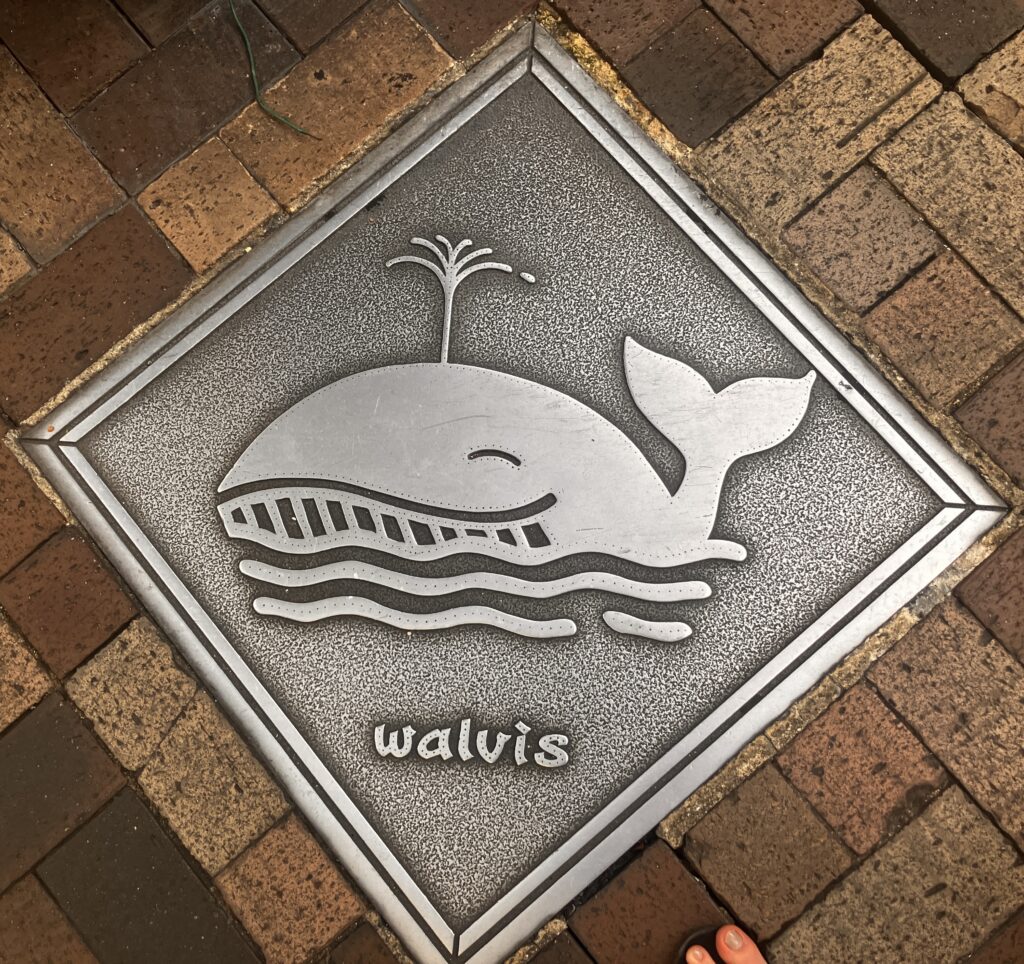
As the light faded, Victor needed to go back to work, but I wasn’t ready to return to the ship. Right across the street a narrow road led uphill toward the botanical gardens.
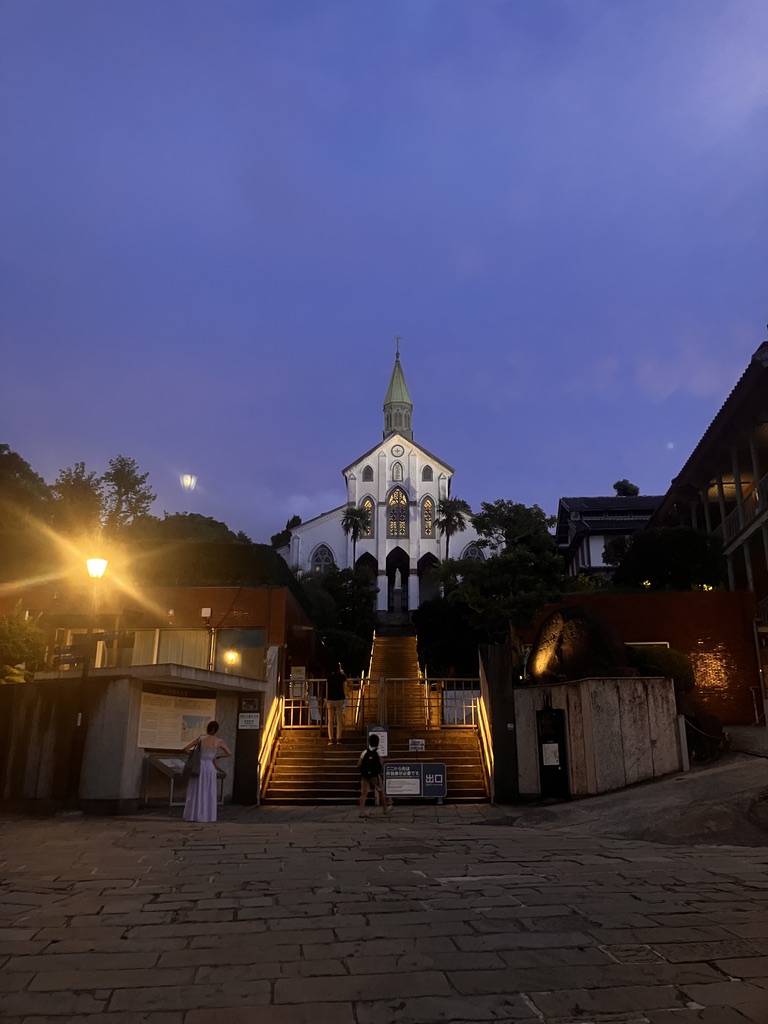
I made it to the entrance of the botanical gardens. I needed the restroom, I was hot and sweaty, and when they required cash for entry (I didn’t have enough change and didn’t feel like breaking a big bill), I took that as my cue to head back to the ship, which I did.