
My views do not necessarily reflect the views of my employer.
May 19, 2025
I started my first Destination Presentation onboard Villa Vie Odyssey – covering Topolobampo, La Paz and Cabo San Lucas (the ship’s final three stops in Mexico before heading to Hawaii)- by asking who had been to these ports before. As I suspected, many in the room had previously visited La Paz and Cabo, but only two had been to Topolobampo (I learned how to pronounce it by singing it to the tune of La Bamba: Topo topo lobampo).
Topolobampo was very excited for our visit – they even sent me a whole powerpoint presentation that covered most of what I’d previously researched online:
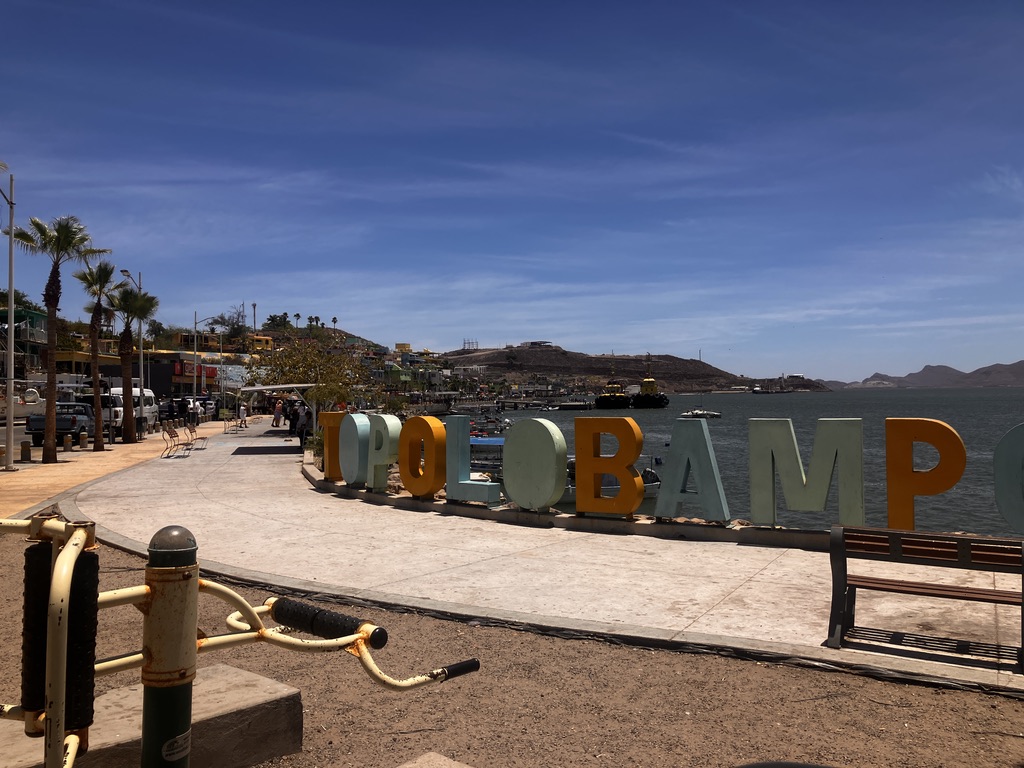
Topolobampo, a small but lively port on Mexico’s Pacific Coast in the state of Sinaloa, is best known as the gateway to one of the country’s most spectacular natural wonders: the Copper Canyon. While the town itself is relatively quiet, it offers a warm welcome with its peaceful bay, colorful fishing boats, and the sounds of banda music drifting through the coastal breeze.
The port is a convenient stop to access nearby destinations like the city of Los Mochis – with its museums, botanical garden and markets – or for a relaxing beach day at nearby Playa Maviri. Yet Topolobampo is also a destination in its own right, known for its beautiful beaches, vibrant sunsets, and a rich mix of culture and nature. Visitors can stroll the cobblestone streets, discover nearby archaeological sites, or set off into lush mangrove forests filled with birdlife.
Outdoor lovers can enjoy kayaking, swimming, dolphin-watching, or just basking in the laid-back coastal charm that makes Topolobampo a truly memorable escape.
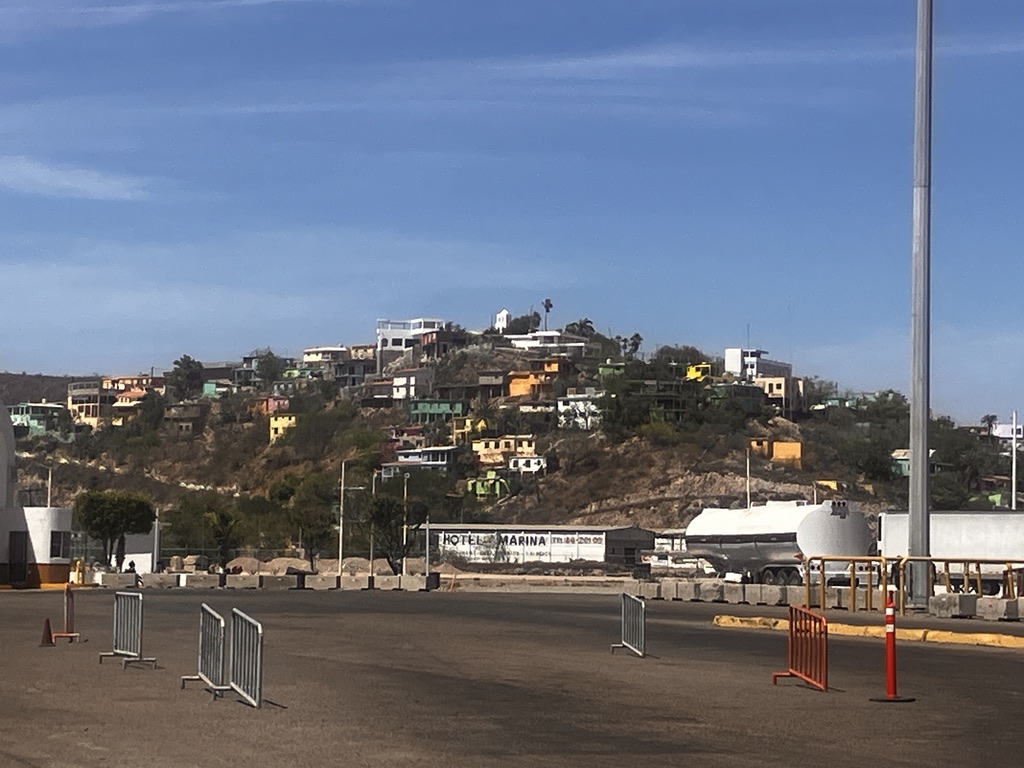
Why are We Here?
Topolobampo is a hidden gem where tranquil natural beauty meets authentic culture. This small Pacific port opens the door to northern Mexico’s dramatic landscapes, including the breathtaking Copper Canyon.
Unlike Mexico’s bustling resort towns, Topolobampo invites you to slow down and soak in the easy rhythms of local life. Watch fishing boats glide into the harbor, stroll the vibrant Malecón, or savor the bold flavors of Sinaloan cuisine. The nearby islands and beaches are havens for birdwatching, marine life, and dolphin sightings.
Whether you’re here for relaxation, culture, or discovery, Topolobampo offers an authentic slice of Mexico, away from the crowds.
Getting Around
Transportation options include taxis, local buses, and even Uber. If you’re interested in venturing farther afield, Hertz offers car rentals directly from the cruise port.
The local currency is the Mexican Peso (MXN). There is an ATM inside the ferry terminal and several banks in nearby Los Mochis, (including Scotiabank and HSBC). ATMs typically dispense 500-peso notes, which many small vendors may not be able to break. Try to carry smaller denominations and avoid accepting torn bills, as they may be refused—though banks will usually exchange them.
While some tourist-focused businesses accept U.S. dollars, using pesos will usually give you a better rate.
Spanish is the official language, though English is commonly understood in tourist areas
History
Topolobampo and nearby Los Mochis owe their existence to an ambitious American dream. In 1893, civil engineer Albert Kimsey Owen envisioned a utopian, cooperative society and identified Topolobampo as the perfect site for a major trading port.
His plans attracted others—including businessman Benjamin F. Johnston, who founded a sugar empire in Los Mochis that transformed the area into a booming agricultural center. By the early 20th century, the region was thriving, and Los Mochis had grown into a vibrant city.
Today, agriculture remains a cornerstone of Los Mochis’ economy, though the region has since diversified. Among its many crops, mangoes have emerged as a key export, placing the area among the leading mango producers in all of Mexico.
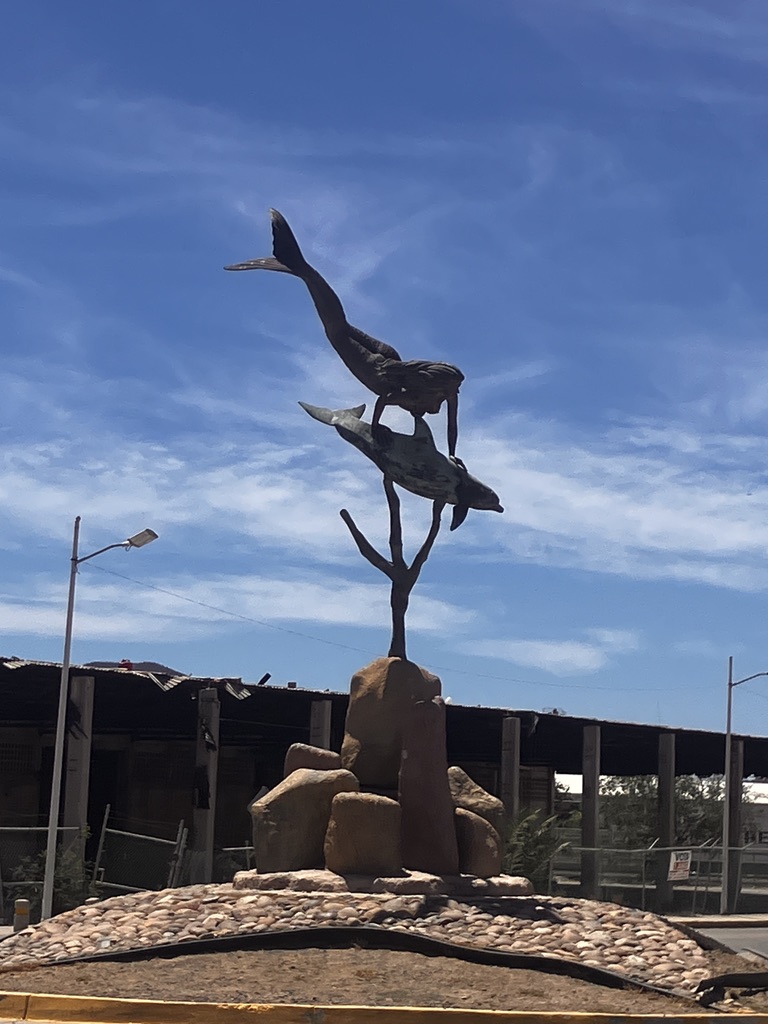
Witnessing
El Malecón de Topolobampo, just a short walk from the terminal, offers a picturesque waterfront perfect for a leisurely afternoon. As you stroll along the promenade, the gentle sound of waves accompanies you, with sea breezes carrying the scent of salt and the rhythm of coastal life. Local vendors display handmade crafts and tempting snacks, while fishing boats and yachts sway gently in the marina.
This is a great spot to relax and watch for seabirds or even dolphins in the bay. As sunset approaches, the sky transforms into a canvas of orange and pink—making the Malecón one of the most memorable places to end your day. With its laid-back atmosphere and scenic beauty, this coastal haven captures the essence of Topolobampo.
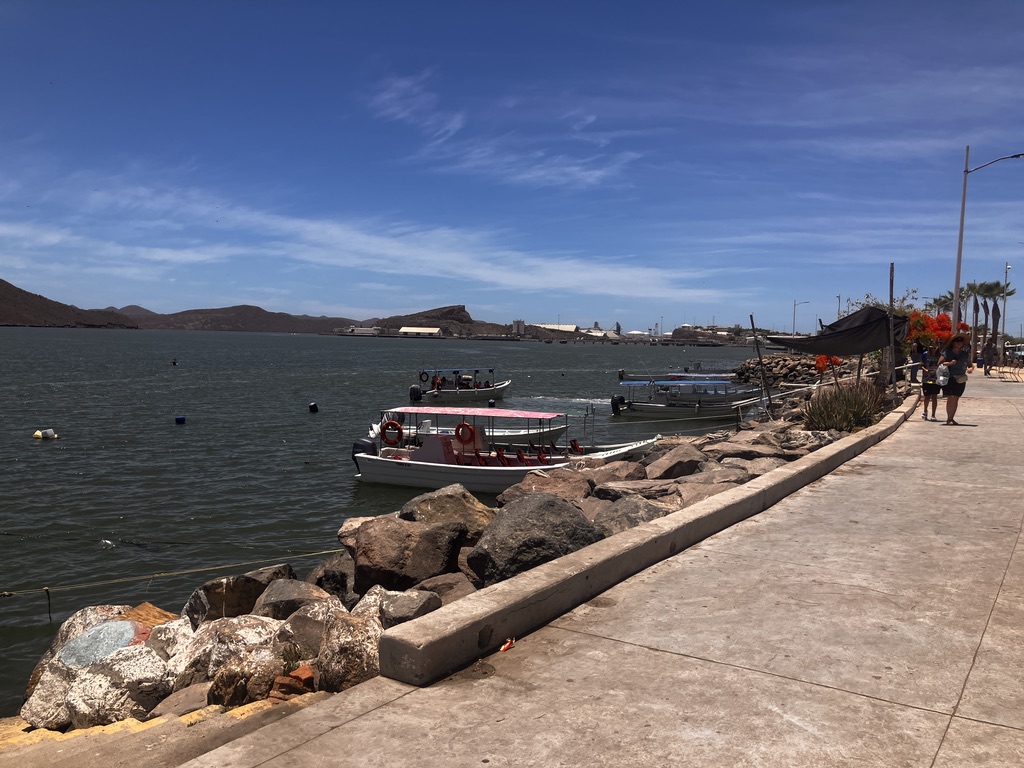
For those looking to explore beyond the shoreline, several boat tours are available:
- Bay Tour: A one-hour cruise around Topolobampo Bay offers views of the surrounding landscape, local marine life, and often includes sightings of seabirds or dolphins gliding through the water.
- Isla de las Aves (Bird Island): A 1.5-hour boat ride (approx. 900 MXP/$50 USD per group) takes you to this small island, a seasonal haven for both local and migratory birds. The best time to visit is between mid-April and early August.
- Isla Farallón: About 15 kilometers offshore, this rugged island is home to a colony of sea lions, most active from October through April. Six-hour boat tours often include opportunities to swim or snorkel nearby.
- El Pechocho the Dolphin: This legendary wild dolphin is known for approaching boats near his usual hangout. A 1.5–2 hour tour (around 1000 MXP/$50 USD per group) may offer a chance to see him. While sightings aren’t guaranteed, they can be unforgettable.
Be sure to choose ethical tour operators who respect wildlife and avoid feeding or disturbing the animals.
Learning
Just a 30-minute drive from Topolobampo is Los Mochis, a city shaped by its agricultural roots and enriched by culture and nature, where you’ll find museums, shopping and a botanical garden.
The Jardín Botánico Benjamin Francis Johnston is only a 15-minute walk from the Azules del Noroeste bus station. The gardens offer a tranquil escape amid both native and exotic flora. Visitors may also encounter local wildlife, and the butterfly pavilion adds a delicate charm to the experience. With ample shady spots and benches, it’s a perfect place to unwind or bring a picnic to enjoy. The gardens are open from 5:00 am to 9:00 pm.
For those more inclined toward history and cultural context, the Museo Regional del Valle del Fuerte offers a compact but compelling introduction to the region’s past. It gives insight into pre-Hispanic cultures, colonial history, and the development of the area’s agricultural economy. Be aware that signage is only in Spanish, and the museum is closed on Mondays.
Another cultural site is Casa de la Cultura Conrado Espinoza, which hosts art exhibitions, workshops, and community events.
Discovery
If you’re in the mood for a bit of shopping while you’re in Los Mochis, there are several vibrant local markets where you can pick up handmade Huichol beadwork, woven textiles, leather accessories, and traditional sweets like cajeta, a rich caramel made from goat’s milk. Prices are generally reasonable, and a little friendly bargaining is welcomed—just be sure to smile as you haggle.
Copper Canyon
The train to Copper Canyon is the main attraction in this area. When we were docked for two days, I looked into it and found that while there is a train that travels into the canyon, the return train wouldn’t run until after the ship’s departure. Here are some facts I found interesting:
El Chepe chugs along its 653 km (405 mi) of track, a journey which takes anywhere from 9 to 16 hours.
The railway track that now stretches from the city of Chihuahua to Los Mochis on the Pacific coast consists of 37 bridges and 86 tunnels. In one tunnel, the tracks make a 180-degree turn whilst descending 100 ft (30 m) inside the canyon walls.
In the Netflix documentary, The Evolution of Us, Mexico’s Copper Canyon is described as “one of the most extreme landscapes in the world”.
Tasting
Sinaloa’s cuisine stands out within Mexican gastronomy for its strong emphasis on fresh seafood, bold flavors, and agricultural abundance, all shaped by its long Pacific coastline and fertile valleys. While traditional Mexican cuisine often leans heavily on corn, beans, pork, and complex moles, Sinaloan dishes tend to be lighter, spicier, and more seafood-forward.
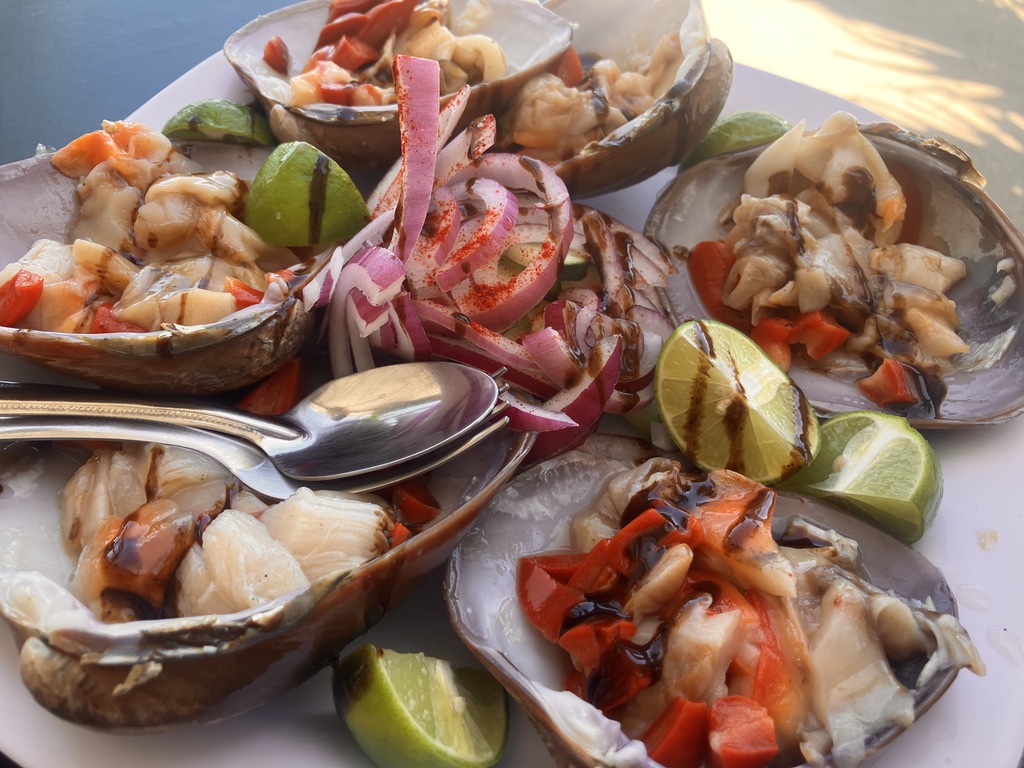
Some dishes to look out for are:
Aguachile, the region’s fiery cousin to ceviche, features fresh shrimp bathed in lime juice and blended with green chilies and cucumber, delivering a refreshing yet spicy kick that’s uniquely Sinaloan. Another local favorite is the Taco Gobernador—a deliciously messy mix of sautéed shrimp, onions, and peppers smothered in melted cheese and folded into a toasted tortilla. For something heartier, chilorio offers a deeply spiced serving of shredded pork, slow-cooked with chiles and garlic, and often served in warm tortillas or stuffed into tortas. Be sure to try the region’s signature dish—pescado zarandeado, a grilled fish marinated with spices and typically served whole.
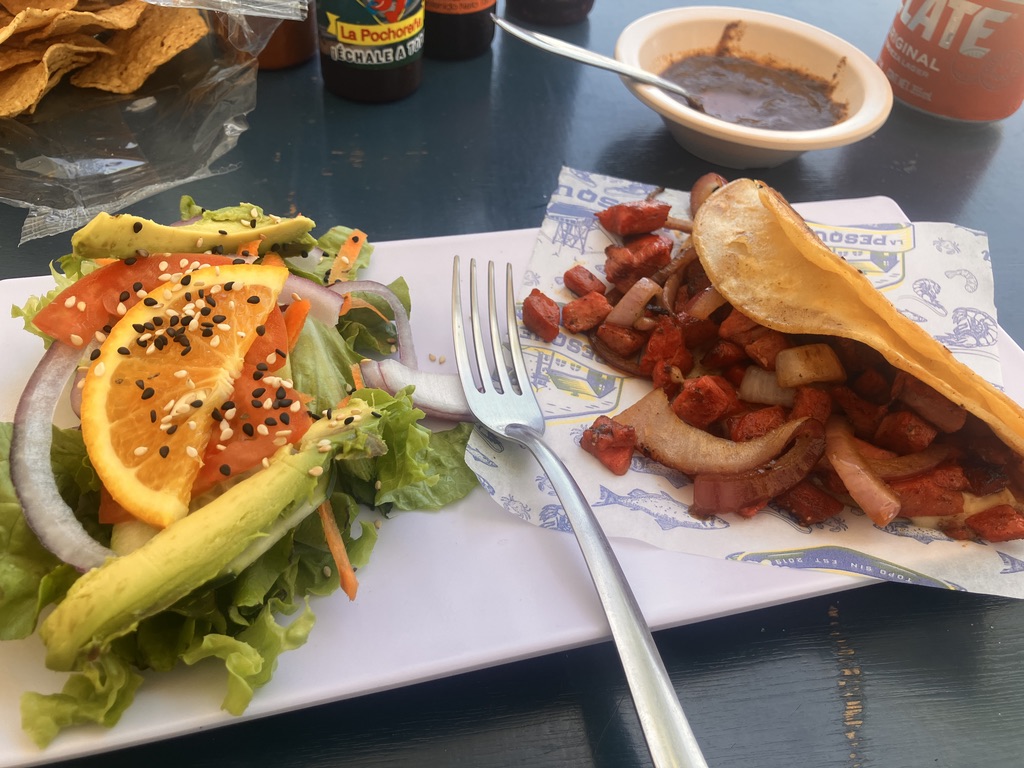
Whether you’re sampling these dishes from a street vendor or a seaside restaurant, the best way to wash it all down is with a cold Tecate—brewed right here in Sinaloa—or a chilled coconut water cracked open fresh on the spot.
Exploring
Just a short 20-minute drive from Topolobampo lies Playa Maviri, a laid-back stretch of beach on Isla Maviri that’s perfect for a relaxing day in the sun. With calm, swimmable waters and a wide expanse of soft sand, Maviri Beach is ideal for swimming, kayaking, or simply lounging on the sand. The beach offers beautiful views of the Sea of Cortez and truly shines at sunset, when the sky erupts in warm hues over the water. A small boardwalk, shaded picnic areas, and rows of casual seafood restaurants line the shore, making it a favorite destination for locals and travelers alike. Just remember to pack some bug spray, especially if you’re staying into the evening.
You can reach Maviri by taxi (about $7–8 USD one-way) or by hourly buses for just 15 MXP.
For those looking to explore the region on foot, there’s a scenic 17.7-kilometer (11-mile) out-and-back hiking and biking trail near Ahome that runs along the Al Maviri road. This mostly easy route takes about 3.5 hours to complete and features gorgeous views of the nearby islands and wetlands. Along the way, you’ll reach the Cueva de Murciélagos, or Bat Cave—a natural spectacle where, at sunset, hundreds of bats take flight in a swirling cloud. It’s an unforgettable experience, especially for nature lovers. (Note that parts of the trail run close to the highway, so caution is essential when traveling this route.)
Travel Tips
The state of Sinaloa is generally considered safe for tourists, especially in and around coastal towns like Topolobampo and Los Mochis. That said, it’s always smart to follow standard travel precautions to ensure a smooth and enjoyable visit:
Keep an eye on your valuables – While petty crime isn’t especially common in smaller towns like Topolobampo, it can still happen, particularly in larger cities such as Los Mochis. Avoid leaving your belongings unattended and be especially cautious in bus stations, markets, or other crowded areas where pickpocketing might occur.
Stay in groups, especially after dark – As in many places, it’s best to explore unfamiliar areas with others. While Topolobampo is generally quiet and safe during the day, avoid isolated beaches or parks at night, and always trust your instincts. If a place doesn’t feel right, take a registered taxi or head back to your hotel.
Avoid flashy jewelry – To prevent unwanted attention, leave expensive-looking watches, necklaces, or other jewelry at home. This applies to both men and women and is especially important in more urban or crowded areas.
Be cautious when swimming – The beaches around Topolobampo and Maviri are usually calm, but some areas can have strong currents or lack lifeguards. Always follow local guidance, swim in designated areas when possible, and avoid swimming alone.
Use registered taxis: Agree on the fare before departing, or arrange rides via hotel or a ride-share app.
Stay Cool: The weather can be quite hot, so be sure to bring water, bug spray, sunscreen, and a hat to stay comfortable.
Navigation: For easy offline navigation, download the Maps.me app and install the Mexico map. This app often has more detailed local routes and amenities than Google Maps, and the built-in GPS works even without mobile data. It’s especially handy if you’re planning to visit remote areas.
By taking these simple precautions, you can relax and enjoy the laid-back charm, delicious food, and natural beauty that make this part of Mexico so memorable.
My experience:
After compiling all of that research, I was excited to see Topolobampo for myself!
The town had set up tents right on the pier with displays and live performances. I got the sense that larger ships don’t visit Topolobampo very often. Since it was about a 30-minute walk into town, I decided to go on foot (I’m frugal and wanted to work on my tan anyway). I’d barely made my way beyond the pier, walking beside big trucks in what seemed to be an industrial area, when a van pulled up beside me. It was full of men in suits who asked where I was headed. “Topolobampo!” I said. They invited me to hop in. Okay! Why not jump in a van full of strangers while walking alone in Mexico? Don’t worry – these guys had clearly just been visiting the ship.
As we drove I looked out the window and concluded that I had made a good decision by taking them up on the ride. The men were heading to Los Mochis (about 30 minutes beyond Topolobampo), so the driver dropped them off at a car just outside the port gates. Before getting out, they told me that they had asked the driver to drop me off at the Malecón, and he did!
I walked the full length of the Malecón and back in about 15 minutes. I decided to wait on a boat ride the next day if Meg and I could both go (I took a nap instead). There seemed to be one place open for lunch. It had both locals and tourists from the ship, so I decided to give it a try. I ordered more food than I could eat, but it was delicious. The Tuna Tacos Gobernador (with a name like that, I HAD to order it (a rule that also applied to the chocolate clams) turned out to be the best I had in all of Mexico- scrumptious!
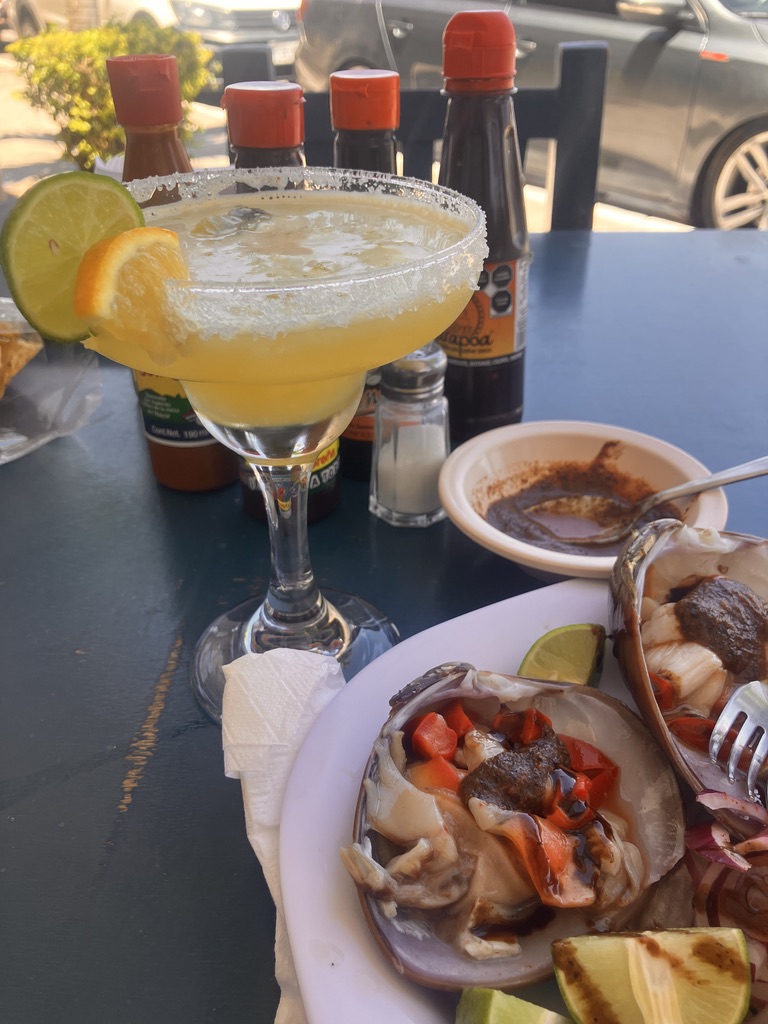
I decided to walk back to the ship after lunch, and the actual ship was a lot harder to find than I thought it would be! We were docked farther out than I realized, and just as I was about to ask Meg onboard to send me a location pin, I finally spotted our tiny ship. Now I have a nice sports bra tan and a very full belly.