My views do not necessarily reflect the views of my employer.
September 2, 2025
After my (mis)adventures in Jeju, I was back in a port I’d been to before, and I wanted to go on a new adventure (while also revisiting some of my favorite things).
During my port talk, I told the residents about the Don Quijote within walking distance. Since many of them know Lauren, I told them about how we went to said Don Quijote with Rhys, the Senior Production Manager, and complained the whole time about how hot and miserable we were. We were so busy complaining that none of us pressed the button to indicate that we wanted to cross the street, thus perpetuating our melting in the sun.
This time, I passed the Don Quijote (the walk didn’t seem as far as I remembered, though it was still hot) and headed to the tram station. I caught the tram (air-conditioned!) which took me into the city center. Then I walked a little farther (hot) to the ferry station and took the ferry (also air-conditioned!) to the island with the volcano.
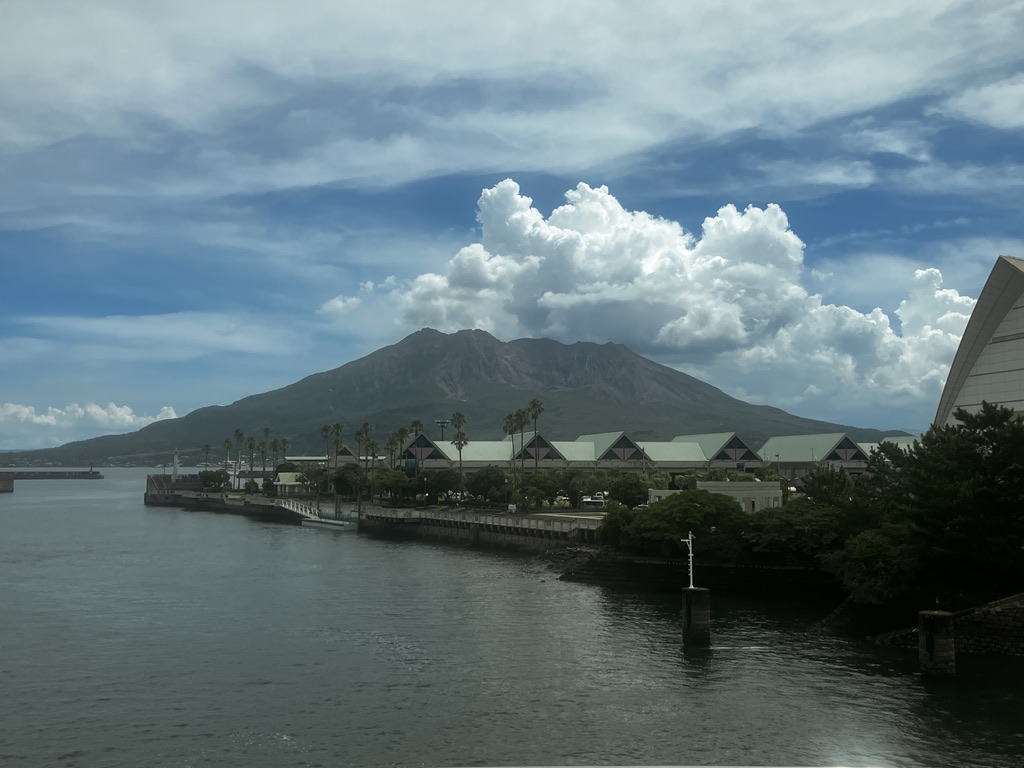
I took a quick look at the guide I’d made to see what there was to do on the island (see below). The lava trail and the foot baths sounded fun. I asked Google Maps how to get there (boy, was it nice to be back in Japan) and it told me to walk for a bit (hot) and catch a bus. The bus was air-conditioned. It was called the Island Loop. I looked out the window at my stop and decided instead to stay on for the full “loop” around the island.
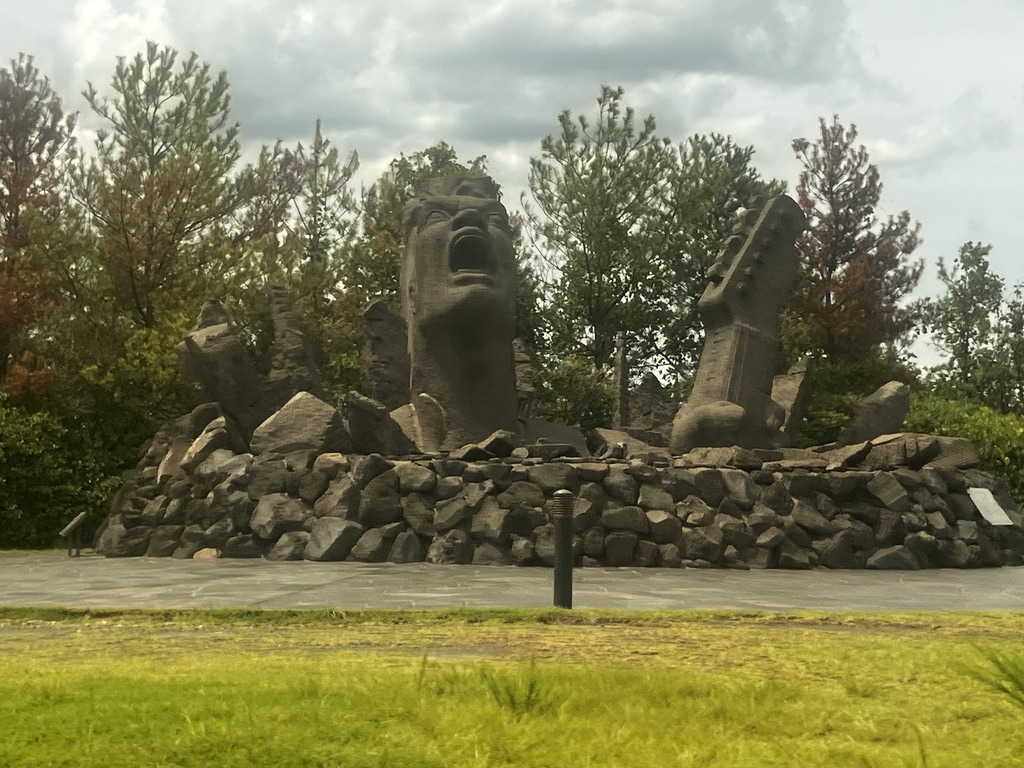
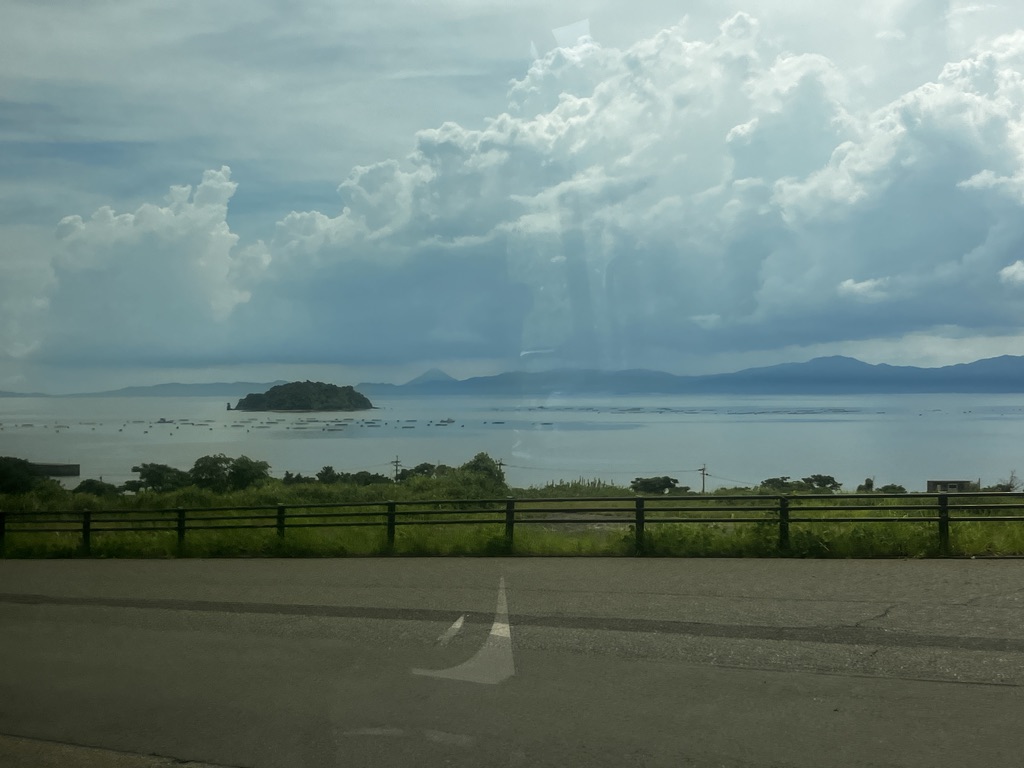
We stopped at a lookout point. I decided to stay on the air-conditioned bus.
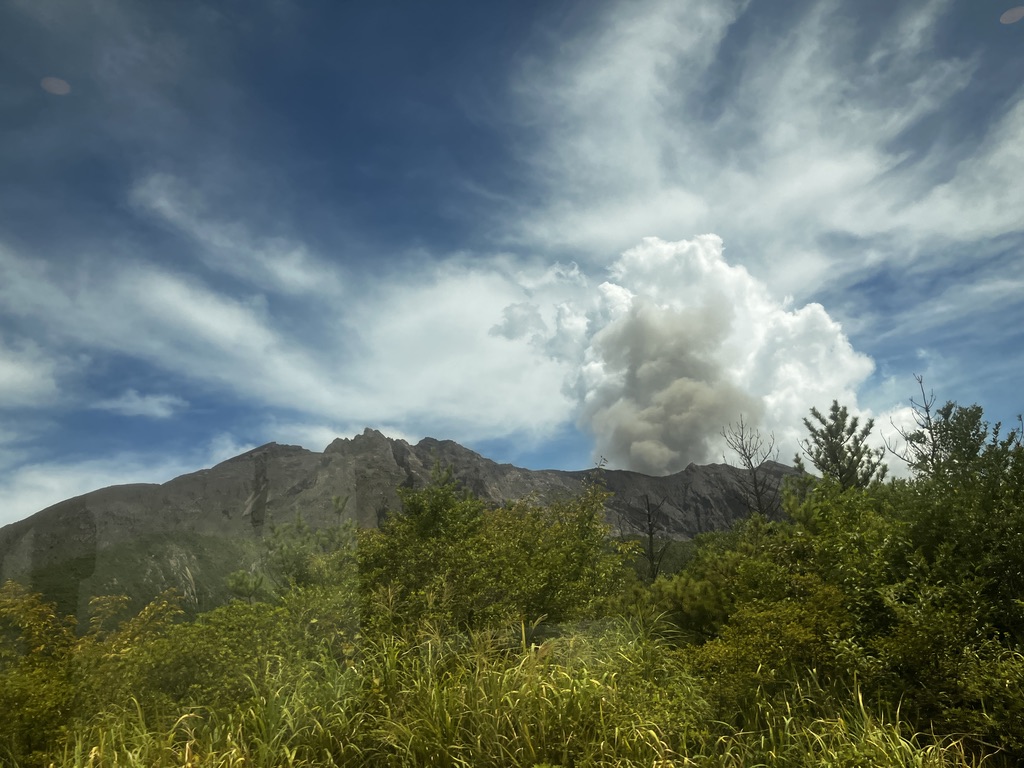
As we wound our way down the mountain, it appeared that the loop didn’t quite go all the way around. I looked up the torii gates buried in ash (see below) – it would take about two hours to get there. I decided to pass. I also decided to skip the lava walk and just go for the foot bath.
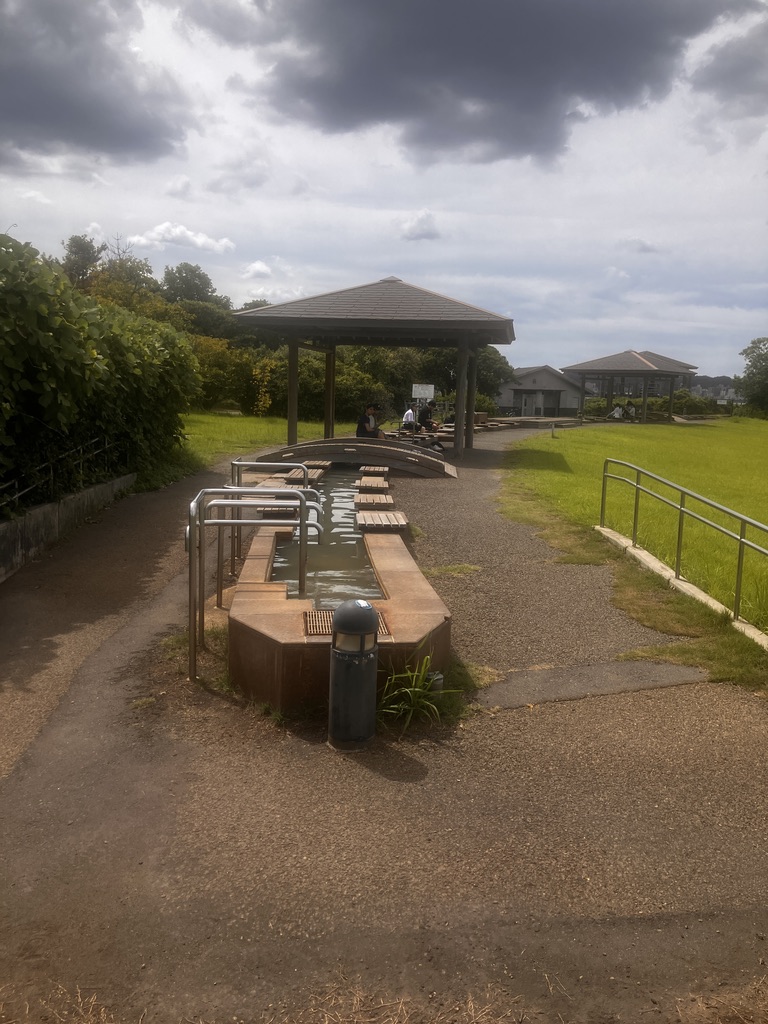
The water was hot! I wondered if it would make me feel cooler – like how you’re supposed to drink hot tea when it’s hot outside. I was the only white person there.
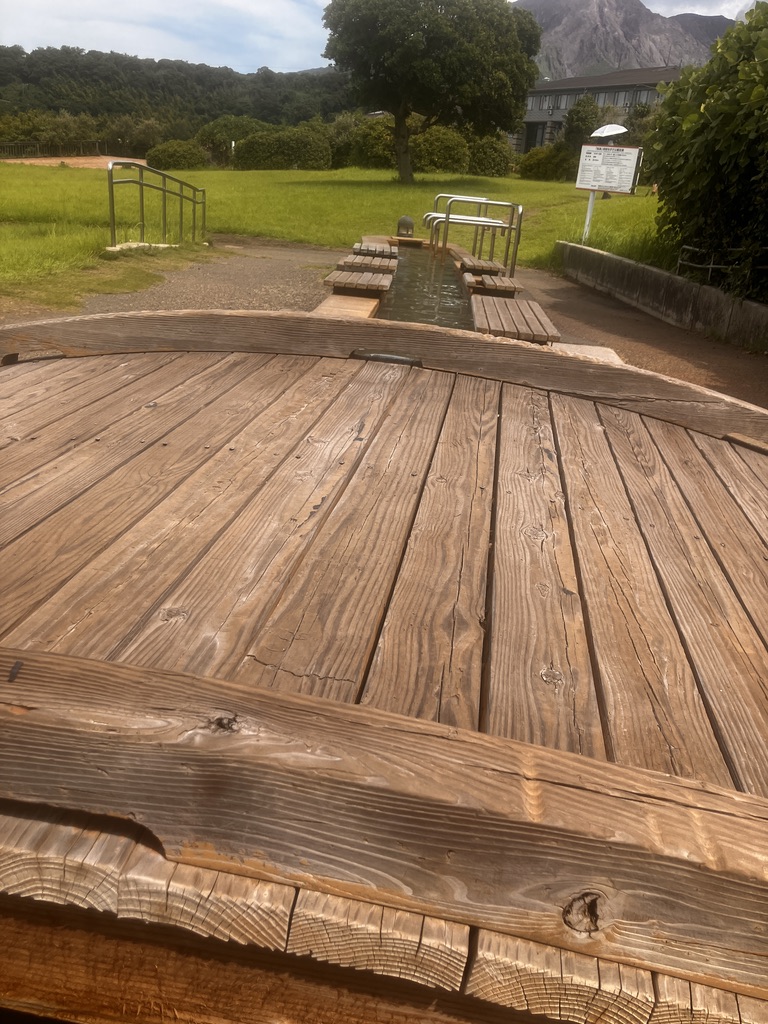
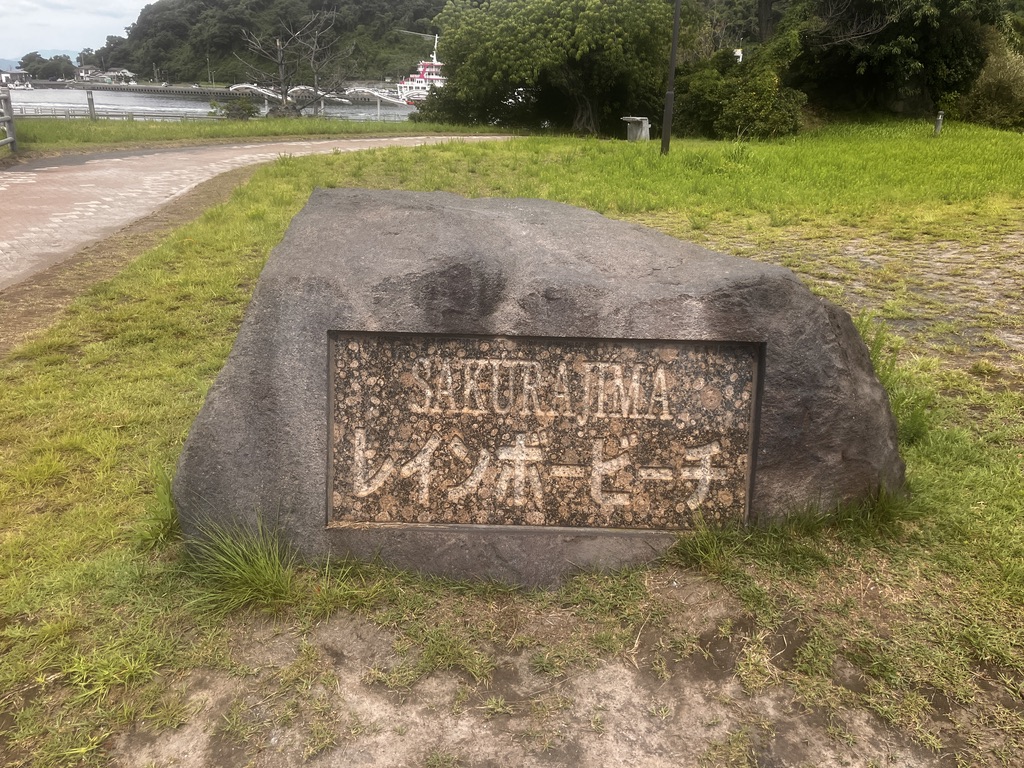
I was satisfied with the island. Victor had just finished work and was heading into the city.
I met up with Victor back in the city center. I wanted to revisit the place I’d gone with Kotoha, but it was too late for lunch and wouldn’t reopen for dinner until 5pm.
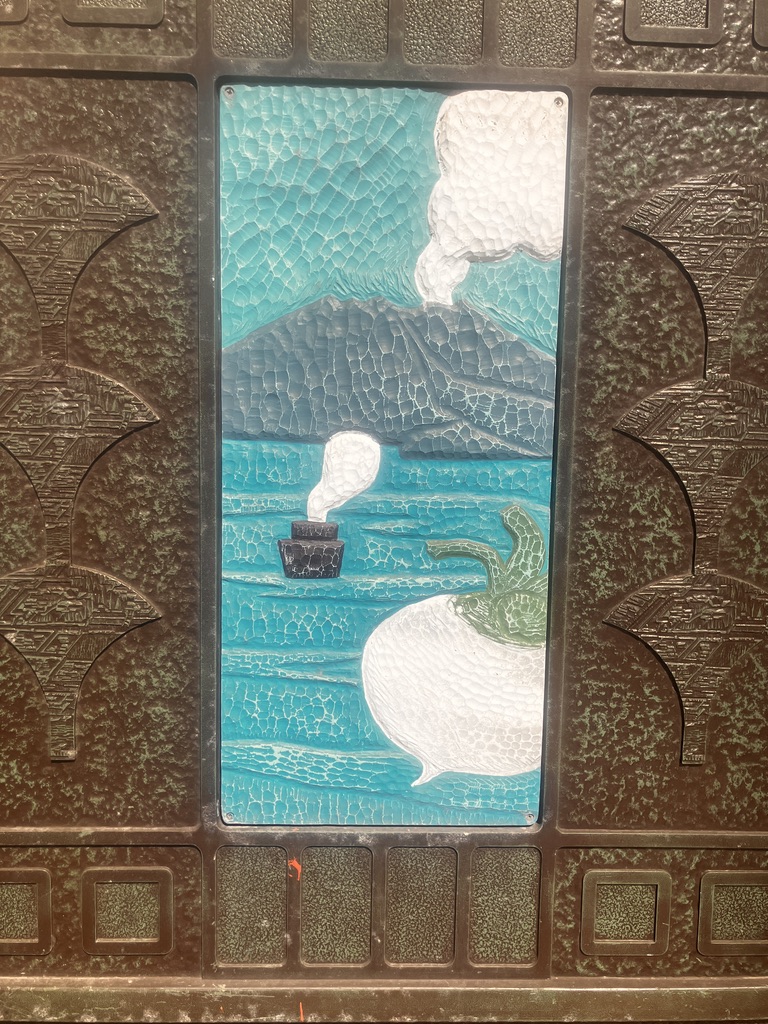
But Victor was starving.
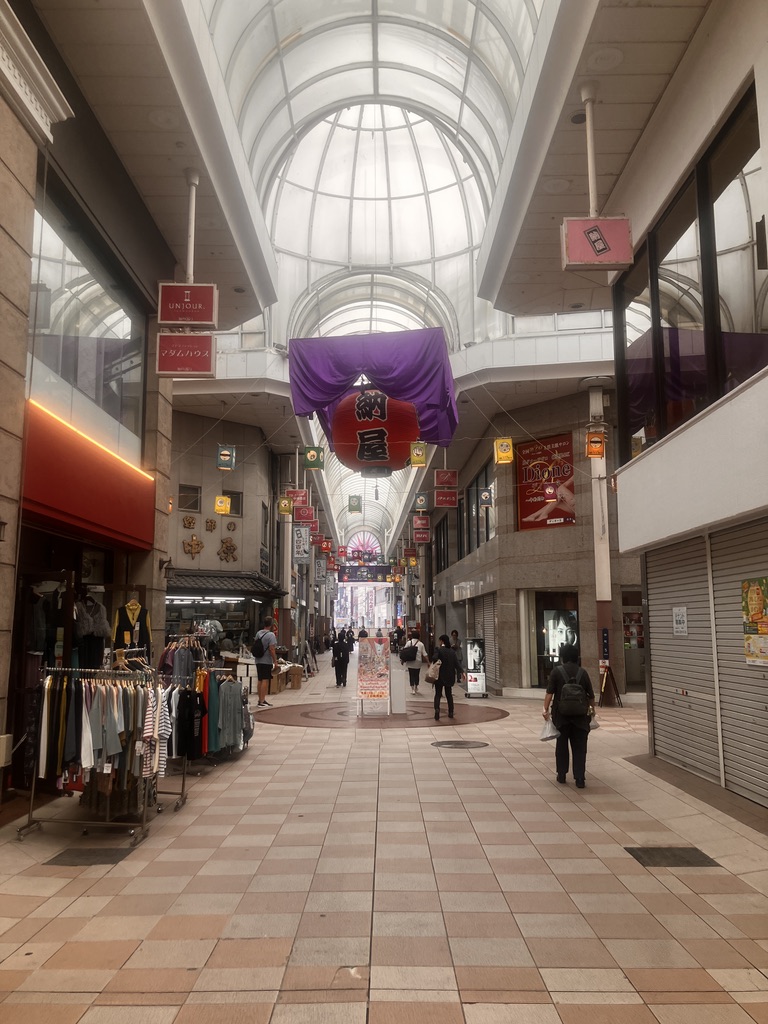
On the bottom floor of a department store, we found food.
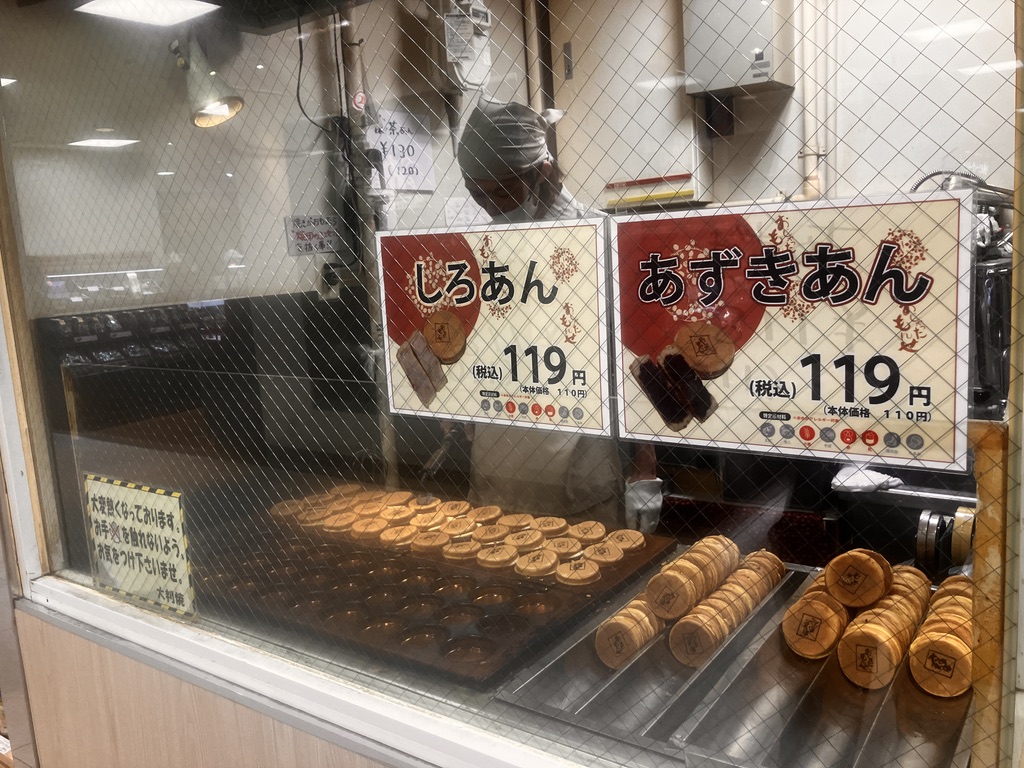
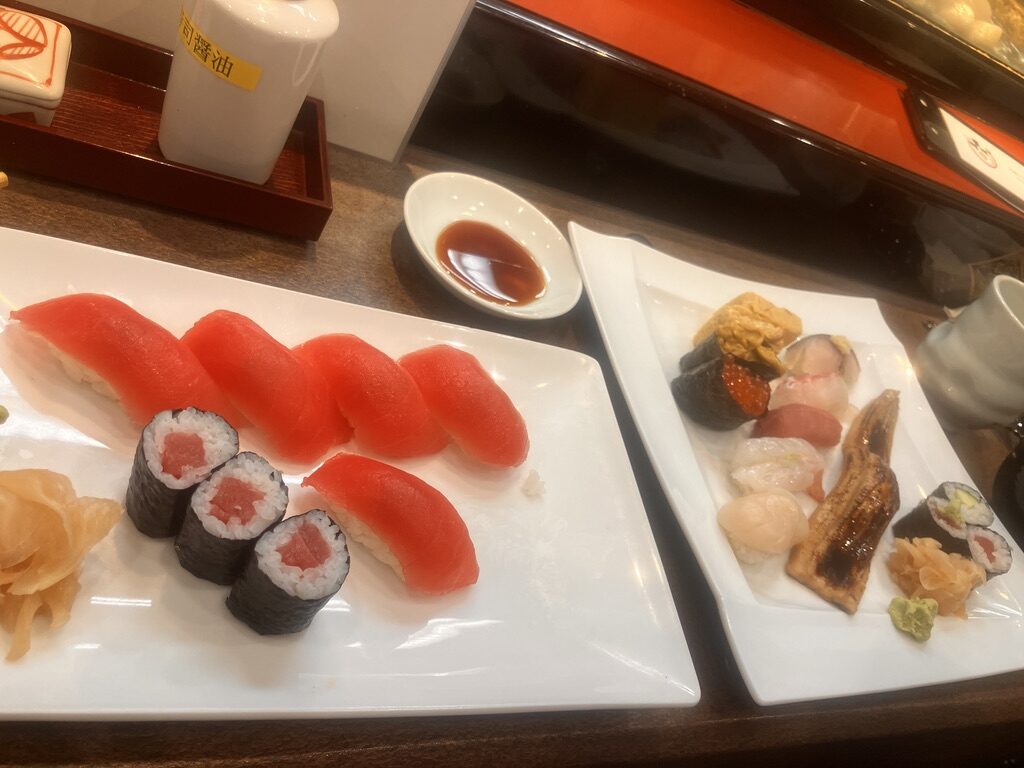
Hunger satisfied, we sought out Don Quijote.
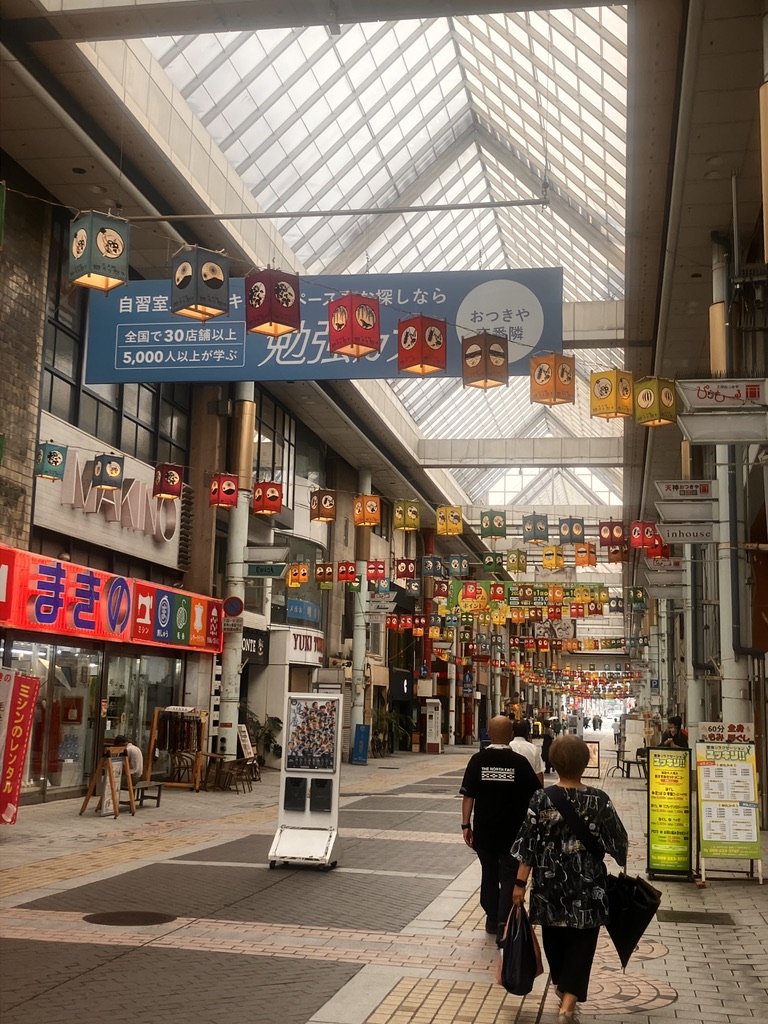
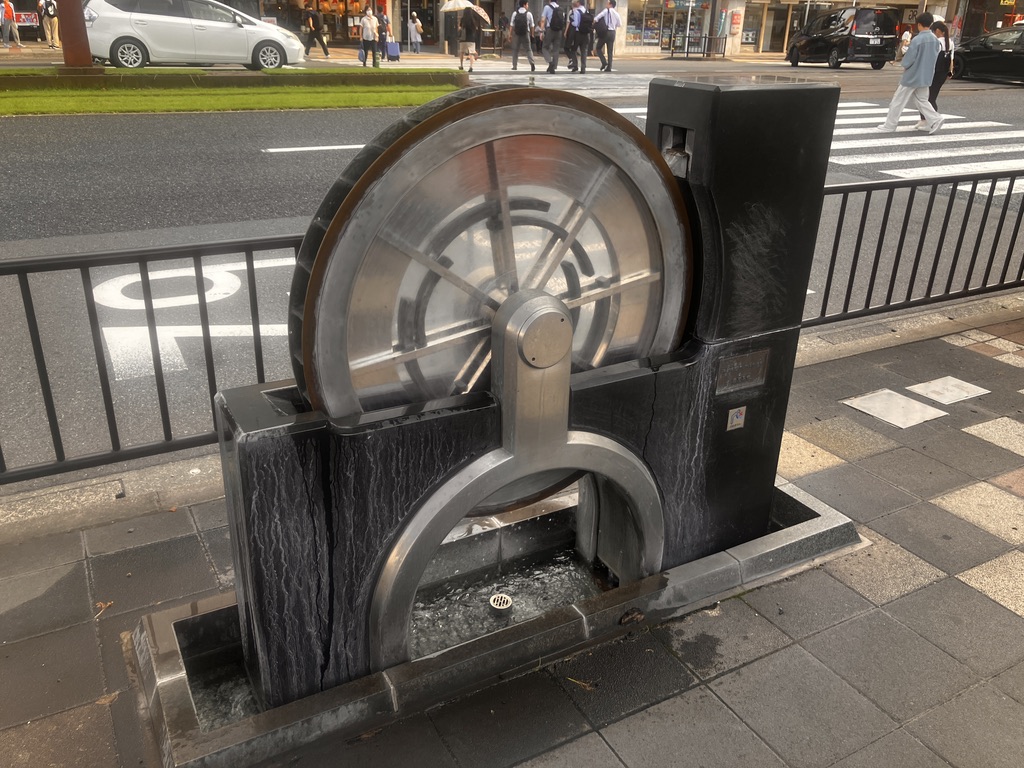
These streets looked ready for sunset so the nightlife could come out.
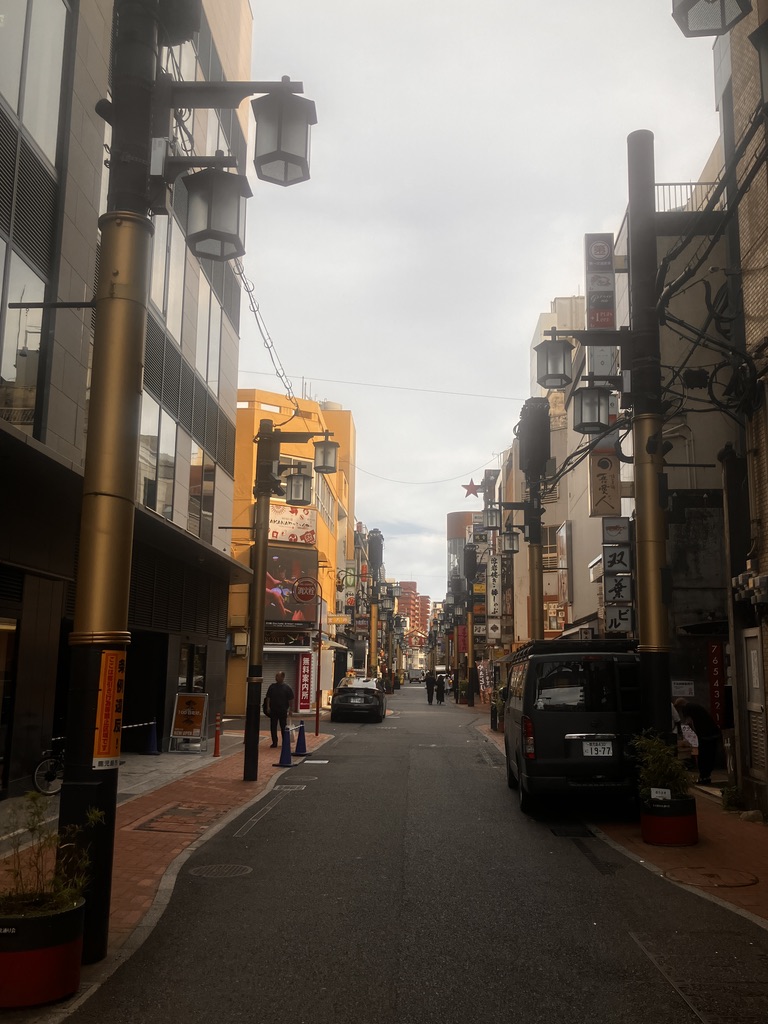
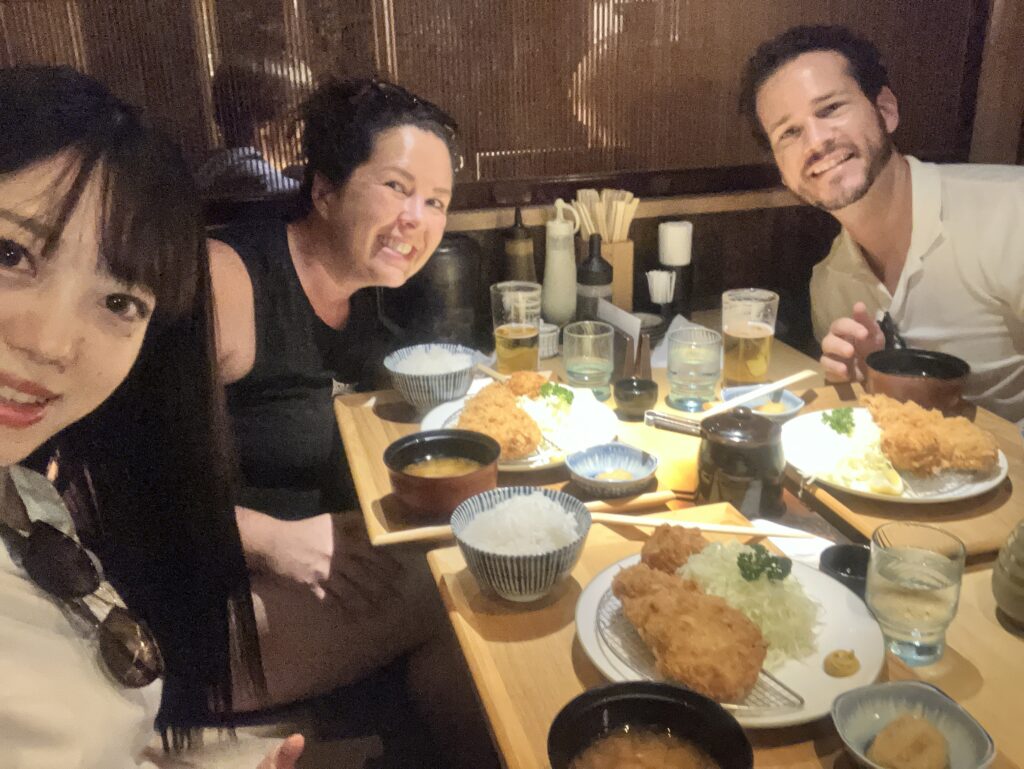
We shopped in Don Quijote. I wandered around while Victor looked at the action figures. Pretty soon it was 5pm. My restaurant was open! I know we had just eaten, but Victor never has enough food and I had to taste what I’d tasted with Kotoha and Fernando again!
Back on the ship I’d used google translate to figure out the name of the restaurant from a photo I’d taken the summer before:
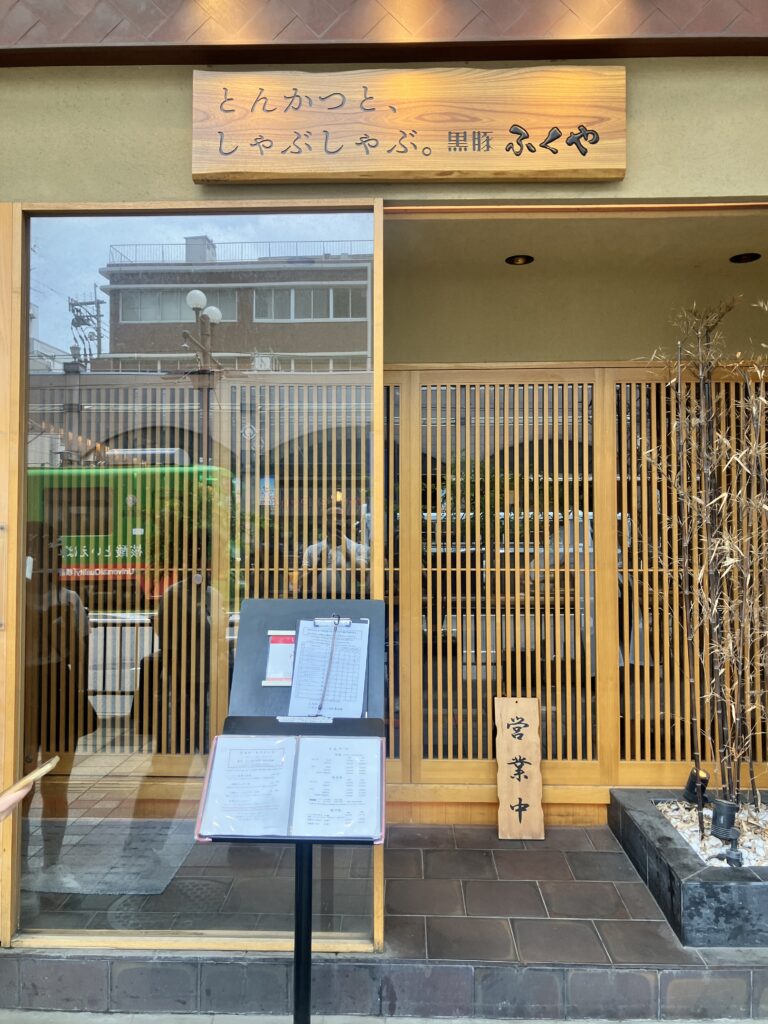
Then I found it on Google Maps.
It was the same place!
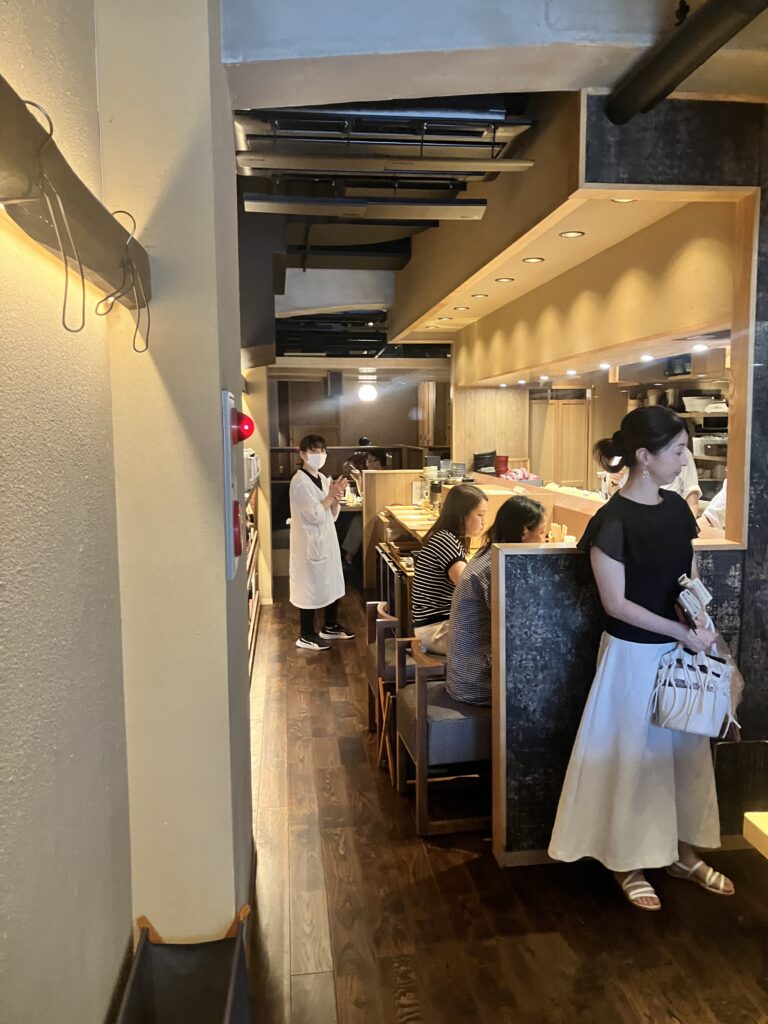
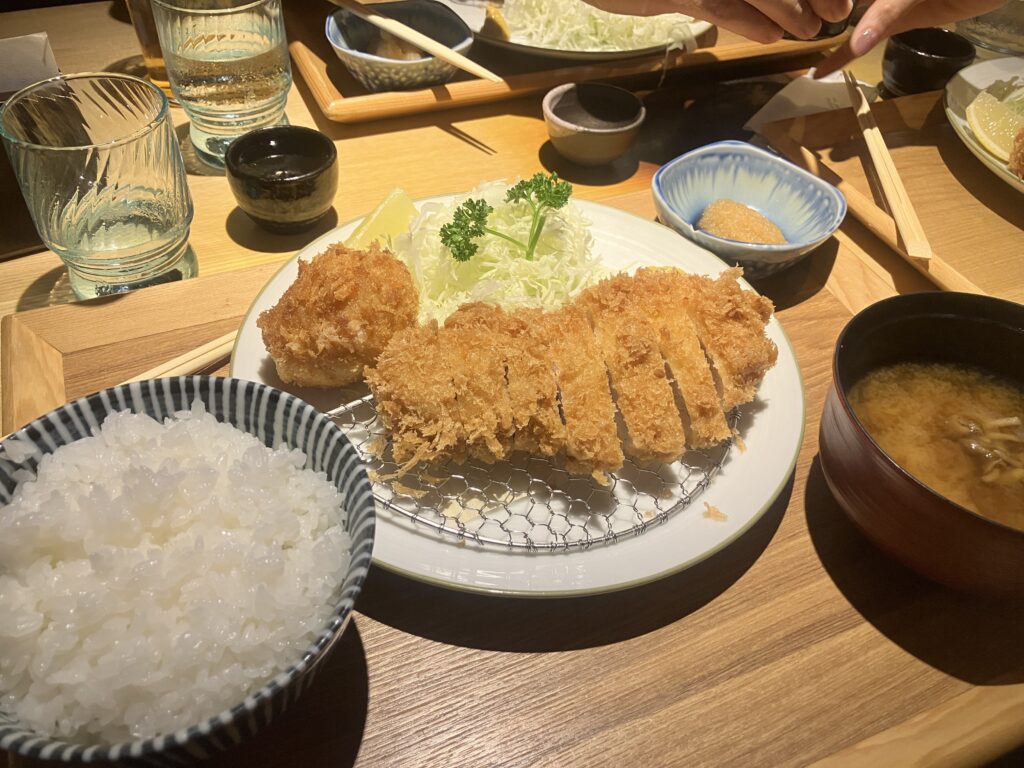
Last year I had this for lunch:
But now it was dinner time. As usual, I let Victor, the chef, order.
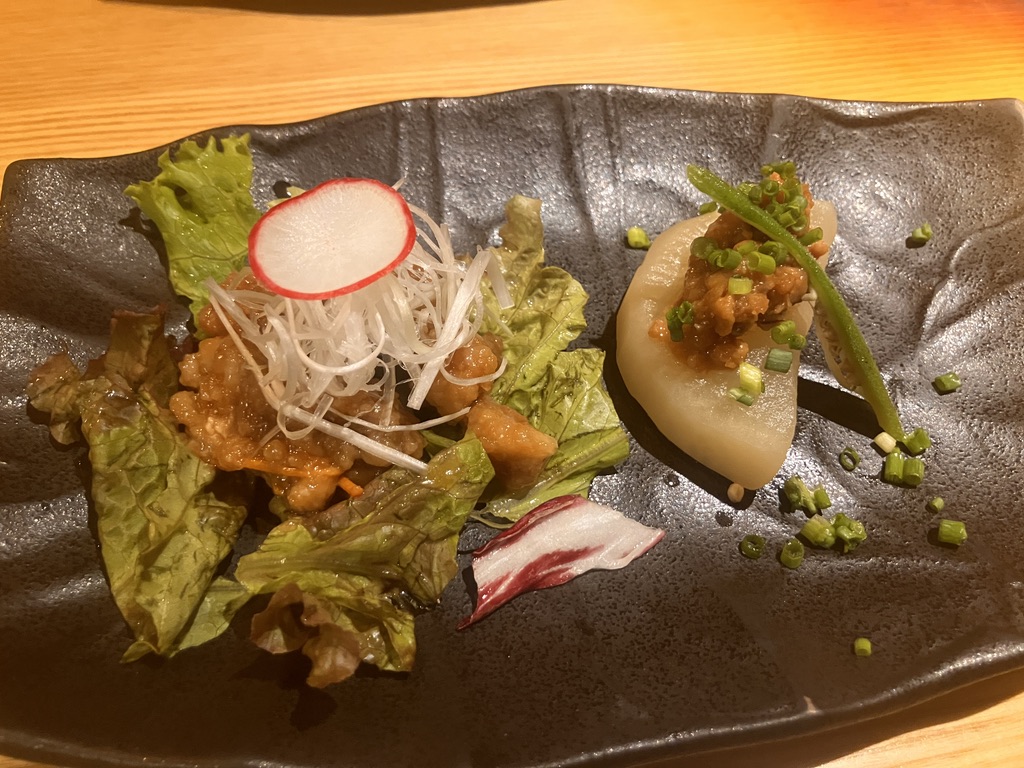
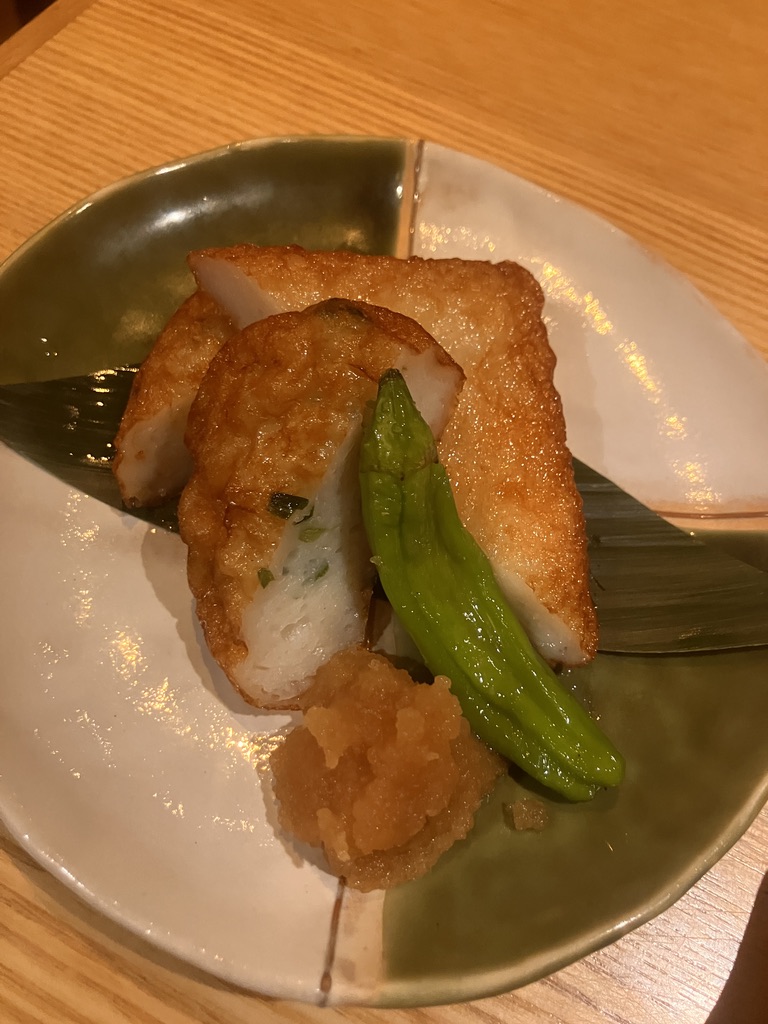
I don’t know what this was but it was delicious!
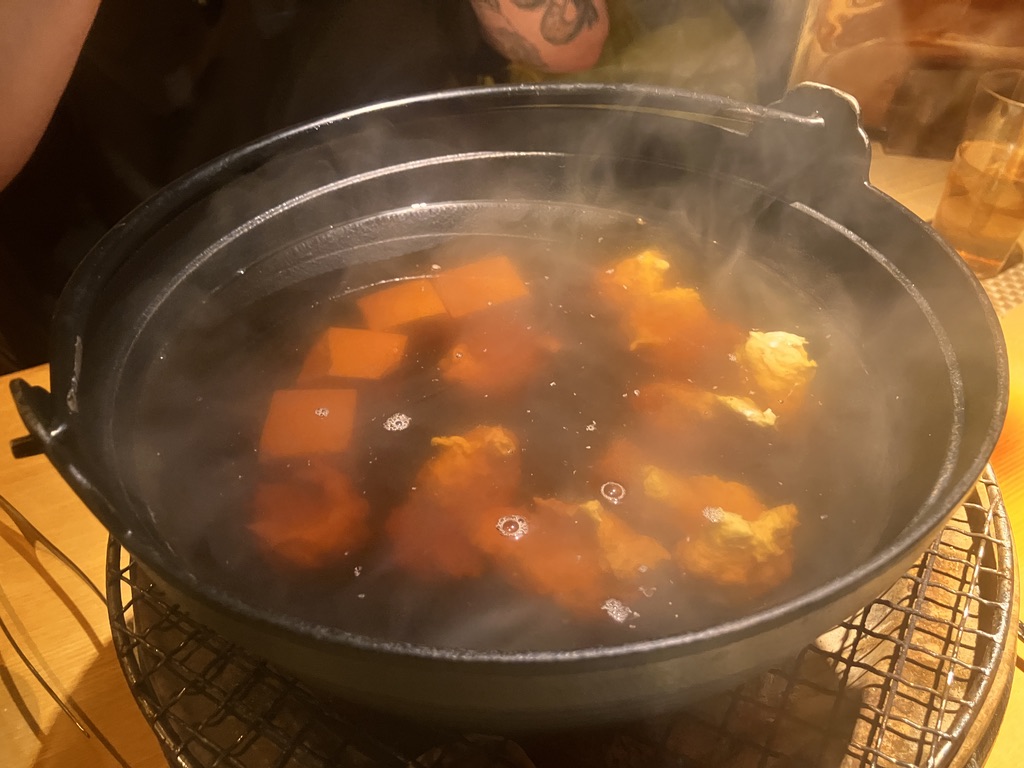
Then they placed a plate of coals on our table with a big pot
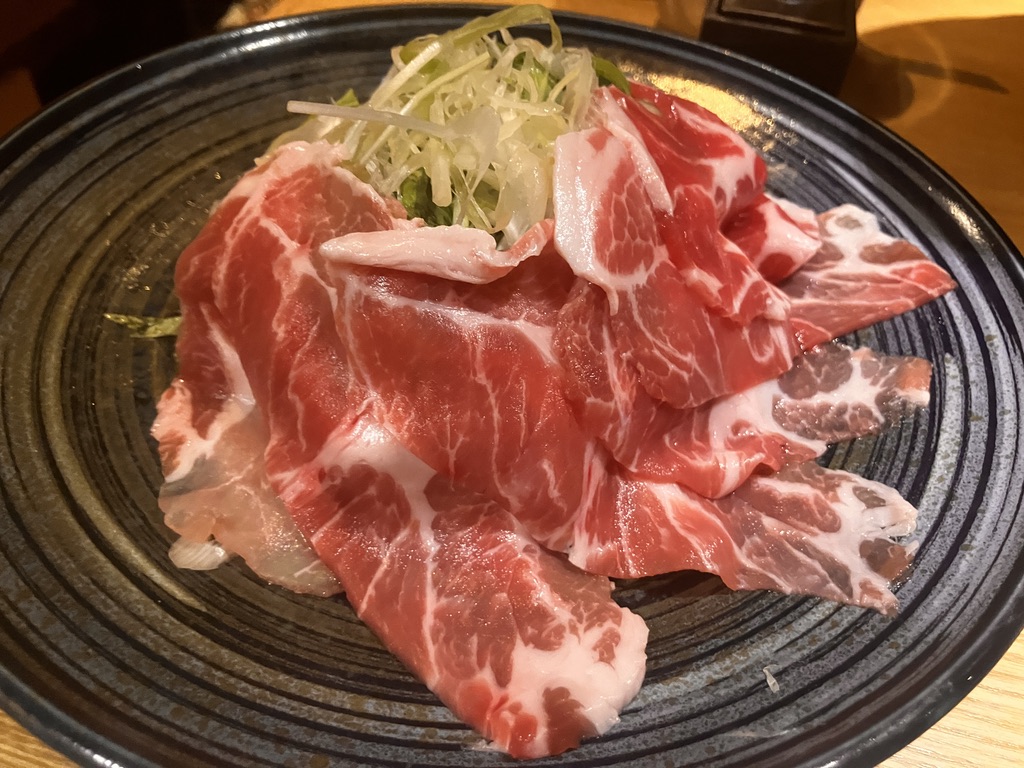
And a plate of meat
So we put it in the pot
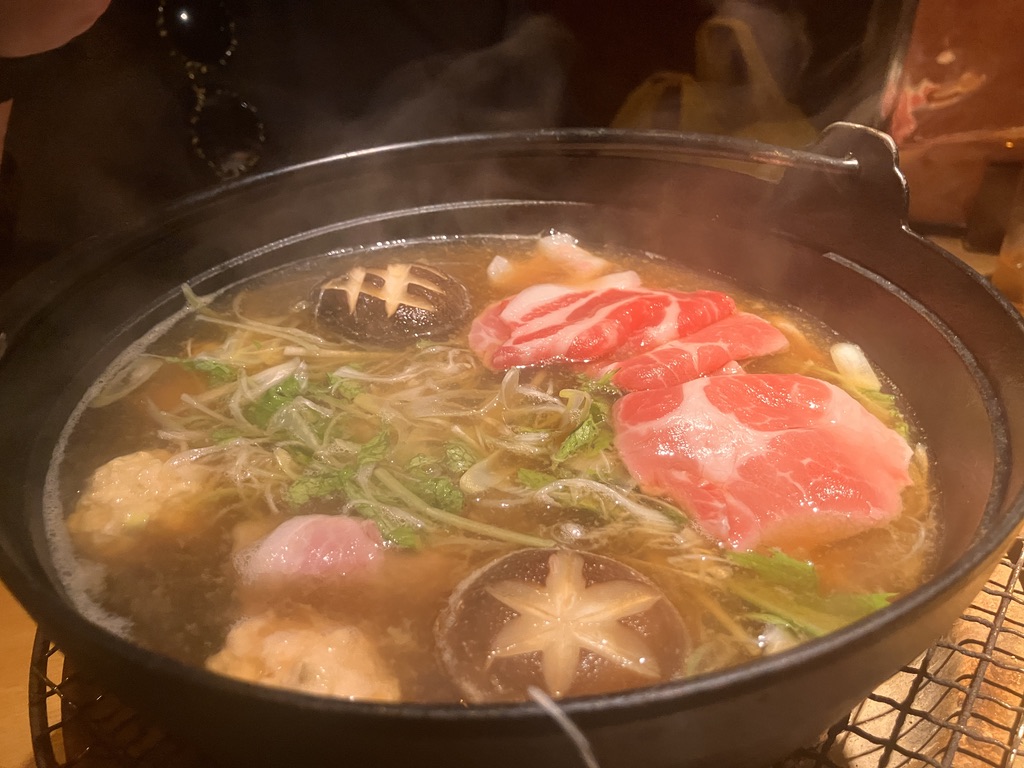
Then these arrived!
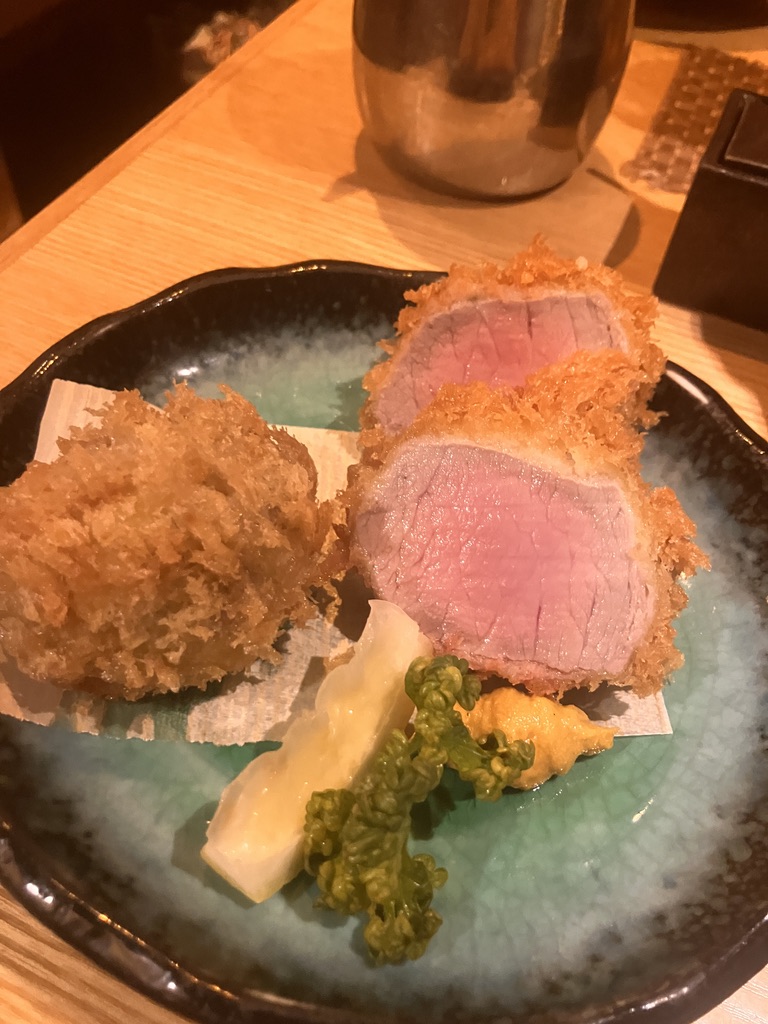
This place was even more delicious than I remembered. Out of time, Victor jumped in a cab and hurried back to work. I wanted to take in just a little more of the city.
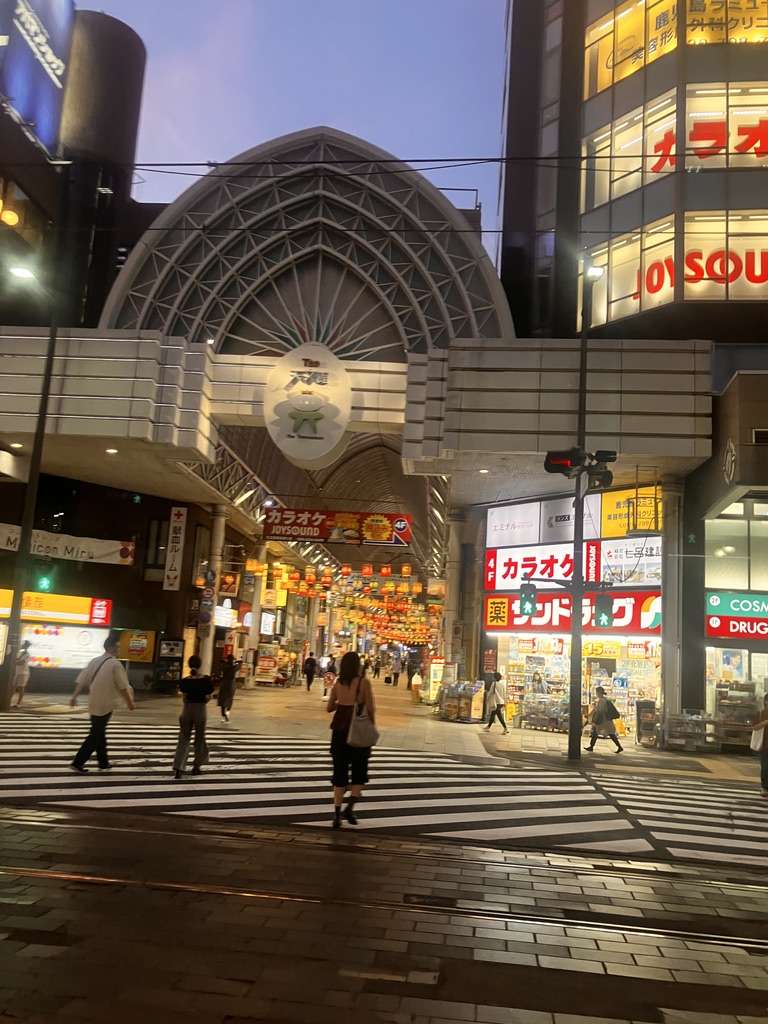
I took the tram and the long walk back to the ship, enjoying being outside at night.
Thanks Kagoshima – it was really nice seeing you again!
Kagoshima, Japan
Located at the southern tip of Kyushu, Kagoshima—home to approximately 590,000 residents, the largest city in southern Kyushu—is often called the “Naples of the East” for its bay setting, warm climate, and the dramatic silhouette of Sakurajima, an active volcano that towers over the city. With subtropical gardens, samurai heritage sites, and a vibrant food culture, Kagoshima blends natural beauty with a rich and storied history.
History:
Kagoshima has long been a city of power, culture, and transformation. As the seat of the influential Shimazu clan, it prospered as the political and economic center of southern Kyushu for centuries. During the Edo period, Kagoshima was the capital of the Satsuma Domain, one of Japan’s most powerful feudal states, which maintained limited but important trade with the Ryukyu Kingdom (Okinawa) and beyond, even under Japan’s isolationist sakoku policy.
In the 19th century, Kagoshima became a cradle of change. Leaders from Satsuma, including Saigō Takamori and Ōkubo Toshimichi, played decisive roles in the Meiji Restoration, which ended feudal rule and launched Japan’s modernization. Kagoshima also witnessed the Satsuma Rebellion of 1877, led by Saigō himself in a dramatic stand of the samurai against the new government.
The city suffered damage during World War II but rebuilt quickly in the postwar era. Today, Kagoshima honors its past through preserved gardens, museums, and monuments, while continuing to thrive as a cultural and industrial hub of southern Kyushu.
Itinerary:
Arrival: Tuesday September 2, 7:00am (please allow time for port clearance)
Departure: Tuesday September 2, All aboard: 9:00pm Sail away: 10:00pm
Weather
- Average Temps (September): High ~30°C (86°F) | Low ~23°C (73°F)
- Climate: Humid subtropical; hot and humid in early September, with possible showers or typhoons
- What to Wear: Light, breathable clothing, comfortable shoes, sunscreen, and a rain jacket or umbrella
Near the Pier:
Cruise Ship Dock: Marine Port Kagoshima Square
Address: 1 Chuokoshinmachi, Kagoshima, 890-0076
Address in Japanese: 〒890-0076 鹿児島県鹿児島市中央港新町1
Distance to City Center: ~5 km (~10–15 minutes by taxi)
Nearby Essentials
- Pharmacy: Kokumin Drug, Amu Plaza (near Kagoshima-Chūō Station, ~15 min by taxi)
- ATM: 7-Eleven and Lawson ATMs within ~10 minutes by taxi; ATMs also available at Amu Plaza
- Grocery/Snacks: Lawson convenience store near the port; more options in Tenmonkan shopping district (~15 min)
- Nearest Church: Kagoshima Catholic Church (~5 km, 15 min by taxi)
- Nearest Golf: Kagoshima Golf Club (~20–25 min by taxi)
- Nearest Don Quijote: Don Quijote Kagoshima Tenmonkan (~15 min by taxi or tram from Chūō Station)
Getting Around:
- 🚶 Walking: Downtown Tenmonkan district is walkable; port to city center ~2.5 km (best by tram/taxi).
- 🚌 Public Transit: Kagoshima City Tram (¥170 flat fare) connects port, Tenmonkan, Chuo Station, and main attractions.
- 🚖 Taxis: Easy to find at port and stations; reliable and metered.
- 🚴 Bike Rentals: Limited, but available near Kagoshima Chuo Station.
- 🚗 Car Rentals: Available at Chuo Station; useful for day trips outside the city.
- Hop-On Hop-Off Bus: The “City View Bus” (¥500 day pass) loops major attractions including Sengan-en, Shiroyama Observatory, and Kagoshima Aquarium.
Witnessing:
Sakurajima Volcano 🌋
The dramatic symbol of Kagoshima, Sakurajima is one of Japan’s most active volcanoes, rising boldly from Kagoshima Bay just 4 km from the city. Once a true island, it was connected to the Osumi Peninsula by lava flows during a major 1914 eruption. Today, it continues to release frequent plumes of smoke and ash, a constant reminder of its powerful presence.
Visitors can take the 15-minute ferry from Kagoshima Port to explore the volcano’s foothills. Highlights include the Yunohira Observatory (373 m elevation) for panoramic views of the crater, the Nagisa Lava Trail, a scenic 3 km walk through lava fields, and natural hot spring footbaths along the coast.
- Access: 15-min ferry from Kagoshima Port (runs every 10–15 minutes, 24 hours a day)
- Visit Time: 2–3 hours (half-day recommended)
- Cost: Ferry ~¥200 each way; observatory and trails free
✨ Travel Tip: Bring a light jacket and consider a hat—ash fall is common. Keep an eye on local advisories; visitors are not allowed near the crater itself due to ongoing volcanic activity.
Sengan-en Garden (UNESCO) 🌿
Built in 1658 as the villa of the Shimazu clan, Sengan-en is a beautifully preserved Japanese garden and residence overlooking Kinko Bay with stunning views of Sakurajima Volcano. The estate combines traditional Japanese landscaping with international influences, reflecting the Shimazu family’s openness to foreign trade and technology during the Edo period.
The grounds feature tranquil ponds, bamboo groves, stone lanterns, and cherry trees, while the main house offers a glimpse into samurai aristocratic life. Sengan-en also includes the Shōko Shūseikan, Japan’s first Western-style factory, part of the UNESCO World Heritage “Sites of Japan’s Meiji Industrial Revolution.”
- Access: ~15 minutes by taxi or via the City View Bus from Kagoshima-Chūō Station
- Visit Time: 1.5–2 hours
- Admission: ¥1,000 adults (includes gardens, residence, and Shōko Shūseikan Museum)
✨ Travel Tip: Don’t miss the tea rooms for matcha with a view of Sakurajima, and the gift shops selling Satsuma Kiriko cut glass and local sweets.
Shiroyama Observatory 🌅
Rising 107 meters above the city, the Shiroyama Observatory offers the most iconic panoramic view of Kagoshima City, Kinko Bay, and Sakurajima Volcano. The name Shiroyama means “Castle Mountain,” as the hill once formed part of Kagoshima Castle’s defenses. It was also the site of the final battle of the Satsuma Rebellion (1877), where Saigō Takamori made his last stand—an event that cemented his legacy as “the last samurai.”
Today, Shiroyama Park is a peaceful green space with walking trails leading to the observatory platform. At sunset, the sky glows behind Sakurajima, making this one of Kagoshima’s most breathtaking photo spots.
- Access: ~10 minutes by taxi from Kagoshima-Chūō Station, or via City View Bus (Shiroyama stop)
- Visit Time: 30–45 minutes
- Admission: Free
✨ Travel Tip: Visit in the evening for the best atmosphere, when city lights twinkle against the silhouette of Sakurajima.
Learning:
Shōko Shūseikan Museum (UNESCO) 🏭
Located within the grounds of Sengan-en Garden, the Shōko Shūseikan Museum is housed in Japan’s first Western-style factory, established in 1865 by the Shimazu clan. Originally built to manufacture machinery and modern weapons, it marked Kagoshima’s leading role in Japan’s industrialization. Today, the museum is part of the UNESCO World Heritage “Sites of Japan’s Meiji Industrial Revolution.”
The exhibits showcase artifacts from the Shimazu family’s centuries-long rule, including samurai armor, weapons, and documents, as well as early industrial machinery and ceramics. Together, they highlight how Kagoshima blended traditional culture with modern technology during a time of rapid change.
- Access: Within Sengan-en (15 minutes by taxi or City View Bus from Kagoshima-Chūō Station)
- Visit Time: 45–60 minutes
- Admission: Included with Sengan-en entry (¥1,000 adults)
✨ Travel Tip: Combine your visit with the gardens for the full Shimazu clan experience—history, culture, and stunning views of Sakurajima in one place.
Museum of the Meiji Restoration 🎥
Located along the Kotsuki River, the Museum of the Meiji Restoration tells the story of Kagoshima’s pivotal role in the events that transformed Japan from a feudal society into a modern nation. Opened in 1994, it uses multimedia exhibits, life-size dioramas, and dramatic video presentations to bring history to life.
The museum focuses on the lives of two Kagoshima-born leaders, Saigō Takamori and Ōkubo Toshimichi, who spearheaded the movement to overthrow the Tokugawa shogunate and launch the Meiji Restoration of 1868. Visitors can step inside recreated streets of 19th-century Kagoshima, watch immersive shows with animatronics, and explore exhibits on samurai culture and modernization.
- Access: ~10 minutes by taxi from Kagoshima-Chūō Station, or via City Tram (Asahi-dōri stop)
- Visit Time: 1–1.5 hours
- Admission: ¥300 adults; ¥150 children
✨ Travel Tip: Shows are available in English via headsets—ask at the entrance for foreign-language support.
Kagoshima City Museum of Art 🖼️
Set within the greenery of Shiroyama Park, the Kagoshima City Museum of Art houses a refined collection of Japanese and Western works, reflecting Kagoshima’s long history of cultural exchange. Opened in 1985, the museum blends European masters with prominent Japanese artists, offering visitors both global and local perspectives.
Highlights include paintings by Monet, Renoir, Cézanne, Rodin, and Chagall, alongside Japanese artists such as Kuroda Seiki and Kagoshima-born Fumio Asakura. Special exhibitions rotate throughout the year, adding variety to the permanent collection. The museum’s design also harmonizes with its setting—look out for sculptures in the surrounding park.
- Access: ~10 min walk from Tenmonkan; City View Bus stop nearby
- Visit Time: 1–1.5 hours
- Admission: ¥300 adults | ¥200 university/high school | ¥150 elementary/junior high
- Hours (Sept 2): 9:30 am – 6:00 pm (last entry 5:30 pm)
✨ Travel Tip: The museum pairs perfectly with an afternoon visit to Shiroyama Observatory—art indoors, sweeping views outdoors.
Reimeikan – Kagoshima Prefectural Museum of Culture and History 🏯
Located on the former grounds of Kagoshima Castle, the Reimeikan is the prefecture’s most comprehensive museum, showcasing the history, art, and traditions of Kagoshima from prehistoric times to the modern era. Opened in 1983, its name means “Hall of Dawn,” symbolizing Kagoshima’s role in ushering in a new era during the Meiji Restoration.
Exhibits cover everything from ancient archeological finds and samurai weaponry to folk crafts, ceramics, and festival traditions. Life-size dioramas recreate scenes of local culture, while rotating exhibitions highlight Kagoshima’s unique role as a crossroads of Japanese, Chinese, and Western influences.
- Access: 15 min walk from Tenmonkan or 10 min taxi from Kagoshima-Chūō Station
- Visit Time: 1.5–2 hours
- Admission: ¥310 adults | ¥190 university/high school | ¥150 elementary/junior high
- Hours (Sept 2): 9:00 am – 6:00 pm (last entry 5:30 pm)
✨ Travel Tip: Combine a visit to Reimeikan with a stroll through Tsurumaru Castle ruins and nearby Shiroyama Park, both within walking distance.
Discovery:
Traditional Crafts
Kagoshima is renowned for its exquisite traditional crafts, two of which reflect the city’s samurai heritage and artistic spirit.
- Satsuma Kiriko (薩摩切子) – Brilliant cut glass, first created by the Shimazu clan in the mid-19th century. Deep, jewel-colored glass is cut to reveal delicate patterns that shimmer in the light. Today, workshops and galleries display both antique pieces and modern creations.
- Satsuma-yaki (薩摩焼) – Elegant pottery with ivory glaze and intricate, hand-painted designs. Historically treasured as gifts for nobility, it remains one of Japan’s most famous ceramic traditions.
Guests can browse and purchase these crafts at Sengan-en’s gift shops (open daily 8:30 am – 5:30 pm) or at specialty stores in the Tenmonkan district. Demonstrations of glass-cutting and pottery techniques are sometimes offered at Sengan-en on weekdays.
- Access: Sengan-en (15 min taxi or City View Bus from Chūō Station)
- Visit Time: 30–45 minutes for browsing; longer if attending a craft demo
- Admission: Free to enter shops; included in Sengan-en ticket if visiting the grounds
✨ Travel Tip: If you’d like a unique souvenir, Satsuma Kiriko glassware is a specialty exclusive to Kagoshima—perfect for display or as a refined gift.
Tenmonkan Shopping Arcade 🛍️ The heart of Kagoshima’s downtown, Tenmonkan is a lively, covered shopping arcade stretching nearly 2 km through the city center. Open since the early 20th century, it’s lined with fashion boutiques, souvenir shops, cafés, and restaurants, all sheltered under a glass roof that makes it enjoyable rain or shine.
Tenmonkan is also a hub for local specialties: try Kagoshima’s famous Shirokuma shaved ice at Mujaki, sample kurobuta pork dishes, or browse shops selling Satsuma Kiriko cut glass and local shochu. In the evenings, the area transforms into a nightlife district with countless izakayas, ramen shops, and pubs.
- Access: ~10 minutes by tram from Kagoshima-Chūō Station; ~15 minutes by taxi from Marine Port
- Visit Time: 1–2 hours
- Admission: Free, pay for purchases and dining
✨ Travel Tip: Tenmonkan is the best place for souvenir shopping—look for Castella sponge cakes, Satsuma-age fish cakes, and artisanal crafts.
Hiking ⛰️
🌋 Sakurajima Nagisa Lava Trail A gentle 3 km coastal walk across lava fields created by the 1914 eruption. The path runs between the Sakurajima Ferry Terminal and the Karasujima Observatory, with striking views of the volcano and bay.
- Visit Time: 1–1.5 hours (round-trip walk)
- Access: 15-min ferry from Kagoshima Port → trailhead is walking distance from Sakurajima Ferry Terminal
- Open: 24 hours, free
✨ Best Option for Cruise Guests – Easy to fit in after a morning or afternoon ferry crossing.
🌲 Shiroyama Park Trails Short, shaded walking paths climb to the Shiroyama Observatory (107 m). The hike is about 2 km round-trip through lush forest, with views of the city and Sakurajima at the top.
- Visit Time: 45–60 minutes
- Access: 10-min taxi from Kagoshima-Chūō Station, or City View Bus (Shiroyama stop)
- Open: Always open, free
✨ Great if you prefer a quick city-center walk with historical significance (site of the 1877 Satsuma Rebellion’s last battle).
Exploring:
Terukuni Shrine (照国神社) ⛩️
Located in the heart of Kagoshima City, Terukuni Shrine is dedicated to Shimazu Nariakira (1809–1858), the progressive 28th lord of the Shimazu clan who championed modernization and Western learning in Kagoshima. Established in 1863, the shrine honors his spirit as Terukuni Daimyōjin, reflecting the deep respect locals still hold for the Shimazu family.
The shrine grounds are peaceful and spacious, with a grand torii gate, tree-lined paths, and seasonal flowers. It’s also a venue for local festivals, including lively summer matsuri and traditional performances.
- Access: ~10 minutes by tram from Kagoshima-Chūō Station (Shiyakusho-mae stop)
- Visit Time: 20–30 minutes
- Admission: Free
✨ Travel Tip: Combine Terukuni Shrine with nearby Reimeikan Museum and Shiroyama Park, as all three are within walking distance.
Iso Beach 🏖️ Located just north of the city near Sengan-en Garden, Iso Beach is a small but scenic stretch of coastline on Kinko Bay, with one of the best views of Sakurajima Volcano rising directly across the water. The beach is popular with locals for swimming in summer and strolling year-round, offering a peaceful contrast to downtown Kagoshima.
Facilities include restrooms, showers, and seasonal lifeguards, making it a safe and convenient stop for visitors. Its proximity to Sengan-en makes it easy to combine a cultural visit with a moment of seaside relaxation.
- Access: ~15 minutes by taxi or City View Bus from Kagoshima-Chūō Station
- Visit Time: 30–60 minutes (longer if swimming in season)
- Admission: Free
✨ Travel Tip: In the evening, the view of Sakurajima glowing under the sunset from Iso Beach is one of Kagoshima’s hidden photographic gems.
Komenoyama Observatory (米ノ山展望台) 🌄
Perched on a hilltop just outside Kagoshima City, the Komenoyama Observatory is a quiet viewpoint that offers sweeping, panoramic vistas of Kinko Bay, Sakurajima Volcano, and the city skyline. Unlike the popular Shiroyama Observatory, Komenoyama is less crowded, making it a peaceful spot for photography or simply enjoying the dramatic scenery.
The observatory is especially beautiful at sunrise and sunset, when the volcano is bathed in golden light and the city begins to sparkle. A small parking area and picnic tables make it an easy and relaxing stop if traveling by car.
- Access: ~30 minutes by car/taxi from Kagoshima-Chūō Station
- Visit Time: 20–40 minutes
- Admission: Free
✨ Travel Tip: Best visited on clear days for unobstructed volcano views—pack binoculars or a camera with zoom for spectacular shots of Sakurajima’s crater.
Hidden Gems:
Deai-sugi Cedar Tree – This train station meeting spot is an actual, mellennia-old tree from the island of Yakushima
Masked God Boze of Akusekijima Island – Once a year, these ‘visitor deities’ chase away evil spirits with a phallic-shaped staff
Jimesaa – Locals have put a new makeup on this strange statue every year since they unearthed it
Portrait of a Shout – A well-known Japanese musician’s all-night concert on this island is immortalized by an unusual work of art
Kurokami Buried Shrine Gate ⛩️ On Sakurajima’s eastern side, the Kurokami Buried Shrine Gate is a powerful reminder of the volcano’s force. During the massive 1914 eruption, falling lava and ash buried the torii gate so deeply that only its top crossbeam remains visible above ground.
Ibusuki Hakusuikan Sand Onsen ♨️ About an hour south of Kagoshima City, Ibusuki is famous for its unique sand baths, where guests are gently buried in naturally heated sand along the seaside. The most renowned spot is Hakusuikan Onsen, a luxurious hot spring resort offering the full sand onsen experience.
Wearing a yukata, you lie down on the beach while attendants cover you in warm black sand heated by underground hot spring steam. The soothing weight and gentle heat promote circulation, relieve fatigue, and provide a deeply relaxing sensation. After 10–15 minutes, guests rinse off and can enjoy traditional indoor baths overlooking the ocean.
- Access: ~60–70 minutes by train or car from Kagoshima-Chūō Station (direct train to Ibusuki, then short taxi)
- Visit Time: Half-day excursion
- Admission: ~¥1,000–1,200 for sand bath; higher for full onsen/spa packages
- Hours: Generally 9:00 am – 5:30 pm (last entry ~5:00 pm)
- What to Bring: Towels provided; yukata rental included with admission
✨ Travel Tip: Because of limited time in port (Sept 2), Hakusuikan is best enjoyed on a dedicated excursion. If you want a taste of hot springs closer to the ship, Kagoshima City also has Sakurajima’s Yogan Nagisa Foot Bath (free, by the ferry terminal).
Tasting:
- Kurobuta (Black Pork): Served as shabu-shabu, tonkatsu, or pork miso.
- Satsuma-age: Fried fish cakes, a Kagoshima specialty.
- Shochu: Local distilled spirit, often made from sweet potatoes.
- Kibinago: Silver-stripe round herring, served raw with vinegar miso.
- Shirokuma: Famous Kagoshima shaved ice topped with condensed milk and fruit.
Irish Pub: Yes, there is an Irish-inspired pub in Kagoshima called Irish Pub Big Ben, located in the Tenmonkandori area. While it offers an international menu and European-style pub ambiance with a focus on draft beers and live sports, it is noted for its connection to Ireland through its concept and name.
Mexican
Mexican & Latin-Inspired Restaurants in Kagoshima
1. La Quinua – A standout option that blends Peruvian, Mexican, and Spanish cuisine with Latin flair and quinoa-forward dishes. Reviewers rave about its unique flavors and friendly service. It’s also vegetarian-friendly and offers creative items like Nacho Pizza and Quinoa Tacos. Located near Asahidori Station, it’s a must-visit for adventurous foodies.
2. Bar.GOPPACHI, GRACIAS, Crazy Uncle – Casual Mexican or Latin-themed eateries listed on Tabelog as culinary options in Kagoshima. While detailed reviews are sparse, these spots suggest there are a few more authentic-style places around the Nakasudoori and Tenmonkan areas where Mexican fusion flavors are on tap.
3. El Pepe (historical mention) – An American-run spot praised in earlier reviews for homemade chips, flavorful chimichangas, and a cozy atmosphere. However, these accounts date back over a decade—it’s uncertain if it’s still operating. Still, it’s a notable part of Kagoshima’s Mexican food legacy.
Nightlife:
- Tenmonkan District: The heart of Kagoshima nightlife with izakayas, karaoke, cocktail bars, and ramen shops.
- Shochu Bars: Sample Kagoshima’s signature spirit in cozy local pubs.
Travel Tips:
- Use the City View Bus or Tram for easy sightseeing.
- Carry cash; smaller shops and restaurants may not take credit cards.
- Sakurajima is active—check local advisories before visiting.
- Summers are hot and humid; stay hydrated and take shade breaks.
- For souvenirs, look for Satsuma Kiriko glassware, Shochu, or Satsuma-age fish cakes.
- Check locally for live music or cultural performances at Tenmonkan or the Civic Hall.