My views do not necessarily reflect the views of my employer.
August 19, 2025
We docked in Kobe as the gateway to Osaka & Kyoto. Steven and Michele invited me to join them on their tours, but I was only able to finagle the first day in Osaka (which I’ll tell you about in my next post). Their adventures in Kyoto and Nara made me determined to see those cities next time I’m in the area.
Our second night in Kobe, Victor and I hit the town after work (As Executive Chef, his work ends after mine). Of course, we wanted to find something to eat, so we decided to head on down to Chinatown. Victor suggested we get an Uber. I suggested we walk – it’s close!
After a couple of minutes, it became apparent that, once again, our definitions of a ‘short walk’ were not the same. With the humidity, Victor accused me of melting the Executive Chef and warned that I would be held responsible for there being no more food prepared on the ship. He jokingly referenced my ‘only 4.8 mile’ walk that broke Steven in Homer, Alaska. In retaliation, I henceforth stopped suggesting we walk anywhere- so that when anyone complained the walk was too long, I could gloat that it was not my suggestion!
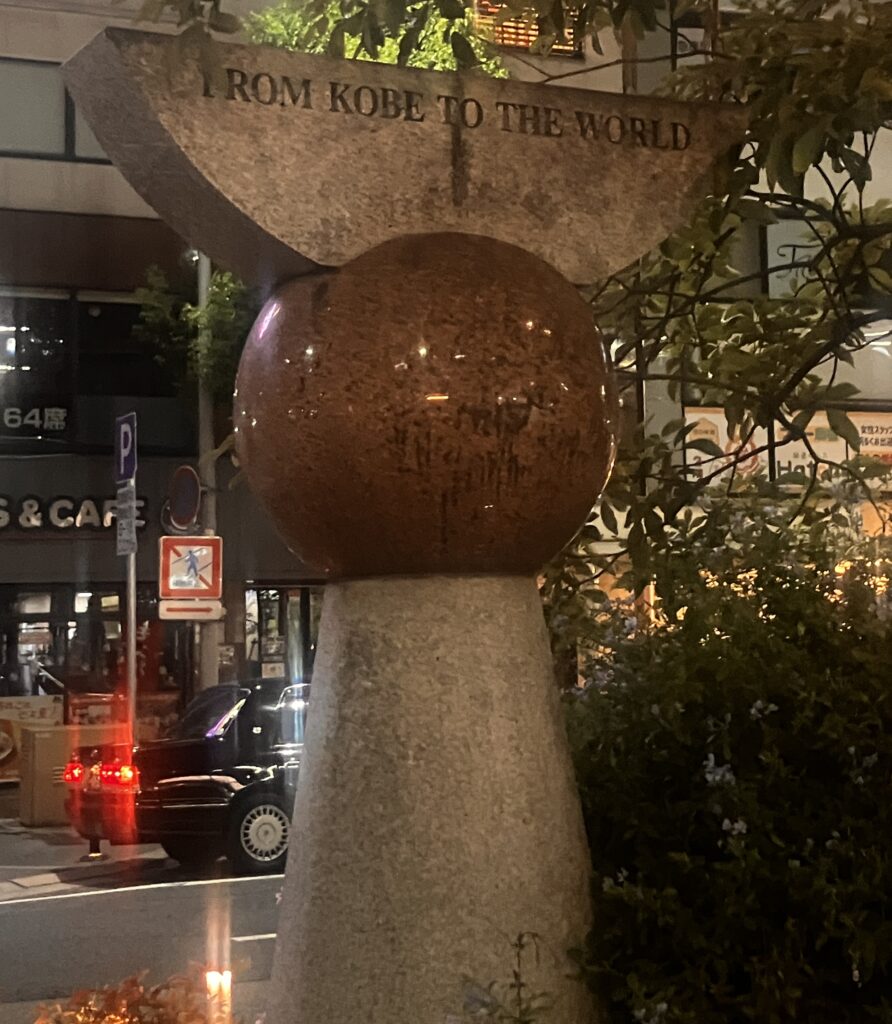
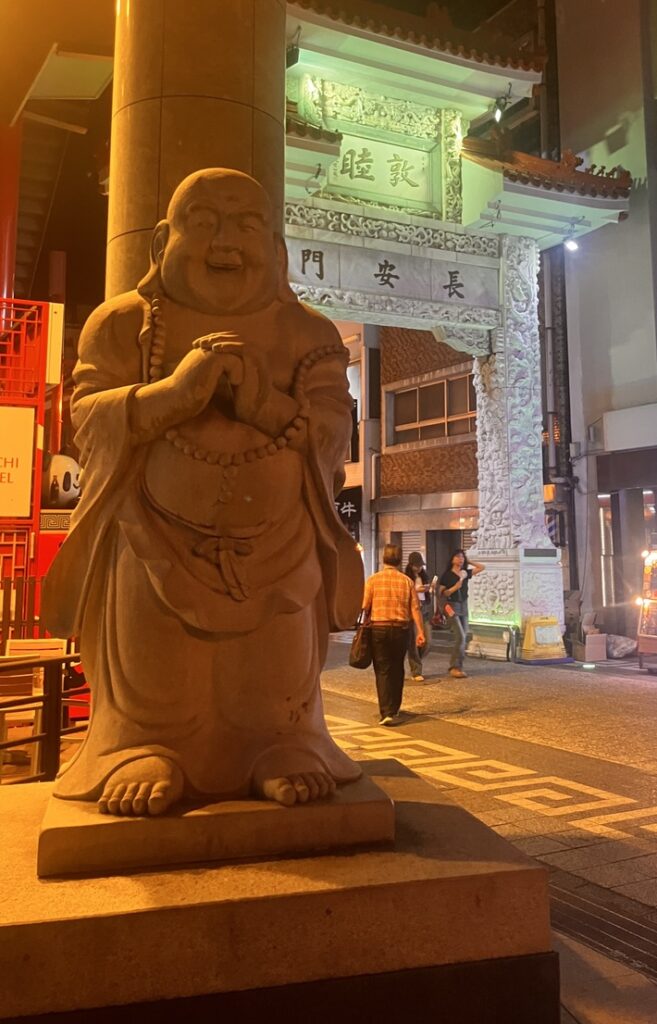
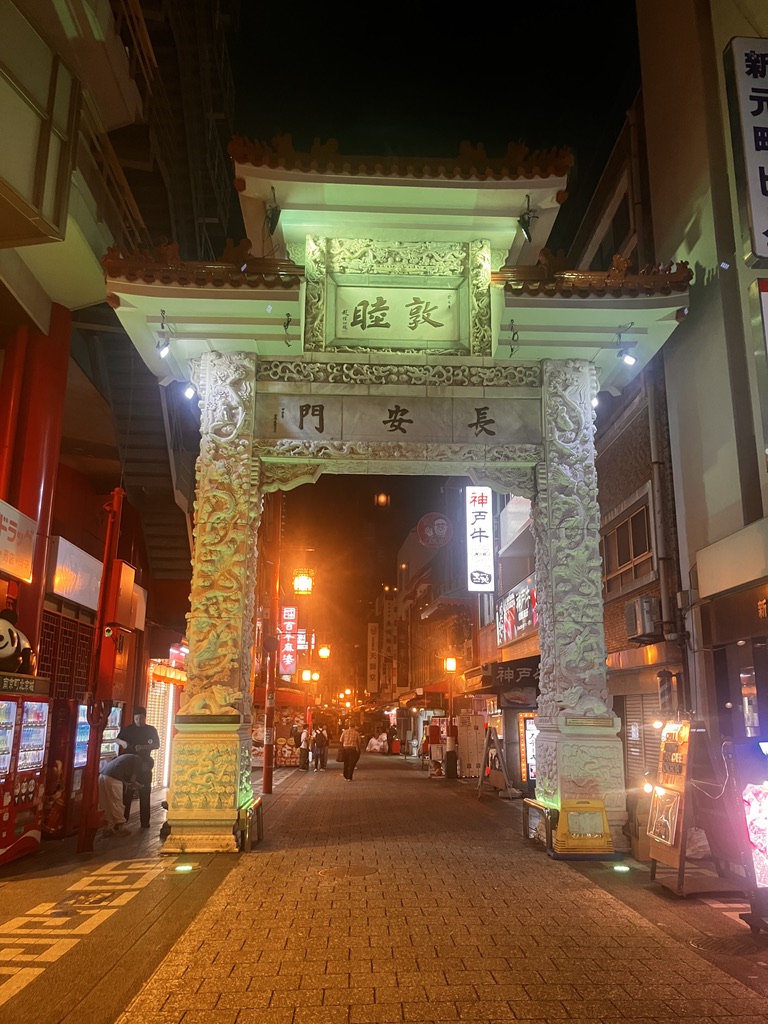
For my PowerPoint presentation, I had found a picture in Kobe online that I liked as my opening slide. Someone commented that it was an interesting choice – having Chinatown represent a Japanese city. At the time, I could barely understand a handful of Japanese words, and I couldn’t yet differentiate the characters between Japanese and Chinese. And here we were- the very gate from the picture!
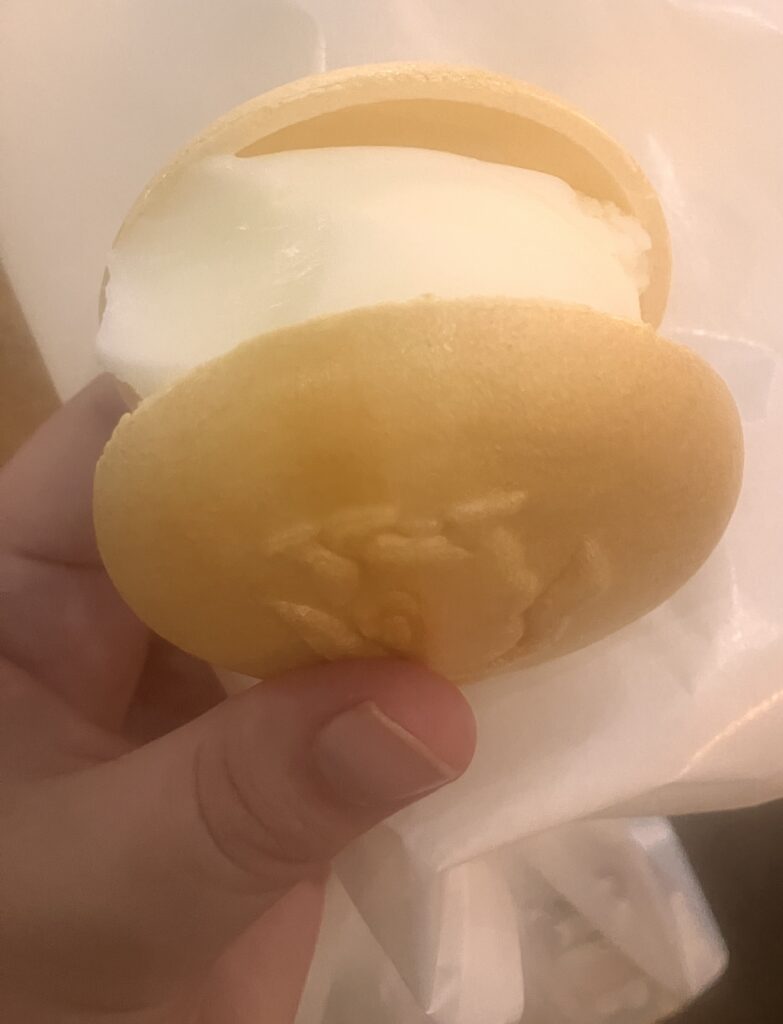
While looking for a restaurant that would stay open late enough to serve us, we got distracted by an appetizer.
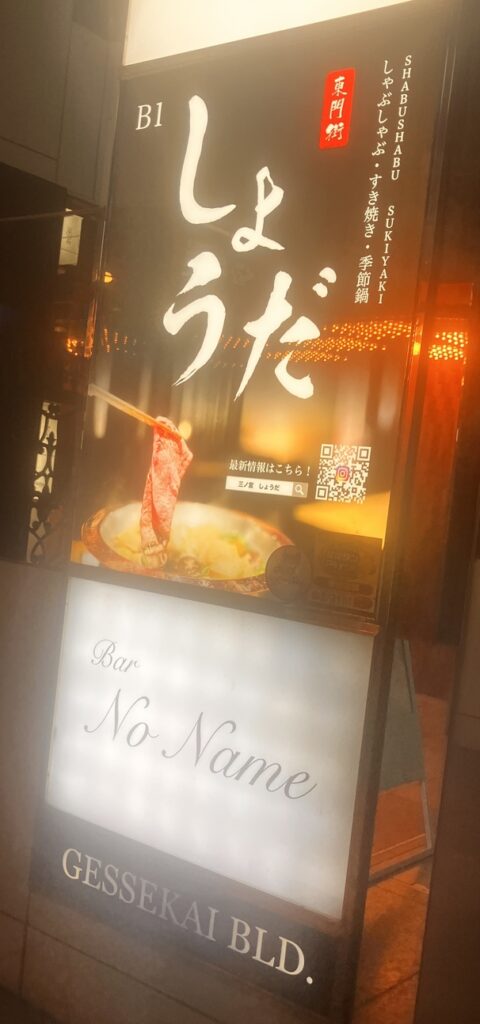
In Cozumel, Mexico, there’s a Bar with No Name that’s a popular hangout for crew, decorated with name badges from all the different cruise lines. We didn’t go inside this one, but I don’t think it has the same theme.
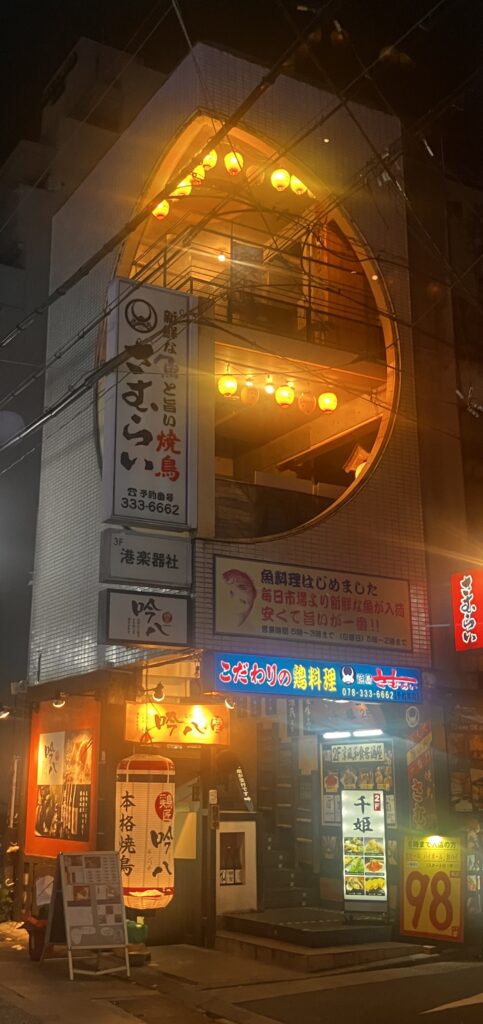
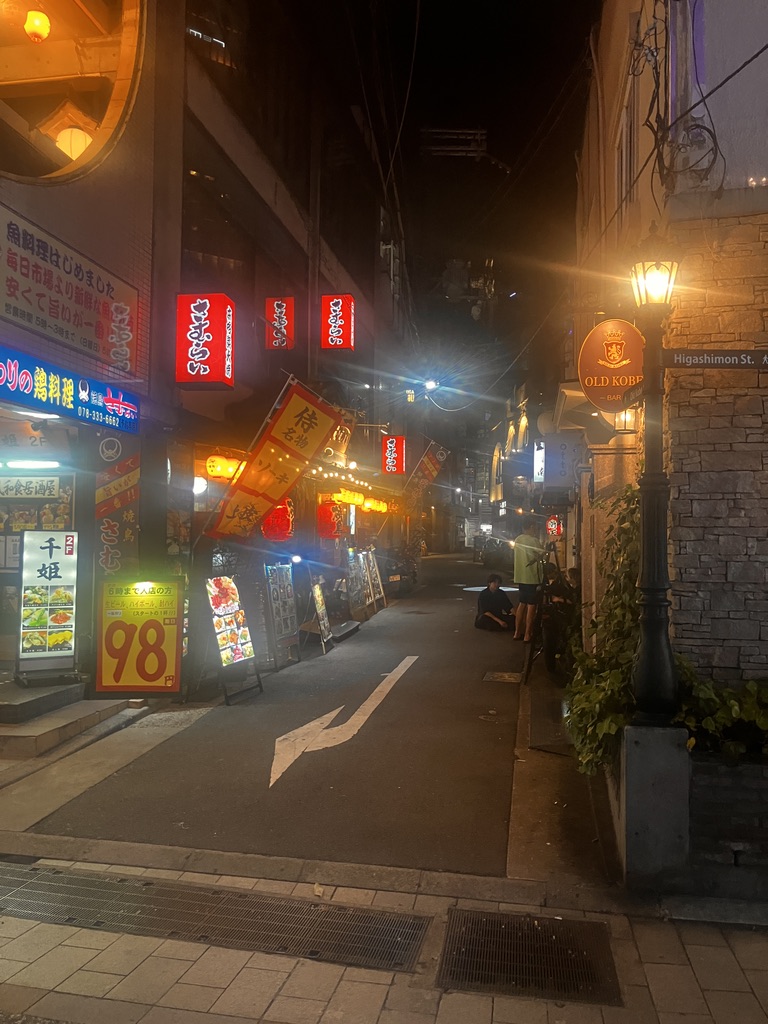
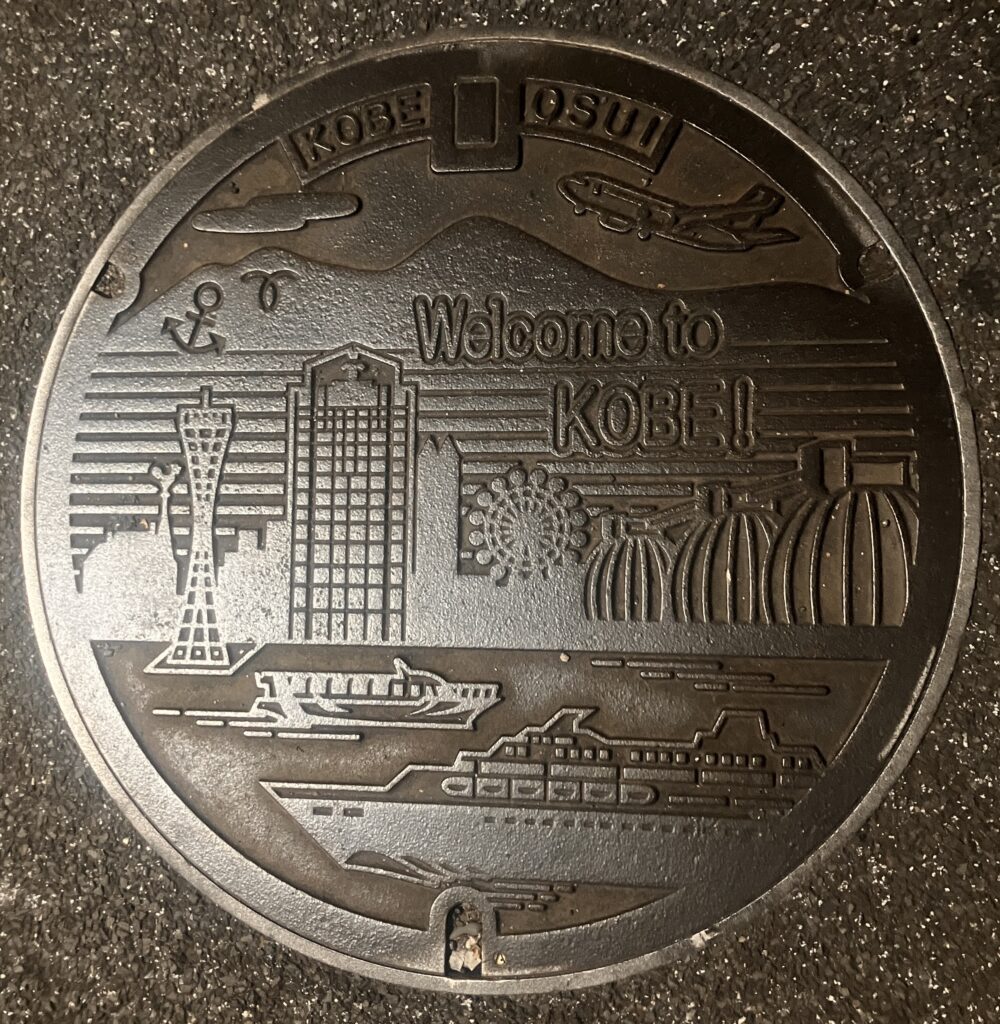
We eventually found a delicious restaurant (we had some beef in Kobe, but I don’t think it was Kobe beef), and then weighed the option of staying out to enjoy the atmosphere versus getting enough sleep – my (almost) daily dilema. In the end, a compromise was made, and we took a taxi back to the ship.
Kobe, Japan
Welcome to Kobe—an elegant port city nestled between Mount Rokkō’s green slopes and Osaka Bay. Known for its cosmopolitan charm, scenic harbor, and iconic Meriken Park, Kobe blends modern urban flair with historic architecture and natural beauty.
With around 1.5 million residents, Kobe is one of Japan’s largest cities and a vibrant cultural hub in the Kansai region.
Kobe is a cosmopolitan port city nestled between the Rokko Mountains and Osaka Bay. Known for its scenic waterfront, historic foreign settlements, and world-famous Kobe beef, it blends tradition and modernity with effortless charm.
As of 2025, Kobe has a population of approximately 1.49 million. It’s Japan’s seventh-largest city, offering a vibrant mix of international culture and Japanese heritage.
History:
Kobe’s history stretches back over 1,000 years, shaped by its location along Japan’s Seto Inland Sea and its role as a natural harbor. Once a small fishing village known as Ōwada-no-Tomari, it became an important port for the ancient capitals of Nara and Kyoto, supplying goods and facilitating cultural exchange.
By the 12th century, Kobe was tied closely to the nearby Taira clan and the rise of maritime trade. It later developed as a gateway for foreign trade during Japan’s early contact with China and Korea. Kobe’s sake brewing tradition—still world-famous today—dates back to the 14th century in the Nada district.
In 1868, after more than two centuries of Japan’s isolation under the Tokugawa shogunate, Kobe was one of the first ports opened to foreign trade. The arrival of Western merchants, missionaries, and diplomats transformed the city into an international hub. Foreign settlement areas, Western-style architecture, and new technologies reshaped Kobe’s culture and skyline.
The city endured hardship in the 20th century:
- World War II bombings in 1945 destroyed much of the port area.
- The Great Hanshin Earthquake on January 17, 1995, claimed over 6,000 lives and caused widespread devastation. Kobe’s rapid recovery is often cited as a symbol of resilience.
Today, Kobe is known for its cosmopolitan atmosphere, port heritage, and global cuisine—most famously Kobe beef—blending Japanese tradition with an enduring international spirit.
Itinerary:
Arrival: Monday August 18 8:00am (please allow time for port clearance)
Departure: Wednesday August 20 All aboard: 5:00pm Sail away: 6:00pm
Weather
- Average Temps: High ~31 °C (88 °F), low ~25 °C (77 °F), average ~28 °C (82 °F)
- Climate: Humid subtropical → hot, muggy summer; occasional rain
- What to Wear: Light, breathable fabrics, sunhat, sunscreen, and comfortable walking shoes.
Near the Pier:
Kobe Cruise Ship Dock: Shinko Pier No. 4Q-1
Address: 4-5, Shinko-cho, Chuo-ku, Kobe 650-0042
For Taxis: 神戸市中央区新港町4-5(新港第4突堤)
Google Maps: Kobe Port Terminal
The Port will be open 24 hours
Terminal Station: Port Terminal Station (ポートターミナル駅) on the automated Port Liner—just 1.8 km into the city center, ~5 min ride to Sannomiya
English-speaking Tourist Information Desk and Money Exchange available inside
Website: www.kobe‑meriken.or.jp/en/terminal/kobe.html
Nearby Essentials
Pharmacy: Sugi Drug: 3 Chome-1-14 Hachimandori, Chuo Ward, Kobe, Hyogo 651-0085
ATM: Inside Tokyo‑Mitsubishi UFJ Bank at terminal
Grocery/Snacks: Local konbini (7‑Eleven/Circle‑K) near terminal station
| Nearest Church: Kobe Central Catholic Church – 1-28-7 Nakayamatedori |
Nearest Golf: Rotary Golf Club – 30 min drive from port
Don Quijote: Sannomiya Store
Getting Around:
🚶 Walking: Kobe is small enough to get around on foot, but you can save time by riding the City Loop Bus. Harborland, Chinatown, and Meriken Park are within 15–20 min walk
🚌 Public Transit: Port Liner monorail to Sannomiya Station (~5 min), further rail/bus to Osaka and Kyoto. Vintage style green buses.
🚖 Rideshare/Taxis: Taxi stands available; show address in Japanese (see above); Kamome Taxi or Uber available 24/7
🚗 Car Rentals: Several agencies located near Sannomiya and Airport; advance booking advised. ORIX Rent-a-Car Shin-Kobe
🚌 Hop-On Hop-Off Bus:
Tourist bus loops are available from the city center and easily accessible via the Port Liner to Sannomiya Station. The City Loop Bus stops at major attractions including Kitano-cho, the Kobe Nunobiki Ropeway, Chinatown, the waterfront, and the city’s main train stations. Day passes are available for unlimited rides.
There are two main routes:
- CITY LOOP – ideal for exploring Kobe’s cultural and historical sights around the city center.
- PORT LOOP – recommended for touring the Kobe Waterfront Area.
City Loop buses also feature onboard tour guides, so feel free to ask questions during your ride.
Witnessing:
Harborland is one of Kobe’s most vibrant waterfront districts, located just southwest of Meriken Park. It offers a scenic promenade along the bay with panoramic views of the Port Tower, Kobe Maritime Museum, and Mount Rokkō in the distance. The area features a blend of shopping malls (like Umie and Mosaic), international restaurants, cafes, entertainment complexes, and ferry terminals.
Popular for both daytime strolls and evening views, Harborland is especially beautiful after dark when the waterfront is lit up. It’s easily walkable from the cruise terminal or accessible via JR Kobe Station. A great spot to dine, relax, or enjoy live street performances.
Just minutes from downtown Kobe, the Nunobiki Falls, Nunobiki Ropeway, and Kobe Nunobiki Herb Gardens offer a peaceful escape into nature with stunning city and mountain views.
🌊 Nunobiki Falls is one of Japan’s “Three Divine Waterfalls,” made up of four cascades. It’s accessible via a short but scenic hiking trail starting behind Shin-Kobe Station, about 15–20 minutes from the base to the main falls.
🚠 The Nunobiki Ropeway departs from near Shin-Kobe and takes you on a 10-minute ride up Mount Rokkō, passing over the waterfalls and forested hills with spectacular views of Kobe Harbor and the Seto Inland Sea.
🌿 At the top, the Kobe Nunobiki Herb Gardens house over 75,000 herbs and flowers across 12 themed gardens, plus a café, footbaths, and panoramic observation terraces. You can ride the ropeway back down or take a gentle 30–40-minute downhill walk through the gardens and forests.
🕒 Opening Hours (August 18–20):
- Ropeway & Herb Garden: 10:00 AM – 5:00 PM (last ropeway down at 5:15 PM)
- Admission: ¥1,800 round trip (includes garden entry)
Kitano Ijinkan-gai (北野異人館街) is Kobe’s historic Western-style district, located on the hillside just north of Sannomiya. After the port opened to foreign trade in 1868, this area became home to diplomats, merchants, and expats—many of whom built elegant European-style mansions known as “Ijinkan” (foreign residences).
Today, about 20 of these former residences have been preserved and turned into charming museums, art galleries, cafes, and gift shops. Popular houses include the Weathercock House, Moegi House, and the quirky Trick Art Museum. Strolling the cobblestone streets here offers a unique blend of Meiji-era architecture, international history, and panoramic city views.
🕒 Opening Hours vary by residence, typically 9:00 AM to 6:00 PM
🎟️ Admission: Some houses are free to view from the outside; combined entry passes are available for interior tours.
📍 Access: 15–20 min walk uphill from Sannomiya Station or reachable by City Loop Bus.
Learning:
The Kobe City Museum offers a fascinating look at the city’s international history and cultural exchange. Located near Sannomiya and Meriken Park, the museum features exhibits on ancient artifacts, Namban art, and Kobe’s development as a port city. The museum will be open Tuesday to Sunday from 9:30 AM to 5:30 PM, Closed Mondays. General admission is ¥300, and the first-floor History Room is free to enter. Allow 1–1.5 hours to explore this beautifully curated space.
The Kobe Maritime Museum, located in Meriken Park beside the iconic Port Tower, offers an immersive exploration of Kobe’s maritime heritage and port development. With striking sail‑shaped architecture and engaging exhibits—including large ship models, interactive simulators, and the adjacent Kawasaki Good Times World—it’s ideal for maritime enthusiasts. From Tuesday to Sunday, the museum is open 10:00 AM to 6:00 PM, with the last admission at 5:30 PM, and closed on Mondays. Admission is ¥900 for adults (children and students eligible for discounts). Visitors typically spend 2–4 hours touring the facility and adjacent waterfront attractions.
Kawasaki Good Times World is an interactive corporate museum located inside the Kobe Maritime Museum at Meriken Park. Operated by Kawasaki Heavy Industries, it showcases the company’s innovations across motorcycles, ships, trains, and aerospace. Visitors can see real Kawasaki motorcycles and bullet trains, sit in a flight simulator, and try hands-on engineering displays that appeal to both adults and children.
The Port of Kobe Earthquake Memorial Park is a solemn and powerful tribute to the victims and recovery efforts following the Great Hanshin Earthquake of 1995. Located within Meriken Park, the site preserves a section of the original damaged quay, left exactly as it was after the earthquake struck. Informational signs and photo displays explain the disaster’s impact and Kobe’s remarkable reconstruction.
The park is open 24 hours, free to enter, and just a short walk from the Kobe Maritime Museum and Port Tower. It offers a reflective and moving experience, especially at sunset or during quieter morning hours.
Discovery:
Ikuta Shrine (生田神社) is one of the oldest Shinto shrines in Japan, with a history dating back over 1,800 years. Located in the heart of downtown Kobe, just a short walk from Sannomiya Station, the shrine is dedicated to Wakahirume-no-Mikoto, the goddess of life and vitality.
Though much of it was rebuilt following damage from WWII and the 1995 earthquake, Ikuta Shrine remains a peaceful sanctuary amid the modern city. Visitors come to pray for love, marriage, and good fortune, and the grounds include a serene forest trail and small stream said to purify the soul.
🕒 Opening Hours: Daily, 7:00 AM – 5:00 PM
🎟️ Admission: Free
📍 Access: ~5–7 minute walk from JR Sannomiya Station
Kobe Chinatown, known as Nankinmachi (南京町), is one of Japan’s three major Chinatowns, alongside Yokohama and Nagasaki. Located near Motomachi Station and just a short walk from Meriken Park, Nankinmachi is a vibrant pedestrian district filled with colorful gates, red lanterns, and over 100 shops, restaurants, and street food stalls.
Visitors flock here to sample a wide range of Chinese-Japanese fusion dishes like steamed buns, dumplings, ramen, shark fin soup, and sweet sesame balls.
🕒 Opening Hours: Most shops and food stalls open 10:00 AM – 9:00 PM
📍 Access: 5-minute walk from Motomachi Station or 15 minutes from Meriken Park
🎟️ Admission: Free to enter
Hiking:
Nunobiki Falls & Mount Maya Trail
- Trailhead: Behind Shin-Kobe Station
- Highlights: Nunobiki Falls → Nunobiki Reservoir → Mt. Maya summit
- Duration: ~2–3 hours to the summit (longer if descending on foot)
- Features: Forested paths, city and harbor views, waterfalls, and ropeway option down
- Tip: Stop at Kobe Nunobiki Herb Gardens on the way for a scenic rest
Mount Rokko Traverse
- Trailhead: Multiple options, incl. Kikuseidai or Arima Onsen
- Highlights: Panoramic views, dense forests, and multiple summits across the Rokko range
- Duration: Full traverse ~6–8 hours, but sections can be done in 2–4 hours
- Tip: Cable car and ropeway access at both ends; can descend into Arima Onsen for a hot spring soak
Mount Takatori (Takatoriyama)
- Trailhead: JR Takatori Station or JR Suma Station
- Highlights: Rock climbing walls, historical temple ruins, views of Kobe’s coast
- Duration: ~1.5–2 hours round-trip
- Features: Less crowded, good for photography and peaceful nature walks
Mount Maya Night View Hike
- Start: Shin-Kobe or Rokko Cable
- End: Kikuseidai Viewpoint, one of Japan’s “Top 3 Night Views”
- Best For: Late afternoon hikes followed by a spectacular sunset and night skyline
- Access: Return via Maya Cable or bus to central Kobe
Tips for Hiking in Kobe:
- Wear proper shoes and bring water—trails can be steep and humid in summer.
- Maps available in English at Shin-Kobe Station and tourist offices.
- Cell signal is generally good, and trails are well-marked.
- Consider starting early in the morning to avoid the afternoon heat.
Exploring:
Arima Onsen (有馬温泉) is one of Japan’s oldest and most famous hot spring towns, tucked into the northern foothills of Mount Rokko—yet easily accessible from central Kobe. With a history spanning over 1,000 years, Arima is known for its therapeutic “gold” (kin-sen) and “silver” (gin-sen) mineral-rich waters, believed to relieve fatigue, improve circulation, and nourish the skin.
The town features traditional ryokan inns, public bathhouses, historic temples, charming streets, and artisan shops. Popular spots include Taiko no Yu, Kin no Yu, and Ginza Yu baths, plus the Arima Onsen Museum.
🕒 Most bathhouses open around 8:00 AM – 9:00 PM
📍 Access from Kobe: ~30–40 minutes by train, bus, or taxi
🎟️ Admission: Public baths start around ¥500–¥1,200; day-use and multi-entry passes available
Arima Onsen makes a relaxing day trip or overnight escape, offering an authentic hot spring experience amid peaceful mountain surroundings.
Hidden Gems:
Kobe Luminarie – An astounding annual light display (not while we’re there) honors the victims of one of Japan’s most devastating earthquakes.
Maya Hotel – An abandoned Art Deco hotel nestled on the side of a wooded mountain
Tetsujin 28 Robot Statue – A 59-foot robot statue looks over the citizens of earthquake-ravaged Kobe.
Takenaka Carpentry Tools Museum – A collection of the specialized tools used to construct Japan’s beautiful architecture
Freundlieb Café – German bakery in a former church
Tasting:
Izakayas (Common in Kobe, Osaka & Kyoto) – Japan’s casual pubs, perfect for sampling yakitori alongside small plates, local sake, and beer. They range from lively chains to intimate, lantern-lit neighborhood spots. Guests typically order a variety of dishes to share, making them ideal for groups.
Yakitori – Skewered, bite-sized pieces of chicken grilled over charcoal, seasoned with either salt (shio) or a savory-sweet sauce (tare). Cuts range from tender thigh meat to crispy skin, juicy meatballs (tsukune), and even adventurous options like liver or cartilage.
Visiting an izakaya (Japanese-style pub) is more than just eating and drinking — it’s about experiencing Japan’s casual, communal dining culture. Here are key tips, phrases, and customs to help you dine like a local.
Things to Do when visiting an Izakaya
- Take Off Your Shoes
- At traditional izakaya with horigotatsu seating, remove your shoes before stepping onto the raised platform.
- Place them neatly with toes pointing outward.
- Enjoy Your Otoshi
- Most izakaya charge a small cover (~¥300) and serve an otoshi (small appetizer) when you sit down. It’s part of the experience.
- Say “Itadakimasu”
- Before eating, press your palms together and say itadakimasu (“I humbly receive”) to show gratitude.
- Use Translation Tools if Needed
- Menus may be handwritten or stylized. Use Google Translate or photo-translation apps without hesitation.
- Share Big Bottles
- If ordering a large beer bottle, pour for others and let them pour for you. This is a sign of attentiveness and respect.
- Bring Both Cash & Card
- Many izakaya are cash-only, but some modern ones accept cards or IC cards like Suica or PayPay.
❌ Things Not to Do
- Don’t Wipe Your Face with the Oshibori
- Use the wet towel for your hands only.
- Don’t Wait for Staff to Come
- Call out sumimasen! (“Excuse me!”) when ready to order.
- Don’t Stick Chopsticks Upright in Food
- This resembles a funeral offering and is considered bad luck.
- Don’t Pass Food Chopstick-to-Chopstick
- Also a funeral ritual — place food on a plate for others instead.
- Don’t Leave a Tip
- Service is included; tips are not expected and may be returned.
💬 Useful Phrases
- Sumimasen! – Excuse me (to get attention)
- Omakase onegaishimasu – “I’ll leave it up to you” (let the chef choose)
- Kanpai! – Cheers!
- Arigatou gozaimasu – Thank you
🍽️ Local Delicacies
- Kobe Beef – World-famous for its melt-in-your-mouth texture and rich flavor; enjoy as steak, teppanyaki, or yakiniku.
- Kobear Kobe Sweets – Playful bear-shaped treats popular as souvenirs.
- Akashiyaki – Soft dumplings made with egg batter and octopus, dipped in dashi broth.
- Sake from Nada District – One of Japan’s top sake-producing areas, offering brewery tours and tastings.
- Street Foods at Harborland & Chinatown (Nankinmachi) – Try kebabs, ramen, and yakitori while strolling.
Nightlife:
Bars and live music in Harborland and Kitano districts; rooftop lounges with harbor views
🎭 Special Performance – Traditional Drumming & Puppet Theatre
- Location: Neptune Lounge, Villa Vie Odyssey
- Date & Time: August 19, 2025 – 9:00 PM (Approx. 30 minutes)
- Performance: A captivating evening of traditional Japanese drum beating followed by Ningyō Jōruri — a form of Japanese puppet theatre combining intricate puppetry, narrative chanting, and shamisen music.
🚆 Travel Times from Kobe to Osaka/Kyoto
Kobe → Osaka
- Time: ~27 minutes
- Frequency: Every ~15 minutes
- Best Route:
- JR Kobe Line from Sannomiya Station (Kobe) → Osaka Station
- Rapid Service or Special Rapid Service trains are fastest.
- Fare: ~¥410 (one-way, non-reserved seat)
- Tip: Avoid Local trains if possible — they stop at every station and take longer.
Kobe → Kyoto
- Time: ~52 minutes
- Frequency: Every ~15 minutes
- Best Route:
- JR Kobe Line from Sannomiya Station → Kyoto Station (no transfer needed on Special Rapid Service).
- Fare: ~¥1,100 (one-way, non-reserved seat)
- Tip: Sit on the right side for possible coastal views during the first part of the journey.
From Osaka → Kyoto (for guests combining cities)
- Time: ~28 minutes (Special Rapid Service)
- Frequency: Every ~10 minutes
- Fare: ~¥580 (one-way)
- Best Route:
- JR Kyoto Line from Osaka Station → Kyoto Station.
💡 Travel Tips
- IC Cards: Use Suica, ICOCA, or Pasmo for easy tap-on/tap-off travel across all three cities.
- Non-Reserved vs. Reserved: Trains on these JR lines are commuter-style — seats are unreserved, so just board any car except “Green Cars” (premium).
- Avoid Rush Hours: 7:30–9:00 am and 5:30–7:00 pm can be very crowded.
- Luggage: Overhead racks are small; larger bags may need to be placed in end-of-car spaces.
Osaka, Japan
Osaka is a city that really unravels, given enough time. With quirky neighborhoods and an abundance of food and cafe options, it’s a perfect blend of old city charm and modern skyscapes.
Located on Osaka Bay in the Kansai region, Osaka is Japan’s vibrant culinary and cultural hub, known as “The Kitchen of Japan.” With modern skylines, historic castles, and energetic street life, the city blends tradition and innovation seamlessly.
Population
Home to approximately 2.7 million residents, Osaka is Japan’s third-largest city and a dynamic economic center.
History:
Osaka’s story begins over 1,400 years ago, when its coastal location on Osaka Bay made it a natural hub for trade and cultural exchange with China and Korea. Known in ancient times as Naniwa, it served as Japan’s first recorded capital in the 7th century under Emperor Kōtoku. Even after the imperial court moved, Naniwa remained an important port and gateway for diplomatic missions and Buddhism’s spread into Japan.
During the 16th century, Osaka became a center of unification under warlord Toyotomi Hideyoshi, who built the magnificent Osaka Castle in 1583. The city flourished as a commercial and cultural center, earning the nickname “Tenka no Daidokoro” (“The Nation’s Kitchen”) for its role in rice trade and food distribution.
Under the Tokugawa shogunate (1603–1868), Osaka thrived as Japan’s leading merchant city, specializing in finance, wholesale trade, and theatre arts like bunraku (puppet theatre) and kabuki.
Following the Meiji Restoration in 1868, Osaka industrialized rapidly, becoming Japan’s manufacturing powerhouse. Its population surged, and modern infrastructure such as railways and port facilities transformed it into a vibrant metropolis.
The city suffered heavy bombing in World War II, destroying much of its industrial base. Postwar reconstruction restored Osaka’s status as Japan’s second-largest metropolitan economy, known for innovation, vibrant street culture, and culinary specialties like takoyaki and okonomiyaki.
Today, Osaka blends historical landmarks with futuristic skyscrapers, retaining its identity as Japan’s friendly, food-loving, and business-savvy city.
🚆 Getting Around Osaka
🚶 Walking: From Osaka/Umeda Station, you can easily explore the surrounding shopping and entertainment districts on foot, including Grand Front Osaka, Umeda Sky Building, and HEP Five Ferris Wheel.
🚌 Public Transit: Osaka Station is a major hub with JR lines, Osaka Metro (Midosuji, Tanimachi, and Yotsubashi Lines), and direct connections to Kyoto, Kobe, and Nara. Local buses also depart from nearby stops for access to attractions beyond the train network.
🚖 Taxis/Rideshare: Taxis are plentiful at the station’s taxi ranks; have your destination written in Japanese for convenience. Rideshare services like Uber operate on a limited basis — JapanTaxi and DiDi are more common.
🚴 Bike Rentals: Cycle-share services such as Docomo Bike Share and Hello Cycling have stations near Osaka Station for short-distance rides.
🚗 Car Rentals: Rental agencies, including Toyota Rent-a-Car and Nippon Rent-A-Car, are located around the station; advance booking is advised.
🚌 Hop-On Hop-Off Bus: The Osaka Wonder Loop Bus stops near Osaka Station, connecting major attractions like Osaka Castle, Dotonbori, and Shinsaibashi.
Witnessing:
Osaka Castle & Park – One of Osaka’s most iconic landmarks, Osaka Castle stands 138 feet (42 meters) tall with five stories. First built in the 16th century by Toyotomi Hideyoshi, it has survived wars and natural disasters, with its most recent major restoration in 1997 returning it to Edo-period grandeur.
Inside, the castle houses a museum displaying samurai armor, weapons, and historical artifacts. From the top floor, you’ll enjoy panoramic views of the surrounding gardens and Osaka’s skyline.
Visitor Information:
- Hours: Daily, 9:00 AM – 5:00 PM (last entry 4:30 PM)
- Admission: ¥600 adults; ¥500 for seniors (65+)
- Tip: The castle grounds are especially stunning during cherry blossom season. For an immersive experience, rent a kimono nearby and stroll the gardens in traditional style.
Umeda Sky Building – For some of the best panoramic views in Osaka, head to the Umeda Sky Building — two soaring skyscrapers connected at the top by the dramatic Floating Garden Observatory.
Begin your journey with a high-speed elevator to the 35th floor, then ride a see-through escalator up to the 39th-floor observatory. From 173 meters (568 feet) above ground, you’ll enjoy breathtaking 360° views of the city, especially stunning at sunset or after dark.
If you prefer to keep your feet on the ground, explore the building’s basement, where you’ll find a retro-style food hall, shops, and bars. This area connects to a network of underground passages and shopping arcades — a “subterranean city” beneath Osaka.
Visitor Information:
- Hours: 9:30 AM – 10:30 PM (last entry 10:00 PM)
- Admission: ¥2,000 adults; ¥800 seniors (65+)
- Tip: Time your visit for golden hour to see Osaka transition from day to night.
🎡 Tempozan Ferris Wheel is one of the world’s largest, standing 369 feet (112.5 meters) tall with a diameter of 328 feet (100 meters). This striking landmark even acts as a giant weather forecast: orange lights for sun, green for clouds, and blue for rain. During the ride, you’ll enjoy sweeping views of Osaka Bay, the harborfront, and the distant mountains. It’s a relaxing and scenic way to begin or end your Osaka visit.
Visitor Information:
- Hours: 10:00 AM – 10:00 PM (last boarding 9:30 PM)
- Admission: ¥800 per person
- Tip: For the most colorful views, ride at night when the wheel and city skyline are both lit up.
🐠 Osaka Aquarium Kaiyukan – One of the world’s most impressive aquariums, Osaka Aquarium Kaiyukan is often described as a city unto itself, showcasing over 16 distinct environments — from the lush Ecuadorian jungle to the colorful Great Barrier Reef.
The star attraction is the enormous Pacific Ocean tank, home to an incredible variety of marine life including playful sea otters and majestic whale sharks — the largest fish on Earth. The aquarium’s spiral layout guides visitors gradually downward past immersive exhibits like the Ring of Fire, representing the Pacific Rim’s volcanic and marine ecosystems.
End your visit with the mesmerizing jellyfish gallery, where these delicate, glowing creatures drift in crystal-clear tanks.
Visitor Information:
- Hours: 10:00 AM – 8:00 PM daily
- Admission: ¥2,400 adults; ¥2,200 seniors (65+)
- Tip: Plan at least 2–3 hours to explore fully, and consider visiting in the late afternoon to avoid the largest crowds.
Learning:
🏛️ Osaka Museum of History – Located just across the street from Osaka Castle, the Osaka Museum of History offers a fascinating journey through the city’s past — from its beginnings as the ancient capital of Naniwa to its rise as Japan’s commercial powerhouse.
The museum’s upper floors provide panoramic views of Osaka Castle, while its exhibits use life-sized reconstructions, models, and interactive displays to bring each era to life. Highlights include recreations of the ancient Naniwa Palace, Edo-period merchant districts, and postwar Osaka.
Visitor Information:
- Hours: 9:30 AM – 5:00 PM (last entry 4:30 PM)
- Admission: ¥600 adults; ¥400 seniors (65+)
- Tip: Start at the top floor and work your way down for both the best views and the correct chronological flow of exhibits.
Fujita Museum – Founded by businessman Fujita Denzaburō in 1954, the Fujita Museum houses one of Japan’s most important private art collections. Its treasures include tea ceremony utensils, calligraphy, folding screens, paintings, and ceramics — some designated as National Treasures and Important Cultural Properties.
The museum’s focus on tea ceremony artifacts makes it a must-visit for those interested in traditional Japanese culture. Seasonal exhibitions allow visitors to see rotating highlights from the collection, often paired with tranquil views of the surrounding gardens.
Visitor Information:
- Hours: 10:00 AM – 5:00 PM (last entry 4:00 PM)
- Admission: Varies by exhibition (typically around ¥1,000 adults)
- Tip: Check the schedule in advance, as the museum closes between exhibitions to prepare new displays.
Cup Noodles Museum – A quirky and interactive museum dedicated to the history of instant ramen. Learn about its inventor, Momofuku Ando, and create your own custom cup noodles to take home.
- Hours: 9:30 AM – 4:30 PM (last entry 3:30 PM)
- Admission: Free entry (activity fees apply for making noodles)
- Tip: The “My Cup Noodles Factory” is very popular — arrive early to avoid long waits.
National Museum of Art- A must-visit for art lovers, the National Museum of Art houses more than 8,000 works by both Japanese and international contemporary artists. Its collection spans prints, sculptures, paintings, and rotating special exhibitions that explore the creative intersections of Japanese and Western art.
The building itself is an architectural highlight — its striking, twisting metal exterior was inspired by the growth of bamboo, a symbol of resilience and creativity in Japan. Inside, you’ll find works by modern Japanese masters alongside notable Western artists, making it a rich cultural experience.
- Hours: 10:00 AM – 5:00 PM (closed Mondays)
- Admission: ¥500–¥1,200 depending on exhibitions
- Access: ~20 minutes by train from Osaka Cruise Terminal — take the Chūō Line from Osaka-ko Station to Higobashi Station, then walk 10 minutes.
- Tip: Check the schedule in advance for temporary exhibitions — they often feature internationally renowned artists.
Discovery:
Shitenno-ji Temple
Founded in 593 AD by Prince Shōtoku, Shitenno-ji is recognized as Japan’s oldest officially established Buddhist temple. Dedicated to the Four Heavenly Kings (Shitennō), protectors of Buddhism, the temple has been rebuilt multiple times over the centuries but retains its serene layout and spiritual significance.
Visitors can explore the peaceful central courtyard, the five-story pagoda, and the treasure house, which displays historical artifacts. Shitenno-ji is not only a place of worship but also a living testament to Japan’s introduction of Buddhism and early temple architecture.
- Hours: 8:30 AM – 4:30 PM (varies by season)
- Admission: Free to enter the outer grounds; small fees apply for the inner precinct and treasure house
- Tip: Visit early in the morning for a quiet, contemplative atmosphere before the tour groups arrive.
Hozen-ji Temple
Tucked away in the bustling Dotonbori district, Hozen-ji offers a peaceful escape amid Osaka’s neon lights. Founded in the early 17th century, this small Buddhist temple is best known for its Mizukake Fudō statue — a moss-covered figure of Fudō Myōō (a guardian deity). Visitors pour water over the statue as an act of devotion and to make a wish, a tradition that has given the statue its lush green covering.
The temple is surrounded by narrow, lantern-lit lanes lined with traditional restaurants and shops, making it a charming stop both day and night.
- Hours: Open daily; no set closing time
- Admission: Free
- Tip: Visit after dark to see the temple softly illuminated, creating a magical contrast to the lively nightlife just steps away.
Osaka Tenmangu Shrine
Founded in 949 AD, Osaka Tenmangu Shrine is dedicated to Sugawara no Michizane, the Shinto deity of scholarship and learning. The shrine is a popular place for students to pray for academic success, especially during exam season.
While it’s an important spiritual site year-round, Osaka Tenmangu is best known for hosting the Tenjin Matsuri each July — one of Japan’s most famous festivals — featuring processions, traditional performances, and spectacular river fireworks.
The shrine grounds offer a peaceful retreat from the surrounding city, with elegant wooden structures, stone lanterns, and seasonal floral displays.
- Hours: Open daily; generally 9:00 AM – 5:00 PM
- Admission: Free
- Tip: Even outside of festival season, the shrine’s serene atmosphere and historic architecture make it worth a visit.
Exploring:
🛍️ Shinsaibashi Shopping Street
The beating heart of Osaka’s retail scene, Shinsaibashi Shopping Street is a 600-meter-long covered arcade packed with fashion boutiques, souvenir shops, cosmetics stores, and cafes. Dating back to the Edo period, it blends traditional charm with cutting-edge style, drawing locals and visitors alike.
Here you’ll find everything from luxury international brands to quirky independent shops, along with popular Japanese retailers like Uniqlo and GU. Street food stalls and side alleys add to the lively atmosphere, making it as much about people-watching as shopping.
- Hours: Most shops open around 10:00 AM and close between 8:00 PM – 9:00 PM
- Admission: Free
- Tip: Arrive early to browse in comfort, or visit at night for a vibrant, neon-lit experience. Nearby, you can easily access Dotonbori’s famous Glico running man sign and canal.
Universal Studios Japan: A theme park featuring rides and entertainment based on popular movies.
🌏 World Expo 2025 – Osaka
From April 13 to October 13, 2025, Osaka will host the World Expo 2025 on Yumeshima Island in Osaka Bay. Themed “Designing Future Society for Our Lives”, the event will showcase innovations in technology, sustainability, healthcare, and culture from over 150 participating countries and regions.
The Expo site will feature national pavilions, interactive exhibitions, live performances, and themed zones highlighting solutions to global challenges. Visitors can expect cutting-edge architecture, immersive experiences, and a festival atmosphere with international food and entertainment.
- Location: Yumeshima Island, Osaka Bay
- Access: Direct shuttle buses and special train services will operate from central Osaka to the Expo site during the event period.
- Dates: April 13 – October 13, 2025
- Tip: Book tickets and accommodations early — millions of visitors are expected over the six-month run.
Events:
The Tenjin Tenma Awa Odori, Osaka’s lively version of the Tokushima dance festival, runs June 29 to August 29 along Tenjinbashi-suji Shopping Street.
While there are no confirmed Tenjin Tenma Awa Odori performances scheduled between August 18–20, visitors may still encounter signs of the festival atmosphere.
Expect:
- Decorations along Tenjinbashi-suji Shopping Street, including lanterns, banners, and festival signage.
- Rehearsals or practice sessions by local dance troupes (ren) preparing for later performances.
- Festival food stalls or seasonal treats in the shopping arcade.
- Musical performances or drum rehearsals adding to the festive energy.
- Increased foot traffic and a lively, community vibe in the Tenjinbashi-suji area.
Tasting:
Street Food Highlights
Best experienced in Dotonbori and Hozenji Yokocho, where neon lights and lively crowds set the scene for sampling Osaka’s signature flavors:
- Takoyaki – Ball-shaped batter snacks filled with octopus, topped with tangy sauce, mayo, bonito flakes, and seaweed.
- Okonomiyaki – Savory cabbage pancakes cooked on a griddle with meat or seafood, finished with sweet-salty sauce and mayo.
- Kushikatsu – Skewered meats, seafood, and vegetables deep-fried in crispy batter and dipped in tangy sauce (no double-dipping!).
Beyond Street Food
Osaka’s food culture stretches from humble snack stalls to refined dining. Explore everything from long-standing family eateries to Michelin-star restaurants serving kaiseki, sushi, and creative fusion cuisine.
🍺 Irish Pub: The Auld Rogue – A cozy Irish pub offering Guinness on tap, hearty pub fare, and a friendly atmosphere, perfect for winding down after a day of sightseeing.
Tip: For the best street food experience, go in the evening when Dotonbori’s lights and signs are in full glow.
Hidden Gems:
Izakaya Toyo – Blowtorches, tuna and a jolly, chain-smoking proprietor mark this beloved street-food stand
Gate Tower Building – The Hanshin Expressway goes right through its 5th, 6th and 7th floors
Tavern Pachimon Wars – This bar is filled with Star Wars merchandise from around the world, all of it unlicensed knockoffs
Taiyoshi Hyakuban – This brothel-turned-restaurant features plenty of surprises and elaborate, extravagant architecture
Gakutensoku – Japan’s first automaton went missing, only to be revived by the Osaka Science Museum
10-Yen Vending Machines – Perhaps the world’s cheapest vending machines
Maishima Incineration Plant – This whimsical garbage disposal facility receives around 12,000 accidental tourists each year
Chapel Goedele – A 14th century European chapel sticks out of the façade of a Japanese hotel
Billiken-san – Up on the iconic Tsutenkaku Tower sits an American mascot that became Osaka’s own lucky god.
Dotonbori Hotel Front Pillars – Surreal giant face-pillars welcome visitors from across the globe to this hotel
Radium Onsen- This bathouse includes an option to soak in radioactive water.
Planet Plus One – Visit a speakeasy-like indie cinema specializing in 16mm and 35mm films
Bone Buddhas at Isshin-ji Temple – This temple is home to a group of Buddha statues made from thousands of bones and ashes of the deceased
Tomb of the Nue – The tomb of an infamous chimeric monster whose corpse once washed ashore in Osaka
Sewerage Science Museum – Near the mouth of the Yodo River, this museum offers visitors six floors of hands-on learning about Osaka’s raw sewage.
Don Quijote Osaka: Rinku Store
Nightlife:
Osaka’s nightlife is as colorful and varied as the city itself — from buzzing neon districts to retro alleys and sleek high-rise bars.
Dotonbori – The epicenter of Osaka’s entertainment scene, Dotonbori is famed for its giant neon signs, canal-side bars, and endless eateries. Street food stalls stay open late, and many venues offer rooftop views over the illuminated Glico Running Man.
Shinsaibashi – A shopper’s paradise by day, Shinsaibashi transforms at night into a lively hub of bars, karaoke spots, and clubs. The side streets hide cozy pubs and themed drinking dens.
Shinsekai – Step back in time in this retro district beneath Tsutenkaku Tower. Known for kushikatsu restaurants, nostalgic arcades, and casual izakayas, Shinsekai offers a more local, old-school vibe.
Umeda – Osaka’s northern business district by day, Umeda comes alive at night with upscale cocktail bars, late-night cafes, and the bustling Dōyamachō area — home to karaoke lounges, host bars, and themed pubs.
Tenjinbashisuji – Japan’s longest shopping street by day, the Tenjin area also has small bars and izakayas tucked into side alleys. Visit during festival season for an extra dose of energy, especially around Osaka Tenmangu Shrine.
Tip: Osaka’s trains stop around midnight. Either plan your return or enjoy a late-night izakaya until the first morning train around 5:00 AM.
Waterfront & Rooftop Lounges: In Namba, Minami, and Kitahama, you’ll find sleek waterfront venues and rooftop lounges perfect for a relaxed evening. Many offer craft cocktails and atmospheric lighting, with some featuring live music.
Tip: Osaka’s nightlife really starts buzzing after 9:00 PM. Trains stop around midnight, so plan your return — or be ready to enjoy an izakaya until the first morning train.
Kyoto, Japan
Once the imperial capital of Japan for over 1,000 years, Kyoto remains the cultural heart of the nation—famed for its serene temples, Zen gardens, geisha traditions, and historic districts. The city beautifully balances tradition with modern comforts, offering visitors a peaceful, enriching experience. Population: Approximately 1.45 million residents
History:
Founded in 794 AD as Heian-kyō (“Capital of Peace and Tranquility”), Kyoto served as Japan’s imperial capital for over 1,000 years, until the government moved to Tokyo in 1869. Its location in a fertile basin surrounded by mountains made it ideal for defense, culture, and trade.
During its time as the seat of the emperor, Kyoto became the heart of Japanese religion, art, and scholarship. The city flourished under court culture, which nurtured classical literature such as The Tale of Genji and refined traditions like the tea ceremony, flower arranging (ikebana), and Noh theater.
Despite suffering damage during wars — notably the Ōnin War (1467–1477) — Kyoto’s historic architecture and cultural treasures were preserved. Remarkably, it was spared from large-scale bombing during World War II, leaving many of its temples, shrines, and gardens intact.
Today, Kyoto boasts 17 UNESCO World Heritage Sites, more than 1,600 Buddhist temples, and around 400 Shinto shrines. It remains a living symbol of Japan’s heritage, blending centuries-old tradition with a modern, vibrant city life.
Getting Around Kyoto:
Walking: Many historical districts, such as Gion, Higashiyama, and Arashiyama, are best explored on foot. Expect well-signed walking paths and a safe, pedestrian-friendly environment.
🚌 Public Transit: The Kyoto City Bus and Kyoto Bus systems are convenient for reaching temples and cultural sites. A 1-day bus pass (~¥700) offers unlimited rides.
🚖 Rideshare/Taxis: Taxis are readily available; rideshare apps like Uber operate with limited availability. JapanTaxi or DiDi are more commonly used locally.
🚴 Bike Rentals: A fantastic way to see Kyoto. Rentals are available near most major train stations. Look for companies like “Kyoto Eco Trip” or “Rent-a-Cycle Kyoto.”
🚗 Car Rentals: Not recommended for city center travel due to traffic and narrow roads, but suitable for countryside day trips.
🚌 Hop-On Hop-Off Bus: Not widely used in Kyoto, but guided bus tours such as “Sky Hop Bus” offer English commentary and key stop-offs.
Don Quijote Kyoto: Shijokawaramachi Store
Witnessing:
Fushimi Inari Taisha – One of Kyoto’s most iconic sights, Fushimi Inari Taisha is famous for its thousands of vermilion torii gates (taw-ree-ee) that wind up the forested slopes of Mount Inari. The gates stretch for nearly two miles, creating an otherworldly tunnel of color.
You don’t need to hike the full path to capture the perfect photo — even the first section offers stunning views. The shrine is just a 5-minute train ride from Kyoto Station on the JR Nara Line, and a short walk from Inari Station.
Visitor Information:
- Hours: Open 24 hours; best visited early morning or late afternoon to avoid crowds.
- Admission: Free
- Tip: Wear comfortable shoes if you plan to hike further up the mountain for quieter, less-crowded views.
Arashiyama Bamboo Grove – One of Japan’s most picturesque bamboo forests, the Arashiyama Bamboo Grove offers a serene, almost otherworldly stroll beneath towering green stalks swaying gently in the breeze. Located on Kyoto’s western edge, it’s just a 30-minute train or bus ride from Kyoto Station, making it an easy and scenic day trip.
Most visitors enter via Tenryu-ji Temple, a UNESCO World Heritage Site whose beautifully landscaped gardens provide a perfect gateway to the grove.
Visitor Information:
- Bamboo Grove: Open 24 hours; free entry
- Tenryu-ji Temple: ¥500 adults; ¥300 seniors (65+)
- Tip: Visit early morning for a quieter, more atmospheric experience — it’s one of Kyoto’s most photographed spots.
Kinkaku-ji (Golden Pavilion) – One of Kyoto’s most famous landmarks, Kinkaku-ji is a Zen Buddhist temple whose top two floors are completely covered in gold leaf, shimmering brilliantly over its reflective pond. Originally built in 1397 as a shogun’s retirement villa, it later became a temple and is now part of Kyoto’s UNESCO World Heritage Sites.
The surrounding gardens are designed in the classic strolling style, offering scenic views in every season. The sight of the golden structure mirrored in the still water is one of Japan’s most photographed scenes.
Visitor Information:
- Hours: Daily, 9:00 AM – 5:00 PM
- Admission: ¥500 adults
- Tip: Arrive early in the morning or late in the afternoon to avoid peak crowds and capture the best light for photos.
Learning:
Kyoto offers a wealth of cultural institutions that showcase its deep artistic heritage and living traditions. From national treasures to pop culture icons, there’s something for every interest.
Kyoto National Museum – One of Japan’s premier art institutions, this museum features antiquities, Buddhist art, calligraphy, and rotating special exhibitions. The striking Meiji-period brick building and modern wing make it a landmark in their own right.
- Hours: 9:30 AM – 5:00 PM (last entry 4:30 PM)
- Admission: Varies by exhibition (~¥700–¥1,500)
Kyoto International Manga Museum – Housed in a former elementary school, this interactive museum is a paradise for manga fans, with hundreds of thousands of books you can browse and read. Exhibitions explore the history, artistry, and global influence of manga.
- Hours: 10:30 AM – 5:30 PM (last entry 5:00 PM)
- Admission: ¥900 adults; ¥400 seniors (65+)
Kyoto Imperial Palace & Nijo Castle – Learn about Kyoto’s imperial past and architectural elegance. The Imperial Palace offers free guided tours of its refined grounds, while Nijo Castle, with its creaking “nightingale floors” and painted screens, is a UNESCO World Heritage Site.
- Nijo Castle Admission: ¥800 adults; ¥300 seniors
Kyoto Handicraft Center – A hands-on hub for traditional crafts, offering experiences like calligraphy, woodblock printing, cloisonné jewelry making, and more. It’s also a great spot for high-quality souvenirs.
- Hours: 10:00 AM – 6:00 PM
- Admission: Free entry; activity fees vary
Discovery:
Ginkaku-ji (Silver Pavilion) & Philosopher’s Walk – Despite its name, Ginkaku-ji (“The Silver Pavilion”) isn’t silver, but it remains one of Kyoto’s most beloved Zen temples. Built in the late 15th century, it is celebrated for its understated beauty, meticulously raked sand garden, and serene moss-covered grounds.
From here, you can enjoy the Philosopher’s Walk — a scenic 2-kilometer stone path that follows a cherry tree-lined canal. The route passes by smaller temples, shrines, and teahouses, making it a peaceful way to experience Kyoto’s charm on foot. The stroll takes about 30 minutes at a leisurely pace, though you may linger at spots along the way.
Visitor Information:
- Ginkaku-ji Hours: 8:30 AM – 5:00 PM
- Admission: ¥500 adults; ¥300 seniors (65+)
- Access: ~30 minutes by bus from Kyoto Station
- Tip: Start at Ginkaku-ji after lunch and aim to finish your walk near sunset for beautiful golden light along the canal.
Gion – Gion is the heart of traditional Kyoto, where you can experience the rich cultural heritage of geisha (geiko) and maiko(apprentice geisha), along with the charm of old Japan. The neighborhood stretches from Yasaka Shrine to the Kamo River, with streets lined by beautifully preserved machiya (traditional wooden townhouses).
Strolling along Hanami-koji Lane, one of Gion’s most famous streets, you’ll see rows of historic buildings, many now housing fine-dining restaurants serving kaiseki (seasonal multi-course cuisine). Hidden among them are exclusive ochaya— members-only teahouses where geiko and maiko entertain guests through traditional music, dance, and conversation.
Contrary to common misconceptions, geisha are not courtesans but highly trained artists, skilled in classical dance, shamisen music, and the refined art of hospitality. Spotting a geiko or maiko walking to an evening appointment is a quintessential Kyoto experience.
Visitor Information:
- Best Time to Visit: Early evening, when lanterns are lit and geiko/maiko may be seen heading to work.
- Tip: Be respectful when photographing geiko or maiko — avoid blocking their path or touching them.
👘 Yukata & Kimono Rental in Kyoto
One of the most memorable ways to experience Kyoto is by strolling through its historic streets in a kimono or yukata (a lighter cotton robe, typically worn in summer). Rental shops are plentiful around Gion, Kiyomizu-dera, and Kyoto Station, offering full packages that include the garment, accessories, dressing assistance, and optional hairstyling.
Yes — most rental shops are happy to take your picture once you’re dressed, either with your own camera or as part of a professional photo package. Some even include short photo sessions at nearby landmarks.
Visitor Information:
- Cost: From ¥3,000–¥6,000 for yukata; ¥4,000–¥8,000 for kimono (varies by style and options)
- Duration: Rentals are typically for the day; some offer next-morning returns for an extra fee
- Tip: Book ahead during peak seasons (spring cherry blossom and autumn foliage) and wear light, comfortable underclothes for easier dressing.
Rentals:
Yume Kyoto – (Gion) Located near Yasaka Shrine, Yume Kyoto is popular for its wide selection of high-quality kimono and yukata, as well as optional hairstyling services. Staff are friendly, and English support is available.
- Price: From ~¥3,500 yukata / ~¥5,000 kimono
- Perks: They’ll take photos with your camera or arrange a pro shoot for an extra fee.
- Website: yumekyoto-kimono.com
Okamoto Kimono Rental – Multiple Locations (Gion & Kyoto Station) One of Kyoto’s largest rental networks, offering thousands of designs from casual to luxury. They also have couple and group plans, plus seasonal specials.
- Price: From ~¥3,000 yukata / ~¥4,000 kimono
- Perks: Free luggage storage; staff will happily snap pictures with your camera.
- Website: okamoto-kimono.com
Yumeyakata – (Kyoto Station Area) Well-established shop with packages that include dressing, hairstyling, and optional rickshaw tours. Known for their professional photo sessions both in-studio and around Kyoto.
- Price: From ~¥3,500 yukata / ~¥5,000 kimono
- Perks: In-house photographers for high-quality images; same-day returns by 5:30 PM.
- Website: yumeyakata.com
🥾 Kurama to Kibune Hike
This scenic 4-kilometer mountain trail connects the rural villages of Kurama and Kibune in northern Kyoto. The route takes you past towering cedar forests, serene mountain streams, and the historic Kurama-dera Temple, known for its spiritual atmosphere and panoramic views.
Many hikers start in Kurama and end in Kibune, where riverside restaurants offer kawadoko (platform dining over the water) in summer — the perfect way to cool down after the walk.
Visitor Information:
- Distance: ~4 km (1.5–2 hours, moderate difficulty)
- Access: ~30 minutes from Kyoto Station to Kurama via Eizan Railway
- Tip: Wear comfortable shoes and bring water; in wet weather, the trail can be slippery. For a gentler outing, take the cable car partway up from Kurama.
Exploring:
Sagano Romantic Train – A scenic rail ride through the Hozugawa River Valley, especially popular in summer.
Kyoto Railway Museum – Interactive, modern, and surprisingly fascinating even for non-rail fans.
Kyoto Botanical Gardens – Japan’s oldest, offering a peaceful break from the crowds.
Kifune Shrine – A mystical spot tucked into the forest with atmospheric lantern-lit paths.
Ippodo Tea Co. – Sample and learn about Kyoto’s famed green tea in a historic shop.
Hidden Gems:
Minatoya Yurei Kosodate-Ame Honpo – Legend has it that centuries ago, a ghost once frequented this candy shop to feed her still-living baby.
Rokudo Chin’noji Temple – It is believed that this Buddhist temple stands right on the gateway to the underworld.
Nokishita711 – Sip “liquid cuisine” made with meat, vegetables, and insects.
Ichijo Modoribashi Bridge – The “bridge of return” is haunted by a myriad of legends, from ghosts to demons to nuptial superstitions.
Statue of Izumo-no-Okuni – The groundbreaking Japanese shrine maiden who invented the art of kabuki.
Hosotsuji Ihee Museum – A strip of traditional hand towel serves as an admission ticket at this modern tenugui museum.
Yasaka Koshin-do Temple – This compact temple is filled with garlands of colorful balls that represent restrained monkeys.
L’Escamoteur – Enjoy a flaming concoction steeped in steampunk, magic, and alchemy at this experimental cocktail bar.
Yasui Kompira-gu Shrine – Crawl through the hole in the middle of this stone to break off a bad relationship or initiate a good one.
Original Nintendo Building – The first location of the eventual video game giant.
Mimizuka – Burial mound for the ears and noses of thousands of mutilated Korean soldiers
Funaoka Onsen – Have a soak at this retro bathhouse, where you will find Japan’s first electric bath, tiling from Spain, and wood carvings representing the Japanese invasion of Manchuria.
Kyotomangekyo Museum – Visitors to this museum will discover that kaleidoscopes are much more than toys.
Ichiriki – More than 300 years old, Kyoto’s historic ”teahouse” still operates as an invitation-only geisha club.
Hair Rope of Higashi Hongan-ji Temple – When this massive wooden temple ran out of rope, they made one out of devotees’ hair.
Kamo Rier Turtle Stepping Stones – These turtle-shaped concrete stepping stones provide a unique river crossing in central Kyoto
Kimono Forest – An LED art instillation composed of 600 poles wrapped in kimono fabric.
Sagano Bamboo Forest – The sound of swaying stalks in this stunning grove has been named a governmentally recognized sound.
Otagi Nenbutsu-ji Temple – Twelve hundred stone carvings guard this off-the-beaten-path Buddhist temple
Okazaki Shrine – The cutest shrine in Kyoto is dedicated to bunnies.
Tokinoha (ときのは) is a boutique Kyoto-based ceramics studio known for blending traditional Japanese pottery techniques with modern design. It’s a wonderful hidden gem for those interested in craftsmanship, local artisan culture, and unique souvenirs.
🏺 Tokinoha Ceramic Studio – Kyoto
Overview:
- Tokinoha creates beautifully minimalist, hand-crafted ceramics that reflect Kyoto’s deep-rooted pottery heritage.
- Their studio and shop are located in the Yamashina area of Kyoto, just east of the city center.
- The brand emphasizes sustainability, timeless design, and practical elegance.
What You Can Do There:
- 🖌️ Pottery Workshops: You can try your hand at wheel-throwing or hand-building your own ceramic piece. Reservations recommended.
- 🛍️ Shop Local Ceramics: Their gallery features elegant teacups, bowls, plates, and vases—all handmade.
- ☕ Cafe & Gallery Space: Some locations feature a café where you can enjoy drinks served in Tokinoha ceramics.
Address:
Tokinoha Ceramic Studio
〒607-8322 京都市山科区川田清水焼団地町8-1
(Kyoto-shi, Yamashina-ku, Kawata Kiyomizu-yaki Danchi 8-1)
Access:
- ~20–30 minutes by train and bus from Kyoto Station
- Near the Kiyomizu-yaki Danchi, a historic ceramics district
Website (EN): https://tokinoha.jp/en/
Tasting:
Nishiki Market
Known as “Kyoto’s Kitchen,” Nishiki Market is a lively, covered food market stretching for five narrow blocks in the city center. With over 100 stalls and small eateries, it’s the perfect place to sample Kyoto’s culinary specialties — from fresh seafood and pickled vegetables to matcha sweets and skewered snacks.
Vendors often offer free samples, and many stalls have been family-run for generations, giving the market a strong sense of tradition. It’s a great spot to pick up edible souvenirs or enjoy a casual lunch while exploring.
Visitor Information:
- Hours: Typically 9:00 AM – 6:00 PM (varies by shop)
- Admission: Free
- Tip: Try to visit before lunchtime for the freshest offerings and smaller crowds.
🍽️ Local Delicacies
Kyoto’s culinary traditions reflect its refined cultural heritage, seasonal awareness, and emphasis on presentation. From temple-inspired dishes to tea-infused treats, the city offers flavors you won’t find anywhere else.
Kaiseki Cuisine – Seasonal, multi-course haute cuisine served in tranquil settings, often at traditional ryotei or fine dining establishments. Each dish is crafted to highlight the season’s ingredients and visual beauty.
Yudofu (Tofu Hot Pot) – A delicate Zen Buddhist specialty served near temple districts like Nanzen-ji. Soft tofu simmers in a light broth, often enjoyed with dipping sauces and seasonal vegetables.
Green Tea Everything – Kyoto is a hub for Uji matcha. Indulge in matcha ice cream, cakes, noodles, lattes, and more at specialty tea shops and cafes.
Sake Tastings in Fushimi – Home to centuries-old breweries like Gekkeikan, Fushimi offers tastings, tours, and a chance to learn about Kyoto’s soft water and its influence on sake flavor.
Irish Pubs:
The Hill of Tara – A cozy, authentic Irish pub near Karasuma Oike.
McLoughlin’s Irish Pub – Located near Sanjo Station.
Events in Kyoto:
🏮 Kyo no Tanabata Festival– Inspired by the traditional star festival of Tanabata, the Kyo no Tanabata Festival transforms Kyoto’s riversides into an illuminated wonderland each August. Romantic displays of bamboo wish trees, lanterns, and art installations line the Kamogawa River and Horikawa River, creating a magical summer evening atmosphere.
Visitors can write wishes on colorful tanzaku paper strips and hang them from bamboo branches, enjoy light projections on historic buildings, and stroll along the softly lit pathways. Seasonal food stalls and live performances often add to the festive mood.
Visitor Information:
- Locations: Kamogawa and Horikawa River areas
- Admission: Free
- Tip: Visit after sunset for the full effect of the lights and to enjoy cooler evening temperatures.
🎭 Kabuki in Kyoto:
Located in Gion, the historic Minamiza Theatre is the birthplace of kabuki and one of Japan’s most prestigious venues for this traditional performing art. Kabuki combines dramatic storytelling, elaborate costumes, stylized acting, and live music to create an unforgettable theatrical experience.
From August 15–26, 2025, the theatre will present its August Kabuki Program. Performances may be full-length or divided into acts so visitors can book shorter segments.
- Advance Tickets: Strongly recommended, especially during summer holiday season.
- How to Book:
- Online: Purchase through the official Minamiza Theatre or Shochiku ticket website (English option available). Visit: https://www.kabukiweb.net/about/ticket/
- In Person: Tickets are sold at the Minamiza box office, but availability is not guaranteed on the day.
- Third-Party Services: Get Your Guide and Klook also sell tickets.
- English Support: English audio guides (G-Pad) are often available for rent, providing translations and explanations during the show.
- Typical Prices: ¥4,000–¥20,000 depending on seating and performance length.
Tip: Arrive early to explore the theatre’s historic architecture and enjoy refreshments before the show — photography is not permitted during the performance.
Nightlife:
Kyoto’s nightlife blends elegance, tradition, and a touch of modern flair — from lantern-lit geisha districts to riverside dining and intimate jazz bars.
Gion District
Wander the atmospheric lanes of Gion, lined with traditional wooden teahouses and softly glowing lanterns. In the evenings, you may glimpse geiko or maiko on their way to appointments, offering a glimpse into Kyoto’s refined entertainment traditions.
Pontocho Alley
Running parallel to the Kamo River, this narrow, lantern-lit street is home to everything from upscale kaiseki restaurants to casual izakayas and stylish bars. Pontocho is also a geisha district, and many venues feature seasonal kawadoko(riverside dining platforms) in summer for cool breezes and scenic views.
- Best Time to Visit: Evening, when the district glows with lantern light.
- Tip: Kawadoko dining is in high demand — book ahead for a riverfront table.
Kamogawa Riverside Dining
Throughout the summer months, restaurants along the Kamo River set up seasonal kawadoko platforms for open-air evening meals, creating a magical atmosphere under the night sky.
Live Jazz & Drinks
For a change of pace, head to Hello Dolly, a long-running jazz bar near Sanjo, or Bar Jammin’ for cocktails paired with vinyl records in an intimate setting.